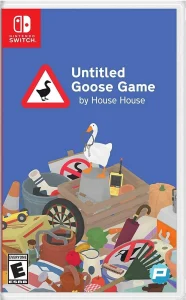
Untitled Goose Game Switch NSP
Report Link Error
Select the broken download file, then submit the report.
Screenshots
About Game
Untitled Goose Game Switch NSP puts players in control of a determinedly troublesome bird in a peaceful English village. There is no sprawling heroic quest to explain the action. The purpose is much simpler: waddle into everyday spaces, unsettle the people who live there, and turn ordinary objects into opportunities for carefully planned inconvenience.
A Mischievous Goose in a Quiet English Village
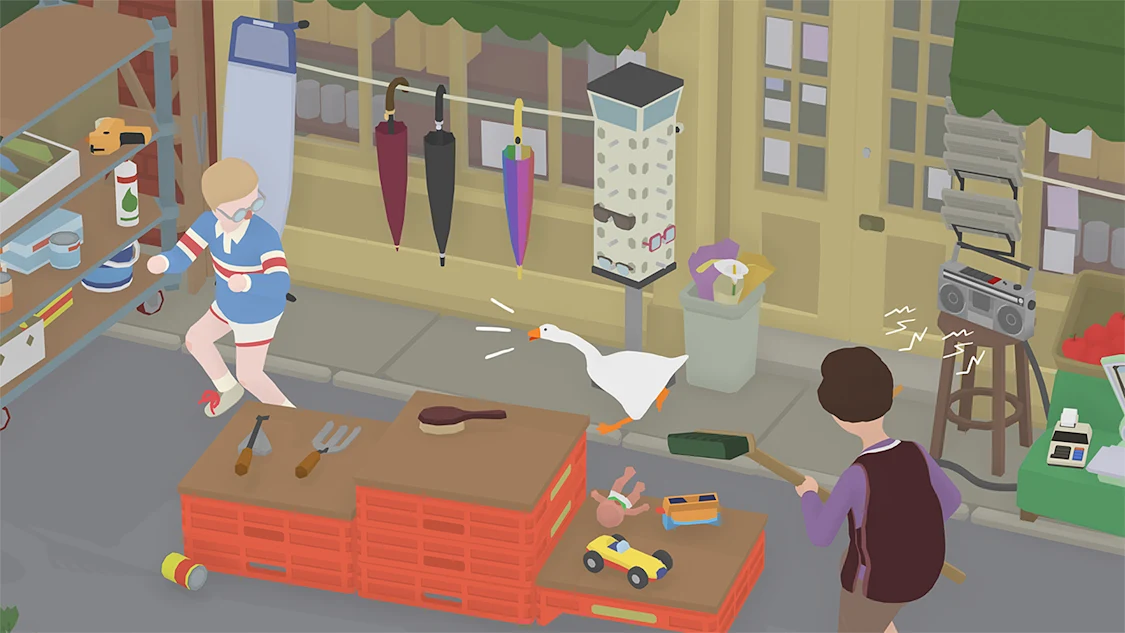
Untitled Goose Game builds its appeal around a deliberately small-scale comic premise. The goose is not saving the village or protecting it from danger. It is the source of the disruption. Villagers are busy with their routines, possessions, and chores; the goose sees each of those things as a potential target.
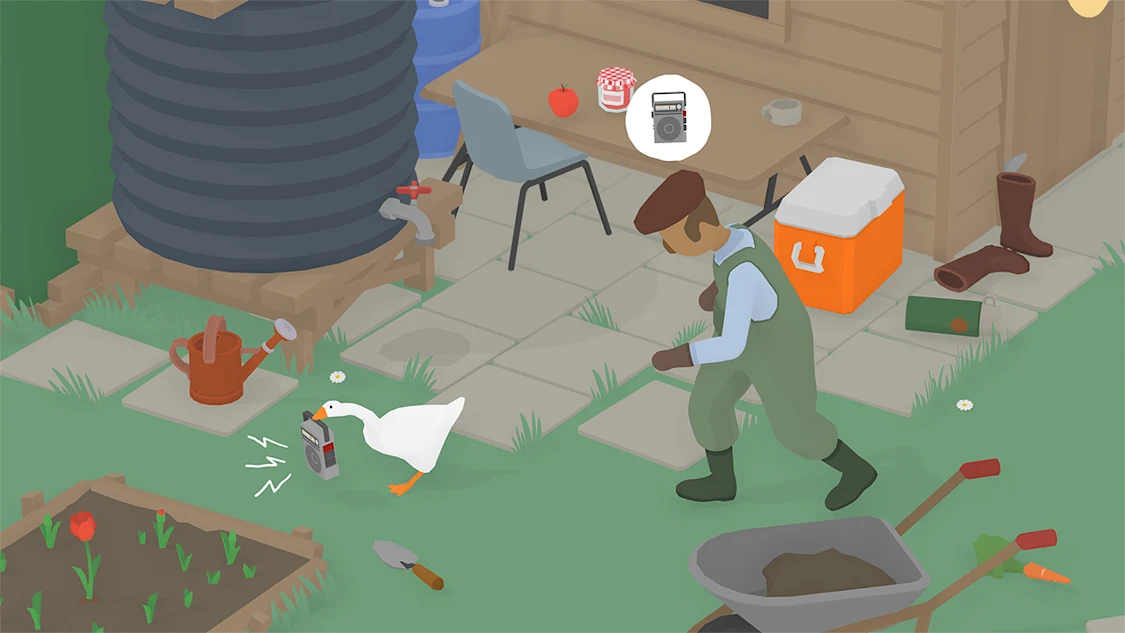
The English village provides a calm contrast to the bird’s behaviour. Its connected areas contain distinct inhabitants and interactive objects, giving each space its own little social order to interfere with. A stolen item can send someone searching. A well-timed interruption can derail a task. The result is a sequence of self-contained mishaps rather than a traditional plot-heavy adventure.
That premise also gives the game much of its atmosphere. The village is charming and orderly until the goose arrives, and much of the humour comes from watching that order gradually break down. The presentation supports the tone with hand-drawn art and a piano soundtrack that reacts to the goose’s actions, helping minor acts of mischief feel playful rather than severe.
How the To-Do Lists Turn Pranks Into Puzzles
Progression is organized through area-based to-do lists. Each item on a list is a village task in reverse: instead of helping a resident complete a job, the goose must find a way to inconvenience them. These objectives give direction to an experience that otherwise encourages free experimentation.
The goose puzzles depend on reading the immediate environment. Players may need to notice which objects a villager values, where someone walks, or what action will draw their attention away from a useful location. An objective can appear straightforward, yet the practical challenge lies in creating the right circumstances to complete it.
This structure makes the game approachable without making every answer immediate. The list states the broad goal, while observation and trial supply the method. Interacting with different objects, moving them to unexpected places, and responding to villagers’ reactions can reveal solutions that are less about speed than about understanding the space.
Because areas include hidden interactions and secret tasks, the lists also encourage a return visit after the obvious objectives are complete. A player who has learned how the village functions may spot possibilities that were easy to miss during an initial pass.
Stealth, Timing, and the Art of Being a Nuisance
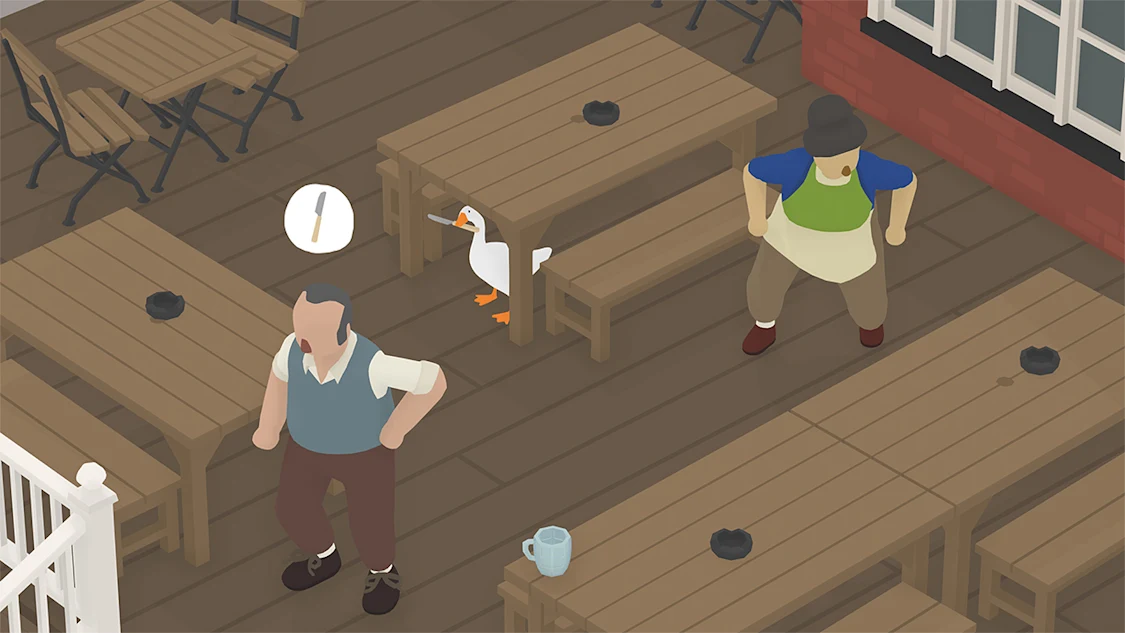
Despite its light comic tone, the game is built on a stealth puzzle foundation. Villagers do not simply ignore the goose. They may react when it gets too close, notice a missing object, or attempt to reclaim something that has been taken. Successful mischief often means approaching carefully and acting before a resident can interfere.
Timing is especially important. Villager routines create openings, but those openings do not last forever. Waiting for someone to turn away, move to another part of an area, or become occupied with a distraction can be more useful than immediately rushing toward an objective.
Distractions give the goose a way to reshape those routines. A honk can attract attention or create a brief disturbance, while a moved object can change what a villager does next. These actions turn the game’s people into part of the puzzle: their predictable behaviour is not merely an obstacle, but information players can use.
The best moments often arise when a simple plan becomes an improvised setup. A villager reacts, the goose adapts, and a small interruption develops into a more elaborate piece of chaos. The game leaves room for that experimentation while still keeping the objectives readable.
The Goose’s Essential Actions: Waddle, Honk, and Grab
The goose controls are intentionally direct. Movement lets the bird explore the village and position itself for a prank. Honking provides an immediate way to interrupt, distract, or unsettle nearby villagers. Grabbing objects allows the goose to steal, carry, relocate, and arrange the materials needed for a solution.
Those basic actions support both direct and indirect play. Sometimes the answer is as plain as taking an object and making a quick getaway. In other cases, an item must be moved first, then used to influence a villager’s behaviour. The same controls remain useful throughout, but the situation determines how cleverly they need to be applied.
This accessible setup suits the game’s focus on observation. Players are not required to manage a large set of complex actions before they can begin solving problems. Instead, the interest comes from deciding when to waddle closer, when to honk, and what to grab.
5 Practical Tips for Outsmarting the Villagers
- Watch first. Pay attention to villager patterns, including where people walk, which objects they handle, and what regularly pulls their attention.
- Wait for openings. A task may become easier when a villager is facing away, occupied elsewhere, or temporarily separated from an important item.
- Honk with purpose. Use the honk as a distraction rather than constant noise; drawing a resident to one spot can create room to act somewhere else.
- Test the objects. Pick up, move, and place items in different locations. Environmental interaction can create setups that are not obvious from the task wording alone.
- Return later. Revisit areas after learning more about their inhabitants and objects, as hidden interactions and secret tasks reward another look.
Untitled Goose Game on Nintendo Switch: Release and Platform Details
Untitled Goose Game Switch NSP refers to the Nintendo Switch release of House House’s animal life and simulation game. It launched on September 20, 2019, with Panic as publisher and House House as developer.
The Switch release is listed for Europe, USA, Asia, and Japan. Its language support includes English, German, Spanish, French, Italian, Japanese, Korean, Portuguese, Russian, and Chinese. The title’s verified Nintendo Switch Title ID is 010082400BCC6000, and its listed firmware version is v8.1.0.
For players interested in a compact puzzle experience built around comic timing, environmental interaction, and a deliberately unruly protagonist, the village offers a focused setting with plenty of room to test ideas. The goose never needs a grand motive. A honk, a misplaced object, and a confused villager are enough to keep the next task moving.