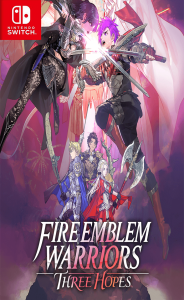
Fire Emblem Warriors: Three Hopes Switch NSP XCI
Report Link Error
Select the broken download file, then submit the report.


Screenshots
About Game
Fire Emblem Warriors: Three Hopes Switch NSP XCI returns to Fódlan through a different lens: a standalone story built around large-scale action, tactical commands, and a new mercenary protagonist. Released by Nintendo on June 24, 2022, the game combines Action, Role-Playing, Simulation, and Strategy elements while revisiting a continent defined by competing ideals, shifting loyalties, and war.
A New Path Through Fódlan With Shez
The Fire Emblem Warriors: Three Hopes story does not simply repeat the events associated with Fódlan. Its alternate storyline places Shez, a mercenary, at the center of events. An encounter with the three future leaders changes the direction of the conflict and gives the familiar setting a new starting point.
That change matters because Shez is not positioned as a distant observer. The mercenary becomes part of the forces shaping Fódlan’s future, creating room for different decisions, relationships, and confrontations. The result is a story concerned with possibilities: how the continent’s political struggle might develop when its major figures meet different challenges and make different choices.
The Fódlan alternate story also gives established factions more space to be considered from varied angles. Its focus is not limited to a single version of events. Instead, the game frames its conflict through new circumstances, allowing motivations, history, and rivalries to emerge in a changed context.
Choosing a Great House and Seeing Familiar Conflicts Differently
Players align with one of the three great houses, a decision that shapes the side from which they experience the wider struggle. This alignment is central to the game’s structure because the factions are not merely battlefield colors. Each has its own people, priorities, relationships, and role in the Fódlan conflict.
The divergent narrative invites players to look again at conflicts that may feel familiar while accepting that the outcomes and connections are not fixed. Alliances can take unexpected forms, rivalries can deepen or shift, and characters face situations that reveal different aspects of their backgrounds. That approach gives Fire Emblem Warriors Three Hopes factions a stronger sense of perspective: each side is part of the same continental crisis, but no side sees it in exactly the same way.
For players interested in character relationships, the base camp supports that side of the experience. Bonds with allies can be developed between missions, and support conversations can be unlocked. These moments complement the war-focused narrative by giving the army room to prepare and connect away from the immediate pressure of combat.
How Musou Combat Meets Fire Emblem Strategy
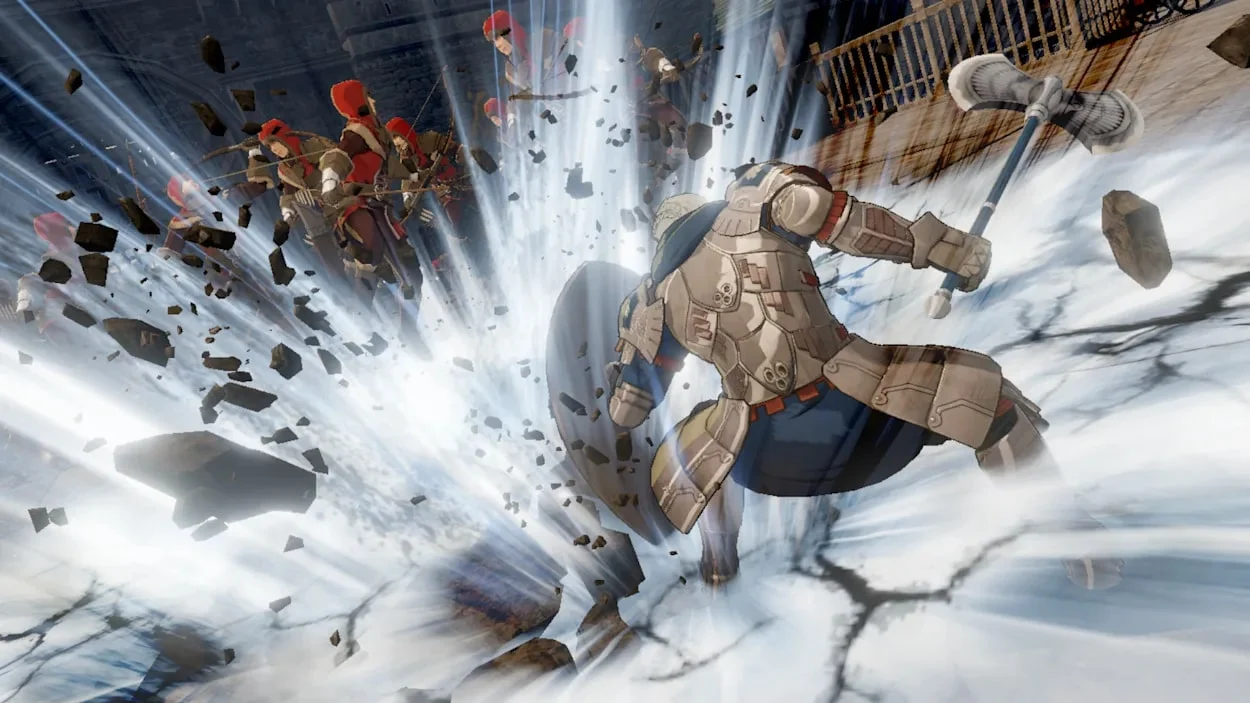
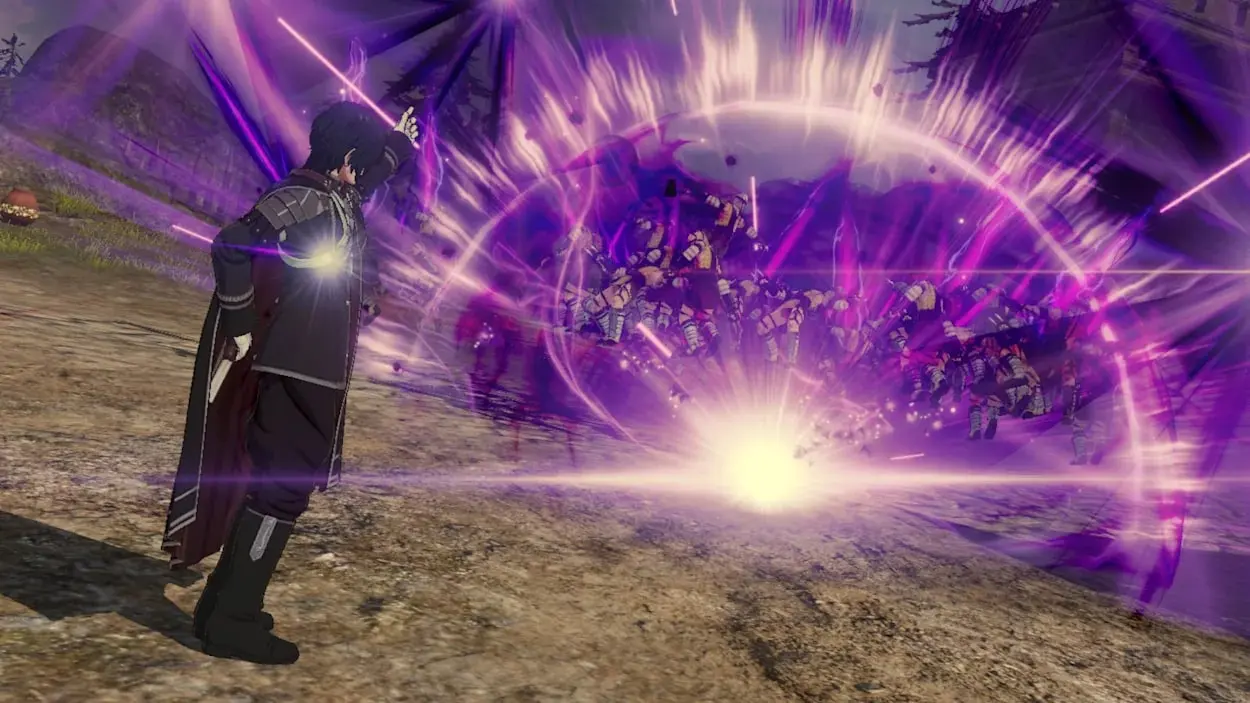
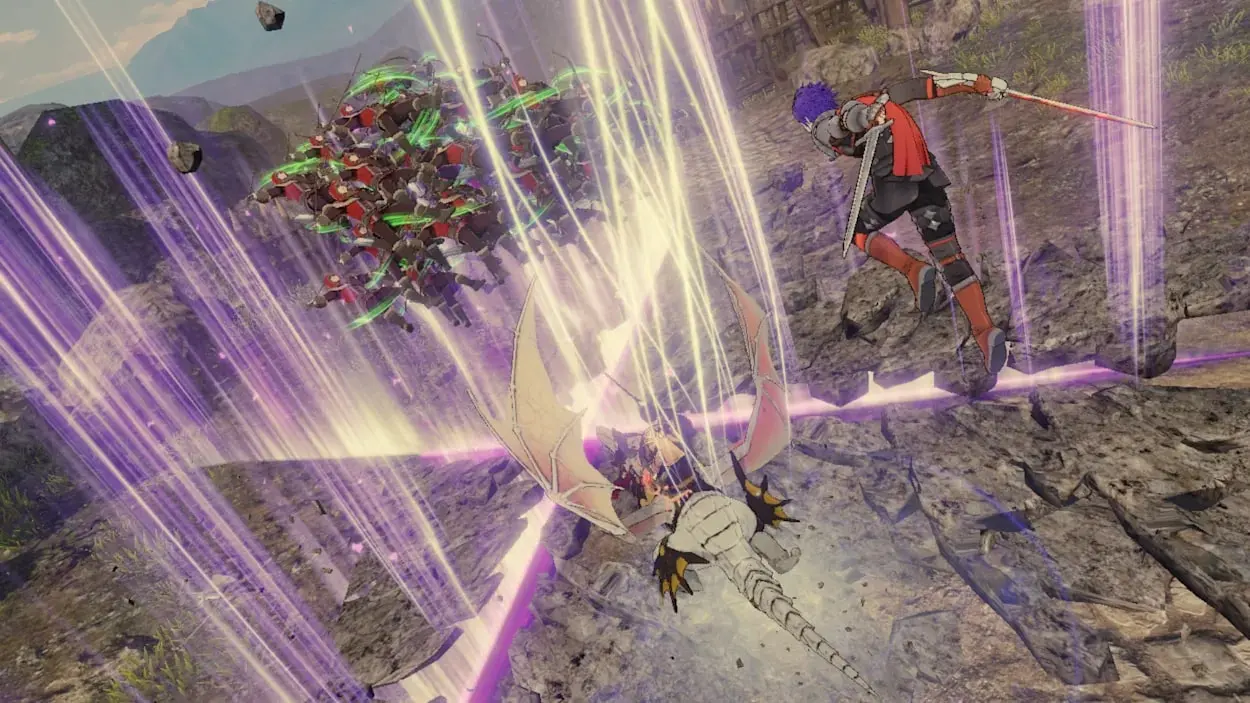
The game’s main battle system joins Musou combat with Fire Emblem strategy. Players directly control characters in fast hack-and-slash encounters, using combos, special abilities, and individual movesets against large groups of opponents. The scale of these fights creates an energetic contrast with the more deliberate decision-making required around the map.
Direct action is only one part of success. Character choice, combat advantages, class options, weapons, abilities, and allied support all contribute to how an army performs. A player can focus on mastering the moveset of a chosen warrior while still thinking about the needs of the entire force.
This blend makes the action role-playing structure more demanding than simple crowd-clearing. Powerful attacks can quickly remove groups of enemies, but a battle can still be lost through poor priorities or neglected objectives. The strongest moments come when immediate combat and larger tactical needs are handled together rather than treated as separate systems.
Commanding Multiple Units in Real Time
Wide battlefields ask players to command more than the character currently under direct control. Through real-time orders, multiple units can be directed toward objectives, enemy positions, or threatened areas. This creates a constant need to decide where a capable ally will be most useful.
Unit command is especially important when several problems demand attention at once. An objective may need protection, an enemy force may need to be stopped, and a key target may be exposed elsewhere. Sending allies to act independently allows the player-controlled character to fight where direct intervention is needed most.
Placement is therefore part of battlefield strategy. A unit sent to the right point can relieve pressure or help secure an objective; a poorly considered order can leave another part of the map vulnerable. The game encourages an active rhythm of fighting, checking the broader situation, issuing commands, and adapting as threats change.
Weapon Triangle Decisions and Enemy Priorities
The Weapon Triangle provides another reason to look beyond the nearest group of enemies. It offers combat advantages against specific enemy types, making matchups a meaningful part of planning. Before committing a unit to a difficult encounter, it is useful to consider which character is best suited to that opponent.
Enemy priorities matter just as much. Large crowds are a constant part of the action, yet the most numerous enemies are not always the most urgent. Officers, objectives, approaching threats, and enemies that can disrupt a plan deserve attention before a player settles into clearing the battlefield.
This is where combat strategy gives the game its tension. Button-mashing may handle smaller encounters, but demanding battles reward awareness of matchups, locations, and timing. A special attack used at the right moment can open space, protect an ally, or remove a dangerous cluster before it becomes a larger problem.
7 Battlefield Habits for Stronger Results
- Read the objective first. Before chasing enemy groups, identify the immediate goal and protect the areas that matter to the mission.
- Place units with purpose. Use unit placement to cover threatened positions, pressure targets, or support an important advance.
- Keep issuing orders. Real-time orders let multiple allies contribute across the map while the controlled character handles urgent combat.
- Return to camp. Visit the base camp between missions to prepare, build bonds with allies, and access support conversations.
- Train the army. Training helps strengthen allies and can unlock abilities that improve their usefulness in battle.
- Try different classes. Experiment with classes, weapons, and abilities to shape the army around preferred approaches and matchups.
- Save specials for pressure points. Awakening attacks and Warrior Special attacks can clear large groups and are most valuable when a battlefield situation needs to change quickly.
Fire Emblem Warriors: Three Hopes Switch NSP XCI is suited to players who want fast, character-driven battles without giving up the need to manage an army. Its appeal comes from that balance: a new route through Fódlan’s conflict, direct control over powerful fighters, and a strategic layer that asks players to think beyond the next combo.
The Nintendo-developed release supports English, Japanese, French, German, Italian, Spanish, Korean, and Chinese, with availability listed for Europe, USA, Asia, and Japan. Its 13GB release brings together a familiar world, a changed narrative path, and battlefield decisions that remain active from one objective to the next.