Pizza Tower Switch NSP [Homebrew]
Report Link Error
Select the broken download file, then submit the report.
Screenshots
About Game
Pizza Tower Switch NSP [Homebrew] brings a frantic, cartoonish platforming adventure into a Nintendo Switch homebrew context. The supplied USA release details list an April 11, 2023 date, English language support, and Ratalaika Games as publisher, while its Action and Adventure classification suits a game that mixes rapid movement, strange encounters, score chasing, and an escalating climb through an unpredictable tower.
Pizza Tower Switch NSP [Homebrew]: Game Overview
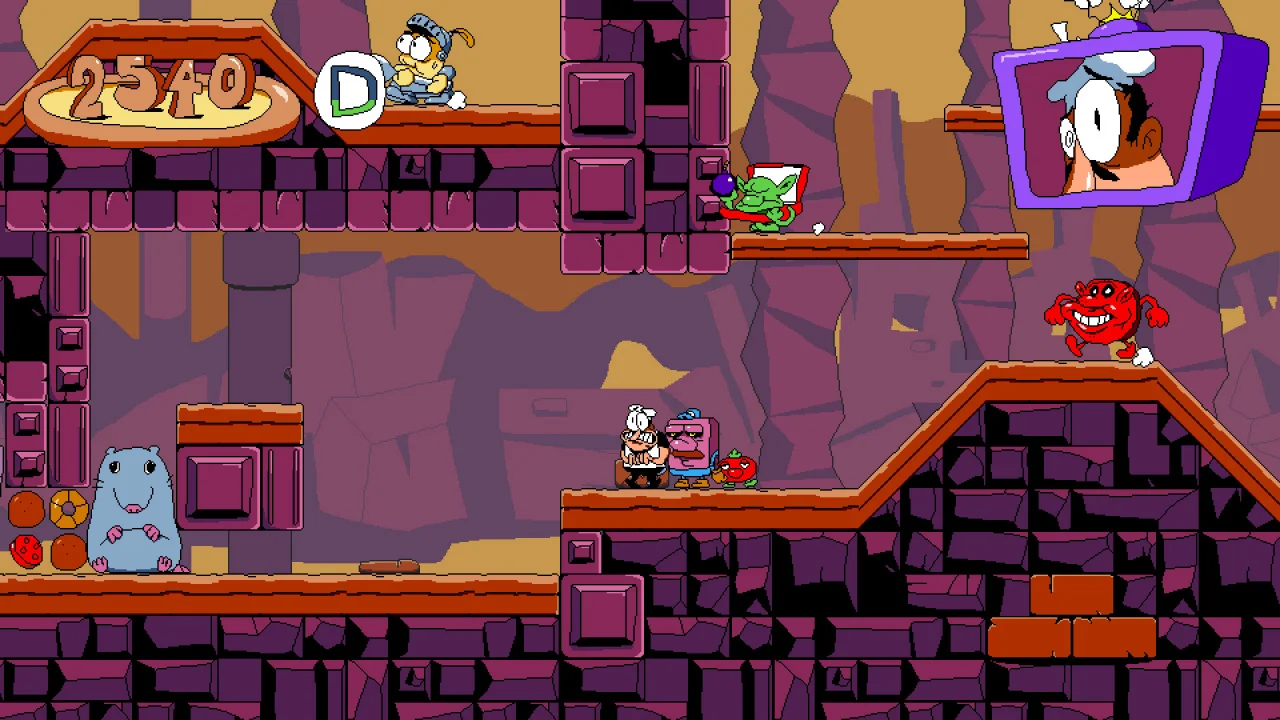
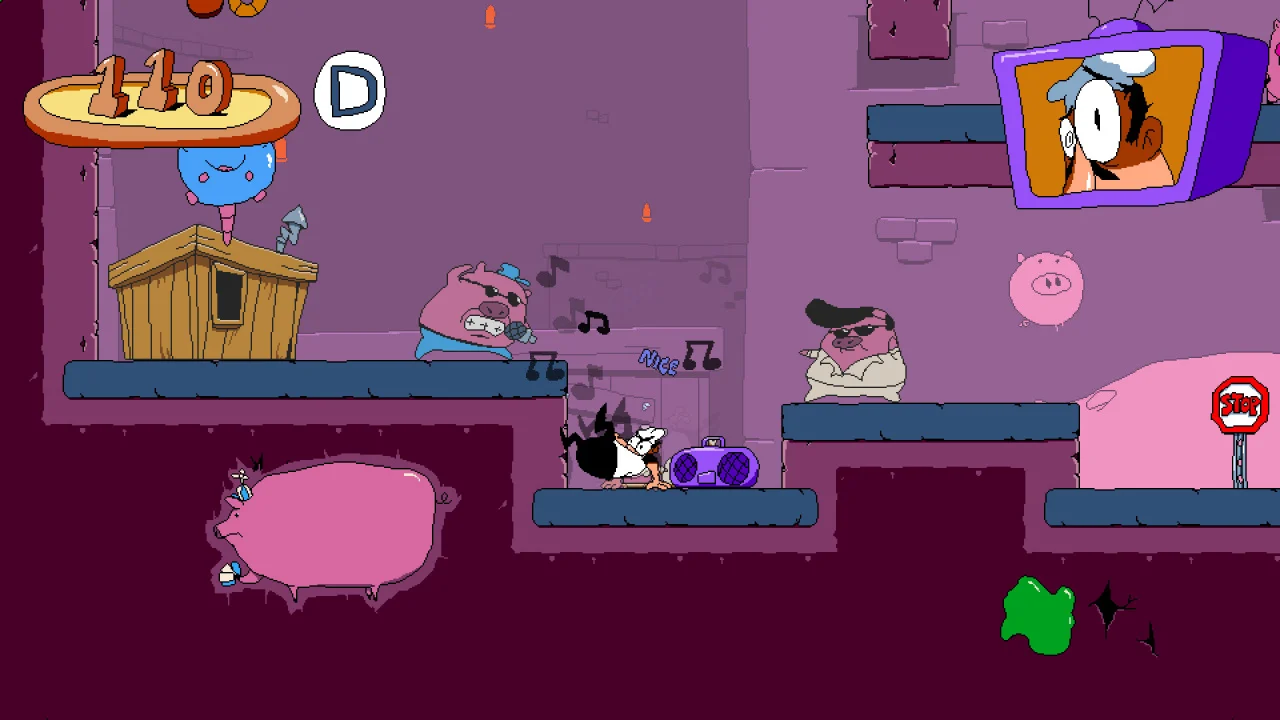
Pizza Tower is built around restless energy. Its presentation leans into exaggerated comedy, bizarre food-themed enemies, and stages that seem designed to surprise players at every turn. The central character is not a polished action hero but Peppino Spaghetti, an anxious pizza chef who is nevertheless capable of remarkable speed, force, and agility when the situation demands it.
The Nintendo Switch homebrew framing fits a game whose identity is closely tied to fast inputs and immediate reactions. Peppino can run, dash, jump, wall jump, slide, and seize enemies, with each action feeding into a movement system that rewards confidence. There is room to explore, but the game also pushes players to keep moving rather than cautiously inching forward.
Its supplied release information identifies the region as USA and the language as English. More importantly for play, Pizza Tower’s style is energetic rather than restrained: stages contain unusual hazards, transformations, secrets, bosses, and routes that encourage repeat visits. A first clear is only one part of the challenge. Better scores, stronger ranks, faster times, and missed discoveries can all pull players back into the same level.
Peppino Spaghetti’s Race to Save His Pizza Parlor
The Pizza Tower story starts with a direct threat. Peppino Spaghetti owns a pizza parlor, and Pizza Face, an evil sentient pizza, threatens to destroy it with a giant laser. Faced with losing his restaurant, Peppino enters the looming Pizza Tower and begins climbing toward the source of the danger.
The premise gives the action a clear sense of progression. Each floor brings Peppino deeper into Pizza Face’s domain, where bizarre enemies, strange level concepts, and boss encounters turn the tower into a series of increasingly absurd obstacles. Peppino’s anxiety is part of the game’s tone: he is visibly distressed by the danger, yet his moveset makes him powerful enough to charge through it.
The goal is simple enough to follow through the chaos. Reach the top, confront Pizza Face, and protect the pizza parlor. Along the way, the tower’s secrets and enemy-filled rooms make the journey feel larger than a straight run from one endpoint to another.
Fast-Paced Platforming Built Around Momentum
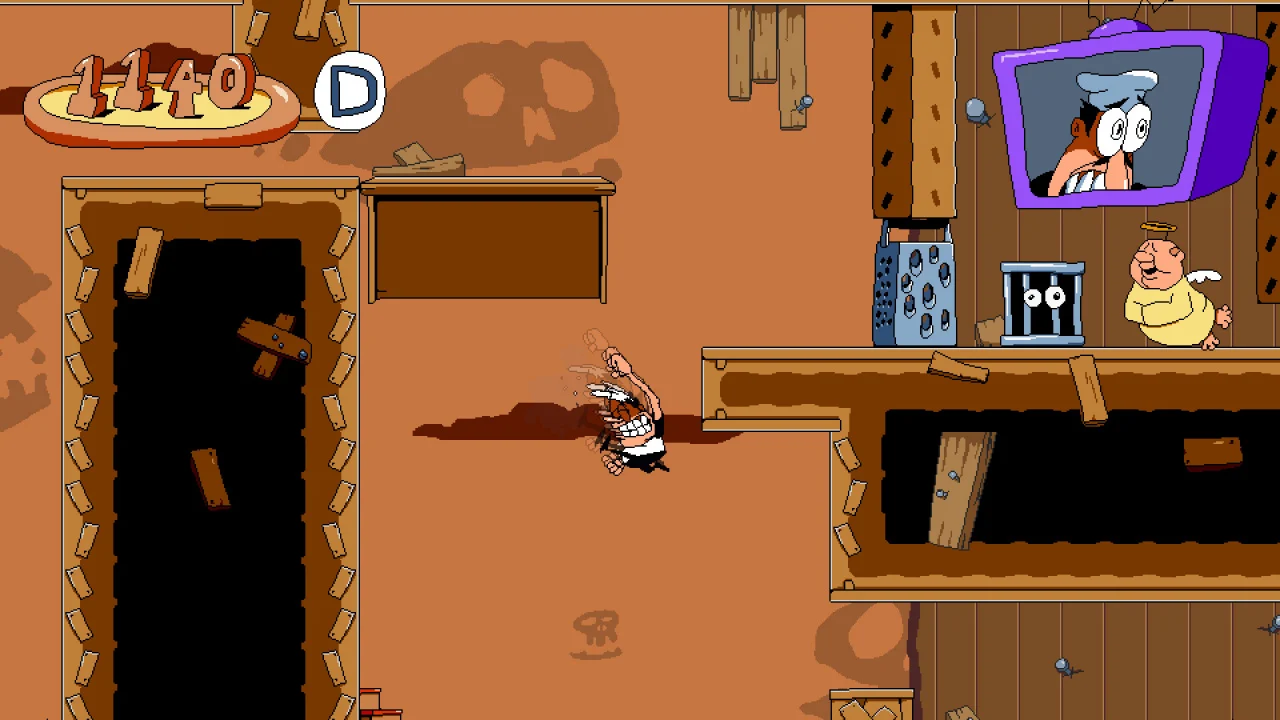
Pizza Tower gameplay emphasizes momentum. Peppino is designed to cover ground quickly, and the levels invite players to link actions rather than treat every jump as a separate challenge. Running into a dash, sliding beneath an obstacle, climbing through a wall jump, or grabbing an enemy can keep a route flowing at high speed.
This approach gives the platforming a physical, almost unruly feel. A player who understands how Peppino carries speed can tear through a room, while a player who hesitates may lose the rhythm that makes traversal efficient. The game does not merely ask for quick reflexes; it asks for control over rapid movement.
Enemy grabs also add flexibility. Enemies are not only hazards to avoid, as Peppino can use his ability to grab them during combat and traversal. Transformations further change how certain situations play out. He may become a ghost, knight, or rock, and each form has distinct abilities that can help with particular challenges, such as breaking blocks, flying, or becoming invulnerable.
The result is fast-paced platforming with a strong sense of forward drive. The stages are unusual, but their movement challenges repeatedly ask the same question: can Peppino maintain momentum through the chaos?
Combos, Scores, and Chasing Better Ranks
Finishing a level is not the only measure of success. Pizza Tower encourages players to chain attacks and movement into combos, building a score through sustained action. This creates a useful tension between exploration and performance. Taking a detour may reveal a secret, but preserving a combo may require decisive movement and clean execution.
Pizza Tower combos reward players for turning the game’s broad moveset into a continuous sequence. Dashes, attacks, enemy interactions, and quick traversal all contribute to the feeling that a strong run should look and feel uninterrupted. Better performance supports higher scores, and higher scores can lead to better Pizza Tower ranks.
That rank pursuit gives individual levels a competitive edge even for players working alone. A completed stage can become a personal challenge: improve the route, avoid mistakes, keep the combo alive longer, or move more efficiently through a difficult section. Replaying is not simply repetition when the goal is a cleaner, faster, more controlled performance.
Secrets, Hidden Rooms, and Reasons to Replay Levels
The tower rewards curiosity alongside speed. Hidden rooms, collectibles, and alternate pathways are placed throughout its stages, giving players reasons to look beyond the most obvious route. These discoveries can change how a level is understood on later runs, especially when a previously missed path becomes part of a faster or more complete route.
Pizza Tower secrets support a replay structure built on gradual mastery. A first attempt may focus on survival and reaching the exit. Later attempts can target hidden rooms, overlooked collectibles, stronger ranks, or speedrun goals. The game’s unusual levels are not presented as one-time scenery; they are spaces to learn, revisit, and refine.
One of the most memorable pressures arrives at a level’s end. After Peppino reaches the objective, Pizza Time begins. He must race back to the start before the level explodes. This return run changes the mood immediately, replacing a successful finish with a frantic escape. Learning the way back is therefore part of mastering a stage, not an afterthought.
For players who enjoy quick platforming with repeated runs and tangible improvement, Pizza Tower Switch NSP [Homebrew] offers a structure that makes practice meaningful. A better route, a newly found room, or a tighter escape can make an old level feel newly demanding.
5 Gameplay Priorities for New Pizza Tower Players
- Build momentum first. Practice running, dashing, jumping, and wall jumping until Peppino’s movement feels connected. Stopping too often can make obstacles harder to handle.
- Link dashes and slides. These moves are important for preserving speed and navigating low obstacles or crowded spaces. Work on chaining them instead of treating them as isolated actions.
- Watch for transformations. Ghost, knight, and rock forms have distinct uses. Learn what each transformation can do, especially when a route involves blocks, flight, or invulnerability.
- Search beyond the main path. Explore corners, alternate pathways, hidden rooms, and collectible locations. Thorough exploration can reveal more of each stage and create goals for later runs.
- Learn the Pizza Time escape. Reaching the end is only half the job. Pay attention to the return route so the timed dash back to the start feels less chaotic on future attempts.