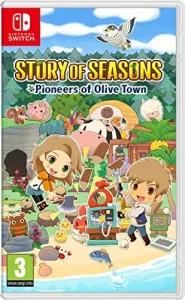
Story of Seasons: Pioneers of Olive Town Switch NSP XCI
Report Link Error
Select the broken download file, then submit the report.
Screenshots
About Game
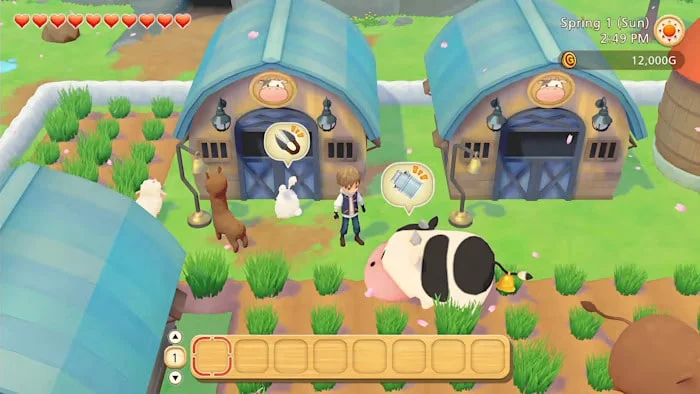
Story of Seasons: Pioneers of Olive Town Switch NSP XCI places a new farmer in a quiet seaside community with a demanding inheritance: an overgrown property, aging buildings, and the chance to continue a family tradition. Released on March 23, 2021, this Simulation and Role-Playing Game from developer Marvelous Inc and publisher XSEED Games frames rural work as a gradual, personal project. Its days are filled with practical chores, local conversations, resource gathering, and the steady satisfaction of seeing an unruly plot become a working home.
A Grandfather’s Farm and Olive Town’s Pioneer Legacy
The starting point is Olive Town, a coastal settlement founded by the player character’s grandfather. Following his pioneering example means taking responsibility for the neglected grandfather’s farm he left behind. The land needs to be cleared, its buildings restored, and its potential rediscovered through patient work rather than a single dramatic turnaround.
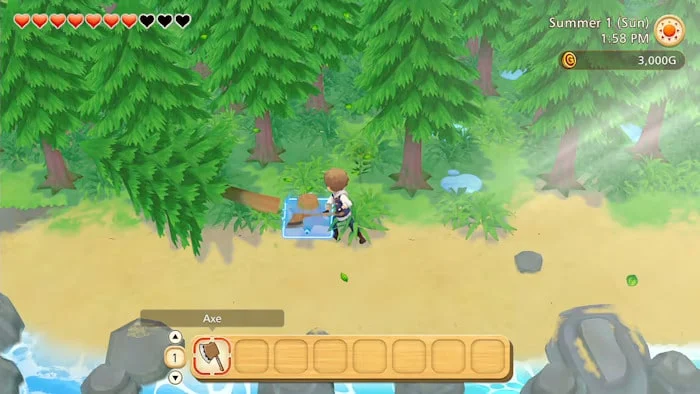
That farm restoration gives the game a clear sense of purpose. Axes, hammers, and sickles are used to cut through overgrowth and make room for future projects. Each cleared patch can become part of a crop field, a place for livestock, or space for structures. The farm’s improvement also connects to Olive Town itself: conversations with residents, help offered around town, and further exploration turn the property into a bridge between the player and the wider community.
The tone is warm and rural, built around a town with a friendly, lived-in atmosphere. Progress is not only measured in money or materials. It is visible in a rebuilt farm, familiar faces in town, and new places opening beyond the initial plot.
Growing Crops Through the Seasons
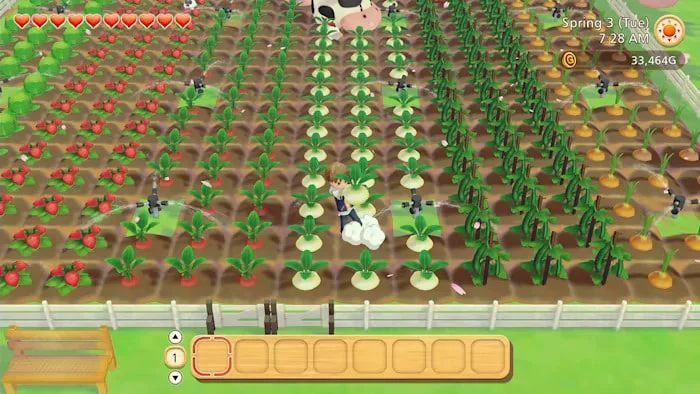
Agriculture remains the daily foundation of the experience. Players prepare land, plant seeds, tend their fields, and collect harvests for income. The available work includes seasonal crops, ranging from vegetables to flowers, so the changing calendar affects what can be grown and when a field is most productive.
Planting and harvesting are more than a simple routine. Crops provide a reason to organize space, plan future work, and return to the farm each day. Flowers broaden the possibilities beyond food production, while harvested goods help support the larger cycle of expansion, crafting, and upgrades. Raising cows, chickens, and alpacas adds another dependable source of daily products, giving the farm a mix of fieldwork and animal care.
Fishing also fits naturally into this production loop. Rivers, lakes, and the ocean offer different places to catch fish, which may be sold or cooked. The result is a farming simulation with several complementary ways to make a day productive, even when a player is waiting on crops or looking for a change from fieldwork.
Terraforming and Farm Customization in Pioneers of Olive Town
Farm work in Story of Seasons: Pioneers of Olive Town Switch NSP XCI is not limited to maintaining a predetermined layout. Terraforming gives players the ability to reshape the land and place structures with greater freedom. That feature makes farm customization part of the game’s progression: clearing an area is only the beginning, because the player can decide what the newly available space should become.
Structures can be arranged to suit a preferred routine, while the house can be personalized with decorative objects. Crafting supports this process by turning gathered raw materials into useful items, machinery, and decorations. Mining caves for ores and jewels, foraging for plants, mushrooms, and fruits, and exploring the wilderness all feed into a practical creative loop.
This flexibility gives the farm a more individual character. One player may prioritize orderly crop plots and efficient access to facilities; another may devote attention to decorations and a more personalized house. The source of replay value lies in that ongoing freedom to revise the property as needs, resources, and ambitions change.
Building Relationships in Olive Town
The farm may be the player’s responsibility, but Olive Town is not a solitary setting. The town’s residents are part of the regular rhythm of play. Conversations and gifts help build rapport, while assisting people with their daily lives supports relationship growth and reveals more of the community around the farm.
These interactions provide a social counterpoint to clearing land and collecting resources. A day can include a quick chat with an Olive Town resident after a morning of tending animals, or a gift offered while passing through town. Relationships can eventually lead to marriage and starting a family, adding another long-term path to the player’s rural life.
The appeal is in the balance. Socializing is neither detached from the farming work nor treated as an afterthought; it is one of the activities that makes Olive Town feel like a place worth investing in. As the farm develops, the player’s connection to the community develops alongside it.
Festivals, Exploration, and Unlocking New Areas
Seasonal festivals and events break up the work cycle with occasions that bring fresh activity to the farming year. They also offer unique rewards, making them meaningful dates rather than background decoration. Their presence reinforces the sense that time passes in Olive Town, with seasonal changes influencing both crops and the community calendar.
Beyond town and farm, exploration leads into varied biomes with new materials, wild creatures, and gathering opportunities. Forests and other outdoor areas provide forageable plants, mushrooms, and fruit. Caves supply ores and jewels needed for crafting tools and improving farm equipment. These excursions make expansion feel earned, since resources found away from home can be transformed into better facilities and new possibilities back on the farm.
Progress also unlocks new areas and introduces mysterious sprites. That gradual opening of the world keeps the focus from narrowing to chores alone. Olive Town’s appeal comes from the way familiar daily work coexists with small discoveries beyond the fence line.
9 Things to Balance During a Day in Olive Town
A productive daily farm routine is less about completing every possible task than choosing what matters most on a given day. These six priorities gather the major Olive Town activities into a manageable rhythm.
- Make room first. Clear overgrown land with axes, hammers, and sickles, creating space for fields, animals, structures, and future farm customization.
- Keep the fields moving. Plant and harvest seasonal vegetables and flowers, using crop sales to support the farm’s growth.
- Care for livestock. Raise cows, chickens, and alpacas, and collect their products as part of a dependable daily income stream.
- Gather beyond the gate. Fish in rivers, lakes, or the ocean; forage for wild plants, mushrooms, and fruits; and mine caves for ores and jewels.
- Turn materials into progress. Craft useful objects, machinery, decorative pieces, and improvements that support both efficiency and house decoration.
- Leave time for town. Speak with residents, offer gifts, help where possible, and take part in seasonal festivals and events when they arrive.
This structure makes the game suitable for players who enjoy a gentle mix of farming, crafting, exploration, and relationship building. The farm can be approached as an organized production project, a customizable home, or the center of a growing life in Olive Town. Its progression gives each of those approaches room to develop over time.