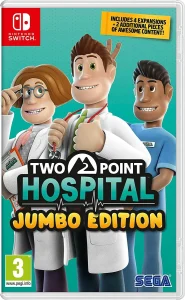
Two Point Hospital JUMBO Edition Switch NSP XCI
Report Link Error
Select the broken download file, then submit the report.
Screenshots


About Game
Two Point Hospital JUMBO Edition Switch NSP XCI brings Two Point Studios’ simulation to Nintendo Switch with a broad hospital-building campaign, a deliberately playful medical theme, and a substantial package of content. Published by SEGA and released on February 20, 2020, this edition places players in charge of healthcare facilities across the eccentric world of Two Point County, where efficiency, comfort, research, and a sense of humour all matter.
What the JUMBO Edition Brings to Two Point County
Two Point Hospital JUMBO Edition is a hospital management simulation built around gradual expansion. The starting point is a modest hospital, but the larger goal is to establish facilities across Two Point County and improve their reputation. Rather than following a conventional story with a fixed cast and linear plot, the game frames progression as a rise through the county’s healthcare world.
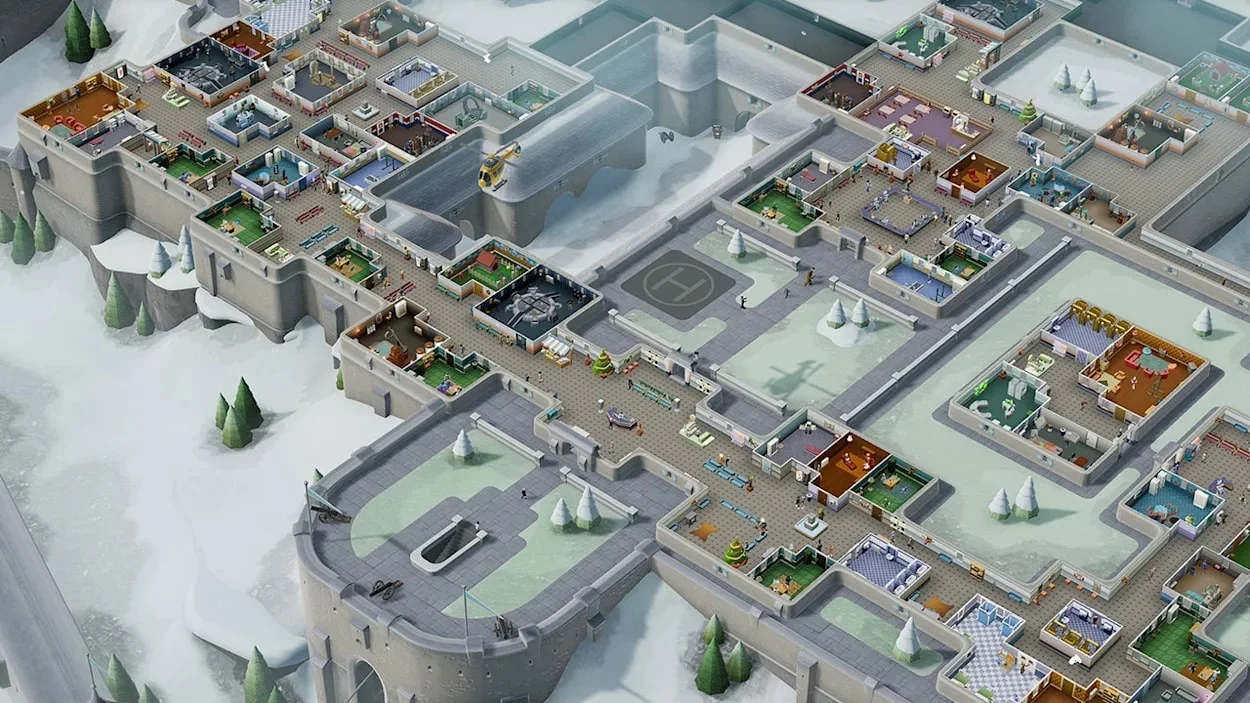
Its tone is light, but the management tasks are practical. Players construct rooms, appoint staff, respond to changing needs, and pursue better results at every location. The county supplies the personality: its hospitals face unusual ailments, distinctive objectives, and settings that ask for different approaches. A frosty mountain environment does not present the same concerns as a busy urban facility, and that variety gives the campaign a changing rhythm.
The JUMBO Edition includes the base game alongside four expansions, enlarging the number of places to manage and the range of illnesses, rooms, and items involved. It is a sizeable version of the Two Point County experience for players who enjoy systems that grow more involved as new options become available.
Building a Hospital Around Patient Flow
Hospital design begins with the fundamentals: corridors, diagnosis rooms, treatment facilities, and amenities. Yet placing a room is only the first decision. A successful layout has to account for how patients travel from one stage of care to the next. Long walks, crowded hallways, and poorly positioned treatment rooms can make a facility feel less responsive, even when it contains the necessary equipment.
This makes patient queues an important part of the building process. Patients need diagnosis before treatment, while waiting areas and amenities help support their comfort during delays. A hospital can grow quickly, but expansion without thought can create bottlenecks that affect satisfaction and reputation. Good layouts make the everyday routine easier to read: patients move through the building, staff reach their assigned rooms, and new facilities fit into a clear plan.
The game’s visual presentation supports this approachable management style. Hospitals are filled with quirky conditions and specialized machines, so practical planning is presented with a comic edge. Illnesses such as Light-Headedness and Mock Star reinforce the setting’s playful character, while the underlying choices remain focused on room placement, capacity, and care.
Hiring, Training, and Managing Hospital Staff
A hospital is more than its floor plan. Doctors, nurses, assistants, and janitors each support the operation in different ways, and staffing decisions shape how smoothly the facility works. Doctors and nurses are essential to diagnosis and treatment, while assistants and janitors contribute to the day-to-day running of the hospital.
Staff management requires attention to both capability and morale. Hiring a suitable team is the opening step; training allows employees to develop their skills as the hospital’s demands become more complex. New rooms, advanced treatments, and a growing patient population create pressure to maintain the right mix of personnel.
Morale also has a practical value. Keeping staff motivated helps sustain a stable operation, particularly when queues are busy and the hospital is taking on more responsibilities. The management challenge is not simply to employ more people. It is to create a workforce that can handle the current workload while remaining prepared for what the next stage of the campaign introduces.
A County-Wide Campaign of Hospital Expansion
The campaign moves from one hospital to another across Two Point County. Each newly unlocked site offers a fresh management problem, with its own environmental challenges, patient needs, and objectives. Progress comes from learning how one facility functions, earning stronger results, and applying that experience to the next location.
Players are encouraged to expand your empire, but growth is not merely a matter of adding rooms. New hospitals can require a revised strategy because the local environment and available needs change. Research, staff development, treatment capacity, and patient happiness all become parts of a longer county-wide plan.
Three-star ratings provide a clear target for each facility. Pursuing them gives the progression structure a replayable quality: a hospital can be improved, refined, and pushed toward better performance after its basic operation is established. The result is a campaign that rewards patience with systems rather than a single, fixed solution.
Four Expansion Packs and the Scope of the JUMBO Edition
The defining proposition of the JUMBO Edition is its combination of the main game and four expansions. Together, they add more regions, hospitals, illnesses, and items to the core framework. That means the edition is not limited to the first set of Two Point County locations; it broadens the campaign with further places to build and additional complications to manage.
This extra scope fits the game’s structure well. New regions and illnesses create reasons to rethink established habits, while extra hospitals keep the expansion theme moving forward. For players drawn to a long-form simulation, the JUMBO Edition content offers more opportunities to develop layouts, build teams, and respond to changing demands.
Two Point Hospital JUMBO Edition Switch NSP XCI is available with English, French, German, Italian, Spanish, Russian, Chinese, and Japanese language options. Its simulation focus and humorous presentation make it particularly suitable for players who enjoy management games with accessible visual character, gradually expanding systems, and objectives that reward careful improvement.
5 Priorities for a Growing Two Point Hospital
- Build with purpose. Place corridors, diagnosis areas, treatment rooms, and amenities in a layout that supports clear movement through the hospital.
- Hire for the workload. Balance doctors, nurses, assistants, and janitors so that essential duties are covered as the facility expands.
- Watch the queues. Manage patient queues carefully, since lengthy waits can affect comfort, satisfaction, and the hospital’s reputation.
- Invest in research. Research unlocks advanced cures, new rooms, and useful equipment that can support more demanding treatment needs.
- Protect patient happiness. Comfortable, entertained patients are better supported while they wait, helping the hospital maintain stronger results.
These priorities give Two Point Hospital strategy a clear foundation. Effective design supports staff, capable staff support treatment, and reliable treatment helps each hospital progress toward stronger ratings. The humour may define the county’s atmosphere, but the appeal comes from making a complicated healthcare operation function one thoughtful decision at a time.
Recommended Similar Games
 Submersible Simulator – Discover the Titanic into Ocean Switch NSPView Game
 Cozy Gardener Simulator Switch NSPView Game
 TCG Card Shop Master Switch NSPView Game
 Bike Courier: Bistro Express Delivery Switch NSPView Game
 Dynasty Warriors 9 Empires Switch NSPView Game
 Tropico 6 – Nintendo Switch Edition NSP XCIView Game
