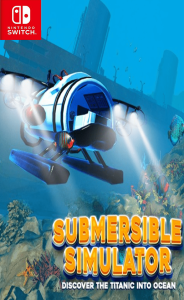
Submersible Simulator – Discover the Titanic into Ocean Switch NSP
Report Link Error
Select the broken download file, then submit the report.
Screenshots
About Game
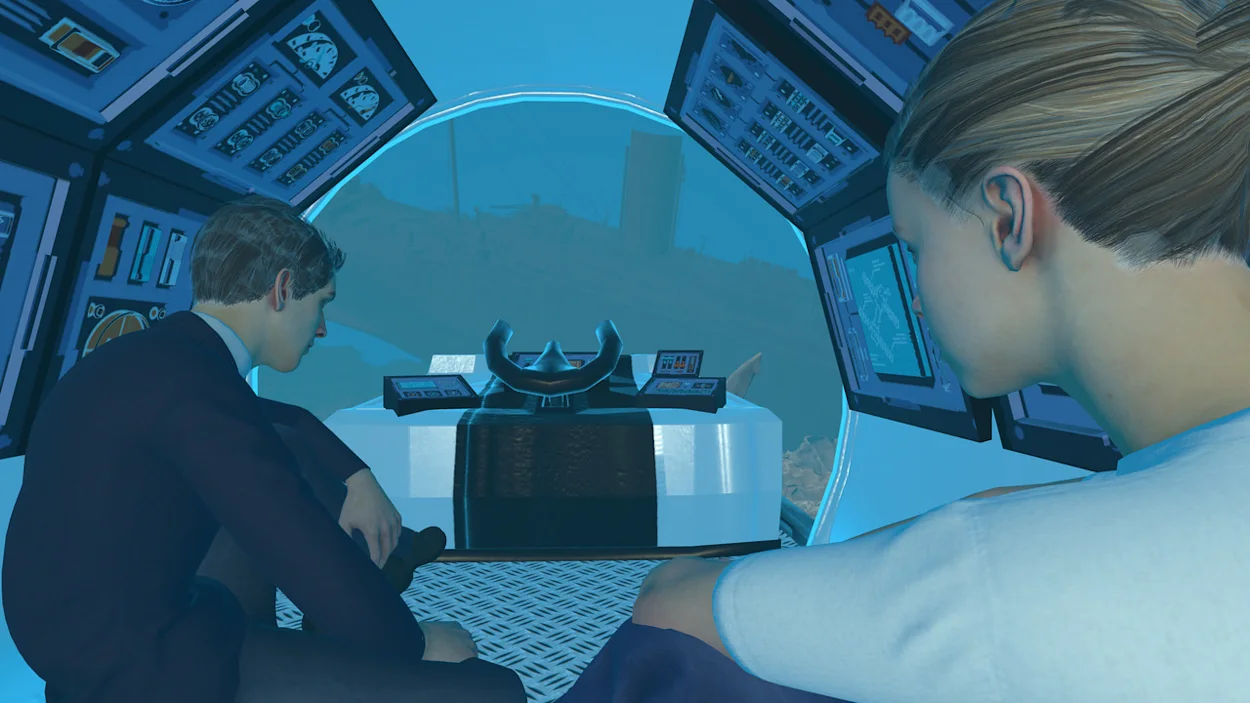
Submersible Simulator – Discover the Titanic into Ocean Switch NSP casts the player as a deep-sea explorer on a mission to investigate one of history’s most famous shipwrecks. Set around an expedition to the RMS Titanic in the North Atlantic, the game frames exploration as a patient scientific exercise: descend into difficult waters, study what is around the vessel, document discoveries, and gradually assemble a clearer picture of the ship’s final story.
A Deep-Sea Expedition Centered on the Titanic
This is a Titanic expedition game built around the appeal of reaching places that remain inaccessible to most people. The Titanic wreck is the central destination, with the player taking responsibility for a sophisticated diving craft and the equipment needed to investigate the site. The journey is not limited to simply arriving at the wreck; it involves gathering information, recording observations, and searching for details connected to the ship’s history.
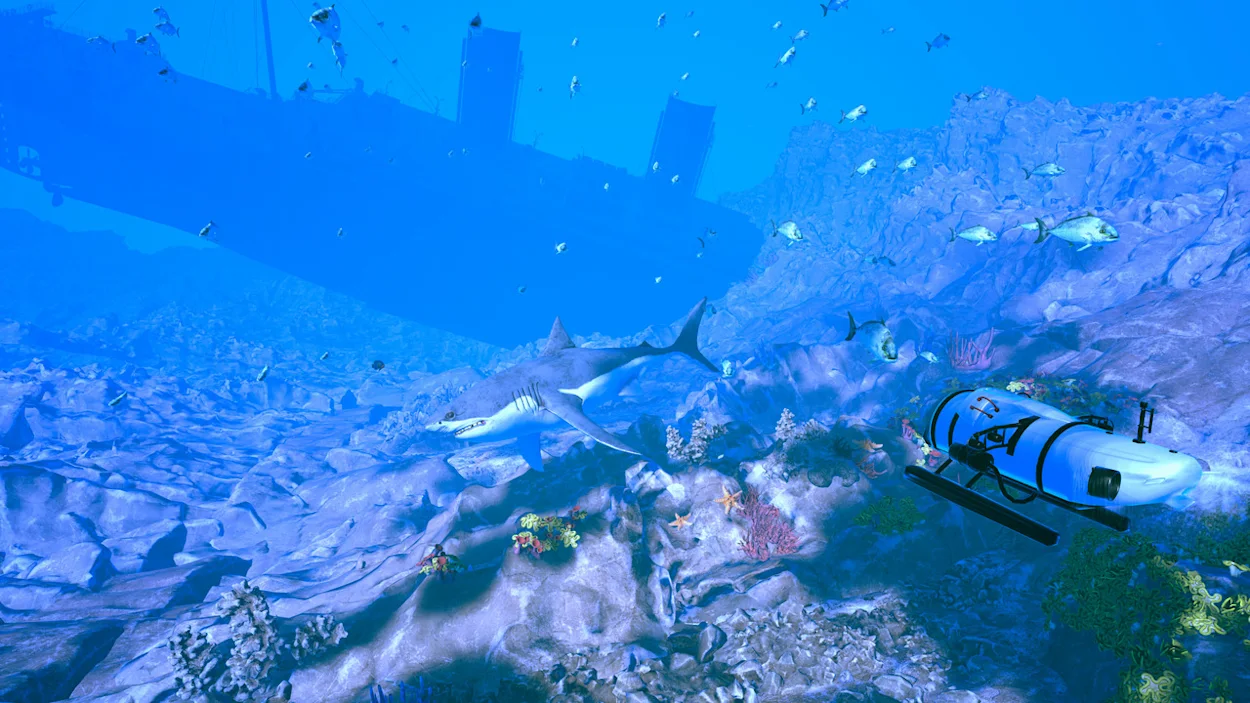
The game’s premise gives its exploration a clear purpose. As a deep-sea explorer, the player is asked to look beyond the broad image of the Titanic and examine its present condition beneath the ocean. Findings, artifacts, and environmental details support the larger investigation into the disaster and its final moments. The game also includes other underwater locations, including reefs, abyssal areas, marine life, sunken objects, and geological formations, broadening the expedition beyond a single wreck.
That mix of historical interest and undersea travel shapes the tone. Dark water, limited visibility, and the distance from the surface give each outing a measured, atmospheric quality. The focus is less on speed than on observation, making room for players who enjoy deliberate discovery and the quiet tension of operating far below the waves.
Piloting the High-Tech Submersible
The central activity is controlling an advanced vehicle through varied underwater environments. The submersible must move through dark, open spaces as well as more confined areas near wreckage and other points of interest. Careful handling matters, particularly when navigating close to objects or passing through tight spaces where a rushed turn can make positioning more difficult.
These submersible controls support an approach based on precision. A successful dive depends on managing direction, distance, and the craft’s placement before attempting to inspect or retrieve something. Underwater navigation is therefore part of the challenge, not merely a way of reaching the next location. Players are encouraged to learn how the craft responds early, then apply that familiarity during longer expeditions.
As a deep ocean simulator, the game also asks players to account for operational limits. Power, oxygen, and repair systems need attention during extended dives. Those resources give the journeys practical stakes: exploration has to be planned around what the submersible can safely support, rather than treated as an endless sightseeing trip.
Using Sonar, Robotic Arms, and Scientific Tools
The submersible is equipped with tools that turn exploration into investigation. Sonar helps scan the surrounding environment, making it useful when visibility is poor or when an area needs a more systematic search. Regular sonar scanning can help players identify where to focus their attention instead of drifting through the ocean without a plan.
Scientific instruments are used to photograph discoveries, collect samples, and document what has been found. These actions fit the game’s expedition theme, since the player is not only visiting locations but also building a record of them. The process encourages closer inspection of the Titanic and other environments, from major structures to smaller points of interest that might otherwise be overlooked.
The robotic arms add another practical layer. Through this robotic arm gameplay, players can interact with objects and retrieve items in the environment. Positioning the submersible accurately becomes especially important here. The tools are not separate from the piloting; they depend on good navigation, patient alignment, and a willingness to approach an object carefully before trying to handle it.
Exploring the Titanic Wreck and Its Historical Context
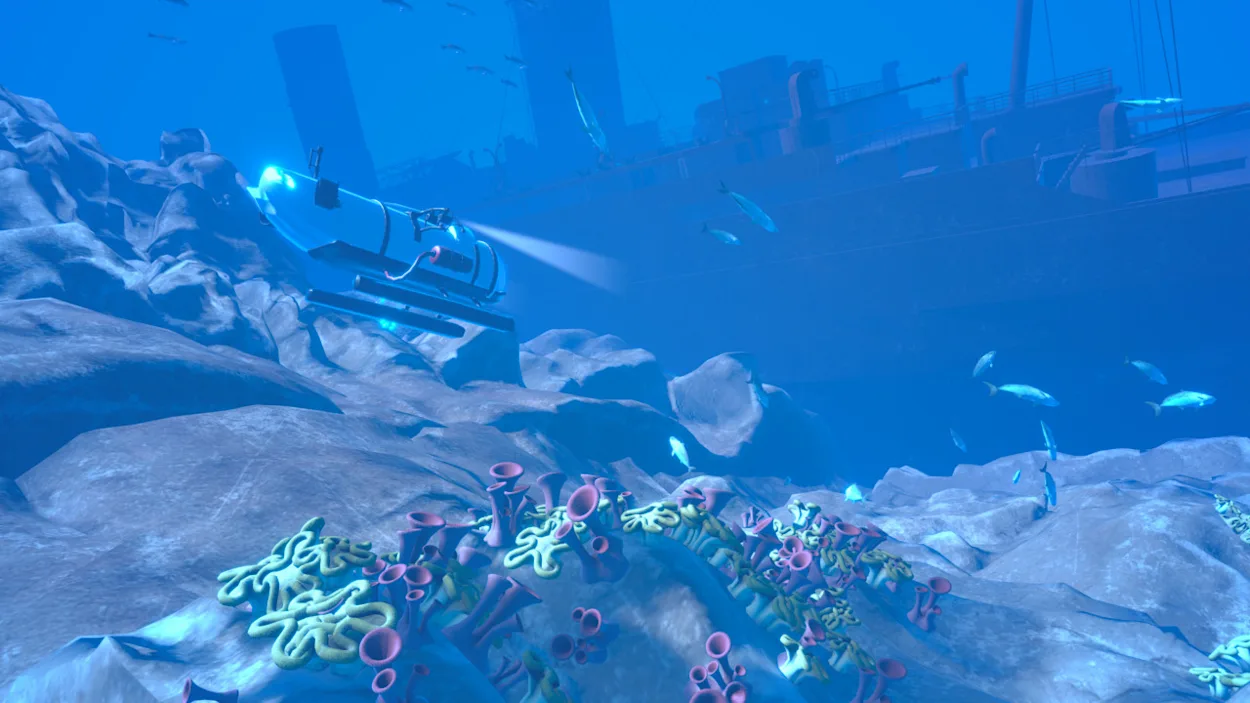
The recreated RMS Titanic wreck is the game’s most significant setting. Players can examine the ship in its current underwater state, scan areas of the wreck, and seek out artifacts and other details. The result is an exploration structure that connects place with history: the wreck is not presented only as scenery, but as the site of an investigation into a well-known tragedy.
Titanic historical exploration comes through the act of documenting findings and locating pieces of information tied to the vessel’s story. The game invites players to piece together a narrative from what they observe beneath the surface. That approach gives the wreck a sense of scale and consequence, while still keeping the player’s role grounded in the practical work of maneuvering, scanning, photographing, and collecting.
The wider underwater settings help prevent the experience from being defined by one location alone. Vibrant reefs and marine life contrast with the abyssal darkness around deeper sites, while ancient sunken artifacts and geological formations provide additional reasons to investigate. These locations support a discovery-oriented rhythm in which each dive can present a different environment, visual mood, or navigational problem.
5 Practical Dive Tips for New Explorers
- Learn the craft first. Spend time becoming comfortable with steering, positioning, and the onboard instruments before committing to longer dives. Familiar controls make close inspection and retrieval work much smoother.
- Use sonar often. Sonar is valuable for checking the surrounding space and identifying areas worth investigating, especially in darker water where direct visibility is limited.
- Practice careful maneuvering. Tight spaces demand patience. Move deliberately near wreckage and objects so the submersible is properly lined up for scanning or robotic-arm interaction.
- Watch essential reserves. Keep an eye on oxygen and battery levels, while remembering that repair systems also matter during extended expeditions. Plan the dive around the craft’s available resources.
- Do not rush locations. The strongest discoveries may come from close observation. Taking time to scan, photograph, and examine an area can reveal details that a quick pass would miss.
Release and Nintendo Switch Version Details
Submersible Simulator – Discover the Titanic into Ocean Switch NSP was released on October 13, 2023. GameToTop Corp. developed and published the title. The listed region is USA, and the game is available in English.
Its genre labels are Simulation, Training, Arcade, and Adventure, which reflects the blend of vehicle operation, exploratory tasks, resource awareness, and historical subject matter. The Nintendo Switch release is version 1.0 and has a listed file size of 585MB. For players interested in a slower-paced underwater journey built around navigation, scientific tools, and the enduring mystery of the Titanic, its premise is especially well suited to focused, methodical sessions.