Plants vs. Zombies: Replanted Switch NSP

Report Link Error
Select the broken download file, then submit the report.
Screenshots
About Game
Plants vs. Zombies: Replanted Switch NSP brings the familiar lawn-defense setup to Nintendo Switch: a peaceful suburban home faces a comic invasion of brain-hungry zombies, and the answer is a garden full of unusually capable plants. The premise is deliberately simple, but each advancing wave turns that simplicity into a lively tactical problem. Players must protect the house by building lines of defense before the undead can reach it.
Plants vs. Zombies: Replanted on Switch: The Core Lawn-Defense Premise
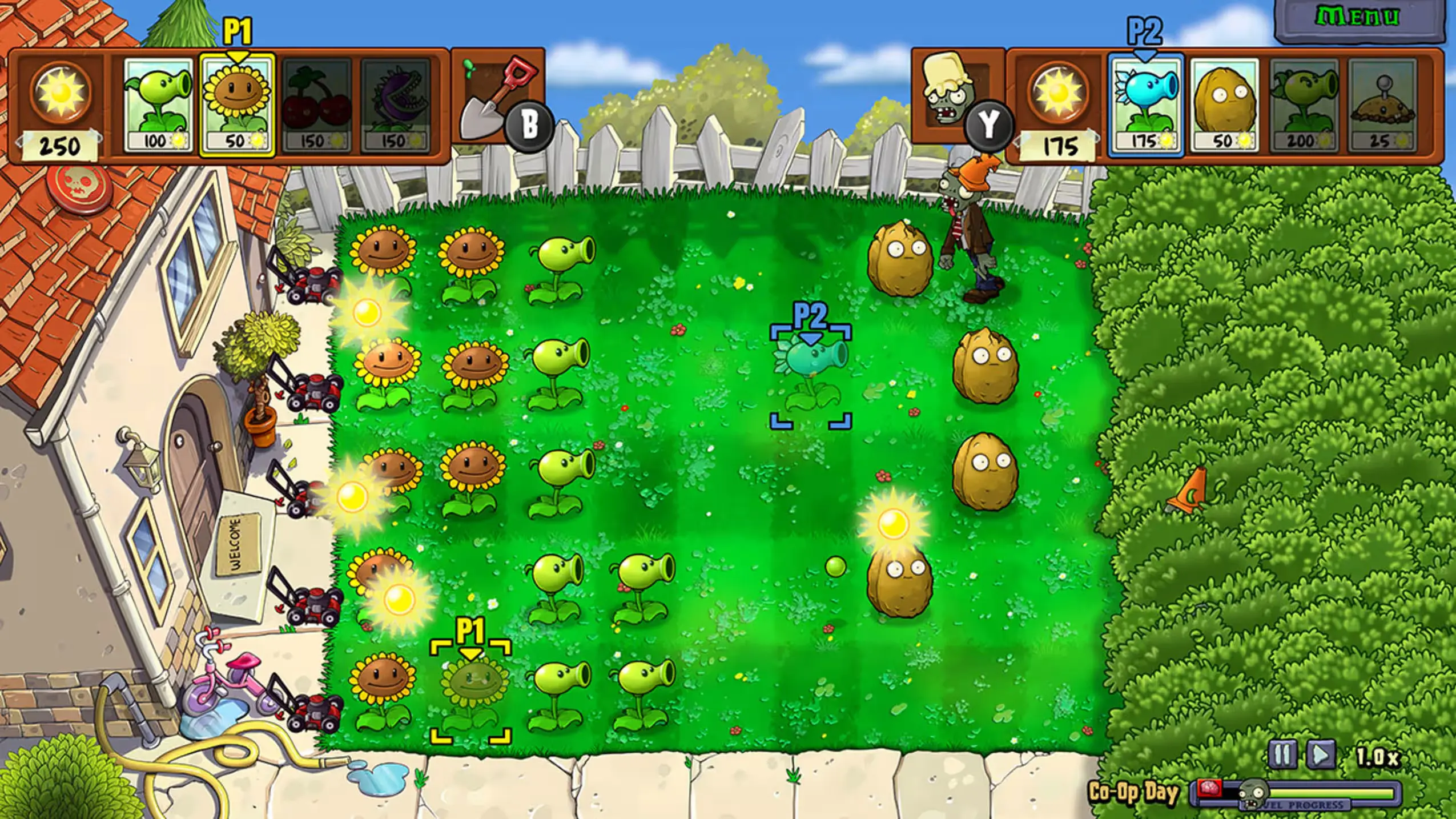
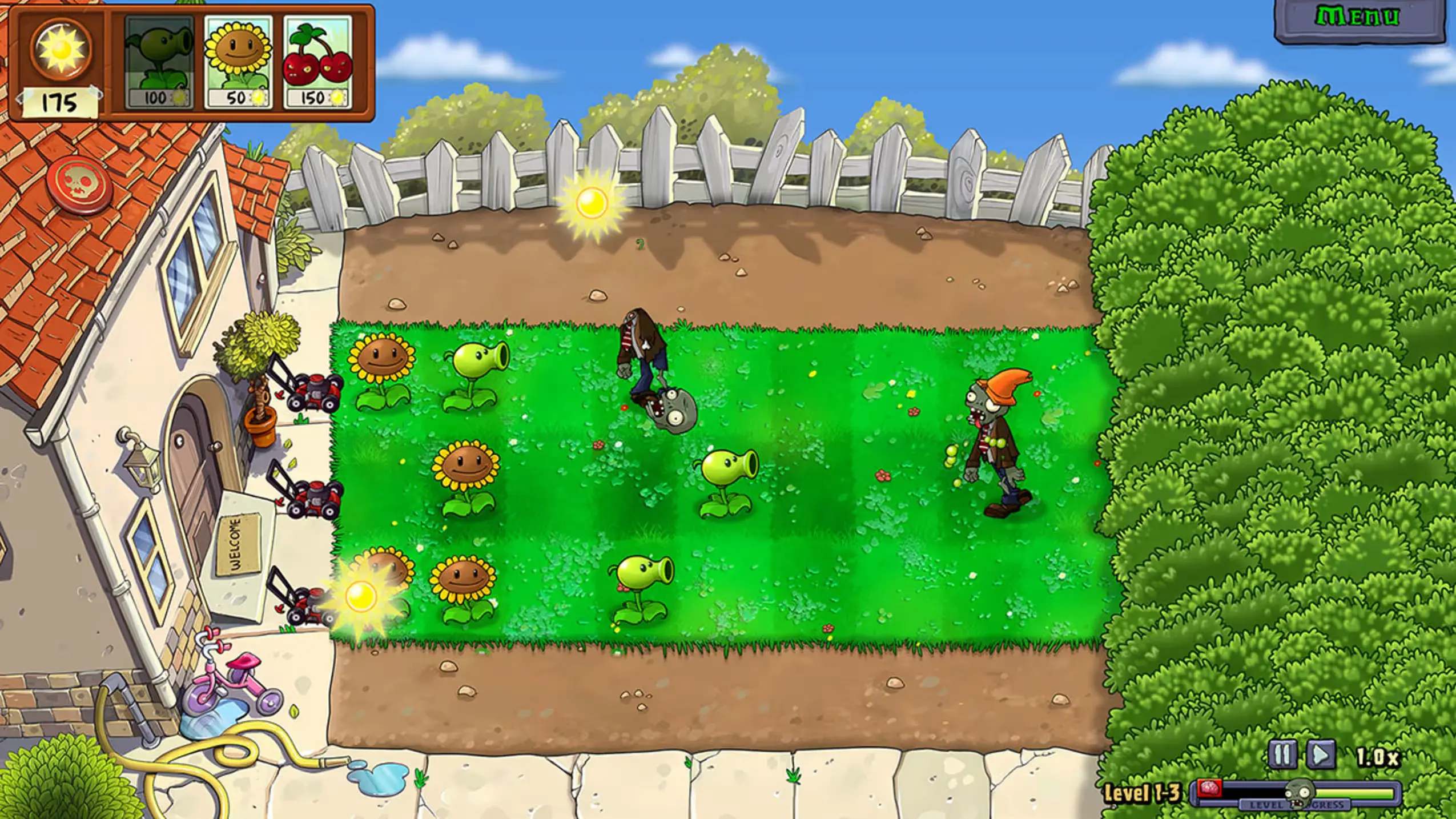
The world of Plants vs. Zombies: Replanted is built around cheerful absurdity. Zombies approach across the lawn in waves, while plants with offensive and defensive roles become the homeowner’s last line of protection. Pea shooters can provide direct pressure, sunflowers support the economy, and wall-nuts help slow down incoming threats. The aim is clear: stop the zombie invasion before the lawn’s defenses collapse.
That straightforward objective leaves room for a wide range of decisions. A zombie wave may look manageable at first, yet a poorly protected lane can quickly become a danger. Players are not simply filling every available space with plants; they are deciding which lanes need attention, which threats require a specific response, and how much of their available sun should be committed at any one time.
The tone keeps the stakes playful. The invading zombies are goofy rather than grim, and the game’s premise treats a suburban zombie apocalypse as a colorful, funny puzzle. This lighthearted atmosphere is part of the appeal: every defense can feel tense without losing the charm associated with the classic series.
Sun Economy and Plant Placement Drive Every Defense
Sun is the resource that shapes the pace of each match. Collecting it allows players to select and place more plants, making sun resource management the foundation of a dependable defense. Spending too quickly can leave a key lane exposed, while waiting too long can limit the offensive power needed to handle a growing zombie wave.
Plant placement matters just as much as plant selection. A defensive plant placed in the right lane can buy time for attackers behind it, while a productive sunflower placed early can support later decisions. The best arrangement is not always the most aggressive one. A lawn needs enough attack power to reduce the zombie advance, enough protection to absorb pressure, and enough sun generation to keep the plan functioning.
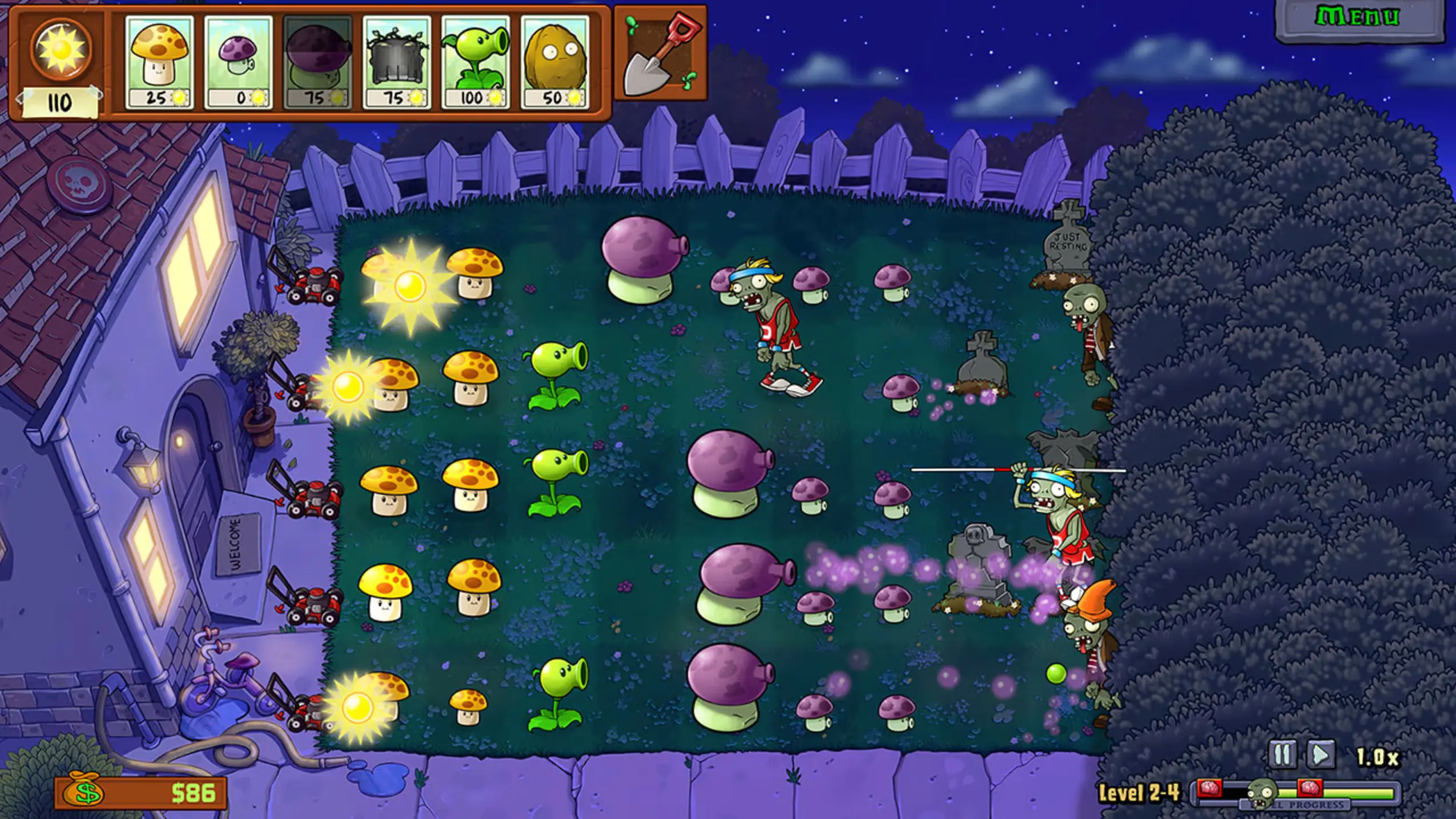
This is where the recognizable Plants vs. Zombies strategy loop takes shape. Different zombies have distinct traits, resistances, and weaknesses, so a plant that works well against one threat may not be the right answer to another. Pole-vaulting zombies, dancing undead, and other variations encourage players to read the lawn carefully rather than rely on a single fixed formation.
Environmental changes also affect the planning process. Defenses can take place during the day or night, in fog, and around a swimming pool. Each setting introduces its own strategic considerations, ensuring that the basic act of arranging plants remains flexible instead of repetitive.
5 Early Defense Priorities for New Players
- Build sun early. Collect sun consistently so there is enough flexibility to place useful plants as pressure increases. A strong economy supports every later defensive decision.
- Balance the lawn. Combine offense with protection rather than committing entirely to one approach. Attack plants help reduce the incoming wave, while defensive options can protect vulnerable lanes.
- Place with purpose. Consider each lane before planting. Positioning sunflowers, pea shooters, and wall-nuts carefully can make a defense more durable and avoid wasting valuable space.
- Watch zombie behavior. New zombie types are not just visual variety. Their traits and weaknesses can require different plant choices, so observing how a wave develops is an important part of the defense strategy.
- Adapt to the setting. Daytime lawns, nighttime conditions, fog, and pool environments bring different considerations. Adjusting the plant plan to the environment helps keep the defense responsive.
Why the Classic Formula Still Supports Strategic Play
The enduring strength of this tower-defense structure is how much decision-making it draws from a small set of rules. Zombies move forward. Plants hold the line. Sun limits what can be deployed. From there, each level becomes a test of timing, positioning, and adaptation.
Quick thinking has value, but planning matters too. Players must decide when to save resources, when to strengthen a weak lane, and when a newly introduced enemy calls for a different counter. A successful layout can be satisfying because it reflects several connected choices rather than a single reaction.
Progression also comes from encountering new plants and zombie variations. As challenges develop, players are asked to reconsider familiar patterns and make better use of the garden’s available tools. Adventure Mode, Mini-Games, Puzzle Mode, and Survival Mode add further ways to engage with the lawn-defense format, giving the game room for both structured progression and repeat sessions focused on particular challenges.
That makes the experience suitable for players who enjoy approachable strategy with clear rules. The premise is easy to understand, while the interaction between resource management, enemy counters, and placement gives more thoughtful players plenty to work with.
Nostalgia and Fresh Presentation in Replanted
The reference positioning for Plants vs. Zombies: Replanted Switch NSP emphasizes a modernized, fan-crafted take on the original formula. Its appeal is tied to preserving the series’ recognizable humor, familiar suburban setting, and strategic lawn battles while presenting them for modern play on a portable console.
The focus is not on replacing the classic concept with a dramatically different story. Instead, the central conflict remains the same: defend the home against waves of zombies with a garden of specialized plants. Familiar characters and scenarios remain part of that identity, while the reference also points toward refreshed content, subtle narrative touches, and enhanced presentation.
Visual and audio refinements are suggested as part of this updated treatment, but the key attraction remains the original balance of charm and tactics. The game’s personality comes from its contrast between colorful plants, silly zombies, and increasingly demanding defensive puzzles. That combination gives the nostalgic strategy game its distinctive mood.
Nintendo Switch Release Details for Plants vs. Zombies: Replanted
Plants vs. Zombies: Replanted is listed for a USA release on October 24, 2025. Electronic Arts is the publisher, and the title is categorized as a Simulation game for Nintendo Switch.
- Title ID: 01008C50239BE000
- Region: USA
- Languages: English, Japanese, Portuguese, Spanish, French, German, Chinese, and Traditional Chinese
- Firmware: 20.3.0.0
- File Size: 1.57 GB
With its approachable zombie-invasion premise, flexible plant defenses, multiple modes, and changing lawn conditions, Plants vs. Zombies: Replanted is positioned around replayable strategy rather than a single solution. The garden may look friendly, but every wave asks players to keep thinking ahead.