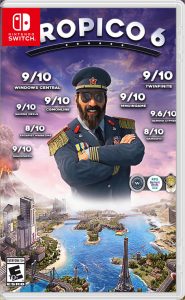
Tropico 6 – Nintendo Switch Edition NSP XCI
Report Link Error
Select the broken download file, then submit the report.


Screenshots
About Game
Tropico 6 – Nintendo Switch Edition NSP XCI casts the player as El Presidente, the central figure in a tropical nation whose history is shaped by planning, policy, and political survival. Its simulation and strategy framework follows an island state from early colonial rule into modern times, asking players to make choices that affect development, public confidence, and the character of each administration.
El Presidente’s Island Rule Across the Eras
The progression through the Colonial period and toward modern times gives each reign a sense of movement. Rather than telling one fixed linear story, Tropico 6 Nintendo Switch Edition provides a changing narrative framework built around the player’s decisions. The nation’s direction is not predetermined: construction priorities, faction relationships, economic choices, and responses to pressure all contribute to the course of El Presidente’s rule.
This structure supports a broad sandbox style. A player can concentrate on expanding an organized island economy, invest in public-facing development, or pursue a more forceful political approach. The game’s tone leaves room for the spectacle of presidential power, including palace customization and speeches delivered from the balcony, but those flourishes sit alongside practical responsibilities. A successful reign still depends on keeping the island functioning when demands become more complex.
Because decisions carry forward across multiple eras, progression is more than unlocking new possibilities. It is also about managing the consequences of earlier priorities. An island built around one source of income or one political constituency may need adjustment as new opportunities and problems emerge.
City Building Meets Political Strategy
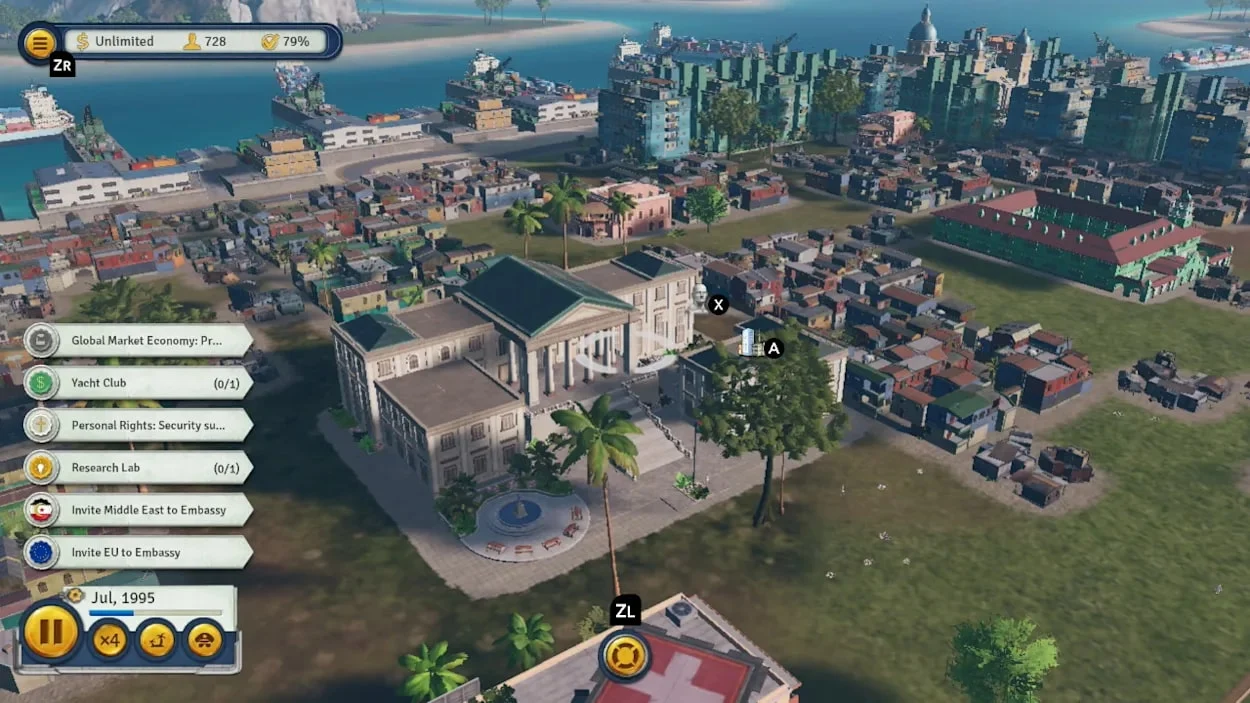
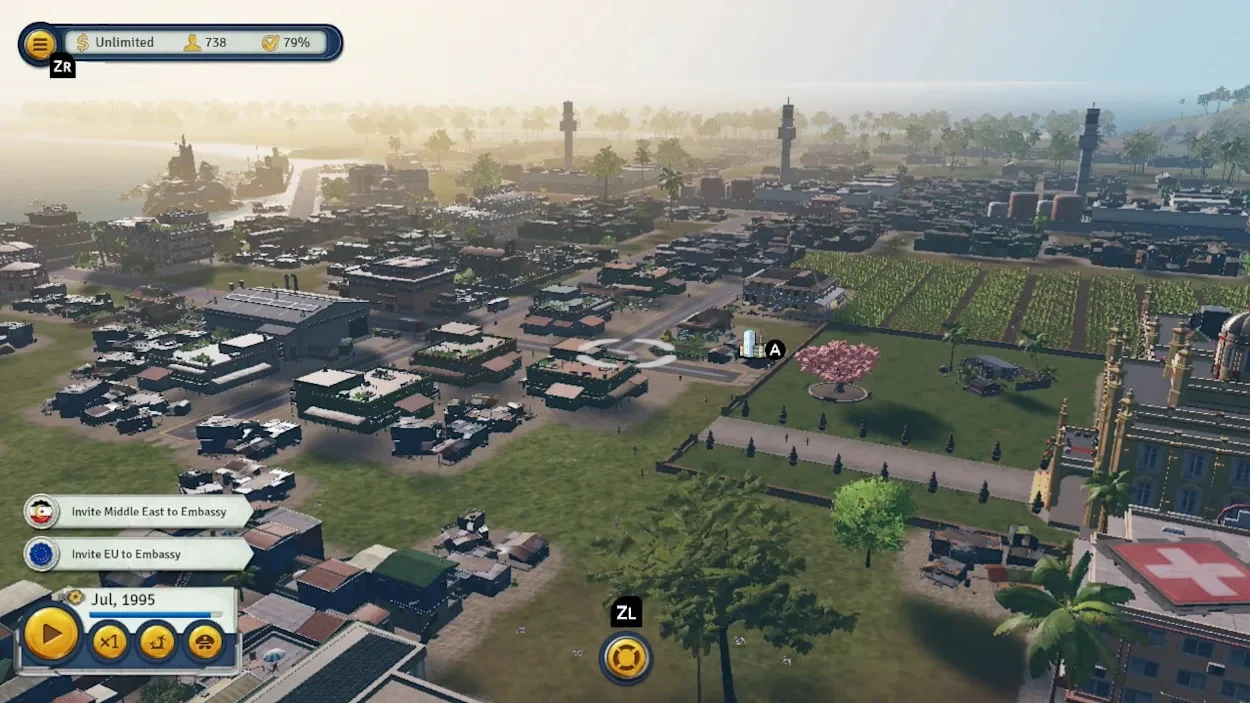
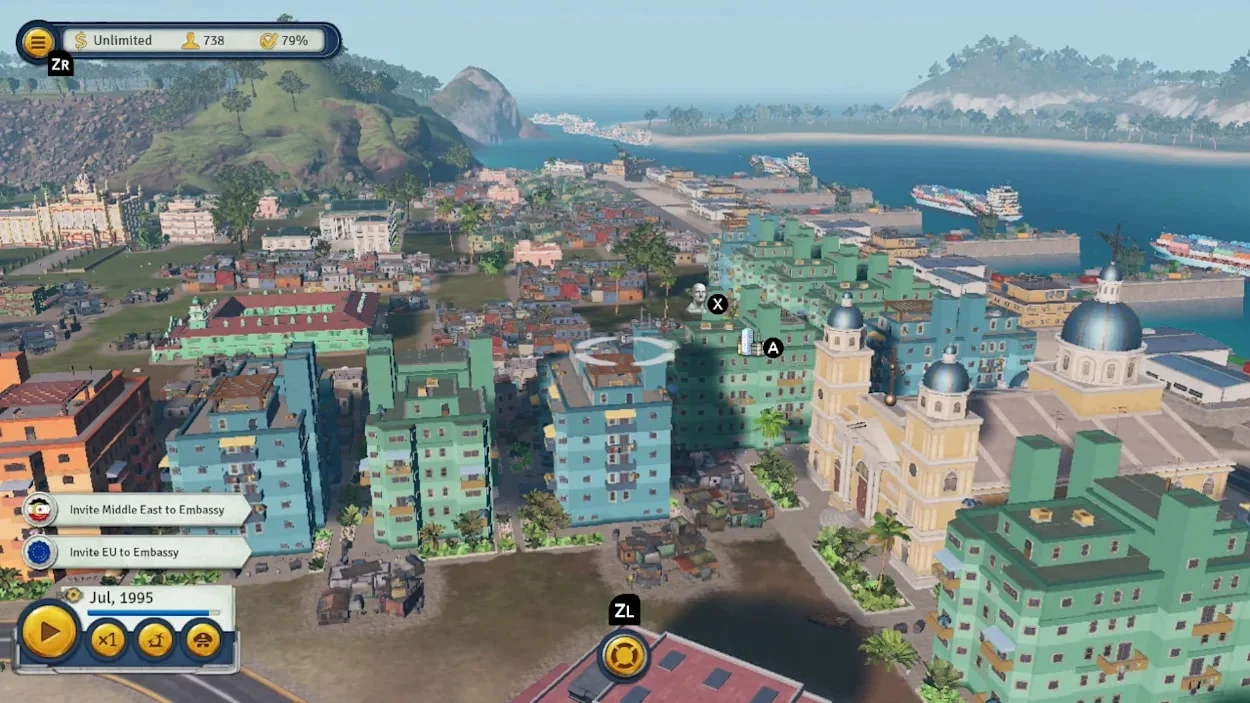
Tropico 6 gameplay combines a city-building simulation with political management. Players construct essential buildings and infrastructure, organize resource production, manage trade routes, and develop an economy through farming, industry, and tourism. Bridges and tunnels expand the options for connecting parts of the island, while each new project needs to fit into a larger plan for growth.
The strategy game element comes from the fact that construction is never purely decorative. Infrastructure supports citizens and production; production feeds trade and income; income helps fund further development. Decisions also carry political weight. A project that improves one aspect of island life may not satisfy every group watching El Presidente’s administration.
That makes the game suitable for players who enjoy interlocking systems rather than a narrowly scripted campaign. There is room to experiment with the identity of the nation, but the simulation asks for attention to finances, logistics, citizen needs, and the political climate. The island can look prosperous while still facing trouble beneath the surface.
Managing Citizens, Factions, and Public Approval
Citizen happiness is a continuing concern, not a single box to tick. The population’s approval can be affected by the broader condition of the nation, and political factions introduce competing expectations. The Intellectuals, Militarists, and Environmentalists represent different priorities, making compromise an important part of political management.
Tropico 6 factions give the nation a sense of internal pressure. Trying to keep every faction content is not presented as an easy or necessarily realistic goal. Instead, the challenge is to decide whose demands can be addressed, whose support is most useful, and when an unpopular decision may be necessary for a larger plan.
This tension gives public approval a practical role in the rhythm of play. Growth can create new demands, while dissatisfaction can become more serious when it is left unattended. Rebel uprisings are among the threats that can challenge El Presidente’s control, so political stability requires more than building a profitable economy.
Raids, Diplomacy, and World Wonders
Domestic planning is only one side of ruling the island. Tropico 6 raids allow agents to be sent on missions for resources or world wonders, extending strategy beyond the nation’s own borders. World wonders can raise the island’s appeal, while raids add another avenue for pursuing objectives that cannot be solved through local construction alone.
Diplomacy also matters. El Presidente must navigate global events and relations with superpowers, adding an external political layer to the city-building systems. These relationships sit alongside trade and resource planning, reminding the player that the island does not develop in isolation.
The result is a broader management experience in which domestic stability, overseas activity, and international relationships can pull attention in different directions. Natural disasters add further uncertainty, creating moments when an otherwise orderly plan must give way to immediate response.
6 Priorities for Stabilizing a New Tropican Nation
- Connect the island. Establish essential infrastructure early, using construction projects such as bridges and tunnels where they help link development and support future expansion.
- Create dependable income. Build an economy around farming, industry, tourism, trade routes, and resource production instead of relying on a single short-term solution.
- Watch citizen happiness. Treat public confidence as an ongoing responsibility, since dissatisfaction can undermine the stability needed for longer-term plans.
- Read the factions. Track the priorities of Intellectuals, Militarists, Environmentalists, and other political interests before committing to decisions that may intensify opposition.
- Advance capabilities. Research technologies and edicts to expand the nation’s options as it moves through new eras and faces more demanding conditions.
- Prepare for disruption. Keep resources and political attention available for crises, including natural disasters and rebel uprisings, rather than assuming prosperity will maintain itself.
These priorities do not prescribe one correct form of rule. They provide a practical foundation for adapting to the game’s changing pressures. The appeal of Tropico 6 strategy lies in that flexibility: an effective plan may need to change when a faction turns hostile, a crisis strikes, or a new era opens different paths for the nation.
Nintendo Switch Edition: Release and Game Details
Tropico 6 – Nintendo Switch Edition NSP XCI is listed as a Simulation and Strategy Game developed by Limbic Entertainment and published by KalypsoMediaGroup. Its verified release date is November 6, 2017. The listed regions are USA and EUR, with language support for English, Spanish, French, Italian, and Russian.
The Nintendo Switch Edition’s mix of construction, resource planning, faction politics, diplomacy, raids, and era-based progression makes it a natural fit for players looking for a management game with a political edge. Its replay value comes from the open-ended nature of El Presidente’s rule: different economic choices, faction priorities, and responses to events can produce a different path through the same island-building challenge.
Recommended Similar Games
 SD Gundam G Generation Genesis for Nintendo Switch NSP XCIView Game
 Princess Maker 2 Regeneration Switch NSP XCIView Game
 Digimon World: Next Order Switch NSP XCIView Game
 inKONBINI: One Store. Many Stories Switch NSPView Game
 F1 Manager 2024 Switch NSPView Game
 Railway Empire 2 – Nintendo Switch Edition NSPView Game