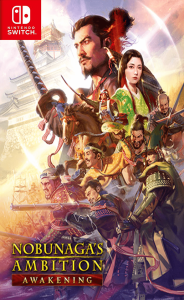
NOBUNAGA’S AMBITION: Awakening Digital Deluxe Edition Switch NSP
Report Link Error
Select the broken download file, then submit the report.


Screenshots

About Game
NOBUNAGA’S AMBITION: Awakening Digital Deluxe Edition Switch NSP places a campaign of national ambition in the fractured world of Sengoku-era Japan. Developed and published by KOEI TECMO Games, this strategy title asks players to guide a daimyo and clan through an age of civil war, competing territories, shifting loyalties, and long-term plans for Japan unification. Released on July 21, 2022, it supports Japanese and Chinese language options for the Asia and Japan regions.
Sengoku Japan as the Setting for a Unification Campaign
The Sengoku period provides the game with a natural sense of instability. Japan is divided among numerous daimyo, each seeking influence, security, and a path to greater power. That conflict gives every campaign a clear larger purpose: bring the country beneath a single banner while surviving the pressures of rival factions.
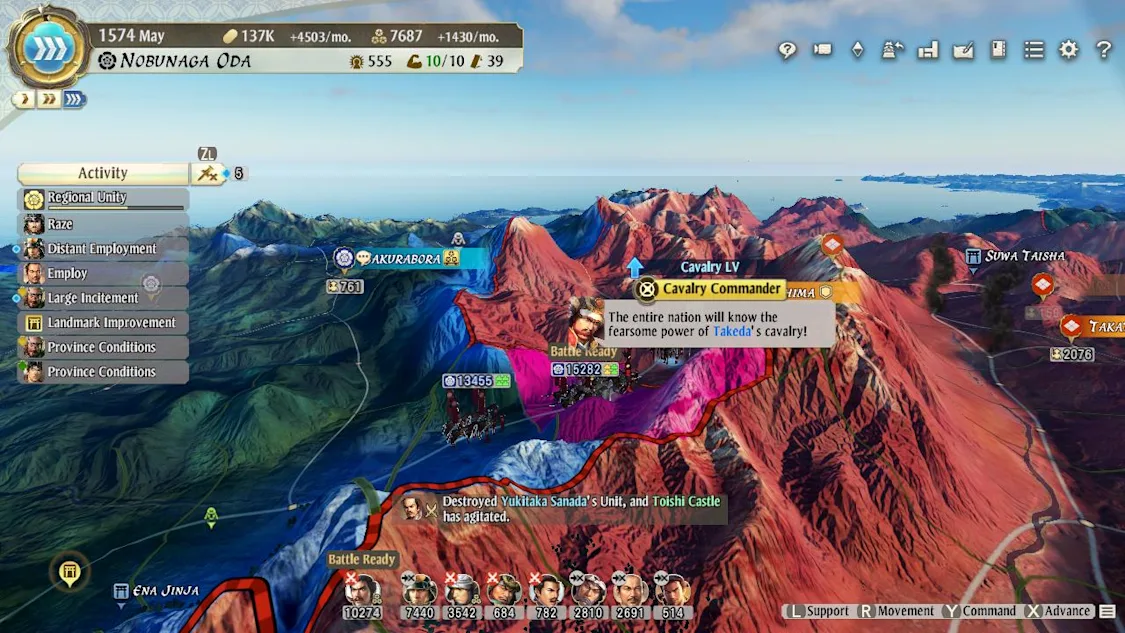
This is not simply a backdrop for isolated battles. The setting supports a broad strategic view of feudal Japan, where territorial control, political standing, and military readiness all contribute to a clan’s position. Maps and battlefields span diverse terrain, while castles become important objectives in the contest for expansion. The atmosphere comes from the tension between immediate threats and a distant ambition: a clan may have to defend its own borders before it can seriously consider unification.
Historical figures and pivotal moments are part of that drama, but the campaign is not restricted to repeating one fixed result. A player may take the role of a lord such as Oda Nobunaga, or direct another clan toward its own vision of the era. Sengoku Japan becomes a strategic stage where familiar historical pressures meet personal decisions.
Leading a Clan Through War, Politics, and Expansion
Clan management is central to the campaign. A ruler is responsible for territories, internal affairs, infrastructure, resources, and the forces needed to protect growing domains. Development matters because a prosperous base can support future campaigns, while poor preparation can leave an ambitious clan exposed when conflict begins.
Military campaigns are only one part of the work. Armies must be directed across the map, troop movement needs planning, and enemy castles can become targets for sieges as a clan expands. Resources and supply lines also affect the ability to sustain a larger realm. These systems encourage a measured approach in which conquest has to be supported by administration rather than treated as an end in itself.
Political intrigue adds another layer. Diplomacy can be used to form alliances, manage relationships with rival factions, or create opportunities for coordinated attacks. Espionage is also available for gathering intelligence and disrupting opposing operations. The result is a strategy campaign in which a lord’s authority is tested in council as much as on the battlefield. A declaration of war may be decisive, but so can the relationship that makes a border temporarily secure.
Historical Officers and Strategic Leadership
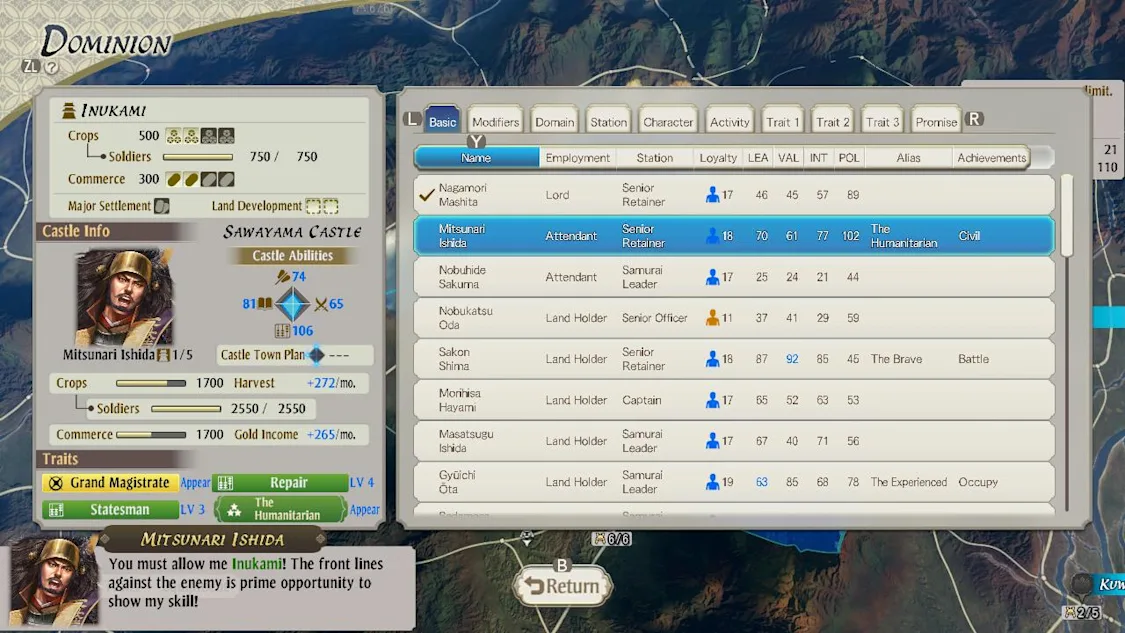
Historical officers give a clan more than a collection of armies. Officers have distinct skills and personalities, allowing leadership choices to influence how a faction approaches its wider strategy. Recruiting and assigning these figures becomes part of building an effective political and military structure.
The importance of officer skills fits the game’s larger focus on planning. A clan preparing for territorial growth may need capable leaders to support its objectives, while a ruler focused on internal development or diplomacy can shape decisions around the people available. Personalities also reinforce the sense that a campaign involves relationships, not only numbers on a map.
This approach gives strategic leadership a human dimension. The daimyo directs the broad course of the clan, but officers help define how that course is carried out. Their presence supports the historical tone of the setting while leaving room for players to organize their leadership according to their own priorities.
Player Agency and Alternate Sengoku Histories
The appeal of a Sengoku strategy campaign lies in the space between historical inspiration and player agency. Alliances, declarations of war, territorial decisions, and development choices can all influence the direction of a campaign. A faction may pursue a familiar route toward power, or it may produce an alternate history shaped by unexpected partnerships and carefully timed expansion.
That freedom gives the struggle for Japan unification more than one possible rhythm. One player may emphasize economic development before committing to major warfare. Another may look for diplomatic protection, then use a moment of weakness among rivals to begin a military push. The game’s turn-based strategic challenges allow those decisions to build over time rather than reducing the era to a single predetermined narrative.
NOBUNAGA’S AMBITION: Awakening Digital Deluxe Edition Switch NSP therefore frames history as a field of possibilities. The era’s conflict and notable figures remain important, yet the player’s command can change the balance among clans and create a different outcome from one campaign to the next.
5 Early Campaign Priorities for Aspiring Daimyo
A successful opening does not require immediate widespread conquest. The supplied gameplay guidance instead points toward patience, preparation, and a close reading of the political landscape.
- Build the economy. Strengthen territories through development and infrastructure so that resources can support a growing clan and its forces.
- Improve internal affairs. Give attention to prosperity and the condition of the domain before placing too much pressure on an undeveloped base.
- Secure the borders. Assess nearby rivals and prepare defenses so a clan is not pulled into damaging conflict before it is ready.
- Use diplomacy. Alliances can protect vulnerable frontiers, improve a clan’s position, and create openings for joint action against rivals.
- Plan expansion carefully. Consider troop movement, supplies, castles, and the consequences of each new territory before committing to a larger campaign.
These priorities suit the game’s balance of administration and warfare. Economic development is not separate from campaign strategy; it helps create the conditions for military action. Diplomacy is not merely a pause between wars; it can shape where and when a clan is able to expand.
What the Digital Deluxe Edition Adds to Awakening
The Digital Deluxe Edition includes additional scenarios and officer portraits. Both additions are relevant to a game built around repeatable strategic campaigns. Extra scenarios provide more starting situations from which to approach the Sengoku conflict, while additional officer portraits add further visual presence to the historical leadership at the center of clan decision-making.
For players interested in revisiting the era through different factions, plans, and political circumstances, those additions complement the game’s alternate-history potential. A new scenario can change the context in which a daimyo must make early choices, and the officer-focused presentation supports the importance of the people directing each clan.
With its focus on territorial development, diplomacy, historical officers, warfare, and the long pursuit of national rule, the game is suited to players who enjoy deliberate grand strategy. Its strongest appeal is the steady process of turning a vulnerable domain into a power capable of contesting the future of Japan.