Muse Dash Switch NSP
Report Link Error
Select the broken download file, then submit the report.
Screenshots
About Game
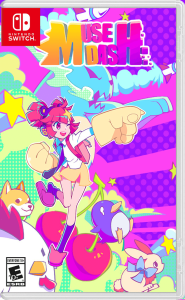
Muse Dash Switch NSP arrived on Nintendo Switch on June 20, 2019, bringing PeroPeroGames’ fast, colorful rhythm-action formula to the platform through publisher X.D. Network. Listed as an Action and Music release, it pairs beat-driven inputs with arcade-style combat, asking players to stay locked to each song while clearing enemies in motion. The game is available across Europe, the USA, and Japan, with English, Japanese, Korean, and Chinese language support.
Muse Dash on Nintendo Switch: Release and Game Overview
Muse Dash Nintendo Switch is built around an immediately readable idea: music sets the pace, and every successful input helps push a run forward. Rather than presenting rhythm play as a separate note chart, it frames the action through a side-scrolling sequence of attacks, dashes, incoming creatures, and score-building combos.
The result is an action music game with a deliberately energetic identity. Songs are not simply background accompaniment; they govern the timing of each encounter. A well-timed response clears an enemy and preserves momentum, while missed inputs interrupt the flow. That structure gives the game an arcade feel, with short-form challenges designed around accuracy, rhythm recognition, and repeated attempts.
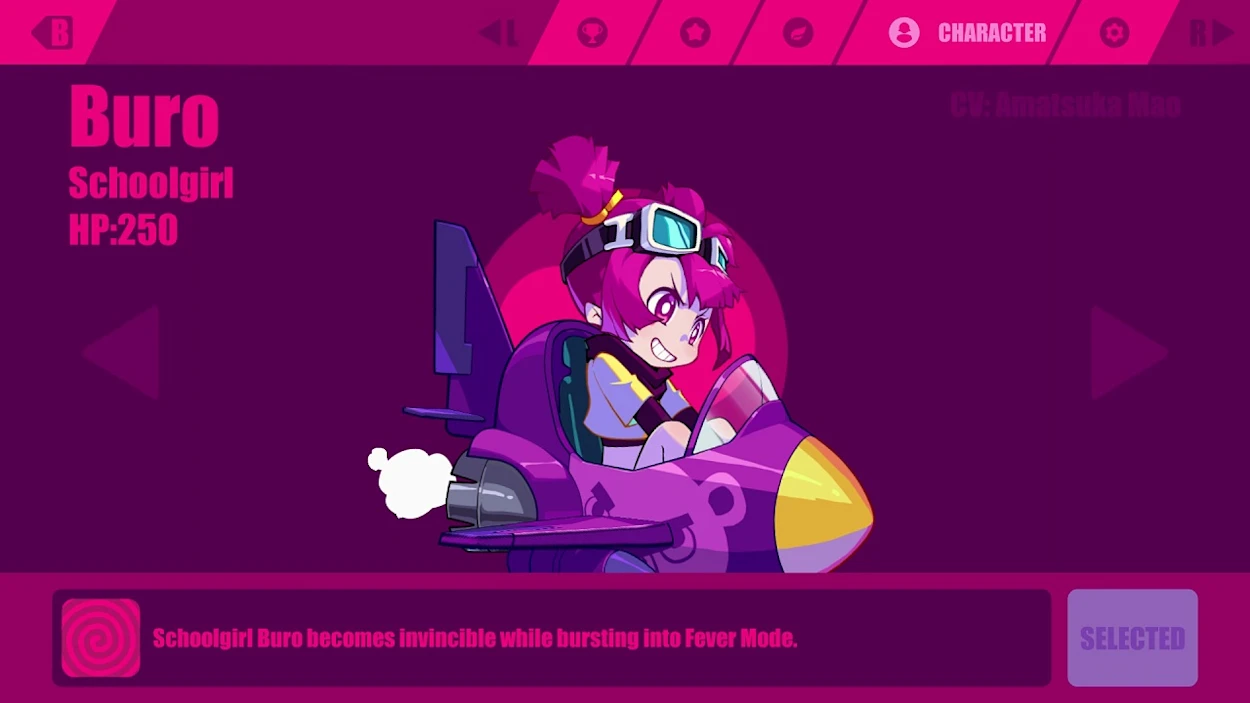
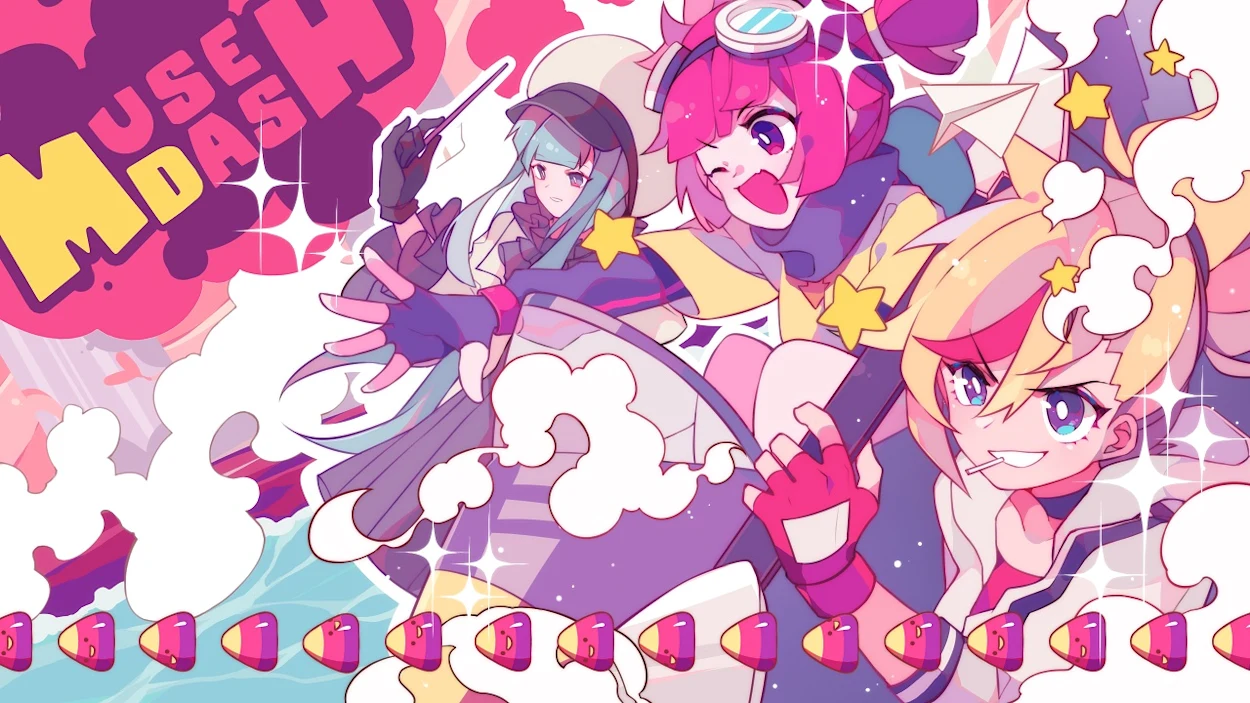
Its presentation supports that directness. The setting is colorful and music-infused, while the playable heroines Rin, Buro, and Marija bring different looks and personalities to the experience. The focus remains on responsive play and high-score pursuit rather than on lengthy story scenes or extensive narrative exposition.
A Rhythm Game Blended With Side-Scrolling Combat
Muse Dash gameplay combines rhythm action with the forward movement and enemy encounters associated with a side-scrolling beat em up. Players guide a chosen character through songs where foes arrive in sync with the music. Attacks and movement are timed to the beat, turning each level into a sequence of rhythmic decisions rather than a traditional free-roaming stage.
That fusion makes the music easier to read through action. Enemies serve as timing markers, and their placement gives each track a recognizable shape. Instead of only following abstract prompts, players respond to creatures and obstacles as they appear across the screen. The game’s combat language is simple, but the pressure rises when songs become faster, denser, or more demanding.
Accuracy and combos are central to the score system. Keeping a sequence intact rewards consistent timing, while learning a track’s arrangement can make later attempts more controlled. This gives familiar songs a reason to revisit: a completed run is not necessarily a perfected one.
- Follow the beat: Enemy appearances are synchronized with the music, making rhythm awareness essential.
- Protect the combo: Accurate inputs help sustain scoring momentum across a song.
- Read the lanes: Encounters arrive on two paths, requiring quick choices about where to respond.
- Learn the arrangement: Repeated play reveals patterns that can improve consistency on difficult tracks.
- Adjust the challenge: Difficulty levels range from easier options to master-level demands.
Two Lanes, Two Buttons, and Timing-Based Attacks
Muse Dash controls are intentionally accessible. The game uses a two-button control scheme, with inputs tied to attacking and dashing against threats on two lanes. This keeps the immediate barrier low: players can understand the basic relationship between the music, the lanes, and the attacks without a large number of commands to memorize.
The simplicity does not remove the challenge. A two lane rhythm game still asks players to process speed, enemy placement, and musical timing at once. On easier songs, the control structure provides a clear way to settle into the beat. On higher difficulties and faster tracks, the same limited inputs demand sharper reactions and stronger familiarity with the song’s patterns.
Timing attacks carry the experience. A tap or slide is most satisfying when it lands exactly where the music expects it, clearing a foe while maintaining the run’s pace. The controls make the game approachable for newcomers to rhythm action, yet the accuracy-based scoring leaves room for players who want to refine individual performances.
A Lighthearted World Built Around Music and Mischievous Enemies
The Muse Dash story is intentionally light. Its world is a bright realm shaped by music, and the heroines’ task is to protect its rhythm and restore harmony by taking on mischievous enemies and bosses. Rin, Buro, and Marija provide the playable center of that premise, but the game does not depend on a deep or sprawling narrative.
Instead, the music-infused world gives the arcade action a playful frame. Character interactions and personality help establish the tone, while enemy waves make the premise tangible during each song. The atmosphere is cheerful, energetic, and built to support the momentum of play rather than interrupt it.
This approach suits the format. The game can move quickly from one rhythm challenge to the next without requiring players to track extensive plot developments. Muse Dash enemies are part of the action language first: they arrive to the beat, form recognizable patterns, and create the targets that turn a song into a playable course.
Unlockable Songs, Characters, Outfits, and Elfin Companions
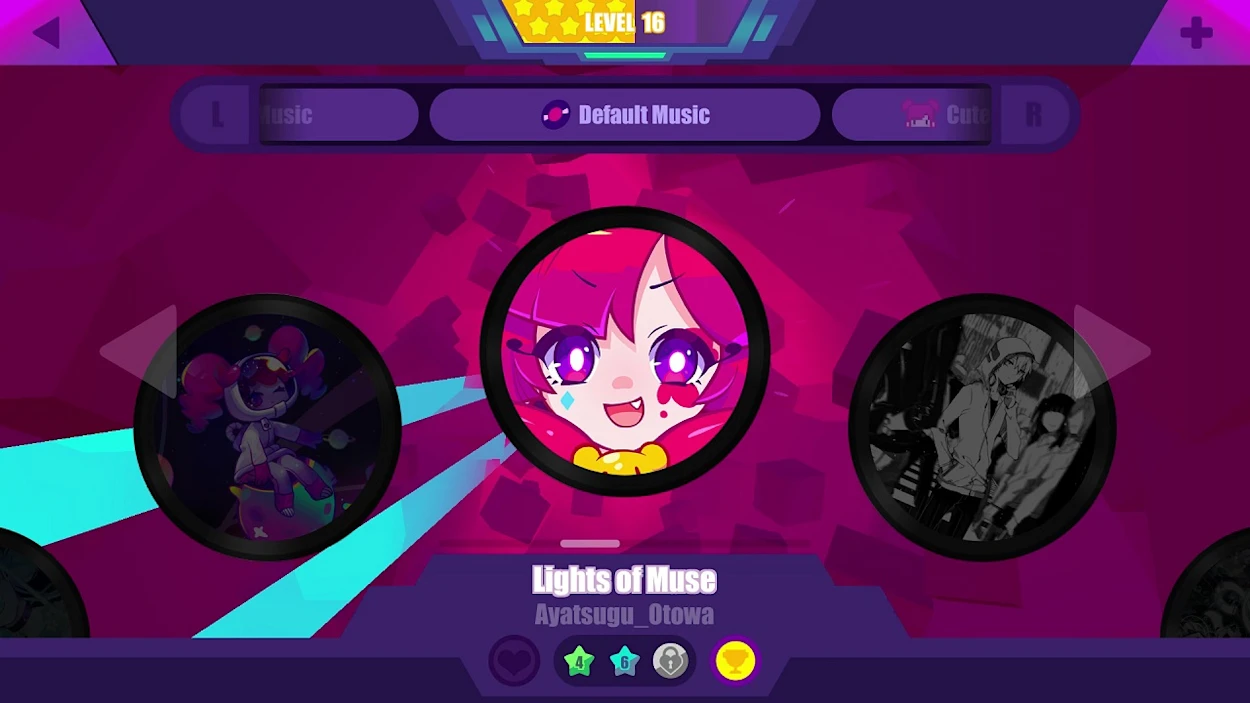
Progression gives repeated runs a practical reward beyond chasing a higher score. As players move through levels, they can unlock new songs, characters, outfits, and elfin companions. New tracks naturally expand the selection of rhythms and enemy arrangements, while characters and outfits add variety to the game’s presentation.
Muse Dash elfin companions also contribute gameplay value through different bonuses. Combined with the available characters, they encourage experimentation, particularly when a player is trying to find an approach that feels comfortable for a specific song or difficulty. The game does not require complicated systems to create this variety; its unlockables work within the same focused rhythm-action structure.
Muse Dash outfits and companions help make progression visible, while new songs create the clearest reason to return. Since each track has its own level design and enemy patterns, unlocking more content means encountering fresh timing problems rather than merely changing cosmetic details.
How Boss Battles Change the Rhythm Challenge
Boss encounters raise the stakes of the regular format. Where ordinary enemy waves test a player’s ability to keep pace, Muse Dash boss battles place greater emphasis on precise timing, pattern recognition, and rhythm game strategy. The player still works within the same two-lane, music-led system, but the encounter demands closer attention to what is coming next.
Learning Muse Dash patterns becomes especially valuable here. Repeated attempts allow players to anticipate attacks, understand enemy indicators, and prepare for difficult passages. Reflexes matter, but familiarity with the musical structure can be just as important. A player who knows when a pattern changes can respond with more confidence than one relying only on immediate reaction.
This balance between accessibility and escalation is a large part of the game’s replay value. Muse Dash Switch NSP can accommodate players who want bright, immediate rhythm action on easier difficulties, while also offering faster songs, stricter accuracy demands, combos, and boss patterns for those seeking a tougher score-focused challenge.