30XX Switch NSP

Report Link Error
Select the broken download file, then submit the report.
Screenshots
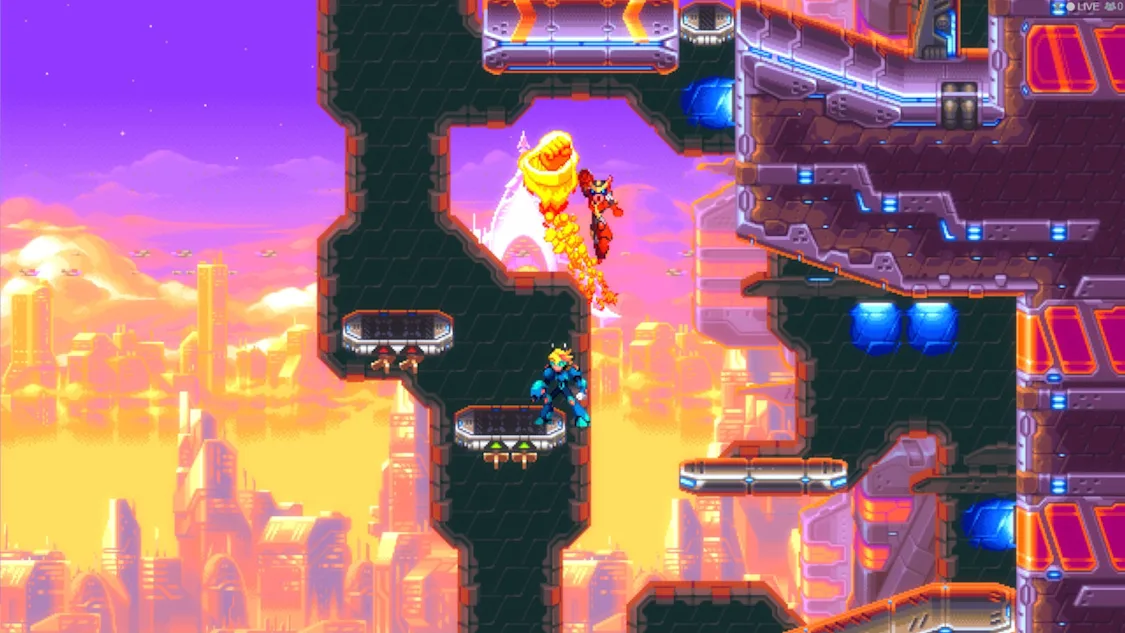
About Game
30XX Switch NSP arrived on Nintendo Switch on September 1, 2023, bringing Batterystaple’s fast-moving action-platformer format to Europe and the USA. Developed and published by Batterystaple, the game sits across Action, Arcade, and Platformer categories, but its appeal comes from the way precise movement, combat choices, and shifting level layouts keep each run in motion.
30XX on Nintendo Switch: Release and Game Details
The 30XX Switch release gives players a game built around repeatable runs rather than a fixed sequence of identical stages. Its September 1, 2023 release date places it as a modern take on a familiar kind of high-speed platforming: one where jumping, attacking, and adapting to new threats all happen quickly.
Batterystaple handled both development and publishing, keeping the game’s identity focused on its action-platformer structure. Players in the Europe and USA regions can access language options in English, French, German, Italian, Japanese, Korean, Portuguese, Russian, Simplified Chinese, and Spanish. That broad selection supports a game whose immediate demands are rooted in movement and combat, while its larger premise follows a troubled future shaped by a catastrophic event and rogue synthetic forces.
Nina and Ace enter that world as heroes facing corruption and a civilization thrown into chaos after a long period of peace. The setting gives the action a forward-driving purpose, but the moment-to-moment experience is defined less by long pauses and more by navigating dangerous stages, gathering upgrades, and surviving the next encounter.
Nina and Ace: Two Approaches to Every Run
The two playable 30XX characters give the game distinct combat rhythms. Nina is built around rapid-fire ranged attacks, making her a natural fit for players who want to pressure enemies from a safer distance while maintaining momentum through platforming sections. Her style emphasizes positioning: keeping space, firing quickly, and reacting to threats as they enter the screen.
Ace takes the opposite route. As a melee-focused fighter, Ace brings combat closer, asking players to engage enemies at short range and commit more directly to each exchange. This approach can make encounters feel more immediate, particularly when a stage’s changing layout limits room to maneuver.
The contrast between 30XX Nina and 30XX Ace is not simply cosmetic. Their different fighting styles encourage different decisions around enemy placement, available abilities, and collected upgrades. A run can therefore feel meaningfully different before procedural variation is even considered. Players interested in ranged control may gravitate toward Nina, while those who prefer close-quarters pressure can find a sharper fit in Ace.
Procedural Levels and Roguelike Replayability
30XX procedural generation is central to the game’s replay value. Level layouts and enemy placements change between playthroughs, so a route that felt comfortable in one run may demand a different response in the next. The structure keeps players from relying entirely on memorization. Familiar movement skills still matter, but awareness becomes just as important when platforms, hazards, and opponents appear in new arrangements.
That changing structure supports the game’s roguelike identity. Each attempt is an opportunity to experiment with upgrades, augmentations, abilities, and character builds. Some collected power-ups can create useful synergies, changing how a hero performs and giving players a reason to test combinations rather than settle immediately on one approach.
- New routes: Procedural layouts alter the path through a stage from run to run.
- Shifting threats: Different enemy placements require quick reassessment of positioning and attacks.
- Build experimentation: Upgrades and augmentations can shape a hero’s loadout in different ways.
- Character contrast: Nina’s ranged combat and Ace’s melee fighting change how the same challenge is approached.
- Learning through repetition: Failed attempts still build familiarity with movement, combat timing, and possible synergies.
For players drawn to 30XX replayability, the appeal is in that combination of consistency and surprise. The controls and core abilities provide a stable foundation; the level generation and evolving builds make the circumstances less predictable.
Precision Platforming Meets Fast-Paced Combat
30XX gameplay connects responsive movement with fast-paced combat. Platforming is not merely a way to travel between fights. It is part of the game’s challenge, as players move through demanding stages while accounting for enemies, attacks, and special moves. The result is an action platformer that rewards quick reflexes without separating traversal from combat.
Tight controls matter because the game repeatedly asks players to make small, immediate adjustments. A poorly timed move can leave a character exposed; a clean sequence can turn a difficult section into a controlled advance. Special moves and powerful attacks add another layer, giving players tools beyond basic movement and standard combat.
The changing levels make that skill requirement feel active. Rather than treating a stage as a solved obstacle once it has been completed, 30XX keeps asking players to apply their platforming instincts in altered situations. This makes it suitable for players who enjoy practicing execution, discovering stronger ability combinations, and improving their response to pressure.
Boss Encounters Across Major Zones
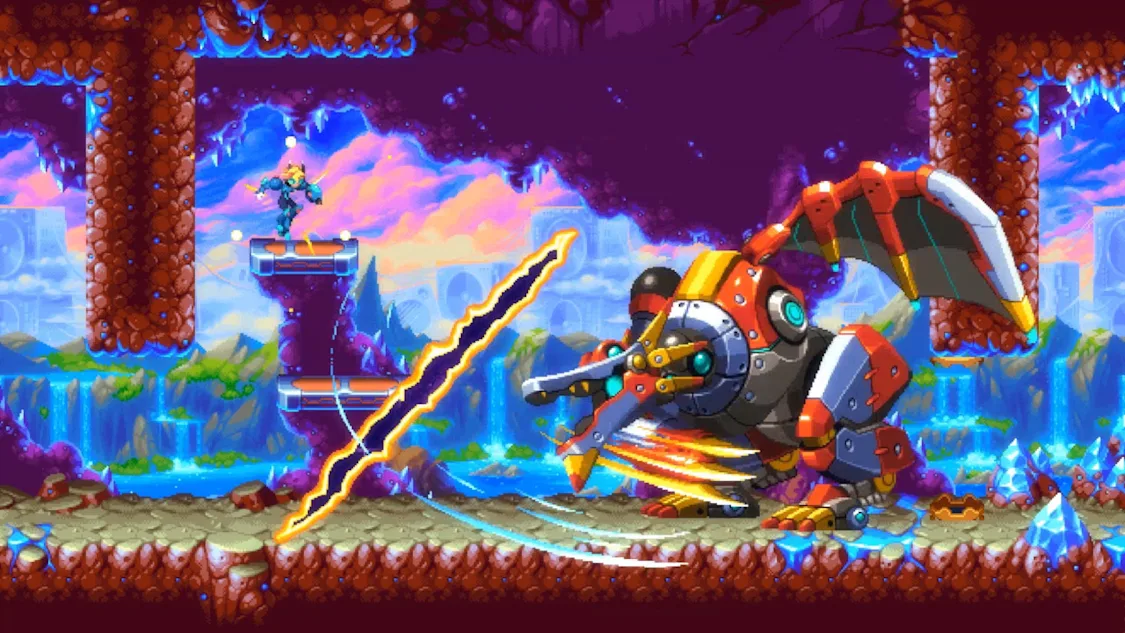
Major zones conclude with formidable 30XX bosses, giving each stretch of a run a clear test. These encounters bring together the game’s main demands: combat execution, movement discipline, and the choices made while assembling a build. A player’s upgrades and abilities may influence how they approach a boss, but success still depends on handling the fight effectively.
Bosses also give progression a useful sense of punctuation. Procedural stages can shift in layout and enemy placement, yet reaching the end of a major zone provides a recognizable goal. The battles challenge players to make use of what they have collected, identify useful synergies, and stay composed when precise platforming and aggressive threats overlap.
This is where 30XX strategy becomes practical rather than abstract. Choosing a character, collecting powers, and testing augmentations all lead toward encounters that ask whether those decisions work under pressure.
Cooperative Play in 30XX
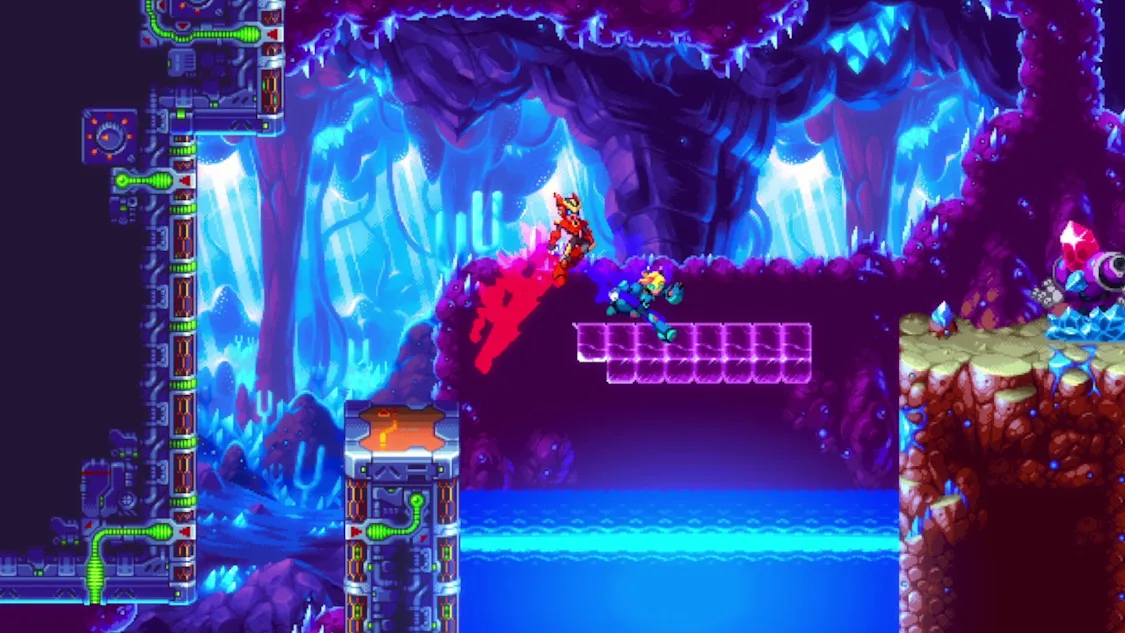
Cooperative multiplayer gives 30XX another way to approach its evolving challenges. In 30XX co-op, two players can tackle platforming sections, combat encounters, and major-zone bosses together. The feature suits friends who enjoy coordinating through changing stages rather than following a completely fixed route.
Co-op does not remove the game’s need for sharp reactions. Instead, it adds another source of possibility as players bring Nina’s ranged attacks or Ace’s melee focus into the same run. Shared challenges can make experimentation with abilities and loadouts more engaging, especially when a difficult zone calls for a fresh attempt.
For players seeking a demanding action-platformer with roguelike variation, 30XX Switch NSP offers a clear framework: responsive movement, two contrasting heroes, procedural stages, build-driven progression, boss tests, and cooperative play. Its changing runs give skill-focused players and two-player teams plenty of reasons to return.