Astrea: Six-Sided Oracles Switch NSP

Report Link Error
Select the broken download file, then submit the report.
Screenshots
About Game
Astrea: Six-Sided Oracles Switch NSP brings a distinctive strategy roguelike approach to Nintendo Switch. Rather than building a deck of cards, players assemble and refine a pool of dice, then roll and assign them during battles across a threatened star system. The result is a game built around chance, careful planning, and the need to keep a dangerous cosmic force under control.
Astrea: Six-Sided Oracles on Switch: A Dice-Driven Strategy Roguelike
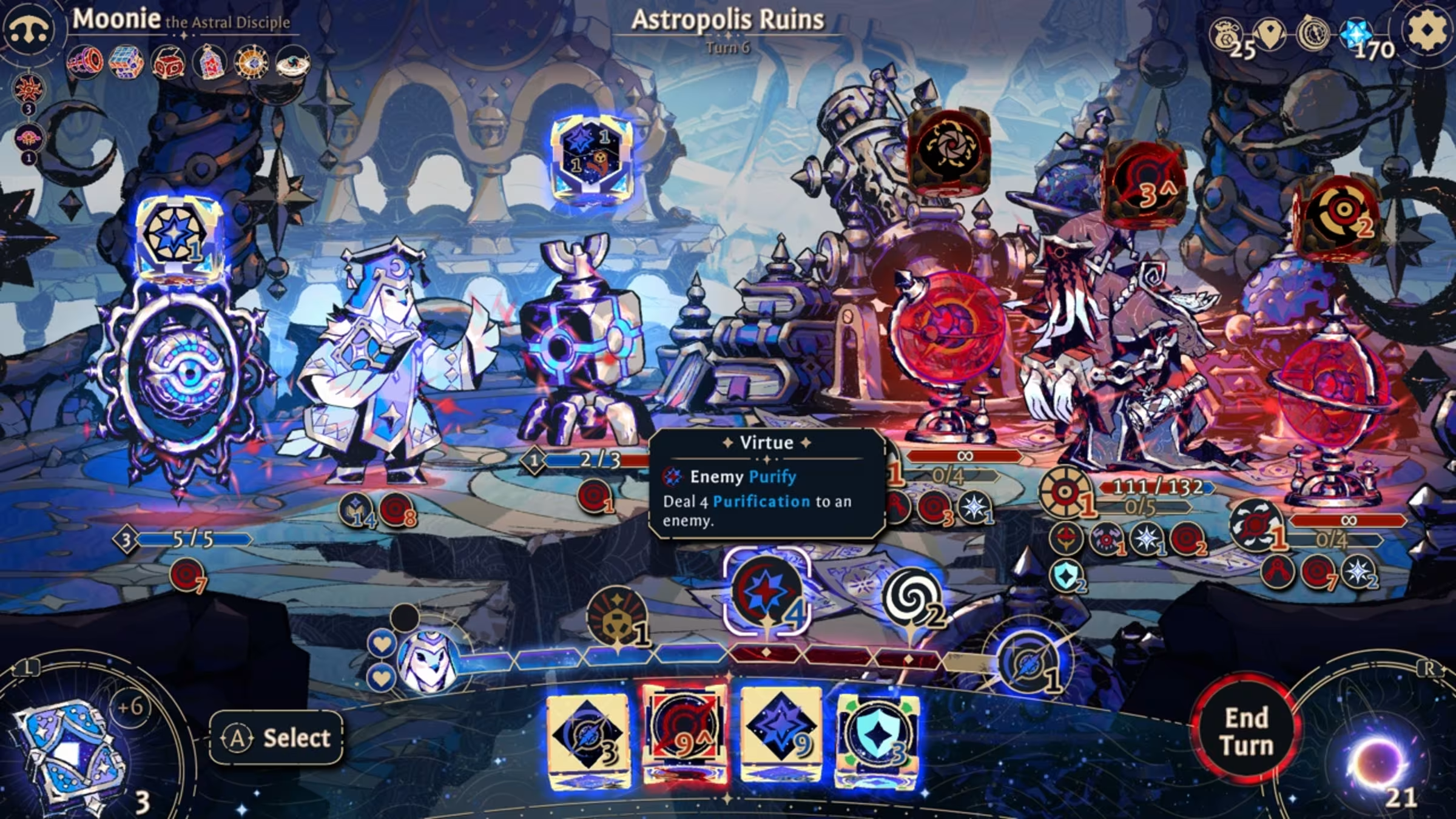
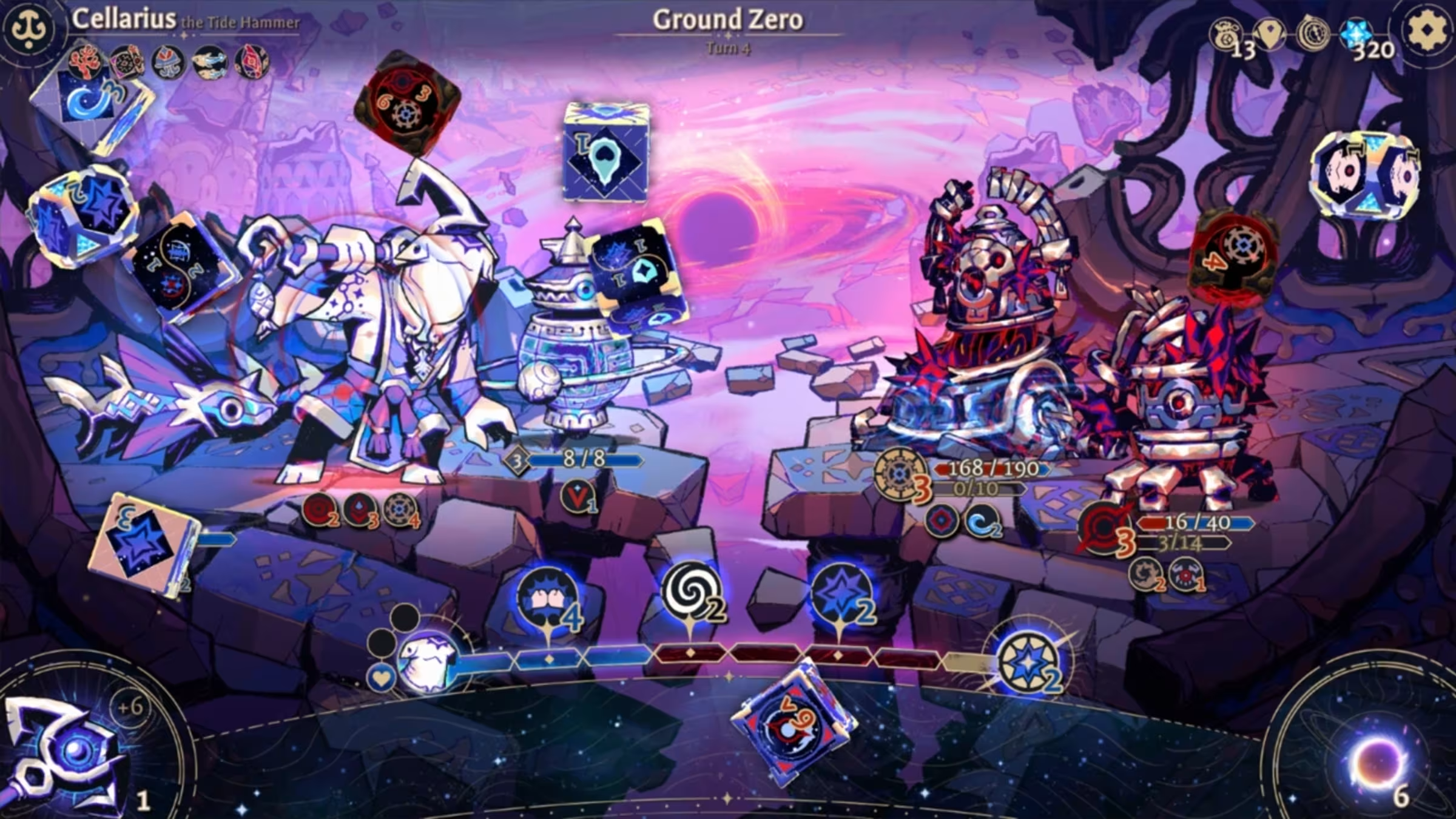
Astrea: Six-Sided Oracles is a strategy roguelike that reworks familiar deckbuilding ideas through dice deckbuilding. Each run revolves around a customizable collection of dice with different faces and effects. Those faces can support attacks, defense, healing, and purification, giving each roll several possible tactical uses.
The dice are not simply random tools. Players must decide which dice belong in their pool, how their effects complement one another, and where each roll should be assigned in an encounter. A useful face may be best saved for a particular enemy, a defensive option may protect against an immediate threat, and a purification result may be more valuable than direct damage. That shifting judgment is central to the game’s strategy.
Six distinct Oracles provide different starting points for these runs. Each Oracle has individual abilities, starting dice, and playstyles, allowing the same core rules to support different approaches. One run may lean toward a particular combination of effects, while another may require a different balance of defense, healing, purification, and offensive pressure.
Purifying a Star System Threatened by Corruption
The Astrea story is framed as a cosmic struggle against the Corruption, a destructive force that has tainted stars and placed the wider system in danger. Players take the role of one of six Oracles, beings tasked with cleansing this spreading threat and restoring balance.
The journey moves through a stellar setting filled with corrupted forces and celestial destinations. Its atmosphere comes from that central premise: a mission of purification unfolding across stars touched by dangerous energy. As players progress, they confront the effects of the Corruption while following narrative threads connected to its origins and the state of the system.
This setting also gives the game’s mechanics a clear purpose. Purification is not a detached status effect or a decorative theme. It is closely tied to the Oracles’ mission and to the decisions made in combat. The tension between a damaged system and the tools used to cleanse it helps the strategy feel connected to the world rather than separated from it.
The Risk-and-Reward Role of Corruption
The Astrea Corruption mechanic is a major source of pressure during a run. Corruption can harm the player if its meter fills, creating a condition that cannot be ignored for long. At the same time, certain powerful effects can become stronger through Corruption, making it more than a simple penalty.
That creates a genuine risk-reward strategy. Taking on Corruption may offer access to a stronger play in the present, but it can also make later turns more dangerous. A decision that helps defeat an enemy quickly may leave the Oracle in a worse condition for the next encounter. The best choice is therefore not always the safest one, nor is it always the most aggressive.
This design gives dice outcomes added weight. A roll must be judged not only by its immediate effect, but by how it affects the player’s condition and future options. Managing Corruption becomes part of building a stable run: powerful effects have value, but they need to fit the current level of danger and the available means of purification.
Why Purification Matters in Every Encounter
Purification is a core tactical priority in Astrea. Corrupted enemies can present dangerous problems during combat, and cleansing them helps prevent their harmful effects from becoming more difficult to manage. Direct offense still matters, but removing corruption can be the more important action when an encounter is beginning to spiral.
The player’s own condition is equally important. Since Corruption can accumulate, purification provides a way to manage the cost of risky choices and preserve momentum across a run. A strong combat plan is not only about ending the current battle. It is also about reaching the next one with enough control, health, and useful dice remaining.
This makes encounter decisions more layered than a simple attack race. Players may need to divide rolls between dealing with enemies, protecting themselves, recovering health, and cleansing corruption. The priority can change from turn to turn, especially when a favorable roll offers an opening that may not appear again.
5 Strategic Priorities for a Stronger Astrea Run
- Test Oracle synergies. Each of the six Oracles has distinct abilities, starting dice, and playstyles. Experimenting with their tools can reveal approaches that suit a particular run.
- Judge dice as a group. A single useful die matters, but combinations are more important. Consider how new faces support attacks, defense, healing, and purification together.
- Protect purification options. Cleansing corrupted enemies and managing personal Corruption can be more valuable than immediate damage when a battle is becoming unstable.
- Spend Corruption carefully. Stronger effects can justify added risk, but a rising Corruption meter creates pressure that must be answered before it becomes overwhelming.
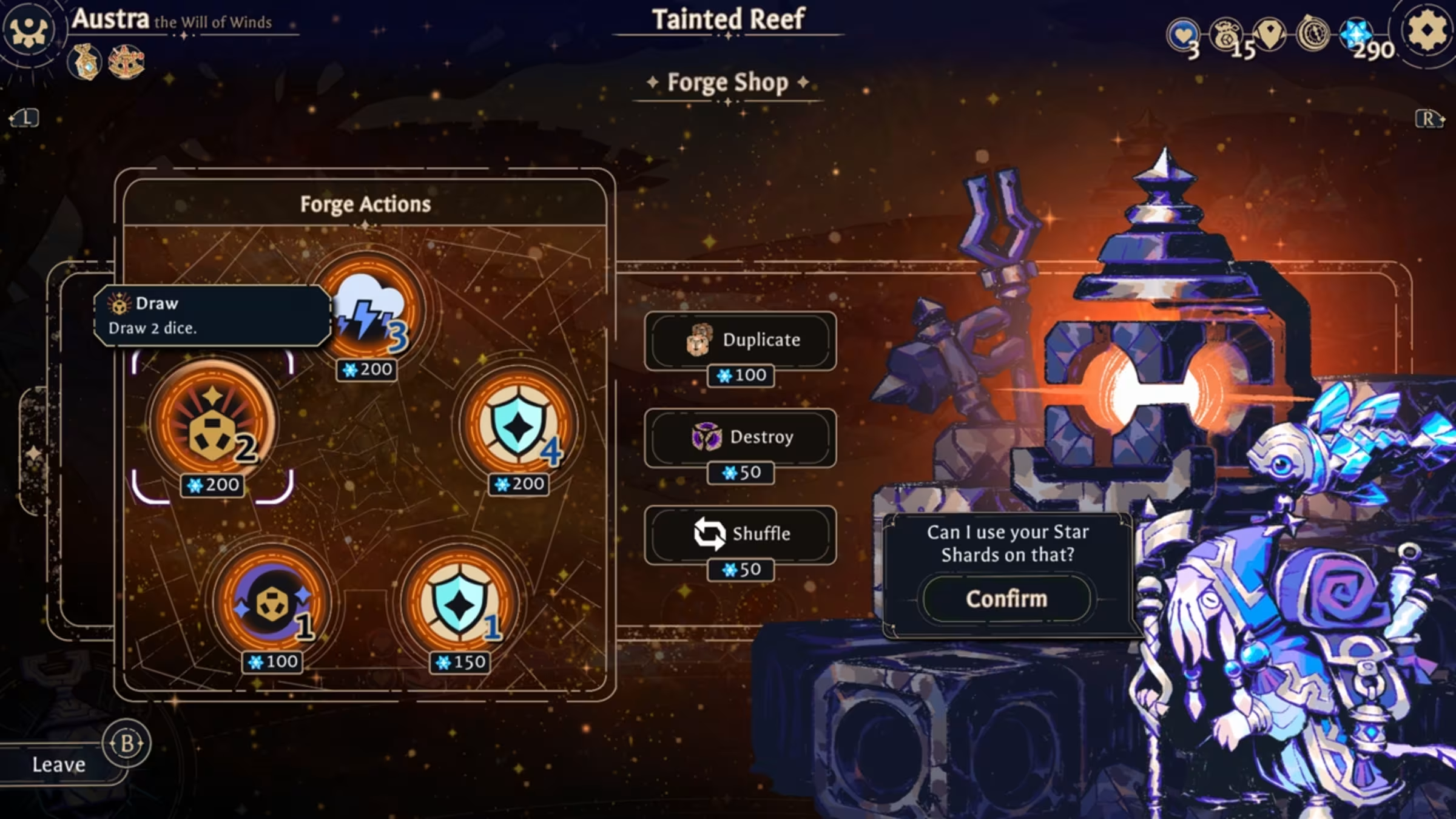
- Choose upgrades for the current build. Hundreds of upgrades, dice enhancements, and blessings can shape a run. The most useful choice is the one that improves the pool already being developed.
Procedural Runs and Long-Term Replayability
Procedurally generated journeys give Astrea replayability beyond a single route through its star system. Encounters, challenges, and upgrade opportunities change from run to run, so players must react to what appears rather than rely on one fixed sequence.
Progression during a run comes through improving dice, gaining blessings, and shaping a build around the opportunities available. Because those opportunities can vary, a strategy that worked previously may not be available in the same form next time. The changing pool of dice encourages adaptation, especially when an Oracle’s initial strengths point in a different direction from later upgrades.
Long-term play is further supported by the six Oracles and higher difficulties. Learning how each character’s abilities interact with dice combinations and Corruption management gives players more to master after an early success. Astrea: Six-Sided Oracles Switch NSP is best suited to players who enjoy roguelike runs where planning matters, randomness must be managed, and a strong build still needs careful decisions in every encounter.
Released in the USA on September 27, 2024, Astrea: Six-Sided Oracles is published by Akupara Games. It supports English, Japanese, Portuguese, Spanish, French, German, Russian, and Chinese.