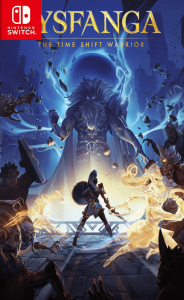
Lysfanga: The Time Shift Warrior Switch NSP
Report Link Error
Select the broken download file, then submit the report.


Screenshots
About Game
Lysfanga: The Time Shift Warrior Switch NSP frames its battles around a simple but demanding idea: a warrior can revisit her own previous actions and turn them into an advantage. Released in the USA region on May 14, 2024, the game combines Action and Strategy elements under publisher QUANTIC DREAM, placing quick attacks, careful planning, and time-based decisions in the same encounter.
Lysfanga: The Time Shift Warrior on Nintendo Switch at a Glance
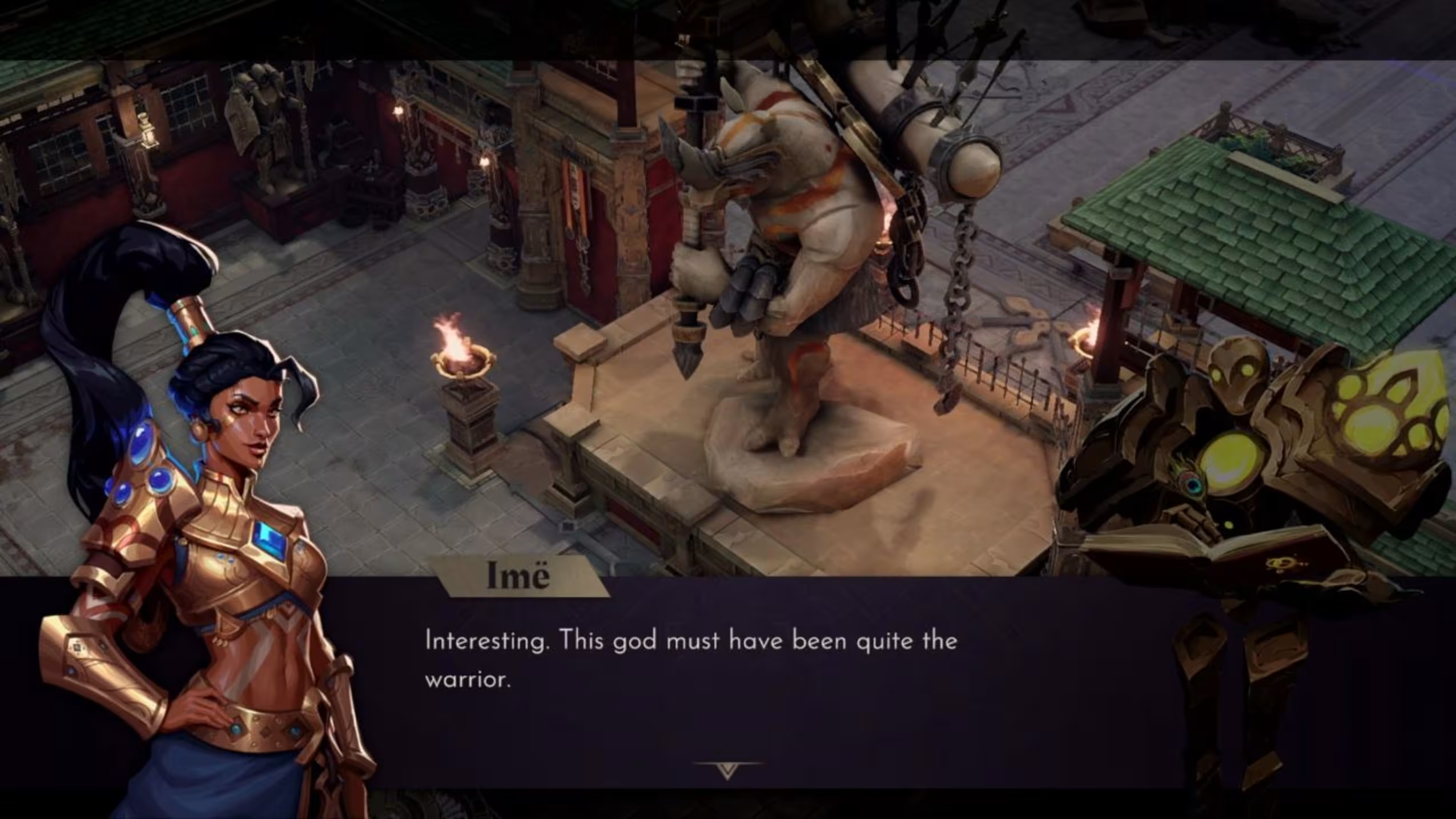
Set in the threatened realm of Antala, the game follows Lysfanga, a legendary protector connected to an ancient deity. The world is endangered by the Rifts, temporal anomalies that threaten to consume reality. As dangers from different eras emerge, Lysfanga’s task is to seal the Rifts and confront the forces behind the fractured timeline.
The Action and Strategy classification fits the structure of its combat. Lysfanga does not simply react to enemies in the moment; she can reconsider an earlier sequence, then bring that sequence back into a new attempt. This creates encounters where speed matters, but so does the ability to recognize patterns, prepare routes, and use past actions with purpose.
Supported languages include English, Japanese, Spanish, Portuguese, French, German, Italian, Russian, Korean, Simplified Chinese, and Traditional Chinese. The game’s verified release information lists a May 14, 2024 launch date, USA region, and QUANTIC DREAM as publisher.
How Time Rewinding and Remanants Shape Combat
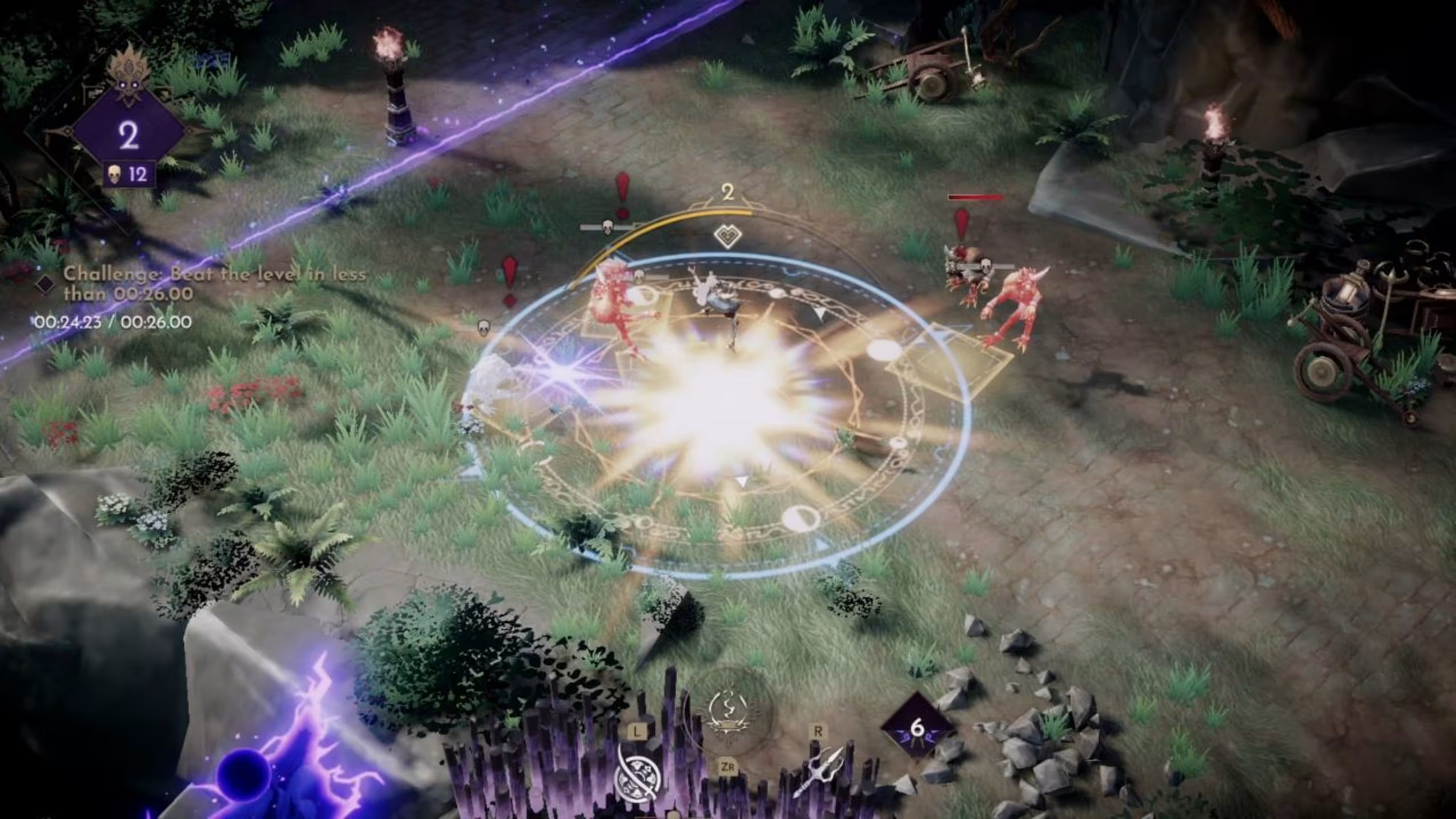
The defining mechanic is time rewinding. Lysfanga can return to an earlier point in an encounter and create remanants, spectral versions of herself that repeat actions performed in the previous attempt. A remanant can retrace a path, attack the same targets, or hold position while the current Lysfanga takes a different role.
That structure changes the meaning of failure and repetition. Replaying a sequence is not only a chance to improve timing; it can become part of the solution. An earlier run might be used to clear space, draw enemy attention, or begin a combination. On the next run, Lysfanga can work alongside that recorded action rather than replacing it.
These temporal clones make combat feel like a layered sequence of decisions. The player must consider what an earlier version of Lysfanga will do, where it will move, and how its repeated actions will affect the battlefield. A useful recording can create an opening that would not exist if Lysfanga fought alone.
Action Meets Strategy in Every Encounter
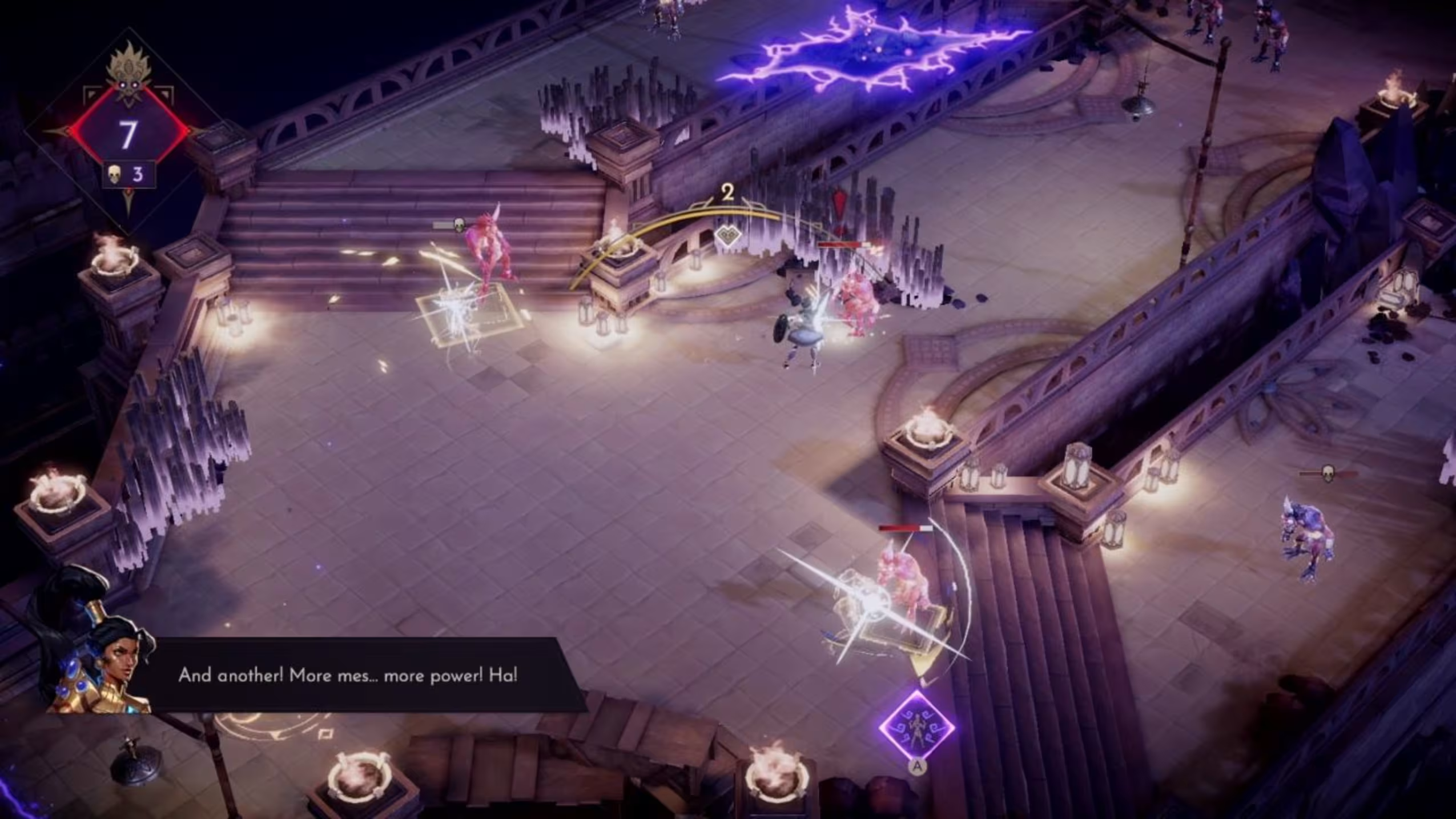
Direct combat remains important. Lysfanga must attack quickly and precisely while managing enemies that can pressure her from several directions. Yet enemy positioning gives each fight a strategic dimension. A crowded route, an approaching group, or an opponent blocking a narrow space can require a plan before a strong attack is enough.
This is where the game’s Action Strategy approach becomes clear. Timing an attack matters, but timing it in relation to a remanant matters more. A prior version of Lysfanga can engage one side of a group while the present version moves around the other side. A recorded sequence can also set up damage before the current run reaches the same area.
Encounters are presented as tactical challenges rather than simple tests of reflexes. Anticipating movement, deciding when to rewind, and choosing how to divide attention between present and past actions all contribute to success. The result is a combat loop built around observation, adjustment, and execution.
Using Temporal Clones for Attacks, Distractions, and Choke Points
Remanants have several practical uses in battle. One is building combat combos: an earlier Lysfanga can repeat attacks against a target while the current version joins in or follows with a different move. Coordinated strikes can help overwhelm enemies that are difficult to handle in a single pass.
They can also function as distractions. If a remanant is positioned to engage part of an enemy group, the current Lysfanga may have room to approach from another direction or focus on a more urgent threat. This is especially valuable when a fight demands attention across more than one point on the field.
Narrow routes offer another tactical opportunity. A remanant can hold a choke point while Lysfanga deals with threats elsewhere, giving the player a way to control movement instead of being surrounded. The strongest temporal clone strategy is not merely creating more attackers. It is assigning each version of Lysfanga a job that supports the rest of the plan.
In Lysfanga: The Time Shift Warrior Switch NSP, this makes repeated attempts feel purposeful. A prior sequence can become a resource, and a carefully chosen rewind can turn a difficult encounter into a coordinated response.
Boss Battles That Test Time-Shift Tactics
Large-scale boss fights raise the stakes of the time-shifting system. These encounters call for precise combat as well as creative use of remanants. A boss cannot be approached only as a target for direct attacks; the player must find moments to position temporal clones, repeat useful actions, and create safer opportunities for Lysfanga herself.
The challenge comes from combining discipline with experimentation. A poorly placed remanant or mistimed sequence may leave little room to respond, while an effective recorded run can support a stronger follow-up. Boss battles therefore reinforce the game’s central idea: knowledge gained in an earlier attempt can be transformed into a tactical advantage in the next one.
5 Time-Shift Combat Priorities for New Players
- Read the battlefield. Watch enemy movement before committing to a route. Knowing where opponents gather, advance, or block access makes rewinding more useful.
- Record meaningful actions. Use earlier runs to create attacks, movement paths, or defensive positions worth repeating through remanants.
- Give each remanant a purpose. Coordinate past actions with the current Lysfanga instead of letting temporal clones repeat moves without a clear role.
- Use space carefully. Positioning can support attacks, distractions, and control of choke points, particularly when enemies threaten to surround Lysfanga.
- Experiment with time-based abilities. The game encourages testing different sequences, combat skills, and approaches to find effective answers to difficult encounters.
The game is suited to players who enjoy action combat but also want encounters that reward planning and revision. Its fractured-world premise, ancient ruins, futuristic locations, exploration, hidden secrets, and equipment provide a setting for the time-shift mechanic, while its replayable combat structure gives players reason to revisit a challenge with a more deliberate sequence in mind.
Recommended Similar Games
 DOOM 3 Switch NSPView Game
 Avatar The Last Airbender: Quest for Balance Switch NSP XCIView Game
 Boti: Byteland Overclocked Switch NSPView Game
 Ys Memoire: Revelations in Celceta Switch NSPView Game
 Wizard of Legend 2 Switch NSPView Game
 METAL GEAR SOLID 4: Guns of the Patriots – Master Collection Version Switch NSPView Game