Galactic Wars: Defend Your Star Worlds Switch NSP

Report Link Error
Select the broken download file, then submit the report.
Screenshots
About Game
Galactic Wars: Defend Your Star Worlds Switch NSP arrived on February 8, 2024, bringing an Action, Simulation, and Strategy blend to Nintendo Switch. Developed and published by Gogame Console Publisher, it places players in a science-fiction conflict built around fleet command, defensive planning, exploration, and the survival of scattered human worlds. The game is available in Europe and the USA, with English language support.
Galactic Wars: Defend Your Star Worlds at a Glance
Galactic Wars: Defend Your Star Worlds is a Nintendo Switch strategy game with a broad battlefield. Its premise moves between large-scale galactic pressure and immediate tactical choices: building defenses, managing resources, expanding to new planets, and directing ships against hostile forces.
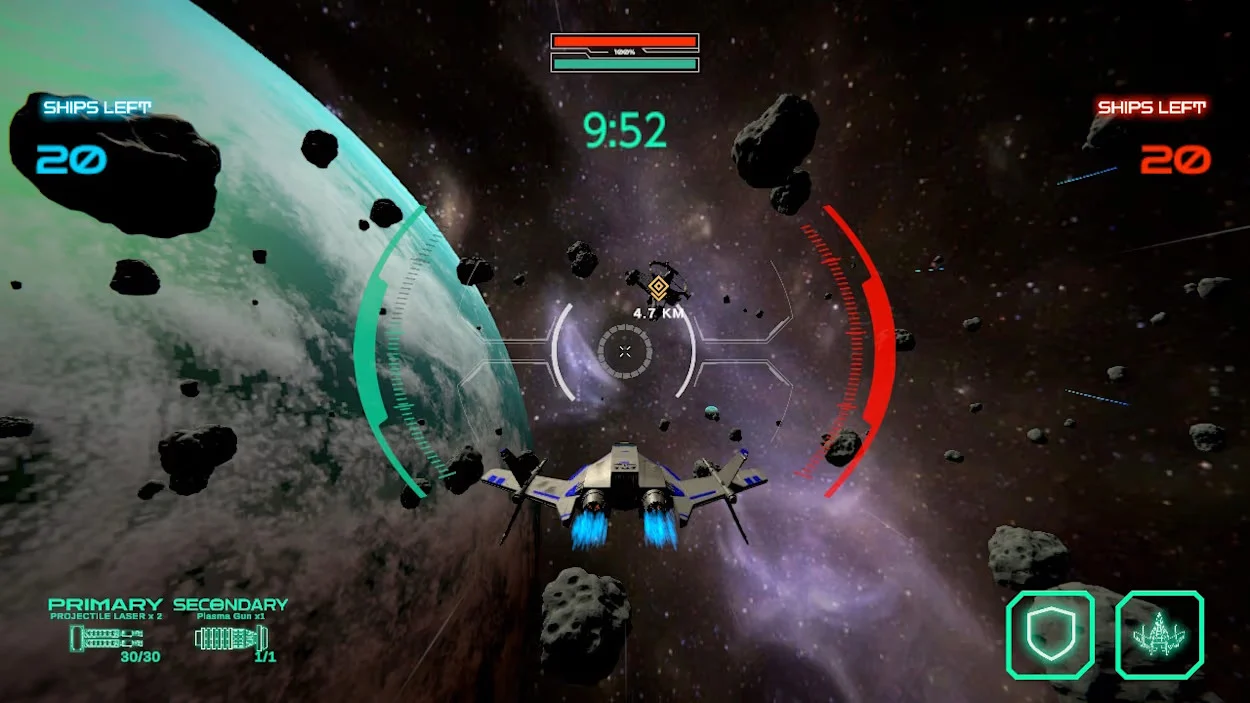
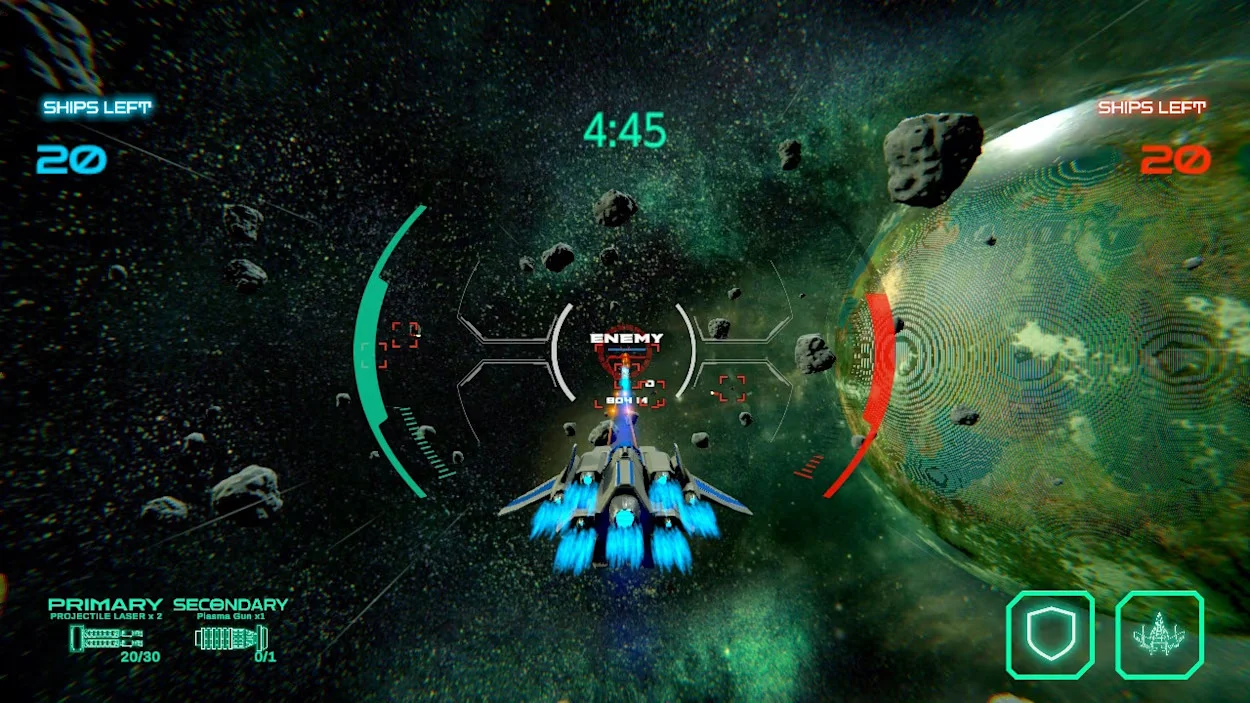
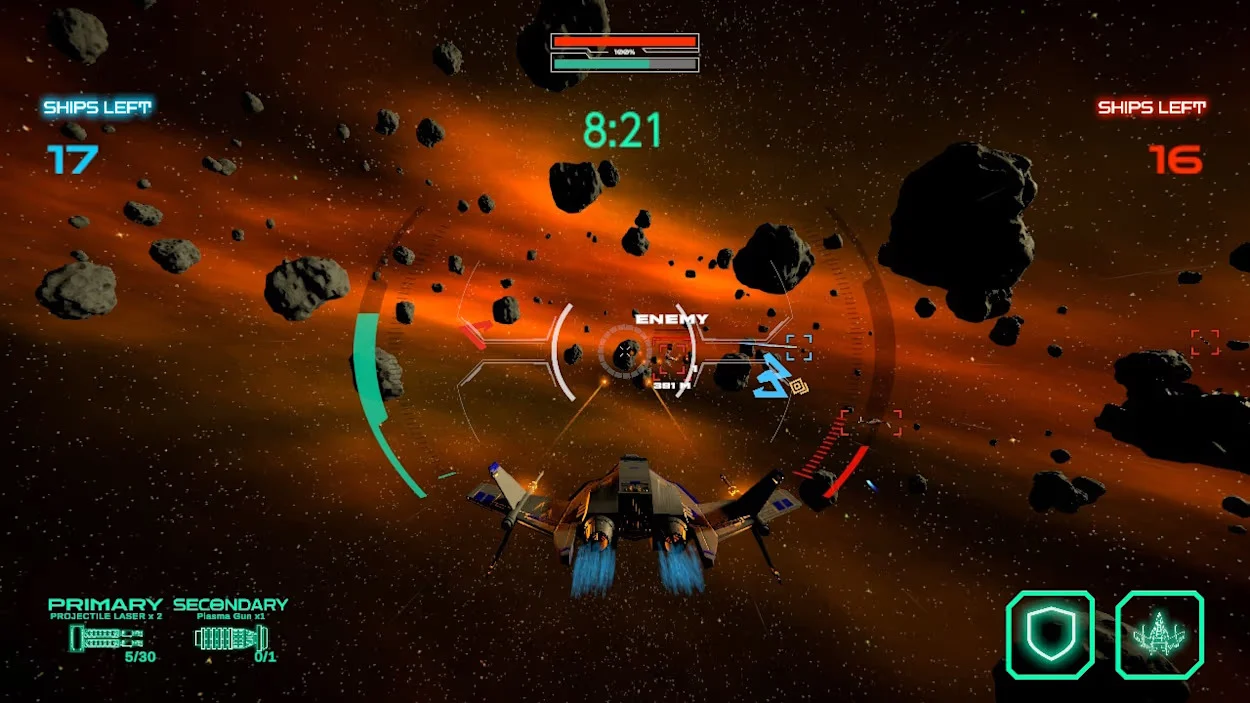
The combination of Action, Simulation, and Strategy reflects the game’s stated focus. Command decisions are not limited to a map screen or passive upgrades. Battles unfold in real time, asking players to react to enemy pressure while maintaining the systems that support a growing fleet. Meanwhile, colonization, technology research, station construction, and resource management provide the longer-term structure behind each military push.
Gogame Console Publisher handles both development and publishing. The Nintendo Switch version has a February 8, 2024 release date, a Title ID of 010000201E22E000, and a listed base firmware requirement of v17.0.1. Its 1.8GB file size suggests a compact release, though the game’s setting still spans multiple systems, planets, asteroid fields, and nebulae.
The Xylos Empire Threat and Humanity’s Last Stand
The conflict begins with the Xylos Empire advancing through the galaxy. Their campaign has already damaged or destroyed worlds across multiple star systems, creating a crisis that reaches beyond a single colony or fleet engagement. The threat is presented as relentless, and its scale gives the game’s defensive focus real weight: each star world is another place that may need to be held, reinforced, or reclaimed.
Humanity’s response comes through the United Star Nations, which calls on a commander to organize resistance against the invasion. The setting is not simply about winning isolated skirmishes. It is about preserving a future for human civilization while an alien force continues to press forward.
The Xylos Empire also brings an unanswered question to the campaign. Their destructive drive has motives that are not immediately clear, giving the Galactic Wars story an investigative thread alongside its military objective. Pushing the invaders back matters, but discovering why they are attacking is part of the larger mission.
Commander Anya Sharma’s Mission Across the Star Worlds
Players take the role of Commander Anya Sharma, described as a skilled tactician tasked with bringing together fragmented human colonies. That responsibility makes expansion more than a territorial exercise. New colonies can add resources and strategic advantages, yet they also become places worth defending when the Xylos threat arrives.
Anya’s assignment has three connected goals: unite human colonies, resist the invading empire, and uncover the motivation behind the Xylos campaign. The result is a campaign framework where military force, diplomacy between separated human holdings, and exploration all support the same broader effort.
The star worlds are therefore not interchangeable backdrops. Each planet can contribute different resources and advantages, while the condition of the surrounding system shapes the choices available to the commander. Building influence is useful, but maintaining it under pressure is the more demanding part of the job.
How Real-Time Strategy and Space Combat Work Together
Galactic Wars combines real-time strategy with space combat. The strategic layer involves managing resources, researching technologies, colonizing planets, and constructing or customizing stations and planetary defenses. These systems determine what a player can field and how well a colony can endure enemy attacks.
Combat then tests those preparations directly. Fleet positioning and fleet composition are identified as central to success, meaning the makeup of a force should respond to the opposition rather than remain fixed from battle to battle. Ships have distinct abilities, and specialized vessels can be assigned to particular roles. Some enemy forces are vulnerable to certain weapon types, making adaptation more valuable than relying on a single approach.
Defensive construction is equally important. Space stations, planetary defenses, and main starbase upgrades can create a stronger foundation before a system comes under sustained attack. Resource income supports this entire loop, funding expansion, upgrades, research, and replacement forces. A powerful fleet without materials behind it may struggle to maintain momentum.
The Switch controls are described as smooth and responsive for both construction and combat management. That suits a game built around quick decisions: reinforcing a line, adjusting a fleet, retreating from an unfavorable engagement, or committing resources to a newly colonized system.
Exploring Nebulae, Asteroid Fields, and Hidden Opportunities
Exploration adds another dimension to the war effort. Star systems contain unique planets, challenges, and potential advantages, while vibrant nebulae and ancient asteroid fields lend the setting its spacefaring atmosphere. These locations are not only visual scenery. They may conceal secrets and resource caches that can help sustain a colony or strengthen a fleet.
Searching beyond the immediate battlefront can therefore be a practical decision. Hidden caches provide boosts that may support upgrades and expansion, while new planets can offer resources and strategic value. Exploration also encourages players to look beyond the most urgent enemy encounter and consider what a system may offer in the longer fight.
That sense of discovery fits the campaign’s larger stakes. With humanity divided and the Xylos Empire moving across known space, each newly explored area can become a potential source of support, a defensive position, or another clue within a hostile galaxy.
7 Tactical Priorities for Defending Your Star Worlds
The following priorities draw directly from the game’s stated systems and tactical guidance. They are useful reminders that expansion, defense, scouting, and recovery need to work together.
- Fortify early: Upgrade main starbase and defensive structures early in a mission so a system has protection before enemy pressure intensifies.
- Secure new colonies: Newly colonized systems can provide important advantages, but they need defenses before they become reliable parts of the wider network.
- Scout first: Check enemy fleet compositions and base layouts ahead of an attack to avoid committing forces without a plan.
- Match the threat: Adjust fleet composition around enemy weaknesses, weapon types, and specialized ship roles rather than using the same lineup every time.
- Watch the flow: Monitor resource income closely, since research, upgrades, expansion, and military efforts all depend on a steady supply of materials.
- Search the systems: Explore nebulae, asteroid fields, and other locations for hidden caches that can strengthen the war effort.
- Regroup when needed: Retreating from a losing battle can preserve a fleet for a better-positioned response later.
For players drawn to real-time strategy, space combat, colony development, and science-fiction campaigns with defensive pressure, Galactic Wars: Defend Your Star Worlds Switch NSP centers its challenge on making every fleet, resource, and star system count.