Wildagotchi: Virtual Pet Switch NSP
Report Link Error
Select the broken download file, then submit the report.
Screenshots
About Game
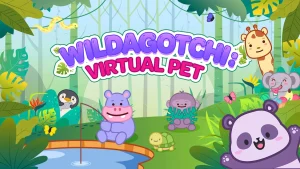
Wildagotchi: Virtual Pet Switch NSP arrived on Nintendo Switch on August 25, 2023, offering a compact pet-raising experience built around repeated care, small activities, and the gradual development of a creature hatched from an egg. Developed and published by RedDeer.Games, it is classified across Arcade, Simulation, and Strategy, a combination that reflects its mix of quick interactions and ongoing responsibility.
Wildagotchi: Virtual Pet on Nintendo Switch at a Glance
RedDeer.Games places the player in charge of a small virtual companion whose well-being depends on regular attention. Rather than presenting a large-scale adventure or a fixed sequence of levels, the game focuses on the familiar rhythm of checking in on a pet, responding to its needs, and helping it develop over time.
Its genre labels make sense in that context. The simulation side comes from caring for the creature’s day-to-day condition. Strategy enters through managing its needs and deciding how to use time and earned currency. Arcade elements are present in the simple mini-games that provide brief, direct activities. The result is a Nintendo Switch simulation game designed around frequent interactions rather than long uninterrupted sessions.
The tone is centered on companionship and care. Players are not guiding a traditional cast of heroes through a scripted conflict; they are maintaining a relationship with a creature whose condition, behavior, and growth reflect the attention it receives. That gives the game a personal, low-pressure structure, while still making routine decisions matter.
A Pet-Raising Journey Rather Than a Linear Story
The Wildagotchi story is not a conventional narrative with a beginning, middle, and end laid out in advance. Its story is the player’s own virtual pet journey. It starts with a hatching egg, leaving the creature’s identity to be discovered through play, then continues through the pet’s growth, personality, and interaction with its environment.
This approach makes progress feel tied to care rather than plot milestones. A player’s routine becomes the framework for the experience: checking the pet’s status, reacting when something is wrong, playing with it, and watching it change. The goal is straightforward—raise a happy, healthy companion—but the route there is shaped by the choices made along the way.
That structure also supports a sense of ownership. The creature is not simply an object to collect or a character that follows a script. Its development is connected to the player’s consistency. As it grows, learns, and may evolve, the record of that care becomes the game’s central narrative thread.
The Core Care Routine: Hunger, Happiness, and Cleanliness
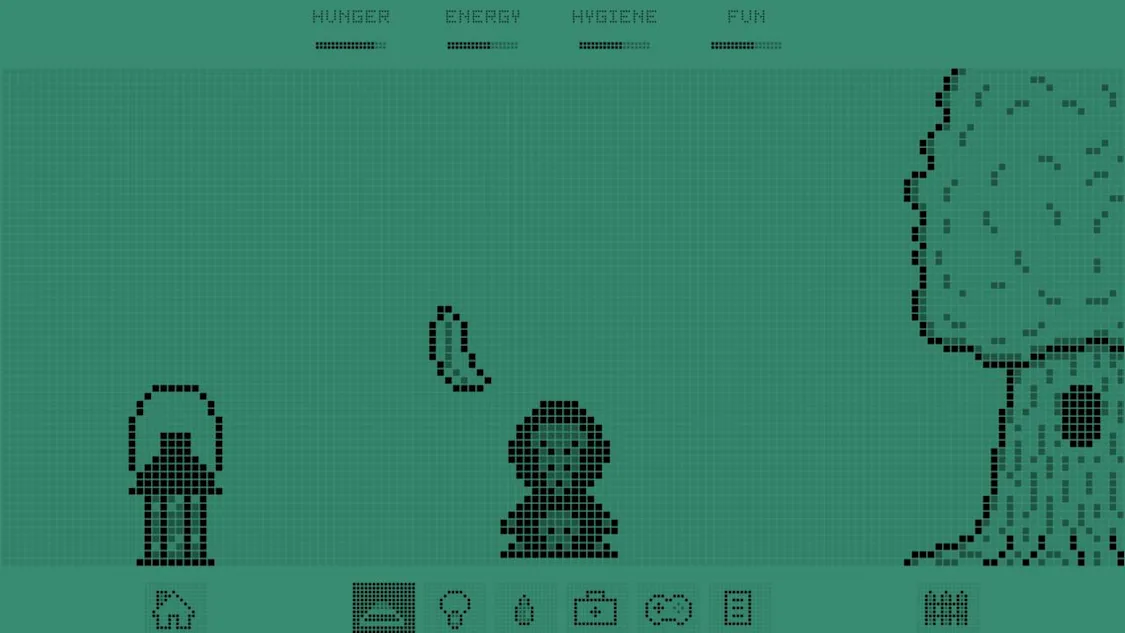
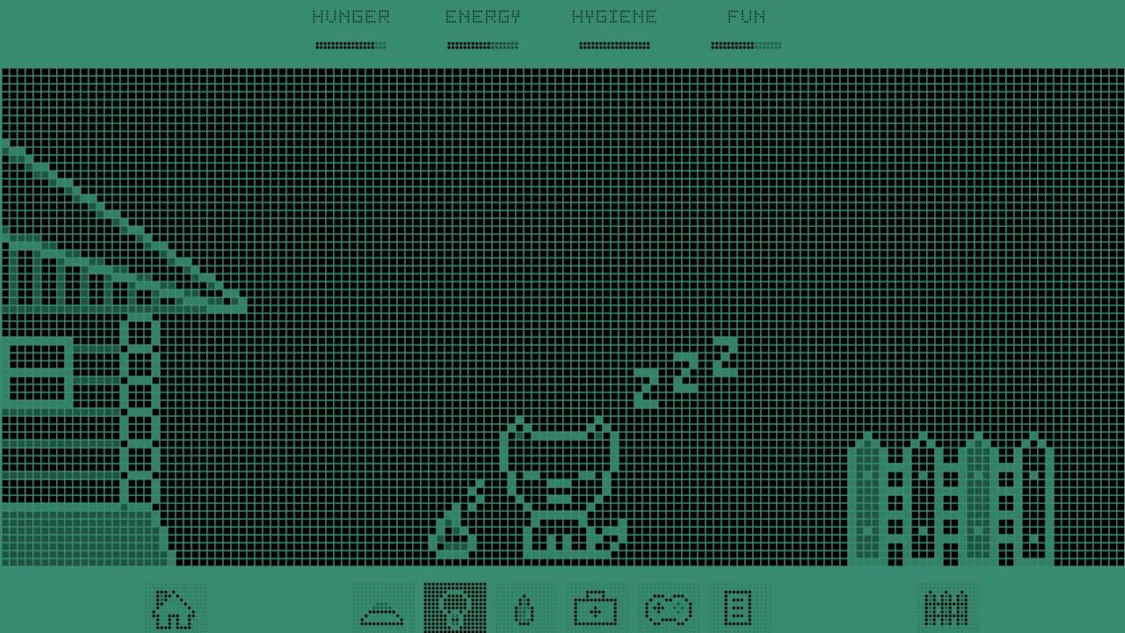
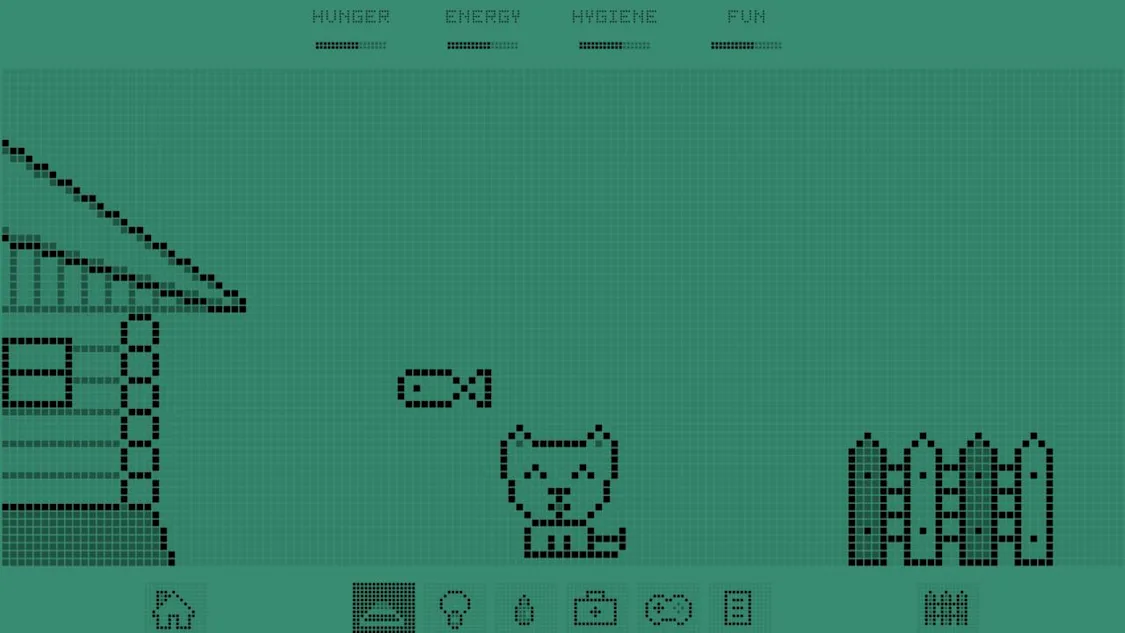
The Wildagotchi care routine revolves around observing the pet and responding before its needs are neglected. Hunger, happiness, and cleanliness are key conditions to monitor. Feeding helps keep hunger under control, while activities can improve mood. Cleaning messes maintains a healthier environment for the creature.
The game also asks players to pay attention to cues from their pet. These signals can indicate that it needs something next, making observation part of the routine rather than a purely menu-driven exercise. Illness can also occur, requiring virtual medicine to help the pet recover.
- Check in often: Regular attention helps players notice changing needs before they become a larger problem.
- Feed with purpose: Meals address hunger and may affect the pet’s mood or growth.
- Keep it entertained: Simple games and activities support happiness while adding variety to the care cycle.
- Clean up promptly: Removing messes helps preserve cleanliness and the pet’s well-being.
- Respond to illness: When the creature gets sick, medicine is needed to support its recovery.
This rhythm gives the game its strategic dimension. There is no indication that care is meant to be complicated, but it does require prioritization. A player may need to decide whether the pet needs food, a clean space, playtime, training, or treatment. Short sessions can therefore still feel meaningful because each visit can address a specific condition.
Mini-Games and Activities That Support Pet Happiness
Wildagotchi mini-games serve more than one purpose. They give the player direct activities to share with the pet, contribute to pet happiness, and provide a way to earn coins. The source material describes these games as simple challenges that can test reflexes or memory, keeping the interaction accessible and brief.
Coins add a practical reward to play. Earned currency can be used for personalizing the pet’s environment with backgrounds and decorations. This creates a small loop between care, entertainment, and customization: spend time with the creature, earn currency through activities, then use that currency to alter its surroundings.
The presentation is therefore closely linked to the pet-raising premise. Decorations and backgrounds offer a way to make the environment feel more personal without changing the core focus on care. Mini-games break up the repeated responsibilities of feeding and cleaning, helping the routine remain active rather than purely observational.
For players who enjoy returning to a game in short bursts, this structure is especially relevant. A brief session can include checking needs, completing an activity, earning coins, and making a small adjustment to the pet’s space. The game’s replay value comes from continuing that loop as the companion develops and from the possibility of caring for additional creatures as progress unlocks them.
Training, Growth, and Potential Evolution Paths
Training adds another layer to pet growth. Through training exercises, the creature can develop and learn tricks. These sessions connect the immediate act of interacting with a longer-term sense of progress, since the pet is not only being kept healthy but also being guided toward further development.
Virtual pet evolution is presented as a possibility rather than a fixed promise of a particular result. Training may help the creature evolve into different forms, but no specific forms or conditions are established here. That uncertainty fits the broader appeal of hatching an egg and discovering how a companion changes over time.
Growth also supports continued play beyond the initial hatch. The player can observe personality and development, train the pet, and potentially unlock the ability to hatch and care for more Wildagotchi creatures. For an audience interested in gentle management systems, collectible companions, and routine-based progression, those elements provide a reason to keep returning.
Wildagotchi: Virtual Pet Switch NSP is consequently best suited to players looking for a virtual companion experience where regular care is the main activity. Its appeal lies in the steady accumulation of small interactions: a meal served, a mess cleaned, a mini-game completed, a trick learned, or a newly decorated setting.
Release and Regional Details for Wildagotchi: Virtual Pet
For reference, Wildagotchi: Virtual Pet has Title ID 010020C01A704000 and was released on August 25, 2023. RedDeer.Games is credited as both developer and publisher.
The game is listed for the Europe, USA, Asia, and Japan regions. Its available languages are English, Japanese, Korean, and Traditional Chinese. The verified genre classification is Arcade, Simulation, and Strategy, matching a design built around pet care, mini-games, training, and gradual progression.