Castlevania Dominus Collection Switch NSP
Report Link Error
Select the broken download file, then submit the report.
Screenshots

About Game
Castlevania Dominus Collection Switch NSP arrives on Nintendo Switch as a Konami collection built around gothic action, exploration, and character growth. Released on August 27, 2024, it brings a dark fantasy framework to the platform: hostile castles, supernatural threats, concealed routes, and confrontations that reward careful play rather than blind momentum.
Castlevania Dominus Collection on Nintendo Switch: Release and Platform Details
The Castlevania Dominus Collection release date is August 27, 2024. Konami serves as both publisher and developer, giving the release a direct place within the company’s long-running Castlevania legacy. It is listed for Europe and the USA, with language support spanning English, French, German, Italian, Japanese, and Spanish.
Its Switch identity suits a collection structured around repeat exploration. A castle corridor that once seemed like a dead end may gain new meaning after a character finds an ability, a piece of equipment, or a weapon that changes what can be reached. That loop—move forward, uncover a limitation, grow stronger, then return—helps make the experience feel deliberate even when its world is threatening and unfamiliar.
As a Konami Switch collection, it is positioned around arcade, platformer, and role-playing elements rather than a single style of play. Fast reactions matter, but so do route awareness, equipment choices, and the patience to revisit a dangerous room with a better plan.
A Gothic Conflict of Curses, Castles, and Darkness
The Castlevania tradition draws its atmosphere from ancient curses, decaying strongholds, monsters, and the recurring shadow of Dracula’s forces. The collection’s broad dramatic language is one of haunted domains and difficult victories: heroes enter places shaped by old evil, confront creatures and resurrected villains, and attempt to prevent darkness from taking hold again.
Its stories commonly frame the struggle through vampire hunters and their allies, with castles serving as more than scenery. They are obstacles, mysteries, and expressions of the threat itself. Hidden chambers, dangerous passages, and forgotten histories support themes of prophecy, destiny, sacrifice, and the repeating conflict between good and evil.
That gothic action-adventure mood also informs the presentation of combat. An enemy-filled hallway is not merely a route to the next objective; it is a test of spacing and awareness. A locked passage is not just a barrier; it suggests that the castle still has something to reveal. The result is a tense but inviting rhythm, balancing eerie discovery with the satisfaction of steadily mastering hostile territory.
Boss Battles and Learning Attack Patterns
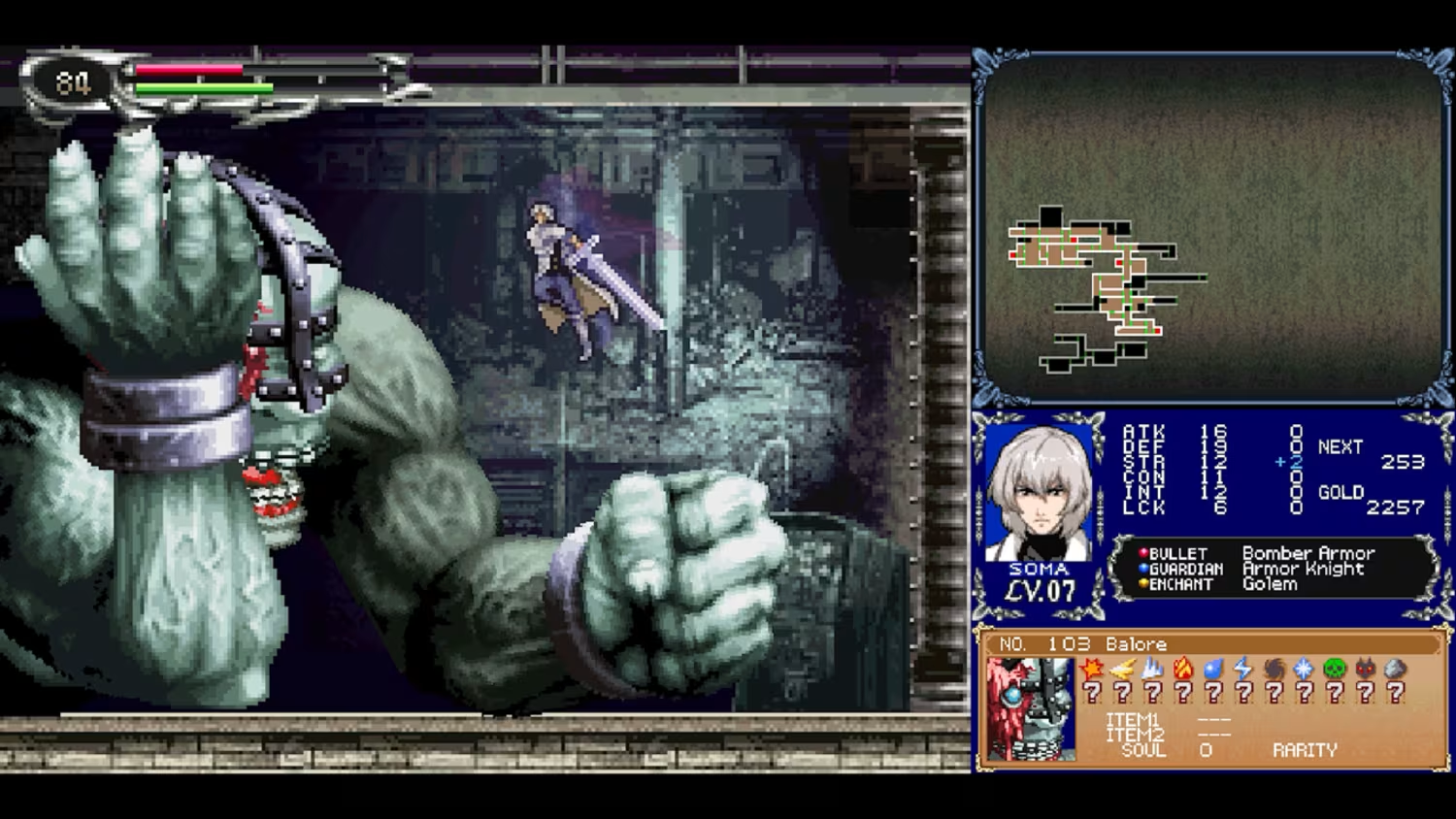
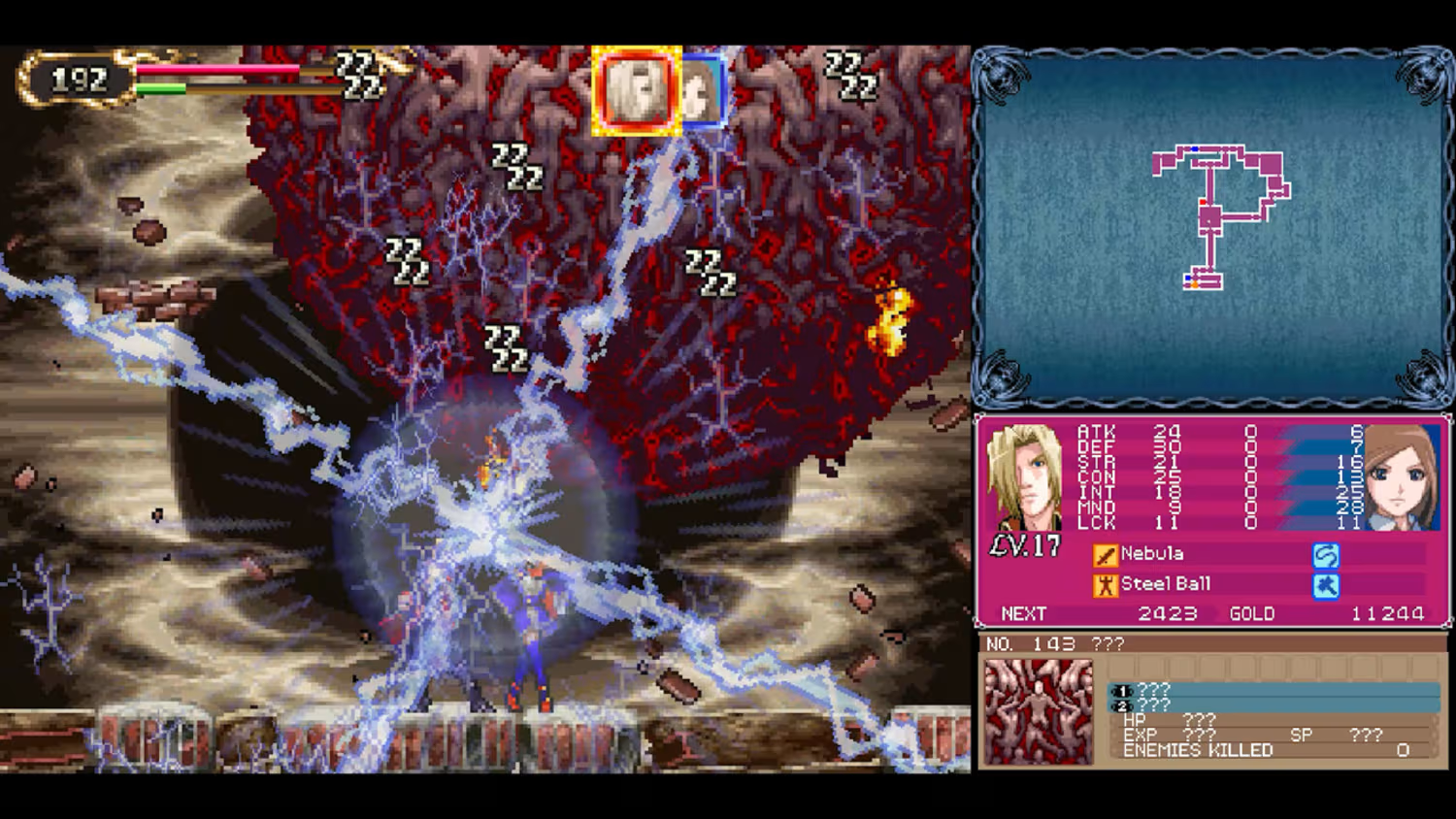
Large boss encounters provide some of the clearest action-platformer challenges. These fights ask players to recognize distinctive boss attack patterns, find safe positions, and decide when a weapon, spell, or sub-weapon is worth committing to. Rushing can be costly. Observation creates openings.
Movement is central to that process. Jumping, retreating, changing position, and managing distance can be as important as raw attack power. A player who watches how a boss signals an attack can respond with more confidence on the next attempt, turning an initially intimidating battle into a readable sequence of choices.
Weapon selection can shift the feel of a fight as well. The supplied gameplay details point to whips, swords, magical attacks, and sub-weapons including axes, holy water, and crosses. Not every option will be equally useful in every situation, so experimentation has practical value. The best answer may be the one that gives a player safer range, better timing, or a more reliable way to exploit an opening.
7 Practical Exploration and Combat Tips
- Question suspicious walls and routes. Hidden passages and unusual corners are worth checking, particularly in a castle built around secrets and interconnected spaces.
- Fill in the map. Revealing rooms piece by piece makes it easier to remember unfinished paths and understand how separate areas connect.
- Return when access changes. An inaccessible route may become reachable after gaining a new ability, finding equipment, or improving a character’s options.
- Study ordinary enemies. Smaller foes can teach useful lessons about range, timing, and positioning before a more demanding encounter arrives.
- Try different loadouts. Weapons, spells, armor, accessories, and sub-weapons can alter how safely or effectively a player handles a particular enemy type.
- Adjust equipment with purpose. A newly found item is most valuable when it addresses a real need, such as survivability, reach, or a difficult route.
- Meet bosses patiently. Use early attempts to learn their attacks, then focus on controlled movement and well-timed counterattacks rather than forcing damage.
Why Its Platforming, Action, and RPG Elements Fit Together
The listed genre blend—arcade, platformer, and role-playing—describes a structure in which each element supports the others. Platforming creates the physical challenge of navigating hazardous rooms and reaching out-of-the-way spaces. Action supplies immediate pressure through monsters, weapons, spells, and bosses. Role-playing progression gives exploration a lasting reward through experience, equipment, abilities, and stronger character options.
This is why Metroidvania exploration is so effective in a Castlevania setting. Progress is not limited to moving from one stage to another. Players can earn experience, discover armor and accessories, improve their capabilities, and open routes that were previously out of reach. The map becomes both a record of progress and an invitation to keep searching.
Replay value follows naturally from that structure. Thorough players can revisit rooms they passed quickly, search for hidden areas, test unfamiliar weapon combinations, or approach a boss with a revised strategy. The collection is especially suited to players who enjoy responsive combat but also want their effort to translate into greater knowledge of the world and a more capable character.
Language, Region, and Switch Technical Information
For reference, the collection is listed for the Europe and USA regions. Supported languages are English, French, German, Italian, Japanese, and Spanish. The listed file size is 1.1GB, while the base firmware requirement is version 18.1.0.
Those details give the release a clear technical profile, while its appeal remains rooted in the play experience: gothic atmosphere, maze-like castle exploration, equipment-driven progression, and demanding encounters built around recognition and control. For players drawn to dark fantasy worlds where persistence opens new paths, the collection’s mix of action and discovery provides a focused fit on Nintendo Switch.