The Pedestrian Switch NSP
Report Link Error
Select the broken download file, then submit the report.
Screenshots
About Game
The Pedestrian Switch NSP brings Skookum Arts’ Adventure, Platformer, and Puzzle design to Nintendo Switch with a premise built around familiar urban objects. A silent stick-figure silhouette lives within public signs, and its route through a metropolitan setting depends on how those signs are arranged, connected, and understood. The result is a largely visual journey through streets, stations, and industrial spaces, where the city’s atmosphere is inseparable from the puzzle work.
The Pedestrian on Nintendo Switch: A Puzzle Platformer Built Around Public Signs
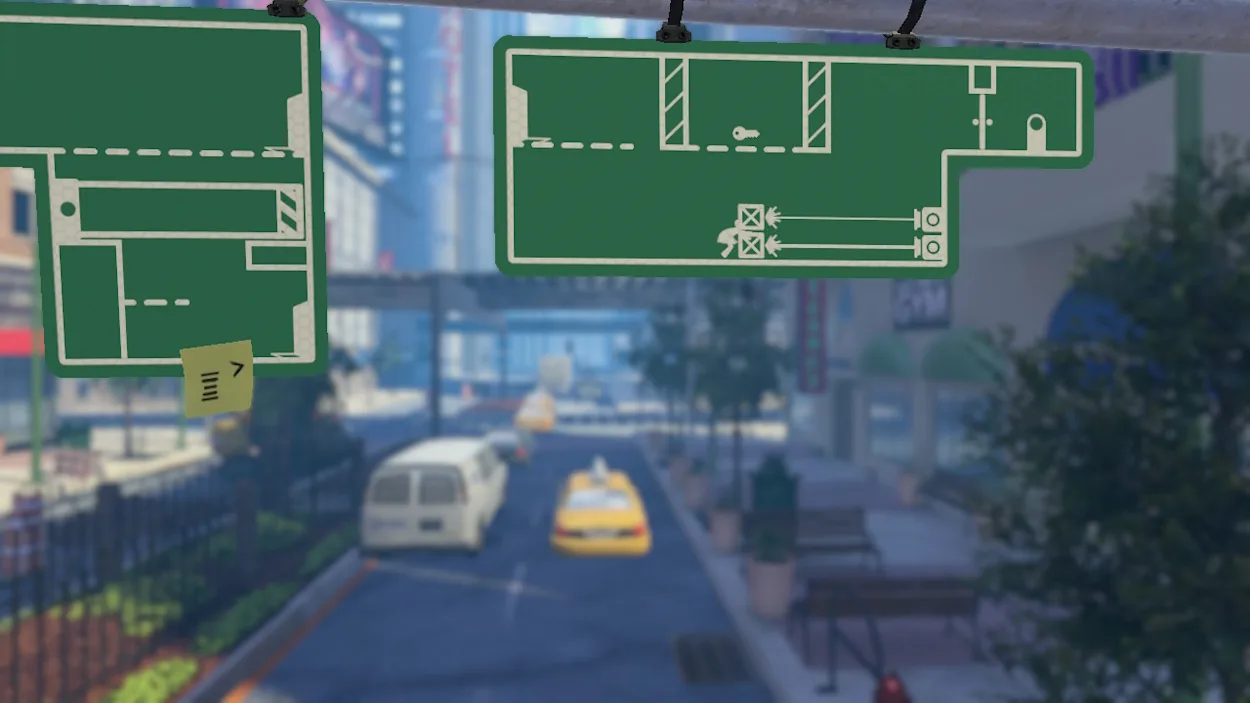
The Pedestrian Switch frames its world through the language of public signage. The protagonist is a small, silent figure moving inside signboards, posters, maps, and other flat displays placed throughout a larger city. Rather than relying on traditional dialogue, the game communicates its setting and progression through visual cues, the layout of its environments, and the changing connections between spaces.
Skookum Arts, serving as both developer and publisher, places the character in a city that feels active and layered even when the immediate challenge is contained within a single sign. Train stations, city streets, and industrial zones provide the backdrop for a journey concerned with movement, escape, and connection. The character’s paper-thin existence is not merely a visual novelty; it defines how each problem is approached.
The platforming element comes from getting the silhouette safely across ladders, platforms, doorways, and passages. Yet the route is rarely fixed. Before the character can cross a gap or reach an exit, the player may need to reconsider the whole arrangement of the puzzle space. That gives the game a measured pace: movement matters, but observation and planning set up the movement.
How Rearranging Signs Creates New Paths
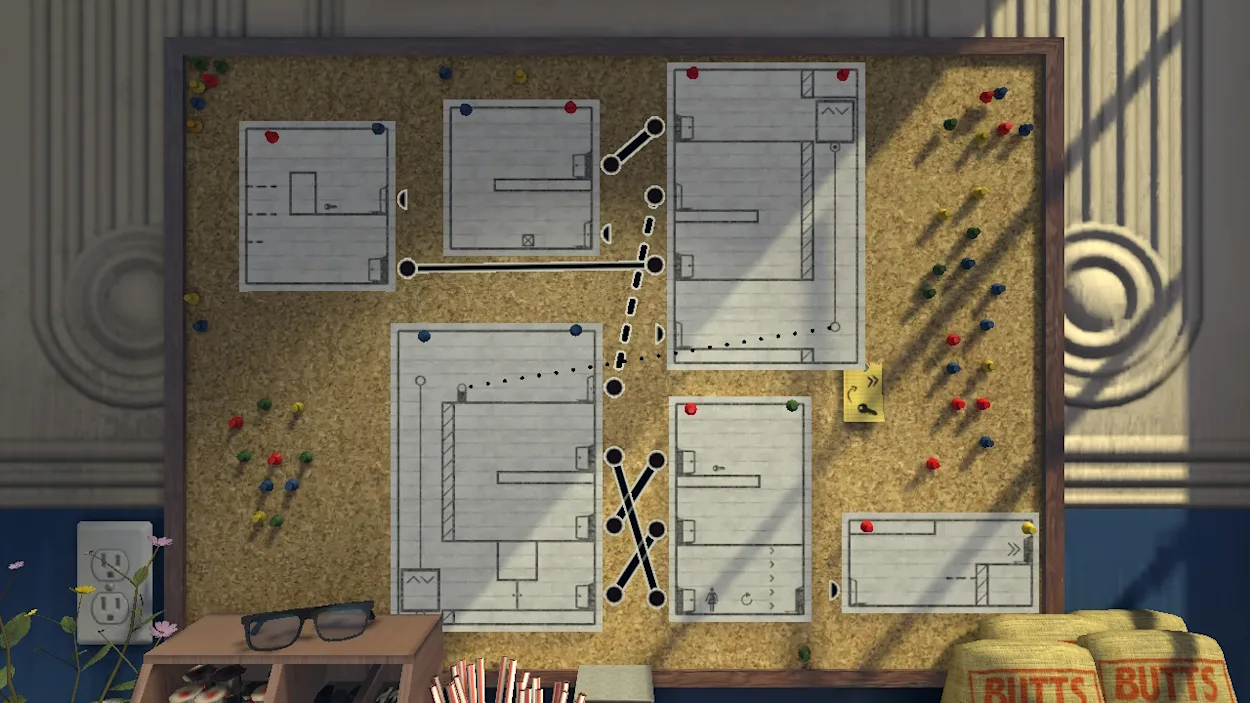
The Pedestrian puzzles center on manipulating the sign environments themselves. Signs can be moved, rotated, resized, and linked so that their internal paths become continuous. A doorway on one board may need to meet a doorway on another. A ladder that initially leads nowhere can become useful when its sign is repositioned. Platforms acquire meaning through the space around them.
This approach gives The Pedestrian sign mechanics a practical clarity. Each adjustment is made in service of a route, but the route may involve several connected pieces rather than one obvious solution. The player is encouraged to study the full layout before committing to a placement, paying attention to entrances, exits, and the direction in which the silhouette will travel.
- Read the exits: Doorways and openings indicate where one sign can connect to another.
- Use orientation: Rotating a sign can change how its ladders, platforms, and passages align.
- Consider scale: Resizing signs can alter their relationship within the available layout.
- Build continuity: Link boards, posters, maps, and billboards into a route the character can actually traverse.
- Test the route: A convincing arrangement still has to support the character’s platforming movement from start to finish.
The Pedestrian platforming therefore works as the proof of each solution. Rearranging signs is not an abstract exercise: the configuration must create a viable sequence of steps, climbs, doors, and landings. The pleasure comes from seeing a fragmented collection of urban displays become one connected place.
Where 2D Puzzle Spaces Meet the 3D City
The Pedestrian 2D 3D gameplay is defined by the tension between the flat worlds inside signs and the three-dimensional city that contains them. The silhouette moves through two-dimensional puzzle spaces, while the surrounding environment affects how those spaces can be used. This perspective-based structure makes the city more than scenery. Background objects and spatial relationships can influence the solution.
The Pedestrian perspective puzzles ask players to look beyond the immediate board. A sign might be part of a larger arrangement spread across a street, station, or industrial area. The character remains tied to its sign-based world, yet the three-dimensional setting establishes context for the boards and can introduce elements that affect their connections.
That presentation also supports the game’s atmosphere. Public signs, city structures, and industrial details create an urban environment that feels observed from an unusual angle. The silent protagonist helps keep attention on the visual design: the player reads routes, objects, and architectural placement in place of spoken instruction. The Pedestrian environment turns ordinary navigational imagery into a puzzle language.
Environmental Objects That Shape Each Puzzle
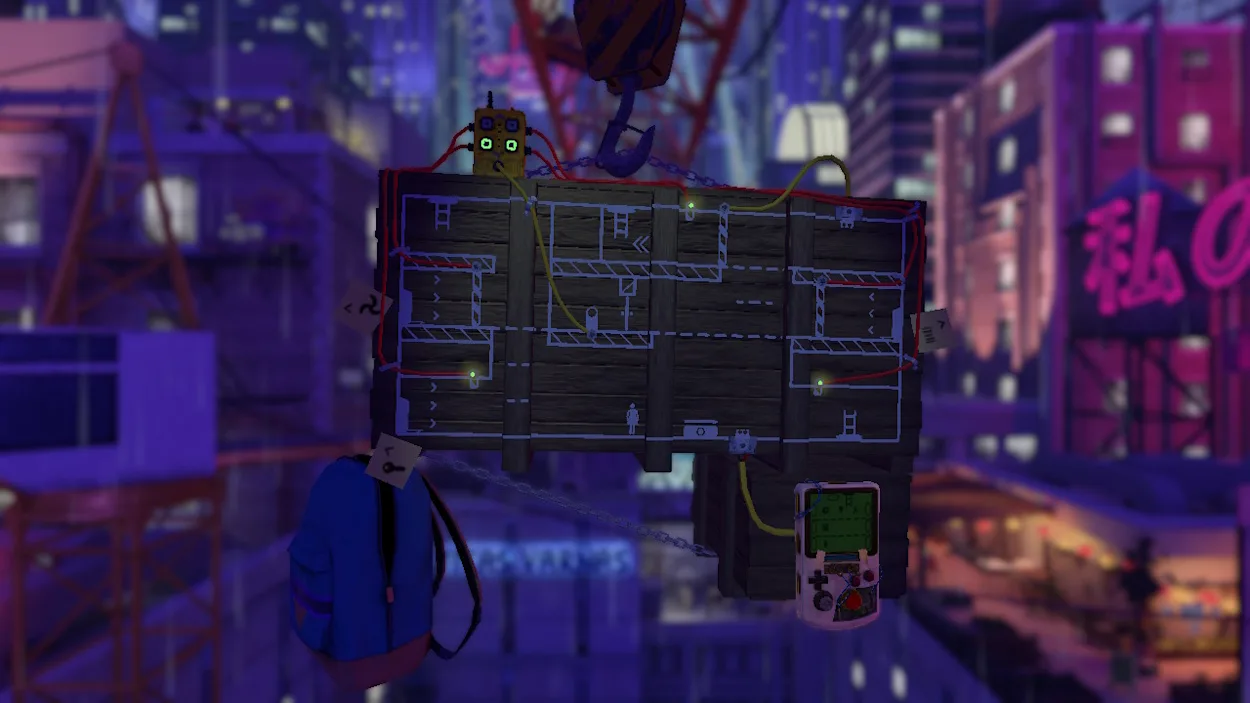
The Pedestrian environmental puzzles introduce interactive objects that complicate the path between signs. Doors, elevators, switches, power cables, and collectible keys can all shape what is possible in a given space. These elements do not replace the core rearrangement mechanic; they add conditions that must be considered while building a route.
Doors can control access between areas within a sign. Elevators add vertical movement. Switches and power cables introduce relationships between objects, requiring attention to how one part of the layout affects another. Keys can open access to new city sections, making exploration part of the puzzle structure rather than a separate activity.
The Pedestrian switches are especially relevant because they reinforce the game’s focus on connections. A route may look complete until an environmental object reveals another requirement. In that sense, the puzzles reward a broad view of the scene: not only where the character can walk, but which objects need to be activated, powered, opened, or reached along the way.
Progression Through New Tools, Abilities, and City Areas
The Pedestrian progression expands through additional abilities, tools, keys, and newly accessible sections of the city. As the journey moves through different metropolitan environments, these additions give later puzzles more layers to consider. The basic act of connecting signs remains central, but new resources widen the range of possible arrangements and interactions.
This structure suits players who enjoy deliberate problem-solving alongside platforming. The game’s replay value lies less in speed or spectacle than in revisiting its visual logic, experimenting with layouts, and appreciating how a solution emerges from spatial relationships. Players drawn to environmental puzzles, quiet visual storytelling, and perspective-based challenges are the most natural audience.
Release Details for The Pedestrian Switch Version
The Pedestrian Switch release date was January 18, 2024. It is published and developed by Skookum Arts, supports English, and is available in Europe, the USA, Asia, and Japan. The Nintendo Switch edition is listed as an Adventure, Platformer, and Puzzle game, with Title ID 010065601BA18000. Its base and update firmware requirement is v17.0.0, and the listed file size is 2GB.