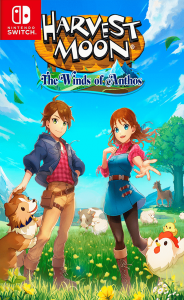
Harvest Moon: The Winds of Anthos Switch NSP
Report Link Error
Select the broken download file, then submit the report.
Screenshots
About Game
Harvest Moon: The Winds of Anthos Switch NSP places farming within a larger restoration journey. Anthos has spent a century divided after a volcanic eruption disrupted travel between its towns and led to the disappearance of the Harvest Goddess and the Nature Sprites. When an awakened Harvest Sprite sends out a call for help, the player steps into a world where planting crops, meeting residents, and travelling farther afield all contribute to reconnecting the land.
A Century After the Eruption: Anthos Needs Reconnecting
The Harvest Moon: The Winds of Anthos story begins with a disaster whose effects have become part of everyday life. Before the eruption, Anthos was protected by the Harvest Goddess and the Nature Sprites, but the catastrophe separated the towns and made communication difficult. Their disappearance left the world without the guardians who had watched over its natural balance.
A hundred years later, the player answers the newly awakened Harvest Sprite’s request to revive the Harvest Goddess and the other Sprites. The premise gives the game’s familiar activities a clear purpose. Farming is not treated as an isolated routine: crops, animals, travel, and conversations sit within an effort to bring prosperity back to a fragmented region. The Anthos volcanic eruption is therefore more than background lore. It explains why the world must be explored piece by piece and why progress involves restoring connections.
That structure suits a lifestyle simulation with adventure elements. Days can be spent tending a farm, but the broader objective keeps attention on what lies beyond the current field or town.
Exploring Five Towns Across Anthos
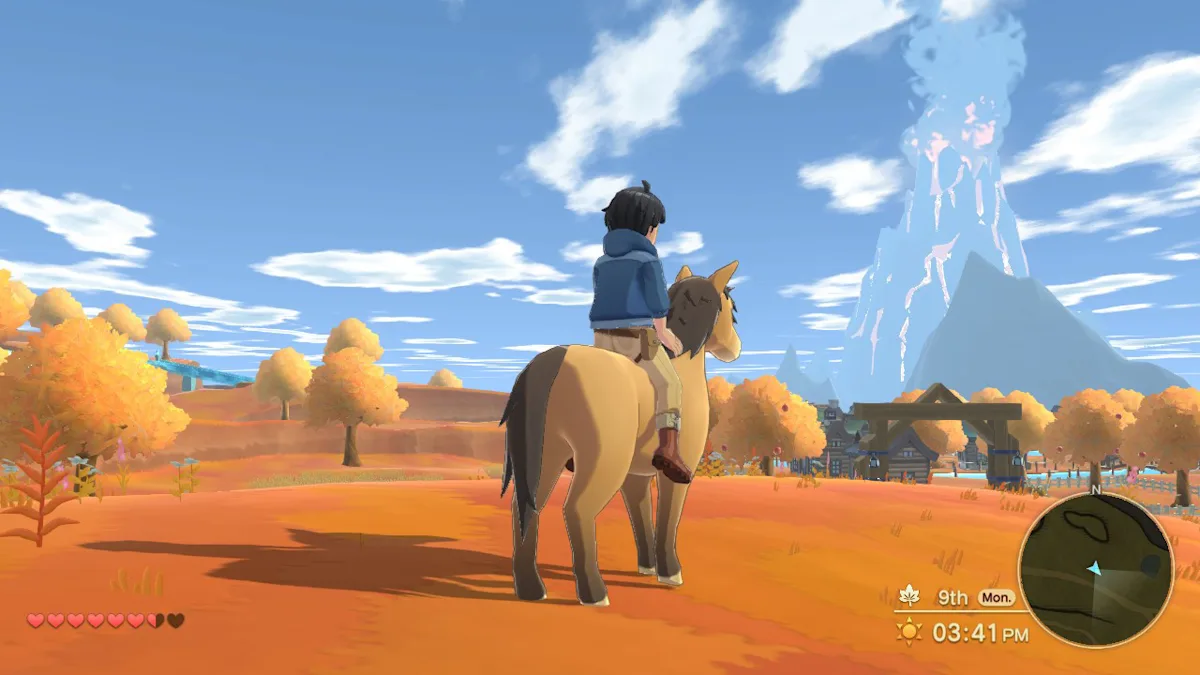
Harvest Moon The Winds of Anthos exploration is built around movement across a large world rather than settling permanently into one fixed farming district. Anthos includes five towns, along with wilderness areas and varied landscapes between them. The towns have been isolated from one another, so reaching new places becomes part of the game’s forward motion.
Travel also supports many of the practical systems. Rivers, lakes, and oceans offer fishing opportunities, while caves and mountains provide places to mine ores and gems for crafting and upgrades. Hidden areas encourage curiosity, and Harvest Wisps can be collected to unlock new abilities and receive blessings from the Sprites.
The result is a progression loop with several directions to follow. A player may head out seeking a resource, find a new area, meet residents, and return with a better sense of where to develop the farm next. The five towns in Anthos provide a useful framework for that sense of discovery without removing the slower rhythm expected from tending crops and livestock.
- Travel with purpose: Different areas hold resources, fishing locations, caves, and new people to meet.
- Watch the land: Soil and climate vary by region, affecting which crops are suited to a location.
- Move when needed: The Expando-Farm makes it possible to relocate the farm base as exploration opens new options.
- Build connections: Relationships, romance, festivals, and events give the towns a social rhythm.
- Keep improving: Ores, gems, Harvest Wisps, and upgraded tools support longer-term progress.
How the Expando-Farm Changes Farm Placement
The Expando-Farm is the game’s most direct answer to the question of where a farm should be located. Instead of being tied to a single home area, the player can move the farm base to different regions. That flexibility makes the farm an extension of exploration rather than a reason to stop exploring.
In Harvest Moon: The Winds of Anthos Switch NSP, this movable farm base supports a changing routine. A new region can bring access to different crops and animals, while a relocated base can put daily work closer to the places a player wants to investigate. It is a practical feature, but it also reinforces Anthos as a connected world in need of rediscovery.
The Harvest Moon The Winds of Anthos Expando-Farm system gives players room to make decisions around location instead of simply expanding one permanent plot. That can help the game retain variety over time, since a farming plan can shift along with the journey through the world.
Farming for Different Soils and Climates
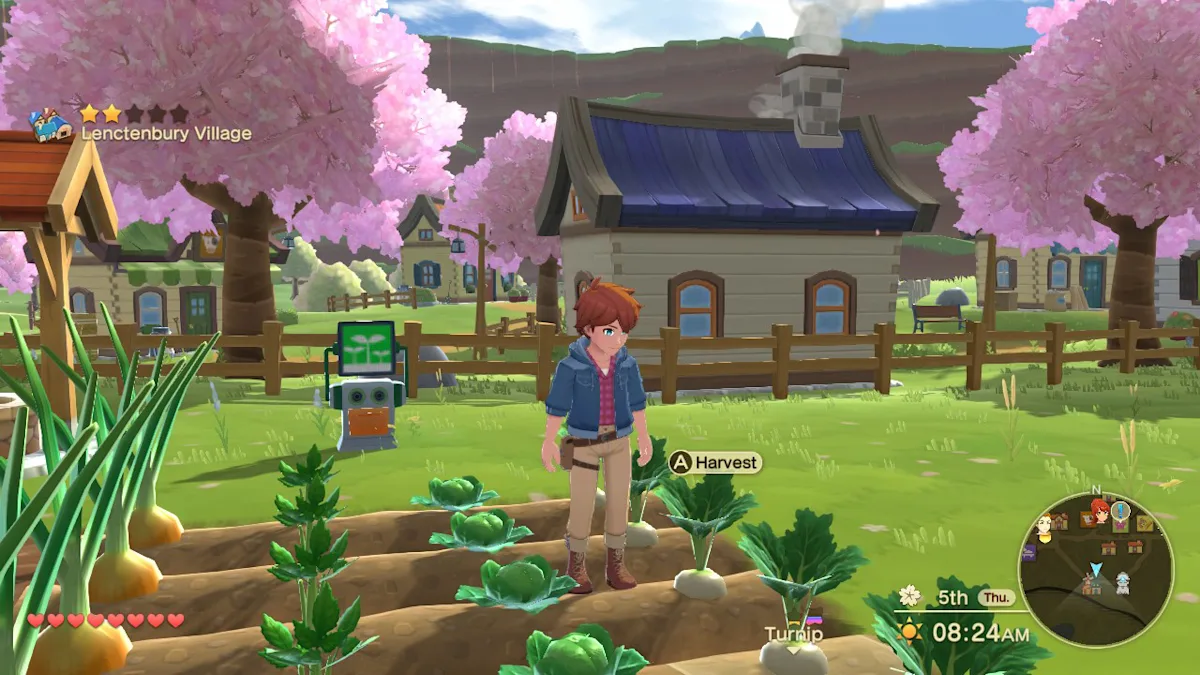
Crop cultivation remains central, yet Anthos asks players to pay attention to regional conditions. Different areas have their own soil and climate, encouraging farmers to adapt their plans as they travel. The approach gives crops a geographical context: discovering a new place is also an opportunity to consider what can grow there.
Harvest Moon The Winds of Anthos crops are joined by livestock such as cows, sheep, and chickens. These animals provide resources and broaden the daily workload beyond fields and watering. Fishing, mining, crafting, and tool upgrades further fill out the schedule, letting players divide their time between dependable farm tasks and expeditions for materials.
This emphasis on soil and climate farming makes planning matter without changing the game’s relaxed foundation. Players who enjoy organizing a farm can focus on crops, animals, and efficient tools. Those more interested in travel can let new landscapes guide their next agricultural project. The systems overlap neatly: exploration reveals possibilities, while farming turns those possibilities into sustained progress.
Friendships, Romance, and Seasonal Festivals
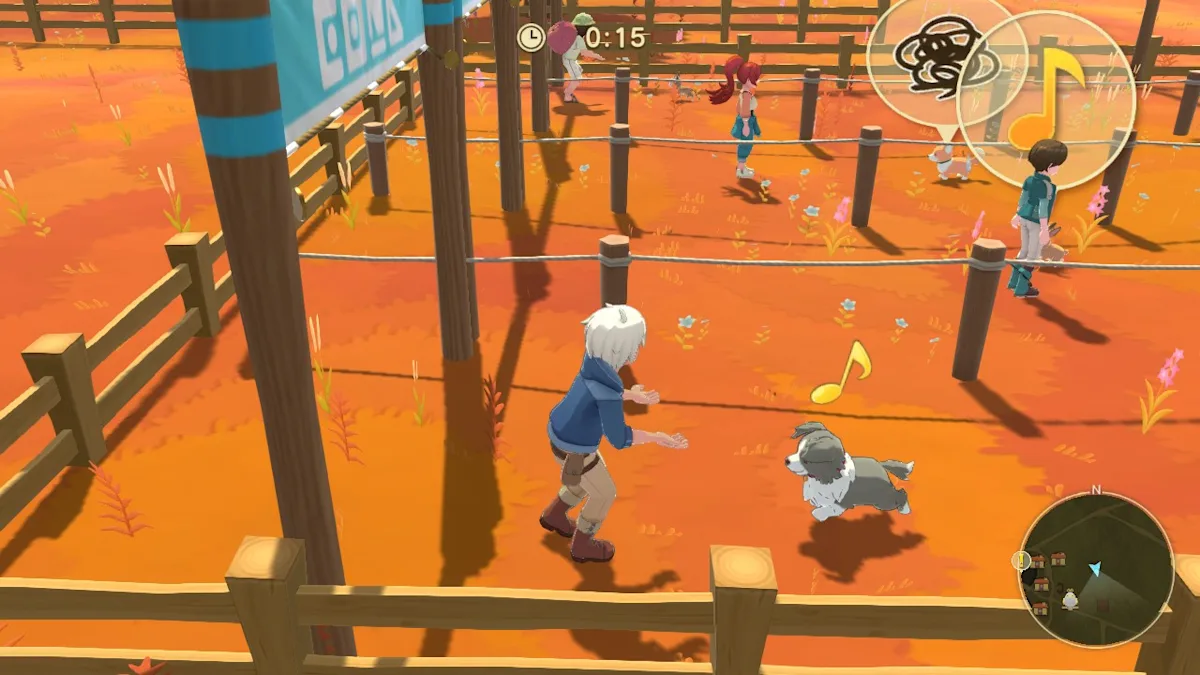
Anthos is not rebuilt through resources alone. The social side includes friendships with characters throughout the world, romance options, and seasonal festivals and events. These features give individual towns personality while offering breaks from the practical demands of cultivation and gathering.
Harvest Moon The Winds of Anthos romance fits naturally into a game about reconnecting communities. Meeting people across the region makes the journey feel less like a sequence of destinations and more like an expanding network of relationships. Festivals offer communal moments within that rhythm, adding events that can punctuate the changing seasons.
The combination of relationships, celebrations, and exploration supports replay value in a modest but meaningful way. Different priorities can shape a playthrough: one player may concentrate on expanding farm operations and tool upgrades, while another spends more time travelling, collecting Harvest Wisps, pursuing romance, or attending Harvest Moon The Winds of Anthos festivals. It is suited to players looking for a farming simulation that leaves room for wandering and social activity.
Nintendo Switch Release Details for The Winds of Anthos
Harvest Moon The Winds of Anthos Switch was released in the USA on September 26, 2023. Natsume Inc. served as both publisher and developer. Its genre mix is listed as Simulation, Role-Playing, Lifestyle, and Adventure, a description reflected in its combination of farm management, relationships, resource gathering, and travel across Anthos.
The game supports English, French, German, Simplified Chinese, Spanish, and Traditional Chinese. The verified version is 1.0.1. For players drawn to an open-ended farming routine but interested in a story-led reason to leave the field, The Winds of Anthos frames each new town, climate, and friendship as part of restoring a world that has been separated for generations.