L.A. Noire Switch NSP XCI

Report Link Error
Select the broken download file, then submit the report.
Screenshots
About Game
L.A. Noire Switch NSP XCI places a detective story in post-World War II Los Angeles, where prosperity, crime, and corruption occupy the same crowded streets. Its noir approach is built around investigation rather than constant action: players study scenes, question people connected to a case, and follow Cole Phelps through the ranks of the Los Angeles Police Department.
L.A. Noire on Nintendo Switch: A 1940s Los Angeles Detective Story
The setting is a 1940s Los Angeles shaped by a postwar boom and a darker undercurrent of violence and dishonesty. The city provides more than a backdrop for individual crimes. It frames the game’s mood, with glamorous surfaces set against murders, drug activity, arson, and the pressures of a police force confronting problems that reach through different parts of society.
This is a detective story with a strong noir sensibility. Cases ask players to move beyond simply finding a culprit, examining evidence and following leads while navigating moral uncertainty. The narrative deals with justice, corruption, and disillusionment, and the cases gradually reveal a city where personal ambition and public wrongdoing can overlap.
The game balances its open-city presentation with structured investigations. Driving through Los Angeles connects assignments and incidents, but the focus remains on the work of solving cases: locating clues, interpreting statements, and deciding how much weight to give a suspect’s behavior. That measured pace gives the setting room to feel like a place with its own pressures rather than just a route between missions.
Cole Phelps and the Path Through the LAPD Desks
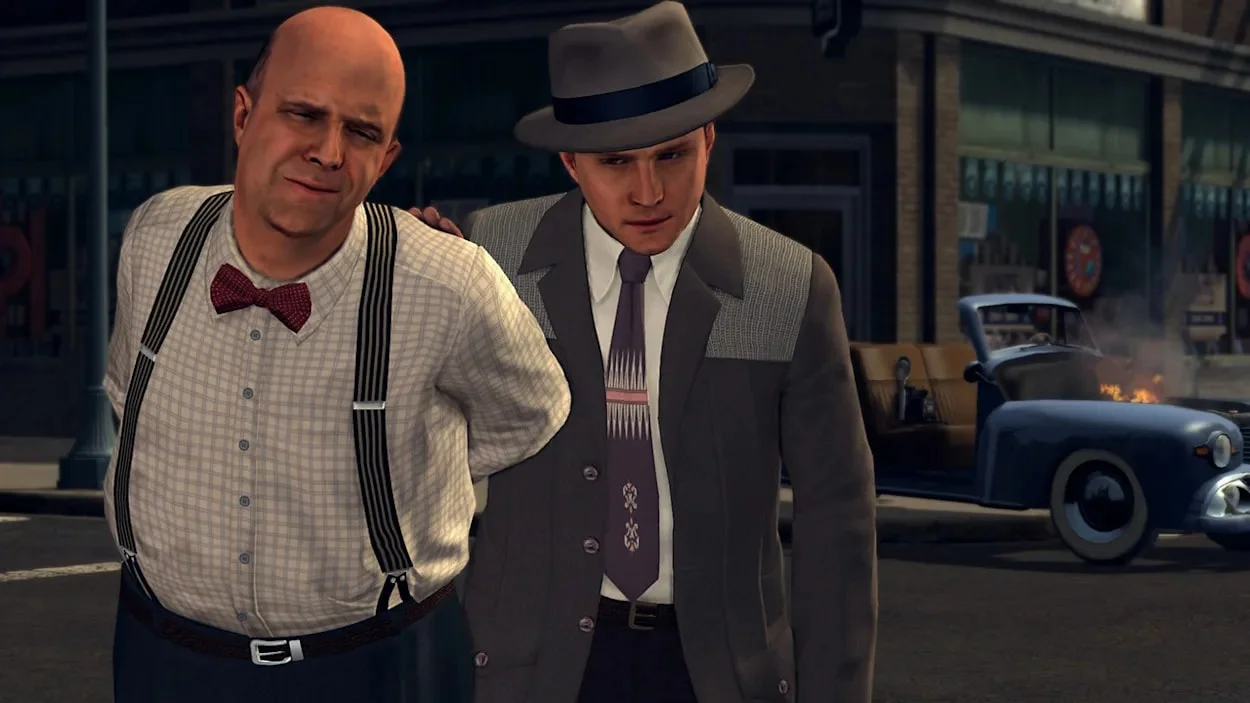
Cole Phelps is a decorated war veteran who begins his police career as an LAPD officer. His path starts on Patrol before moving through a sequence of specialized LAPD desks: Traffic, Homicide, Vice, and Arson. Each assignment changes the kind of crime under examination while maintaining the central emphasis on investigative procedure.
The progression through Traffic, Homicide, Vice, and Arson gives the story a sense of escalation. A case may involve an accident, a killing, criminal activity, or a suspicious fire, yet every desk still depends on gathering facts and questioning the people involved. Phelps is also shaped by his own past, adding personal tension to a career defined by difficult judgments.
Rather than presenting detective work as a simple chain of correct answers, the game places Phelps in situations where witness accounts, evidence, and appearances do not always align. The result is a progression system tied to the changing responsibilities of police work, from early patrol duties to investigations that carry wider consequences.
Interrogations and the Role of MotionScan Facial Animation
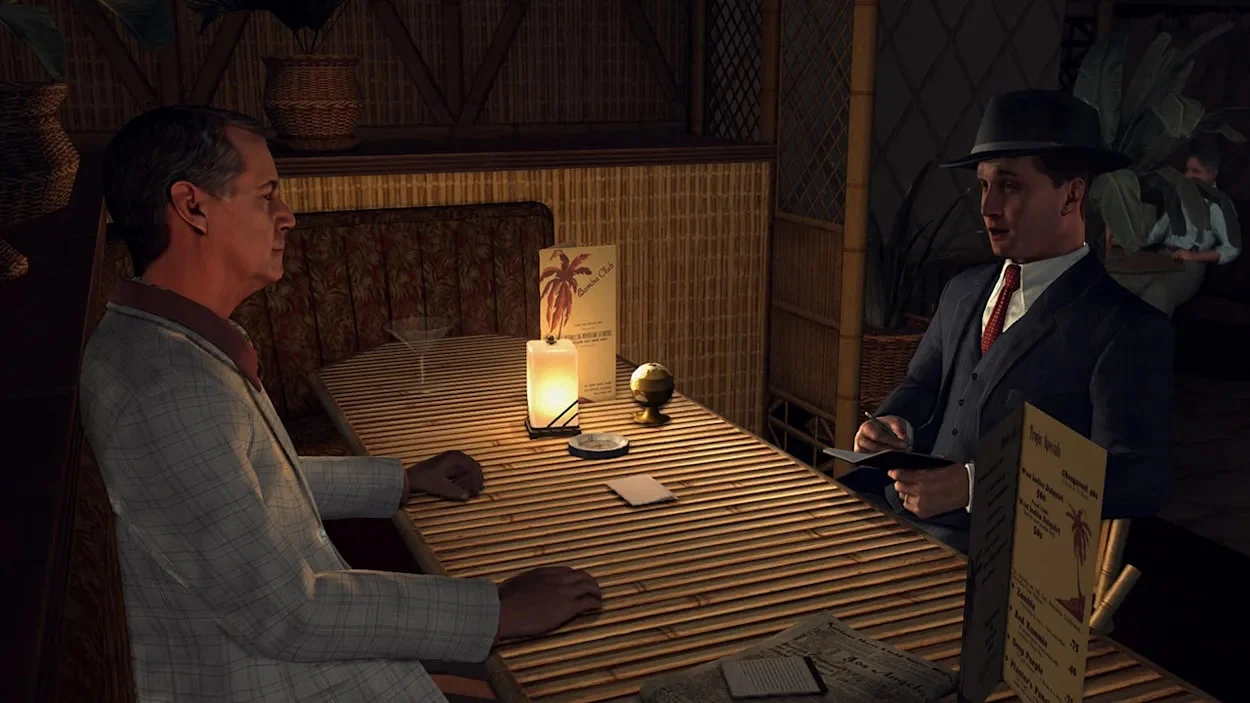
L.A. Noire interrogations are among the game’s defining mechanics. Witnesses and suspects do not merely deliver information; their reactions become part of the evidence. During interviews, players choose dialogue responses while considering what a person says, how they say it, and whether the available clues support their account.
MotionScan technology gives the characters detailed facial animation, making close observation important during questioning. A glance, hesitation, guarded expression, or shift in body language may suggest that an answer deserves more scrutiny. Those signals are not a substitute for evidence, however. The strongest questioning choices come from comparing a reaction with what has already been found at a crime scene.
This system gives the game a presentation style that suits its subject matter. Interviews can feel tense because the player is asked to read a room rather than simply select a clearly labelled outcome. Careful attention to facial expressions, statements, and supporting evidence turns conversations into another form of investigation.
Action Between Cases: Chases, Shootouts, and Fistfights
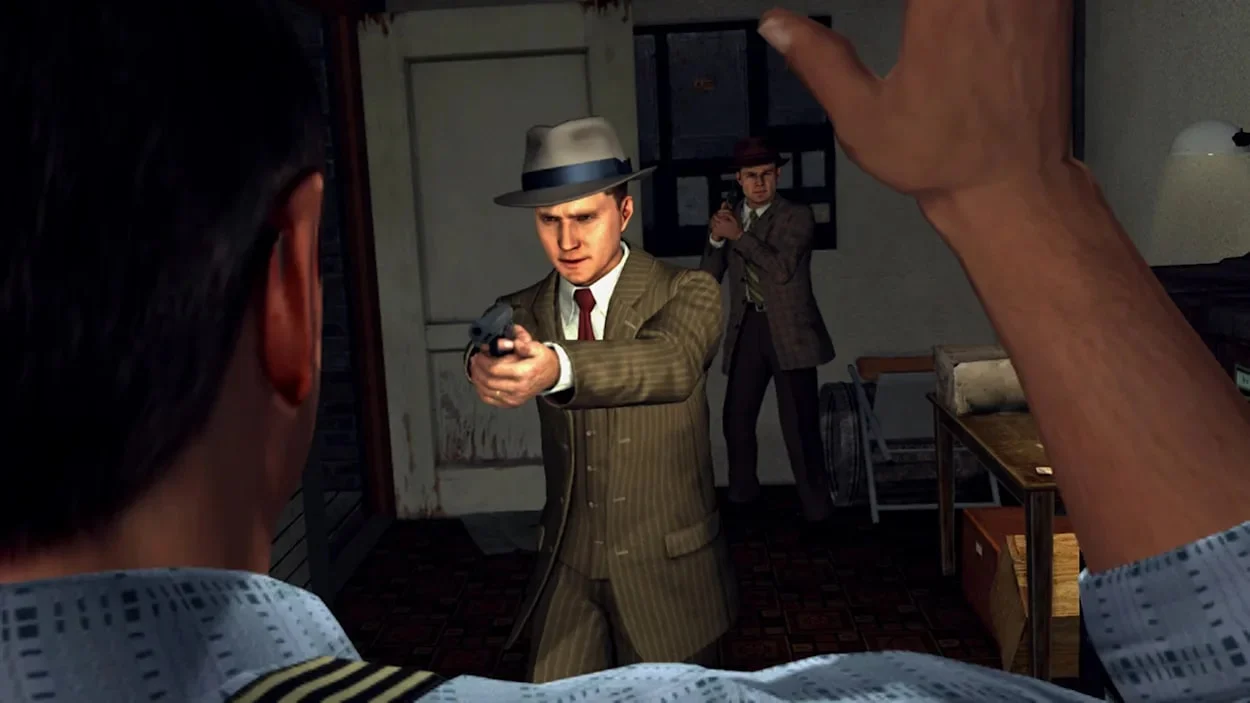
Investigation is central, but the city also produces more immediate confrontations. Players drive period-appropriate vehicles through 1940s Los Angeles, with car chases sending police and suspects through the streets. These sequences add movement and urgency to cases that may otherwise unfold through searching and interviews.
There are also on-foot pursuits, shootouts, and fistfights. A lead can turn into a chase, while a confrontation with a criminal can require force rather than further questioning. The action elements broaden the rhythm of a case without replacing its detective focus; clues and interviews still provide the foundation for understanding what happened and why.
The mix of driving, pursuit, gunfights, and close-quarters fights makes the work of an investigator feel less static. One moment may involve examining an overlooked object in a room, while the next demands catching someone who has chosen to run. That contrast helps the game move between patient observation and sudden danger.
7 Investigation Habits for Handling L.A. Noire Cases
Successful cases reward patience. These L.A. Noire gameplay tips are grounded in the game’s evidence gathering, interview systems, and detective notebook tools.
- Search every scene carefully. Crime scenes can contain clues that shape later conversations, so take time to inspect the environment rather than leaving as soon as an obvious item appears.
- Check overlooked areas. Seemingly minor details may matter, and interactive examination can reveal evidence or hidden items connected to the case.
- Use the detective notebook. Keep track of clues, persons of interest, and objectives so that a new lead can be compared with earlier information.
- Watch reactions closely. During interviews, study facial expressions and body language alongside the words being spoken.
- Support challenges with evidence. If an answer seems doubtful, review the clues before deciding how to respond during questioning.
- Do not rush interviews. A fast judgment can miss the value of a hesitant reply, a guarded expression, or a detail that conflicts with the evidence.
- Review the case before moving on. Reconsidering the available facts can help connect a person, place, or object that initially seemed unrelated.
These investigation habits also give the game lasting appeal for players who enjoy revisiting a case with closer attention. The pleasure comes less from speed than from noticing how evidence, notebook details, and interview reactions fit together.
Nintendo Switch Release Details and Supported Languages
L.A. Noire Switch NSP XCI corresponds to the Nintendo Switch release dated November 14, 2017. Rockstar Games is listed as publisher, while Team Bondi is listed as developer. The release is identified for Europe and USA regions.
The game is classified in the Action and Adventure genres. Supported languages are English, German, French, Spanish, Italian, Russian, and Japanese. Its blend of crime-scene examination, dialogue-based questioning, driving, chases, shootouts, and fistfights makes it particularly suited to players interested in a period detective drama where observation matters as much as action.
For players drawn to 1940s Los Angeles, police-case progression, and a presentation built around performance-driven interviews, L.A. Noire offers a focused crime narrative with investigation at the center of its experience.