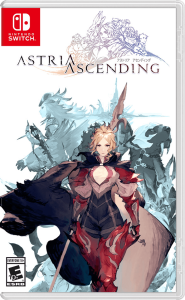
Astria Ascending Switch NSP
Report Link Error
Select the broken download file, then submit the report.
Screenshots
About Game
Astria Ascending Switch NSP brings a role-playing journey to Nintendo Switch built around a threatened world, a party of eight Demi-gods, and a familiar turn-based structure that rewards deliberate choices. Released on September 30, 2021, the game was published and developed by Plug In Digital for Europe and the USA, with language options in English, French, German, and Spanish.
Astria Ascending on Nintendo Switch: Release and Game Details
Astria Ascending Switch arrived as a Role-Playing release with a story set in Orcanon, a realm guarded by a generation of Demi-gods. These protectors confront hostile dark entities known as Noises while trying to preserve harmony in their world. The premise carries an immediate sense of pressure: the current Demi-gods have only three years left to live, giving their mission a defined and personal urgency.
Ulan is among the central Demi-gods facing this fate. Alongside her companions, she travels through Orcanon in search of a way to stop a catastrophe that threatens far more than a single region. The narrative frames its journey around sacrifice, friendship, duty, and the possibility of resisting a destiny that appears already decided.
Plug In Digital holds both the publisher and developer credits. The Switch release supports Europe and the USA, and its available languages make its dialogue and menu experience accessible across English, French, German, and Spanish-speaking audiences. Its technical metadata lists Title ID 01003070146FE000, with firmware requirements noted as v12.1.0 for the base release and v14.1.1 for the update.
Turn-Based Battles Built Around Strategy
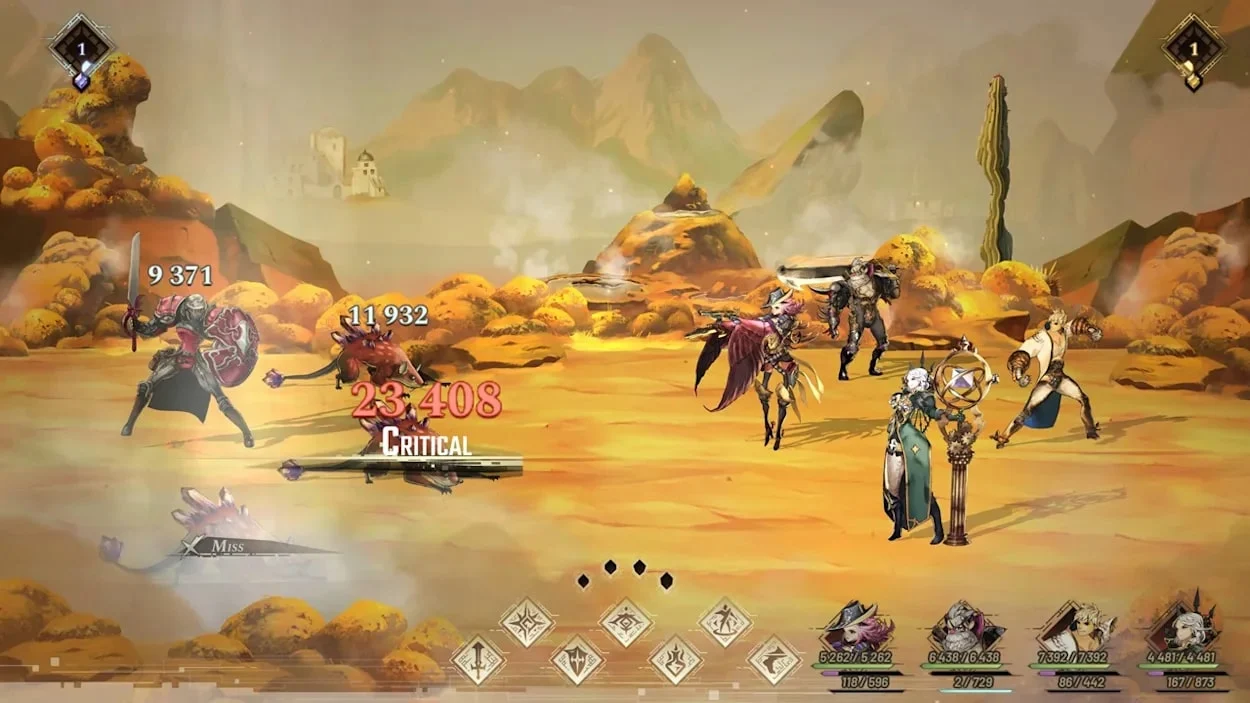
Combat follows a classic turn-based JRPG rhythm, but the important decisions extend beyond simply choosing an attack. The party is made up of Demi-gods with distinct abilities and battlefield roles, so success depends on reading encounters and assigning actions with purpose. A more defensive choice, a carefully timed ability, or the right character in the right situation can matter as much as raw power.
Elemental weaknesses are a major consideration. Enemies are not merely obstacles to wear down; they invite players to identify favorable options and use the party’s skills accordingly. Positioning also plays a role, adding another layer to battle planning. These systems give encounters a methodical pace, particularly when stronger foes demand a more disciplined approach.
Boss battles reinforce that emphasis. They are presented as challenging encounters that call for careful execution of the team’s available skills. The game’s combat is therefore well suited to players who enjoy pausing to consider a turn, managing a group rather than relying on one lead character, and adapting a plan when an enemy’s strengths or weaknesses become clear.
How the F-Orb Mechanic Adds Tactical Options
The F-Orb mechanic adds a strategic boost system to Astria Ascending’s traditional turn-based foundation. Rather than replacing the genre’s familiar structure, it gives players another decision point within it: when to strengthen an action and how that added benefit fits the condition of the battle.
That makes the system especially relevant in difficult encounters, where a boosted move may be more valuable than using resources without a clear purpose. The F-Orb mechanic complements the game’s broader focus on planning, elemental awareness, and party management. It is a small but meaningful part of the JRPG battle system, encouraging players to think beyond the immediate turn and consider the momentum of the fight.
Eight Demi-gods, Job Classes, and Party Customization
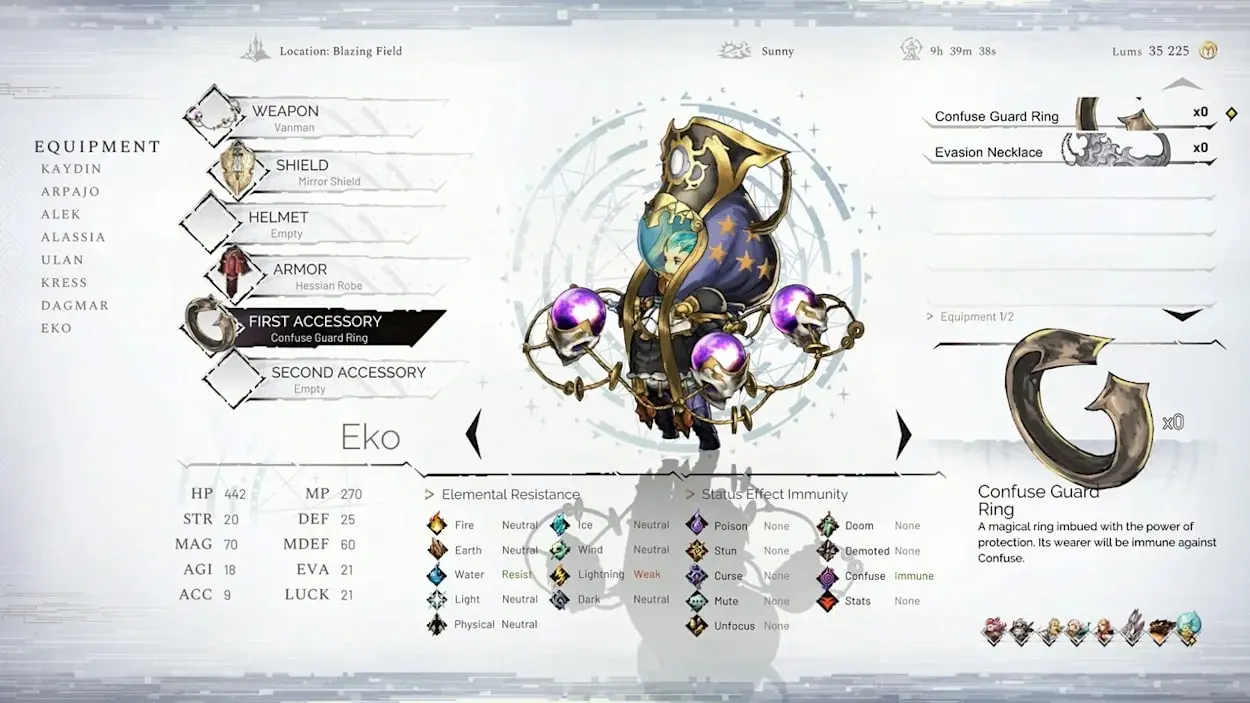
A party of eight Demi-gods gives the game room for flexible party customization. Each character has a different role and set of abilities, while progression allows players to unlock skills, improve equipment, and experiment with job classes. Instead of forcing every group into one fixed arrangement, Astria Ascending provides tools for shaping a team around individual preferences and the demands of particular battles.
Job classes are central to that flexibility. They give players opportunities to explore combinations of abilities and build a party that better handles weaknesses, durability, or offensive needs. Equipment upgrades further support the sense of development, while new skills provide reasons to revisit how each Demi-god contributes.
This progression system also supports replay value in a practical sense. Different job choices and party setups can lead players to approach the same challenge with different priorities. The central story remains focused on the same group and its looming fate, but the route through combat can reflect a player’s own tactical habits.
Exploring Orcanon’s Hand-Drawn 2D Environments
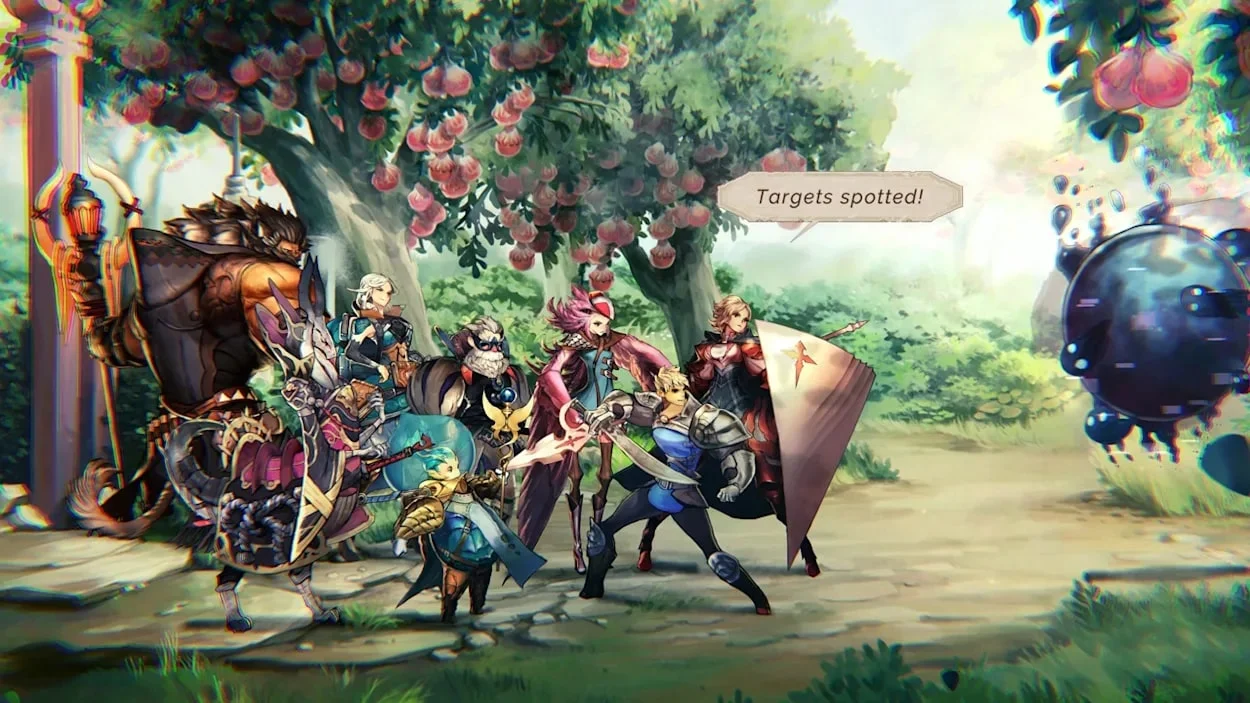
Outside battle, Orcanon is explored through hand-drawn 2D environments that range from cities to ancient ruins. The presentation gives the setting a storybook-like visual identity while still serving the needs of adventure: locations hold puzzles, hidden treasures, materials, and clues connected to the larger journey.
Exploration is not treated as a simple path between combat encounters. Environmental puzzles and scattered secrets encourage attention to the spaces between major story moments. Crafting materials can be gathered to create potent items, providing another reason to investigate regions thoroughly rather than move directly from objective to objective.
The result is an atmosphere that balances beauty with uncertainty. Orcanon is vibrant enough to invite discovery, yet its world is also under threat, and the ancient places visited by the Demi-gods carry the weight of the crisis they are trying to avert. For players drawn to 2D visual design and structured exploration, those environments are a substantial part of the experience.
5 Core Elements That Define Astria Ascending
- A finite mission: Eight Demi-gods protect Orcanon from the Noises while confronting the fact that their generation has only three years left to live.
- Measured battles: Turn-based combat emphasizes party roles, positioning, elemental weaknesses, and preparation for formidable boss encounters.
- F-Orb decisions: The F-Orb mechanic provides strategic boosts that add another tactical layer to individual turns.
- Buildable parties: Skills, equipment upgrades, and job classes let players tailor the Demi-gods to different battle needs.
- Places worth searching: Hand-drawn 2D cities, ruins, puzzles, secrets, and crafting materials make exploration a meaningful counterpart to combat.
Astria Ascending Switch NSP is best suited to players looking for a story-led role-playing game with deliberate combat, extensive character development, and a visually detailed world to search. Its appeal lies in the way those pieces connect: a pressured group of heroes, tactical fights that reward preparation, and an Orcanon that asks players to look beyond the next battle.
Recommended Similar Games
 Neptunia x Senran Kagura: Ninja Wars Switch NSPView Game
 The Legend of Heroes Sen no Kiseki I Kai Thors Military Academy 1204 Switch NSPView Game
 Tactics Ogre: Reborn Switch NSP XCIView Game
 2weistein – The Curse of the Red Dragon 3 – Ronger Pirates – V2 Switch NSPView Game
 Souls of Chronos Switch NSPView Game
 Sakura Dungeon Switch NSPView Game
