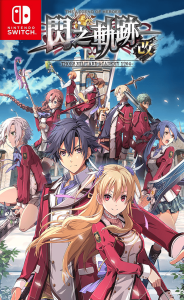
The Legend of Heroes Sen no Kiseki I Kai Thors Military Academy 1204 Switch NSP
Report Link Error
Select the broken download file, then submit the report.
Screenshots
About Game
The Legend of Heroes Sen no Kiseki I Kai Thors Military Academy 1204 Switch NSP is a role-playing game for Nintendo Switch that places school routines, party development, and turn-based combat within a story of social division and political tension. Released on July 8, 2021, it is published by Clouded Leppard Entertainment and carries a Japanese region designation. Supported languages include Japanese, Korean, Simplified Chinese, and Traditional Chinese.
What Sen no Kiseki I Kai: Thors Military Academy 1204 Is
This Nintendo Switch role-playing game is set in the Erebonian Empire, where a seemingly stable nation is marked by growing pressure beneath the surface. Its premise has room for both personal drama and larger events: students attend classes and form friendships, but their experiences gradually connect to conflicts affecting the empire itself.
Clouded Leppard Entertainment’s release centers on a structured RPG rhythm. Time spent at Thors Military Academy is not treated as a pause between battles; it is part of the game’s identity. Campus exploration, conversations, relationship-building, and school activities give context to the party before field studies and combat place those relationships under pressure.
The available language selection makes the release accessible to players who read Japanese, Korean, Simplified Chinese, or Traditional Chinese. With an 8.82 GB file size and firmware version 12.0.2 listed in its metadata, the game is presented as a substantial RPG focused on character progression and a continuing narrative.
Rean Schwarzer and the Purpose of Class VII
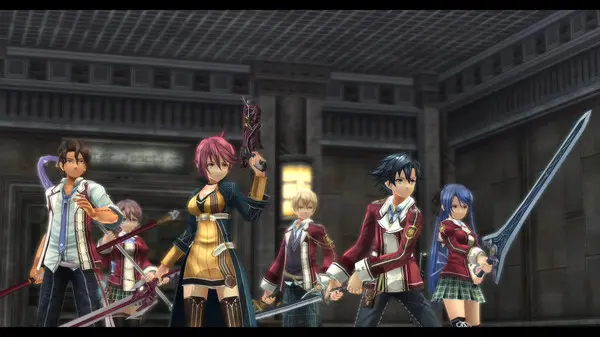
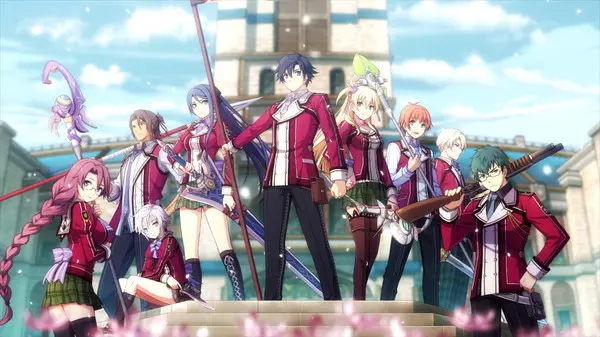
Rean Schwarzer enters Thors Military Academy as part of the newly created Class VII. The class has a defining difference from the academy’s other groups: it includes students from noble families and common backgrounds. In an empire shaped by clear social divisions, that arrangement makes Class VII a deliberate experiment as much as a classroom.
The result is immediate friction. Students arrive with different expectations, histories, and assumptions about one another, so the group cannot simply become a united team overnight. That tension gives the academy setting a practical narrative purpose. Class VII is where the empire’s divisions become personal, visible in conversations and in the relationships that develop through shared work.
Rean’s role places him close to those changing dynamics. As the academic year unfolds, the class must learn how to act together while confronting problems that reach beyond school grounds. The bonds formed among classmates matter because the story repeatedly asks them to respond to challenges as a group rather than as isolated students.
School Life and National Intrigue in One RPG
The game moves between the everyday texture of school life and a broader investigation into hidden plots. Classes, campus exploration, and character bonding events establish an atmosphere where routines have value. Players are given time to understand the academy, meet classmates, and see how its internal divisions reflect the conditions of the wider empire.
Those quieter stretches sit beside fieldwork, combat, and revelations about conspiracies beneath the country’s outward order. The contrast is central to the experience. A school activity can make the setting feel familiar, while a later mission can show how quickly that sense of stability is challenged by political intrigue.
This structure also supports the game’s character focus. Class VII members each bring their own background to the group, adding different perspectives to the academy’s conflicts and the national issues surrounding them. The story’s scale grows through those connections: personal struggles, friendship, and social pressure are tied to the same empire-wide tensions.
Orbments, Arts, Crafts, and Character Customization
Combat uses turn-based encounters with movement and tactical positioning. Success is not only about selecting an attack; placement and the timing of abilities matter. Each party member contributes a different set of options, encouraging players to consider how a group functions rather than relying on one repeated approach.
The Orbment system provides a major avenue for character customization. It allows abilities to be adjusted, giving players room to shape how characters contribute in battle. Arts and Crafts form part of the wider toolkit, offering different ways to respond to enemy groups and changing combat situations.
The Link System adds another cooperative layer. Forming Links between classmates supports partnered battle maneuvers, reinforcing the game’s interest in teamwork both narratively and mechanically. As characters level up and master new skills, party planning becomes more flexible. Equipment choices also matter, with weapons, armor, and accessories available to manage as progression continues.
Field Studies, Town Requests, and Optional Activities
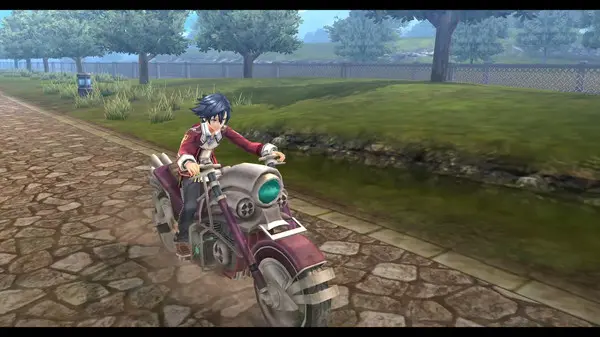
Field studies take Class VII away from the academy and into locations around the Erebonian Empire. These excursions broaden the sense of place while giving the party practical work to do. Exploration is paired with major story developments, but the game also includes side quests that ask players to assist residents in towns.
Those requests offer a useful change of pace from the main narrative. They make room for smaller problems and local concerns, while also providing opportunities for items and progression. The optional structure suits players who enjoy checking in with towns and taking time to explore rather than moving directly from one major event to the next.
Fishing and cooking provide additional activities beyond combat. Both can yield useful items, making them more than simple distractions. Combined with equipment management and character development, these systems give the RPG a steady rhythm: prepare the party, explore an area, help residents, and return to larger story concerns with stronger resources and a better understanding of the world.
5 Gameplay Priorities for New Class VII Members
For players beginning The Legend of Heroes Sen no Kiseki I Kai Thors Military Academy 1204 Switch NSP, a few practical habits can make its layered systems easier to read.
- Learn positioning. Turn-based battles include movement, so pay attention to where characters stand before committing to an attack or ability.
- Experiment with Orbments. The Orbment system supports character customization, making it worthwhile to test how different ability setups fit each party member.
- Use Links actively. Linked classmates can perform cooperative battle maneuvers, so party relationships have direct value during encounters.
- Keep equipment current. Review weapons, armor, and accessories as the party progresses, rather than leaving equipment management until a difficult fight appears.
- Make time for side activities. Field studies, town requests, fishing, and cooking can provide useful items and support progression outside the main route.
The game is particularly suited to RPG players who appreciate strategic turn-based battles alongside a story built around classmates, social divides, and an expanding national mystery. Its academy setting supplies a grounded daily rhythm, while Class VII’s fieldwork and the empire’s concealed conflicts ensure that the stakes do not remain inside the school walls.