Mercenaries Rebirth: Call of the Wild Lynx Switch NSP

Report Link Error
Select the broken download file, then submit the report.
Screenshots
About Game
Mercenaries Rebirth: Call of the Wild Lynx Switch NSP is a grid-based, turn-based tactical RPG for Nintendo Switch from developer Rideon Japan and publisher CIRCLE Ent. Released on November 11, 2021, it places strategic battles alongside a story of mercenary work, divided factions, and mounting conflict. Its mix of role-playing, simulation, action, and strategy elements is built around careful planning rather than hurried decisions.
A Tactical RPG Overview of Mercenaries Rebirth: Call of the Wild Lynx
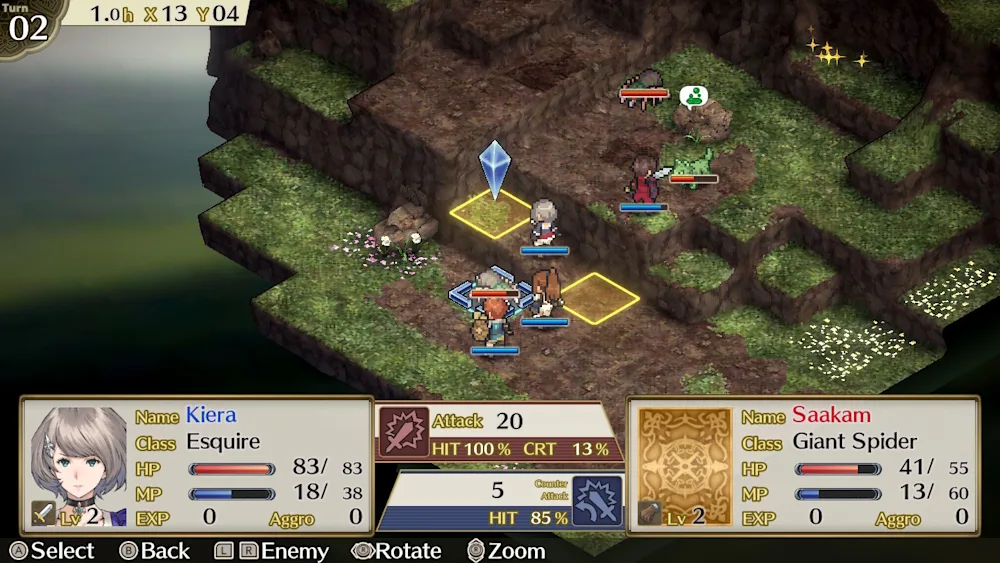
Mercenaries Rebirth: Call of the Wild Lynx follows the familiar tactical RPG structure of assembling a party, developing its members, and moving units across battlefield grids. Battles play out in turns on isometric maps, where placement, range, abilities, and enemy behavior all influence the next decision.
The game uses pixel-art presentation to frame its war-torn setting and its cast of mercenaries. Rather than treating combat as a simple exchange of attacks, it asks players to consider how each class and character fits into the larger formation. Active and passive skills give units distinct functions, so a capable group is not merely one with the highest levels, but one whose members can support a workable plan.
For players who enjoy tactical RPGs that reward patience, the appeal lies in reading a map and responding to the conditions it creates. Different battlefields and enemy types encourage changes in approach, while the wider progression systems provide reasons to revisit team setups and skill choices.
Leading the Eclaire Mercenary Company
The campaign centers on the Eclaire mercenary company, led by its commander, Claude. The company enters a world already strained by rising tensions, then takes on missions as conflicts deepen. Its work brings the group into contact with multiple factions and increasingly dangerous opponents.
That mercenary perspective gives the narrative a practical starting point. The Eclaire company is not presented as operating outside the consequences of war; its assignments place its members in the middle of disputes that continue to grow in scale. Claude’s leadership anchors the group as it faces changing circumstances and difficult encounters.
The war-torn world is also reflected in the game’s structure. Missions are not simply isolated challenges, since the company’s path is tied to the people, forces, and rival interests it meets along the way. The result is a tactical campaign where the battles serve the movement of a larger conflict.
Political Intrigue, Ancient Mysteries, and Personal Stakes
The story combines factional conflict with political intrigue, ancient mysteries, and personal struggles. As the Eclaire company moves through the campaign, alliances and betrayals carry weight because the surrounding conflict involves competing motivations rather than a single uncomplicated threat.
Its character writing is supported by a varied cast whose members have their own motivations and backstories. Those personal histories help give the party and its encounters more texture. Individual personalities matter to the narrative, particularly when relationships shift or when a character’s reasons for fighting come into focus.
Ancient mysteries add another thread to a setting otherwise shaped by immediate military and political pressure. This combination gives the story room to move between broad conflict and more personal concerns. The game’s atmosphere comes from that overlap: a world under strain, mercenaries navigating its dangers, and characters whose choices are shaped by their own pasts.
How Isometric Grid Combat Shapes Each Battle
Combat is driven by an isometric grid, where movement is as important as the attack selected from a menu. Unit positioning can determine who is protected, who can reach a target, and which allies are close enough to contribute. Careful awareness of the battlefield is necessary because enemy types call for different tactical responses.
Turn order adds another layer to each encounter. A strong move may not be useful if a unit is exposed before support can arrive, while a modest repositioning can create a better opportunity for the next character in the sequence. Players are encouraged to weigh immediate damage against the shape of the formation after the turn ends.
- Read the terrain: High ground can offer advantages, making elevation part of the tactical picture.
- Protect the formation: Unit positioning helps keep allies in useful ranges while limiting unnecessary exposure.
- Look for flanks: Attacking from favorable positions can lead to critical hits.
- Match damage to attributes: Elemental weaknesses can provide bonus damage against suitable enemies.
- Adapt to opponents: Different enemy types require changes to skills, party roles, and battlefield plans.
The game’s tactical demands therefore extend beyond selecting the strongest available attack. Party composition, terrain, positioning, and enemy attributes all contribute to the rhythm of a battle.
Rebirth Ex and Assist Actions in Combat
Two combat systems add further options to the turn-based framework. Rebirth Ex provides powerful special attacks that can change the direction of a difficult fight. Their presence gives players a higher-impact tool to consider when ordinary actions may not be enough.
Assist actions emphasize nearby allies and formation planning. When units are positioned close enough, allies can join an attack, making cooperation part of offensive decision-making. This means that a character’s location can matter even when it is not that character’s turn to act.
Together, these systems reinforce the game’s interest in coordinated play. Rebirth Ex attacks offer moments of force, while Assist actions reward teams that stay connected and positioned with purpose. In Mercenaries Rebirth: Call of the Wild Lynx Switch NSP, the best opening is not always the most obvious one; a move that prepares an ally may create the more valuable result.
Character Growth Through Skill Trees and Rebirth
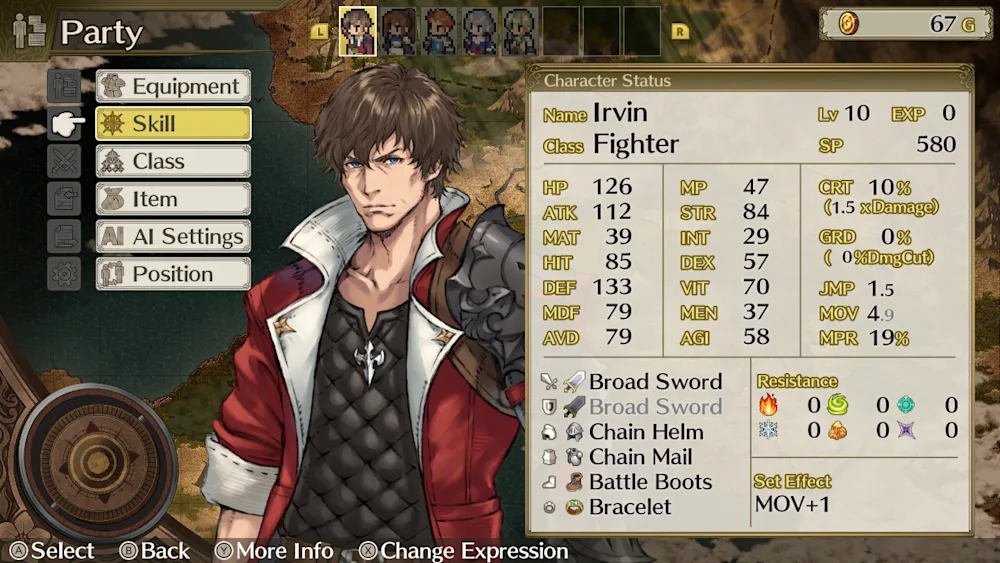
Progression continues outside individual battles through leveling, equipment, accessories, and skill-tree customization. Characters can be developed through their available active and passive skills, allowing players to shape a lineup around the needs of the party and the challenges ahead.
The Rebirth process is particularly important to long-term growth. It resets a character’s level while granting permanent stat boosts, creating an additional path for strengthening mercenaries over time. This system invites players to think beyond a single level cap and consider how repeated development can improve a unit’s future potential.
Free battle stages support that growth by offering places to gain experience and materials before tougher encounters. They also provide a reason to revisit tactical choices, test different combinations, and prepare characters for more demanding missions. For an audience drawn to measured turn-based strategy, skill planning, and party development, Mercenaries Rebirth: Call of the Wild Lynx offers a framework built around steady experimentation and battlefield awareness.