Trombone Champ Switch NSP
Report Link Error
Select the broken download file, then submit the report.
Screenshots
About Game
Trombone Champ Switch NSP brings a deliberately unruly take on rhythm gaming to Nintendo Switch. Released in the USA on September 15, 2023, this Music and Party title from Holy Wow Studios asks players to chase musical accuracy with an instrument built for comic chaos. The aim is simple enough—follow the notes, find the pitch, and toot on time—but the path to a clean performance can be wonderfully messy.
Trombone Champ on Nintendo Switch: A Brassy Rhythm Game Overview
Trombone Champ approaches music through the peculiar, expressive sound of the trombone. Instead of presenting a polished band performance as the only goal, it makes room for the strange noises produced while players learn its unusual rhythm mechanics. A well-timed note can feel rewarding; a badly judged one can turn into an off-key interruption that is just as memorable.
Its Switch release fits the game’s Music and Party classification. The central activity is score-driven song performance, yet the tone is light rather than stern. There is room to practice for better results, but there is also room to laugh when a song takes an unexpected brass-heavy detour. The result is a Nintendo Switch rhythm game that treats precision seriously enough to create challenge while keeping the mood intentionally silly.
The presentation is rooted in a whimsical world of trombone mastery, quirky discoveries, and musical absurdity. It is not framed as a grand concert-hall simulation. It is a game about trying to play songs well while accepting that the road there may involve squawks, fumbles, and gloriously imperfect toots.
The Quest to Become Trombone Champ
Trombone Champ does not rely on a conventional epic story. Its progression is instead built around a personal pursuit: improving as a performer and earning the right to claim Trombone Champ status. Each song offers another opportunity to sharpen timing, raise a score, and move further into the game’s playful trombone-focused world.
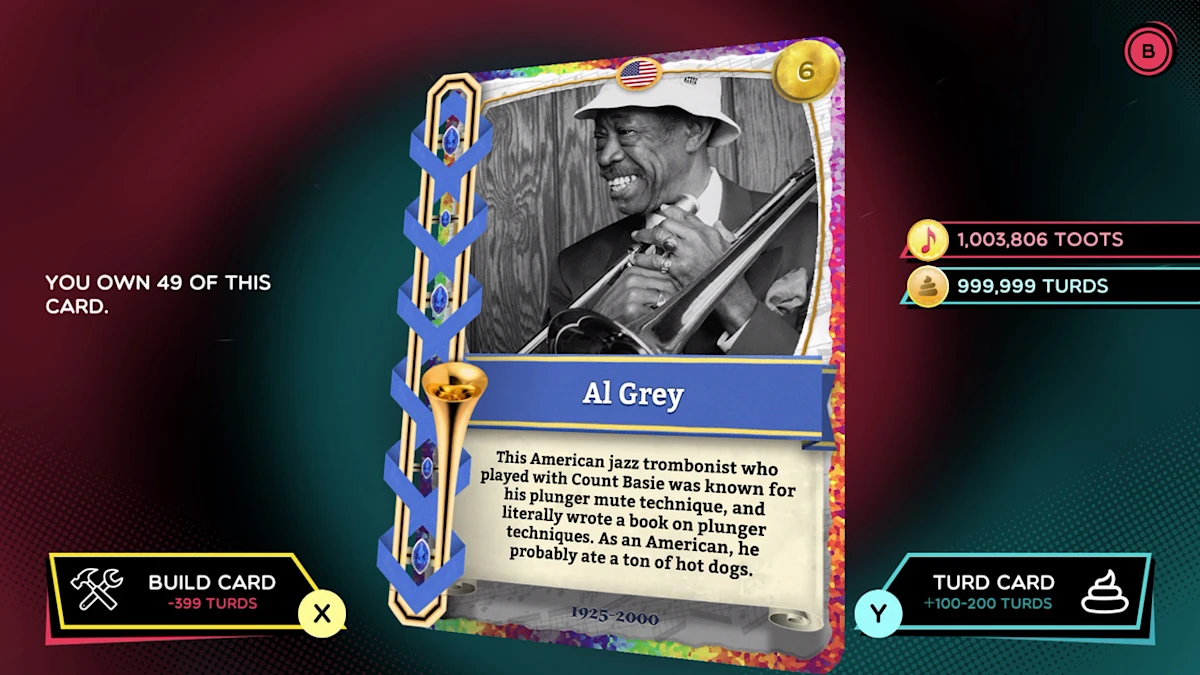
Performance creates the main sense of forward motion. Better runs and continued play can unlock more songs, different trombone sounds, and Tromboner Cards. These cards provide quirky facts about real trombones and notable players, giving the game an additional collectible element without changing its lighthearted direction.
This structure makes the player’s own improvement feel like the story. A first attempt may be full of wavering notes, while later performances can become steadier as the slide controls and rhythms begin to make sense. The pursuit of Trombone Champ status is less about saving a kingdom than building a legend one toot at a time.
How the Trombone Slide Controls Work
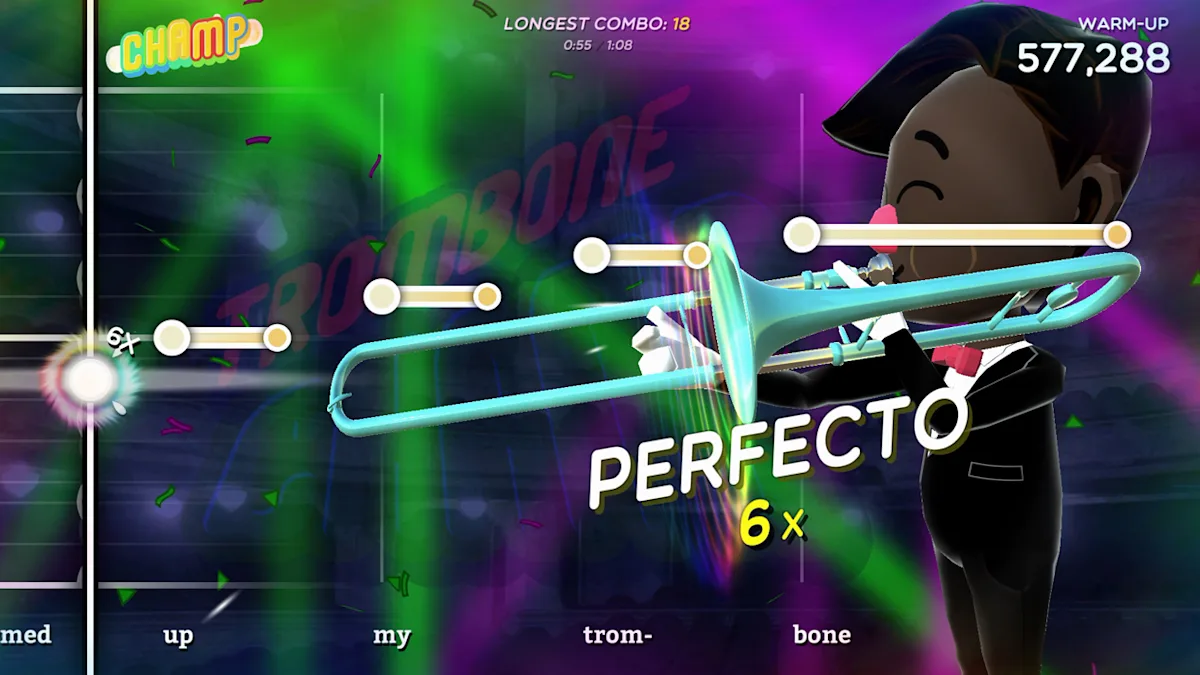
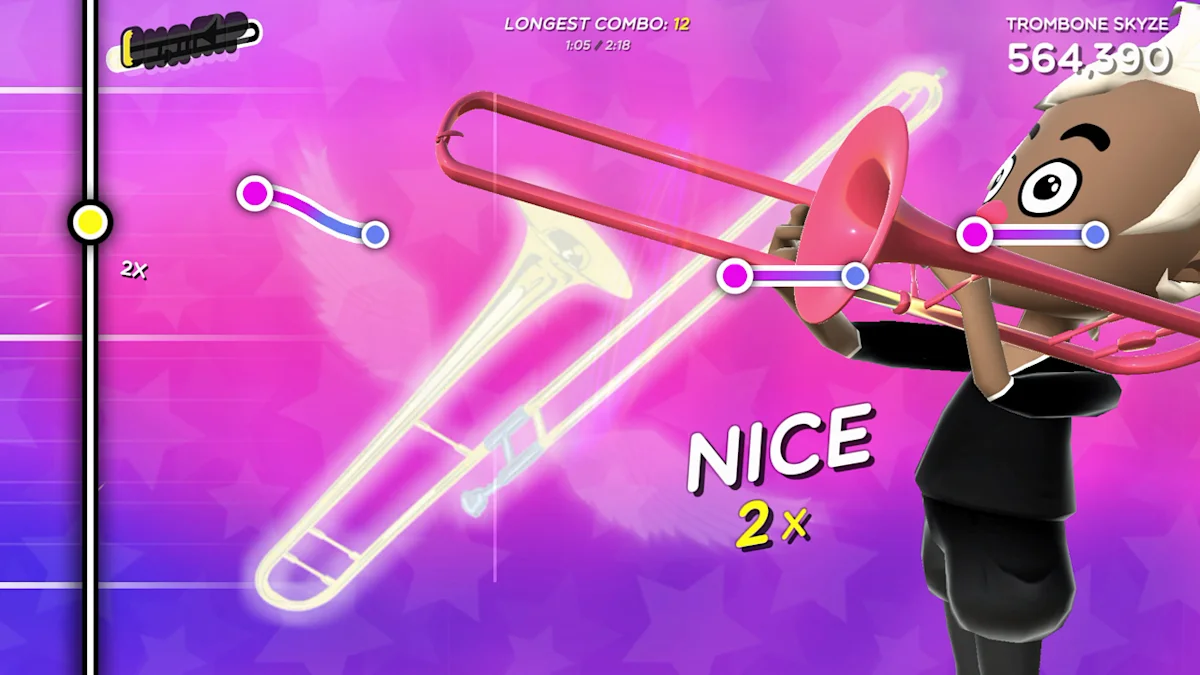
The central idea behind Trombone Champ controls is to use the controller’s analog stick as a trombone slide. As notes travel across the screen, the player moves the stick to adjust pitch, attempting to line up with the incoming target. It is a direct concept, but it asks for coordination that differs from simply pressing notes in a more traditional rhythm game.
Pitch control and button input work together. Finding the right position with the analog stick is only part of the task; the player must also press a button to toot at the appropriate time. That combination gives each note a physical, slightly unstable quality. A small error in slide movement can change the sound immediately, which helps make the instrument feel both approachable and difficult to master.
- Watch the notes: Follow the on-screen prompts as they approach.
- Move the slide: Use the analog stick to bring the pitch into line.
- Toot on cue: Press the button when the note should be played.
- Protect the rhythm: Keep timing and pitch aligned through the song.
- Learn through repeats: Start with easier songs before taking on more complex material.
The game also simulates breath management, adding another consideration during a performance. Rather than reducing the experience to one repeated motion, this makes a song feel like an active balancing act between position, timing, and sustained control.
Timing, Pitch, and the Perfect Toot
A perfect toot depends on two connected skills: reaching the proper pitch and playing the note at the right moment. The scrolling note display provides the immediate visual guide, but reacting cleanly takes practice. Players need to read what is coming, shift the analog stick accurately, and commit to the button press without losing the song’s pulse.
Accurate performances lead to stronger results and higher scores. That score chase gives repeated sessions a practical purpose, particularly for players who want to revisit songs and improve a previous run. As familiarity grows, the challenge becomes less about discovering the controls and more about maintaining consistency through a full performance.
Mistakes are not hidden away. If the slide lands in the wrong place or the toot arrives at the wrong time, the game answers with an off-key sound. Those moments make the learning curve audible. They can be frustrating when pursuing a high score, but they also make every improvement easy to recognize.
Why the Game’s Musical Mistakes Are Part of the Fun
Trombone Champ humor comes from the tension between musical ambition and inevitable instability. Players may set out to deliver a smooth rendition of a song, only for a missed pitch to produce a spectacularly awkward brass noise. The game does not treat those failures as a reason to stop playing; it turns them into part of the show.
That design gives the experience a welcoming quality for different skill levels. Players focused on mastery can pursue cleaner timing and higher scores, while players drawn to a funny rhythm game can enjoy the chaos of an unexpectedly disastrous performance. The same mechanics support both reactions because the off-key squawks are a natural consequence of play, not a separate joke pasted on top.
For that reason, Trombone Champ Switch NSP works best when its silliness is embraced alongside its demands. A good run is satisfying because it takes control. A bad run can still be entertaining because the trombone refuses to fail quietly.
Solo Sessions and Local Multiplayer Brassy Battles
Solo play offers the clearest space to learn the slide system, understand rhythmic cues, and work toward stronger scores. Repeating songs can help players become more comfortable with pitch changes and the timing required for accurate toots. Unlockable songs, alternate trombone sounds, cards, secrets, and silly accomplishments provide reasons to keep exploring.
Local multiplayer changes the energy from private practice to shared musical chaos. Friends can challenge one another in brassy battles, turning missed notes and surprisingly clean runs into part of the group reaction. The party rhythm game appeal comes from that contrast: everyone can appreciate a successful performance, but an especially dramatic squawk may earn just as much attention.
It is suited to players who enjoy rhythm challenges with a comic edge, as well as groups looking for local multiplayer that does not demand perfect musical skill before the fun begins. Trombone Champ leaves space for score chasing, collecting, practice, and loud mistakes—all in pursuit of becoming the champion.