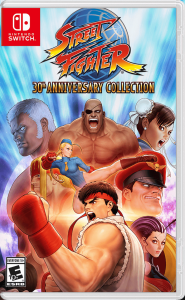
Street Fighter 30th Anniversary Collection Switch NSP
Report Link Error
Select the broken download file, then submit the report.
Screenshots
About Game
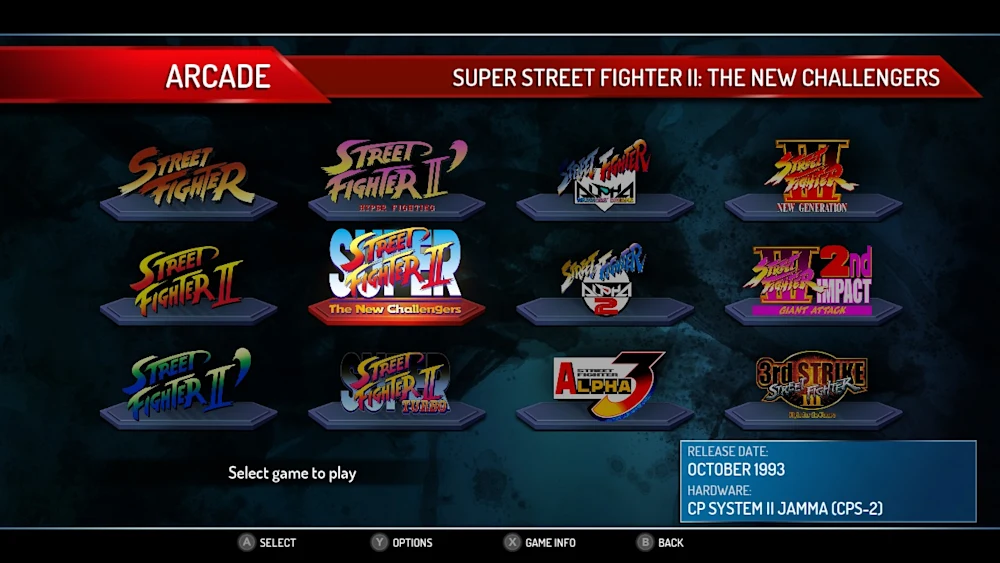
Street Fighter 30th Anniversary Collection Switch NSP is a Capcom fighting-game collection released for Nintendo Switch on May 29, 2018. Available in Europe and the USA, it brings together 12 classic arcade Street Fighter games spanning the series’ earliest entries through Street Fighter III. The result is a compact historical tour of competitive 2D fighting: different eras, changing rosters, and many versions of the mechanics that made the franchise a fixture of arcades and home play.
Street Fighter 30th Anniversary Collection on Nintendo Switch: Release and Platform Details
Capcom both developed and published this Nintendo Switch release. Its May 29, 2018 launch placed a large portion of Street Fighter’s arcade history on one handheld-capable platform, while retaining the games’ competitive focus. The collection is categorized as a fighting game, and that genre label suits it closely: matches are built around direct confrontations, character knowledge, timing, and the gradual improvement that comes from repeated play.
The package covers the original Street Fighter, several iterations of Street Fighter II, the Street Fighter Alpha series, and the Street Fighter III games. Rather than presenting one uniform fighting system, it places players in front of multiple interpretations of the series. That makes it useful as both a playable archive and a set of distinct competitive games with their own rhythms.
For players returning to familiar arcade entries, the appeal is the chance to revisit their original game paths and character matchups. For newcomers, the collection offers a clear way to see how Street Fighter’s controls, styles, and cast developed across three decades.
How the Collection Traces Street Fighter’s Story Eras
The collection’s games are primarily driven by tournaments and personal rivalries, but they also chart the changing shape of Street Fighter’s world. Ryu and Ken provide an early through-line, defined by their martial-arts training and pursuit of greater skill. Their journeys give many of these games a human focus: fighters enter the tournament for very different reasons, from proving their strength to seeking redemption or pursuing power.
Street Fighter II broadens that foundation through its conflict with M. Bison and the Shadaloo organization. The tournament format remains central, yet the stakes extend beyond individual ambition as characters confront Shadaloo and its influence. Familiar fighters including Chun-Li and Guile help give this era a broader cast of motivations and rivalries.
The Alpha games explore another set of character dynamics, alliances, and confrontations. Then Street Fighter III shifts the focus forward with a newer generation of fighters and a fresh chapter in the series narrative. Seen in sequence, these games do not tell one uninterrupted story in the same way as a single-player adventure. Instead, they offer connected snapshots of a fighting-game universe, shaped one arcade ladder and one rivalry at a time.
- Martial-arts pursuit: Ryu and Ken’s drive to improve provides a recurring personal thread.
- Tournament stakes: Each game uses competition as the route toward key confrontations.
- Shadaloo conflict: Street Fighter II connects many fighters to M. Bison’s organization.
- Alpha dynamics: The Alpha era adds its own rivalries and character relationships.
- A new generation: Street Fighter III moves the series forward with newer fighters and a different narrative focus.
Classic 2D Fighting Gameplay Across Three Street Fighter Generations
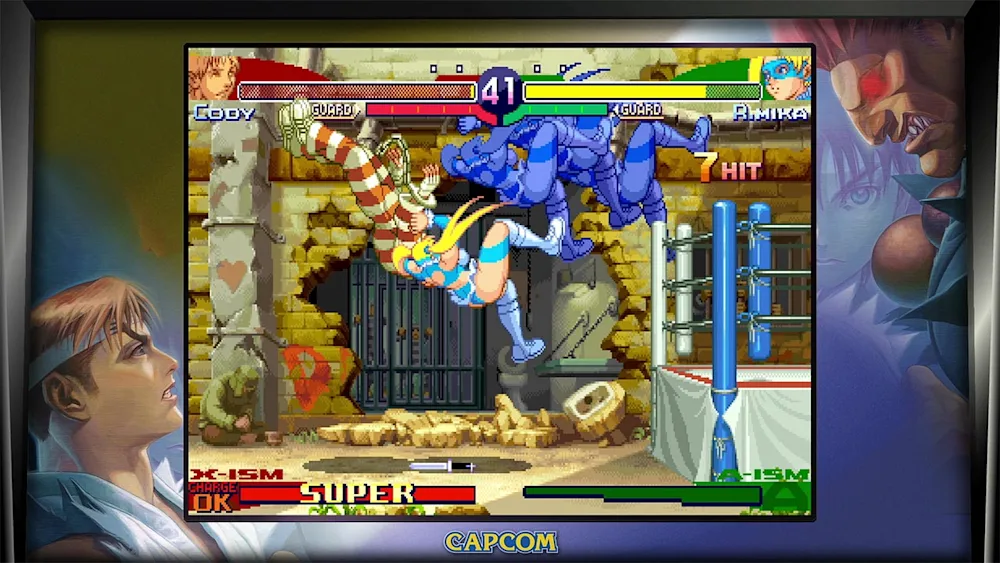
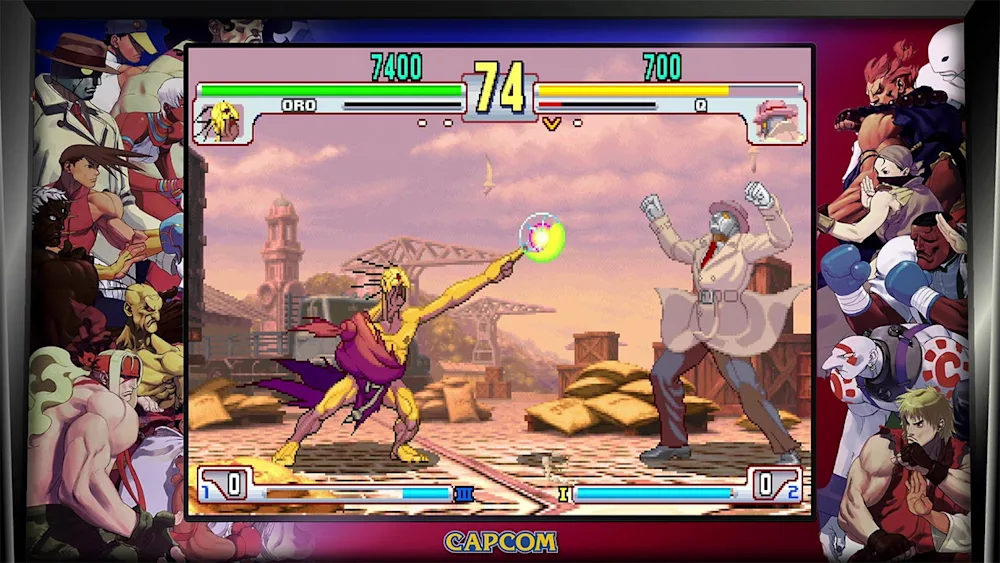
The central appeal of these games is their classic 2D fighting structure. Players choose a character, learn their movement and attacks, and attempt to control space while anticipating an opponent’s decisions. Special moves depend on precise inputs, while successful combos require timing and an understanding of what can connect. The fundamentals are straightforward to describe but demanding to master.
Each era has its own feel. The original Street Fighter sits at the beginning of the series’ arcade lineage. The many Street Fighter II versions show how the formula expanded through different iterations. The Alpha games and Street Fighter III continue that evolution with their own character rosters and gameplay identities. Moving between them can be revealing: familiar names and moves return, but pacing, options, and match dynamics change.
This is not a collection built around a single progression system. Its sense of progression comes from the player. A special move that initially feels inconsistent becomes reliable; a difficult matchup becomes easier to read; a short combo becomes a practiced response. The replay value comes naturally from that process, as well as from the range of games, characters, and opponents available.
For a player who enjoys deliberate controls and visible improvement, Street Fighter 30th Anniversary Collection Switch NSP offers many separate paths to mastery. Those expecting every title to play alike may find the differences more demanding, but those differences are also the point of the collection.
Arcade, Versus, and Training Modes for Different Play Styles
Arcade Mode is the appropriate starting point for players who want to follow each game’s original paths. It frames the fighting around a run of computer-controlled opponents and lets the character-driven tournament structure take the foreground. This mode suits a player looking for the arcade atmosphere of working through a roster of challenges, one match after another.
Versus Mode shifts the focus to local competition. Friends can select fighters and settle matchups directly, without the structure of an arcade run. Because these games place such importance on spacing, reactions, and character-specific tools, local battles can quickly become tests of adaptation as much as execution.
Training Mode provides a dedicated space for practicing special moves and combos. That matters across a collection of this size. A player can spend time learning a character’s unique style before taking that knowledge into Arcade or Versus play. Training is especially relevant for those who appreciate the series’ technical side, but it also serves anyone who wants more confidence with basic inputs.
The collection also includes a Museum Mode with historical artwork and character bios. It adds presentation beyond the matches themselves, offering context for the fighters and visual history represented by the games.
Local Multiplayer and Online Play in Select Titles
Street Fighter is at its most immediate when two players are sharing the same match, and the collection supports local multiplayer battles for that purpose. Local Versus play is suited to quick rematches, informal sessions, and the familiar competitive tension of learning an opponent’s habits over several rounds.
Online play is available for four included titles. That limitation is worth noting because the collection contains 12 games, but it still gives selected entries a way to extend beyond local matchups. The online component complements, rather than replaces, the wider package: Arcade, Training, local Versus, and the Museum remain part of the collection’s broader appeal.
The audience is therefore wider than long-time specialists alone. Experienced players can revisit particular arcade versions and refine advanced techniques. Players curious about Street Fighter’s history can compare its generations directly. Local groups looking for competitive 2D fighting also have a varied set of games to rotate through, from early arcade foundations to later Street Fighter III battles.
Language and Regional Information for the Switch Edition
The Nintendo Switch edition is listed for the Europe and USA regions. Its listed language options are English, Japanese, French, German, Italian, Spanish, Korean, and Chinese. English appears twice in the supplied language listing, alongside Japanese and the other available languages.
That regional and language coverage supports the collection’s role as a broad celebration of Street Fighter’s arcade legacy. The games remain rooted in direct, competitive matches, but the surrounding options—multiple series eras, character bios, artwork, local play, training, and online support for four titles—give players more than one way to approach that legacy.
Recommended Similar Games
 BloodRayne Betrayal: Fresh Bites Switch NSP XCIView Game
 Demon Slayer -Kimetsu no Yaiba- The Hinokami Chronicles Switch NSPView Game
 Melty Blood: Type Lumina – Deluxe Edition Switch NSPView Game
 Pirates Outlaws Switch NSPView Game
 BlazBlue Cross Tag Battle Switch NSP XCIView Game
 Sifu Switch NSP XCIView Game
