Demon Slayer -Kimetsu no Yaiba- The Hinokami Chronicles Switch NSP

Report Link Error
Select the broken download file, then submit the report.
Screenshots

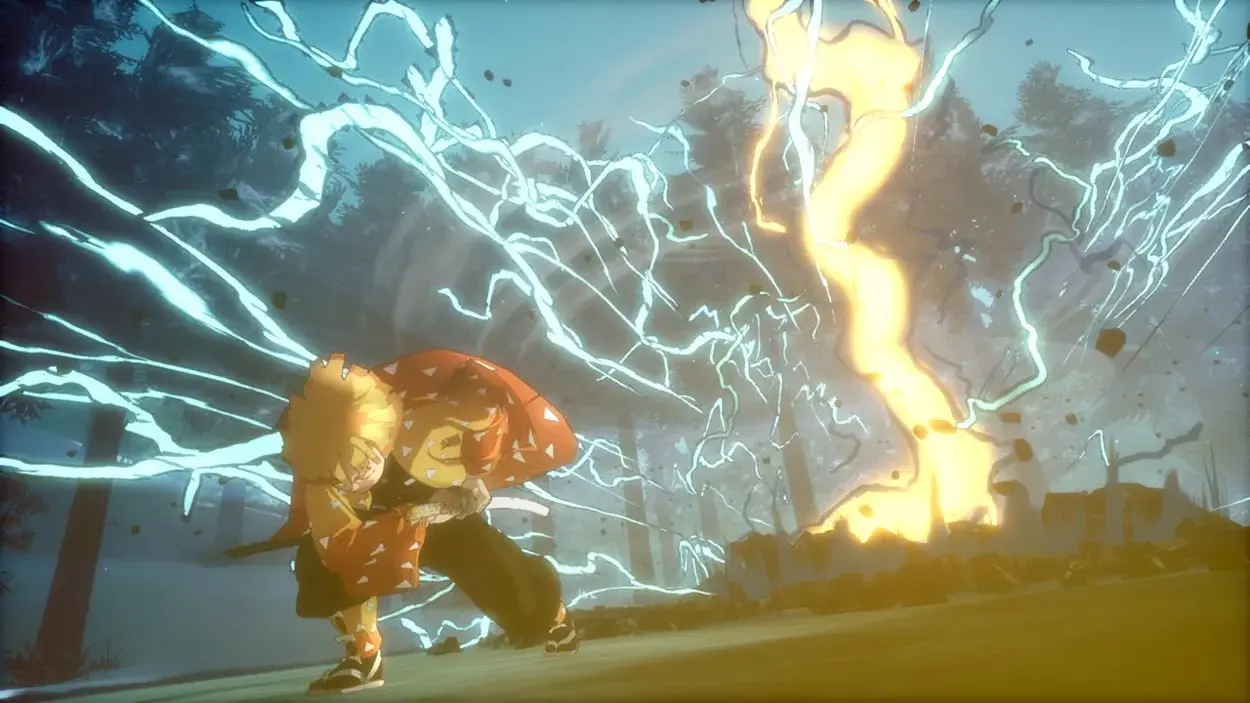
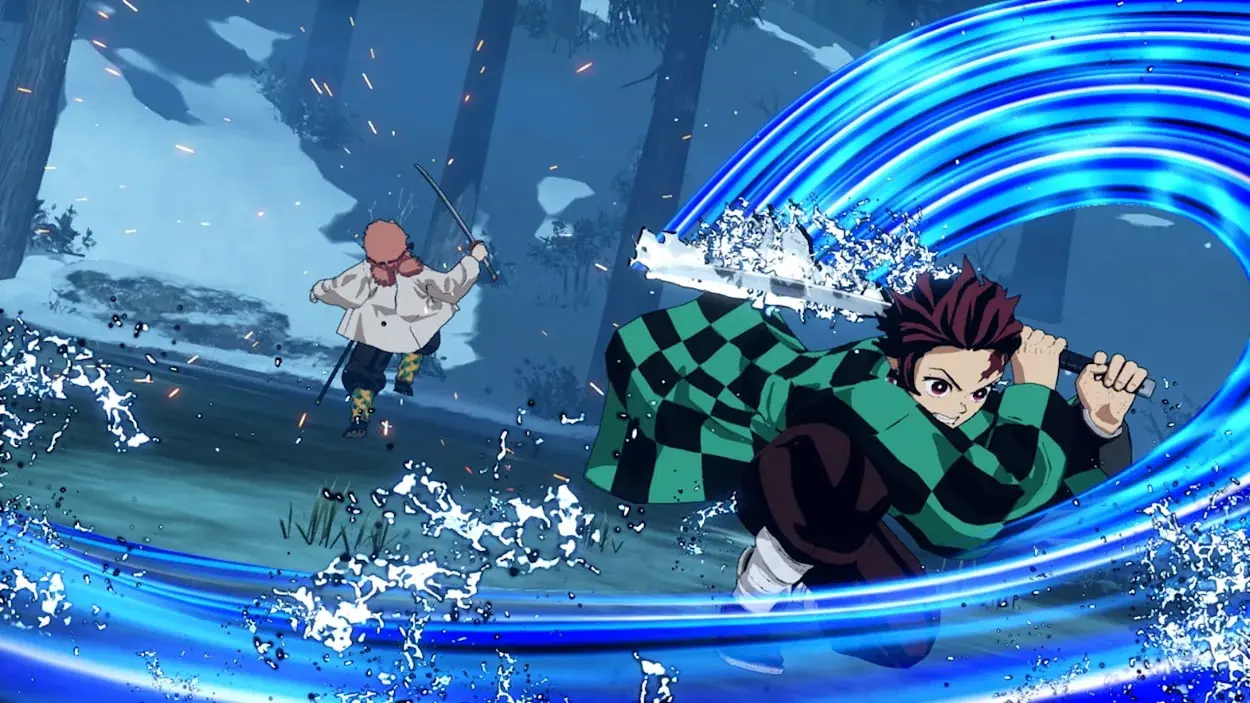
About Game
Demon Slayer -Kimetsu no Yaiba- The Hinokami Chronicles Switch NSP brings Tanjiro Kamado’s demon-slaying mission to Nintendo Switch in an action-fighting adaptation built around story scenes, exploration, and dramatic one-on-one clashes. Its appeal comes from the way it connects a familiar anime narrative with accessible 3D combat, while leaving room for players to learn the distinct attacks of its heroes and villains.
An Anime Adaptation Centered on Tanjiro Kamado’s Journey
The Demon Slayer story begins with a devastating loss. Tanjiro’s family is attacked by demons, and his sister Nezuko is the only survivor. Her survival carries a terrible cost: she has been transformed into a demon. Tanjiro’s path is therefore driven by two connected goals. He seeks revenge for his family while searching for a cure that could restore Nezuko.
The game follows that personal journey as Tanjiro trains to become a Demon Slayer and confronts increasingly dangerous enemies. Its story material includes his training under Sakonji Urokodaki and reaches through the Mugen Train saga. Along the route, players encounter major allies including Zenitsu and Inosuke, as well as the demons who challenge Tanjiro’s resolve.
This framing gives the fighting a clear dramatic purpose. Battles are not simply isolated matches: they are tied to Tanjiro’s progress, the relationships he builds, and the escalating threats around him. For players who want to revisit notable events from the anime in interactive form, the narrative focus is a major part of the experience.
How Story Mode Blends Exploration and Arena Battles
Demon Slayer story mode combines forward narrative momentum with periods of exploration. Players move through anime-inspired locations, looking around environments connected to the series and uncovering secrets as they advance. These quieter stretches create contrast with the game’s confrontations, allowing its settings and characters to carry some of the atmosphere between major fights.
The structure then shifts into arena battles when the story calls for combat. This balance helps the mode feel like more than a menu of fights: exploration supports the sense of travelling through Tanjiro’s world, while encounters provide the action needed to move each chapter ahead. Boss battles also adapt pivotal moments from the series, giving major conflicts a more focused presentation.
Progression offers further reasons to continue through the available content. Gameplay can unlock additional characters, costumes, and quotes, providing rewards beyond the immediate completion of story chapters. The result is a story experience designed for players who enjoy both anime environments and direct fighting-game action.
The Core Combat: Fast-Paced 3D Fighting
The combat is built around fast-paced 3D arena fighting. Characters move and battle in open arenas, with responsive controls intended to make the fundamentals approachable while preserving room for more practiced play. Basic attacks may be easy to begin using, but stronger performance depends on understanding how each fighter’s options work together.
Character combos, special skills, and Ultimate Arts give matches their spectacle and tactical variety. Fighters have character-specific attacks, so changing from one hero or villain to another can alter the rhythm of a match. Elemental-looking techniques and powerful moves such as Hinokami Kagura reinforce the game’s animated presentation, turning key attacks into visually emphatic moments rather than routine exchanges.
A tag-team system expands those choices. Players select two characters and can switch between them during combat, making team composition part of the decision-making. The system encourages experimentation: one character may suit a player’s preferred approach, while a partner can offer a different set of attacks or a useful change of pace.
This is where the game’s accessible surface and deeper possibilities meet. Newcomers can focus on movement, attacks, and special abilities. Players who stay with the combat can refine combos, learn individual movesets, and make more deliberate choices about when to switch characters or commit to a powerful technique.
Versus Mode for Friends and AI Opponents
Outside the story, Demon Slayer Versus mode provides a separate place to test the roster. Players can face friends or AI opponents, choosing from heroes and villains with differing abilities. It is a useful mode for trying fighters that may not fit a preferred story-mode lineup, or for seeing how two characters’ styles compare in a direct match.
Local competitive fighting gives the game a replayable side beyond narrative progression. A match against an AI opponent can be used for practice, while sessions with friends place more emphasis on adaptation and character knowledge. Because the combat system includes two-character teams, Versus mode also invites repeated experimentation with pairings and switches.
The mode is particularly suited to players who enjoy anime fighting games with an immediate, pick-up-and-play structure. There is enough spectacle in the special attacks to make a casual match lively, while the variation among movesets supports players who want to spend more time learning the roster.
5 Combat Tips for Building Better Demon Slayer Skills
- Resist button mashing. Quick attacks can be tempting, but more thoughtful inputs help players recognize openings and use their options with greater control.
- Test the roster. Spend time with different heroes and villains to find attacks and movement patterns that feel comfortable.
- Learn each moveset. Character-specific attacks, special skills, and Ultimate Arts are easier to use effectively when their roles are understood.
- Practice character combos. Repeating combinations in fights helps build familiarity with timing and makes combat feel less improvised.
- Switch with purpose. The tag-team system allows a change between two selected characters during battle, so treat switching as a useful tactical option rather than an afterthought.
Nintendo Switch Release Details and Supported Languages
Demon Slayer -Kimetsu no Yaiba- The Hinokami Chronicles Switch NSP was released for Nintendo Switch on June 10, 2022. Classified in the Action and Fighting genres, it was published by SEGA and developed by SEGA.
The Switch release supports English, German, Spanish, French, Italian, Japanese, and Chinese language options. Its combination of narrative adaptation, exploration, flashy arena battles, and Versus matches makes it a natural fit for Demon Slayer viewers who want to revisit Tanjiro’s journey, as well as players looking for a character-driven fighting game with local competition and AI battles.
Recommended Similar Games
 Onimusha Warlords Switch NSP XCIView Game
 Ben 10: Power Trip! Switch NSPView Game
 Wash Simulator – Clean Garage, House, Cars Business Tycoons Switch NSPView Game
 Knight vs Giant: The Broken Excalibur Switch NSPView Game
 Bō: Path of the Teal Lotus Switch NSPView Game
 Jump Force Deluxe Edition Switch NSPView Game
