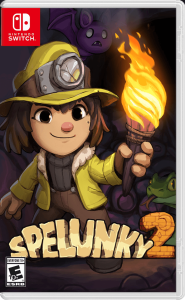
Spelunky 2 Switch NSP
Report Link Error
Select the broken download file, then submit the report.
Screenshots
About Game
Spelunky 2 Switch NSP places players in a demanding Moon adventure where curiosity, caution, and quick reactions are equally important. Released on August 26, 2021 by Mossmouth, this action-platformer sends Ana into shifting caverns filled with creatures, traps, items, secrets, and routes that can change from one attempt to the next.
Ana’s Moonbound Search for Her Missing Family
Set years after the first game, Spelunky 2 follows Ana, the daughter of the original Spelunker. Her parents and their friends have gone missing, and Ana travels to the Moon in search of them. What begins as a rescue mission becomes an exploration of a strange alien world with ancient ruins, bizarre inhabitants, and dangerous underground spaces.
The setting gives the game more than a simple destination to reach. Each descent can reveal another part of a larger, interconnected world, where hidden areas and unusual encounters suggest there is much more beneath the surface. Ana’s search provides a reason to keep pushing deeper, but survival is never guaranteed. A run can turn on one missed jump, a poorly placed bomb, or an enemy encountered at the wrong moment.
That tension suits the premise. The Moon is not presented as a safe place to investigate at leisure; it is a hostile place where discovery must be earned. The journey combines exploration with constant risk, making even a small detour feel like a decision worth weighing.
Why Every Cave Descent Feels Different
Procedural generation is central to the game’s replay value. Level layouts, enemy placements, and item locations shift between attempts, so familiar knowledge helps without turning each route into a memorized routine. Players may recognize a biome and understand its broad dangers, yet still need to assess the immediate situation before moving.
That structure gives Spelunky 2 runs their distinctive rhythm. One attempt may offer useful tools early, while another may demand careful progress with limited options. Shops, hidden paths, powerful encounters, and other discoveries can reward exploration, but reaching them can also introduce new danger. The game repeatedly asks players to balance caution against opportunity.
As a roguelike platformer, it encourages repeat attempts through learning rather than certainty. Death is frequent, but information carries forward: a trap’s trigger, an enemy’s behavior, or a safer use for an item can matter on the next descent. The changing layouts keep that learning active, asking players to apply experience to new circumstances rather than simply repeat old movements.
A Tour of the Game’s Dangerous Biomes
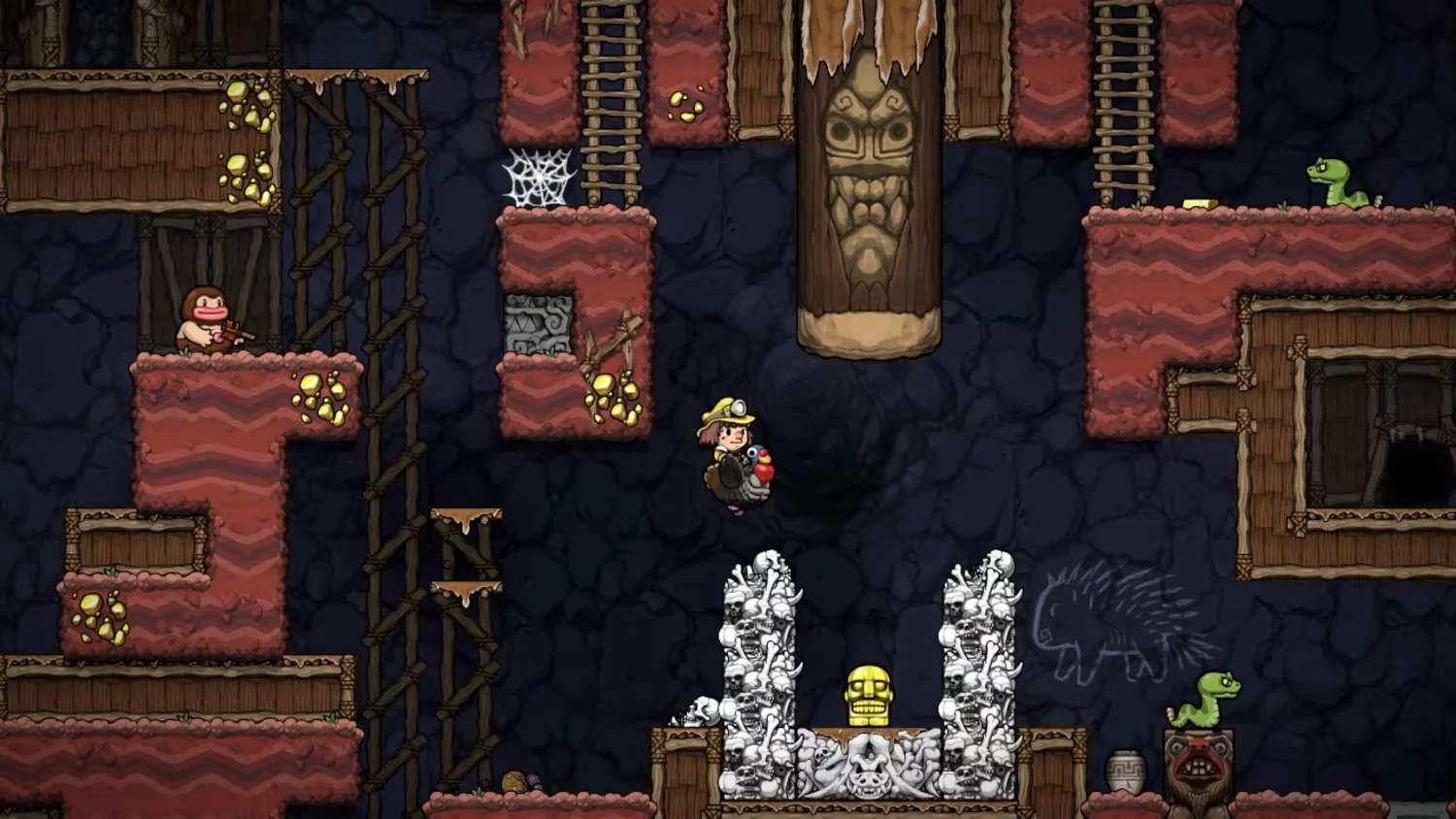
The Moon’s underground world is divided into distinct environments, each giving exploration a different character. The Dwelling introduces players to the hazards of the caves, where careful observation is essential from the first rooms. It is a place to establish good habits: check the ground ahead, notice threats above, and avoid treating any open space as automatically safe.
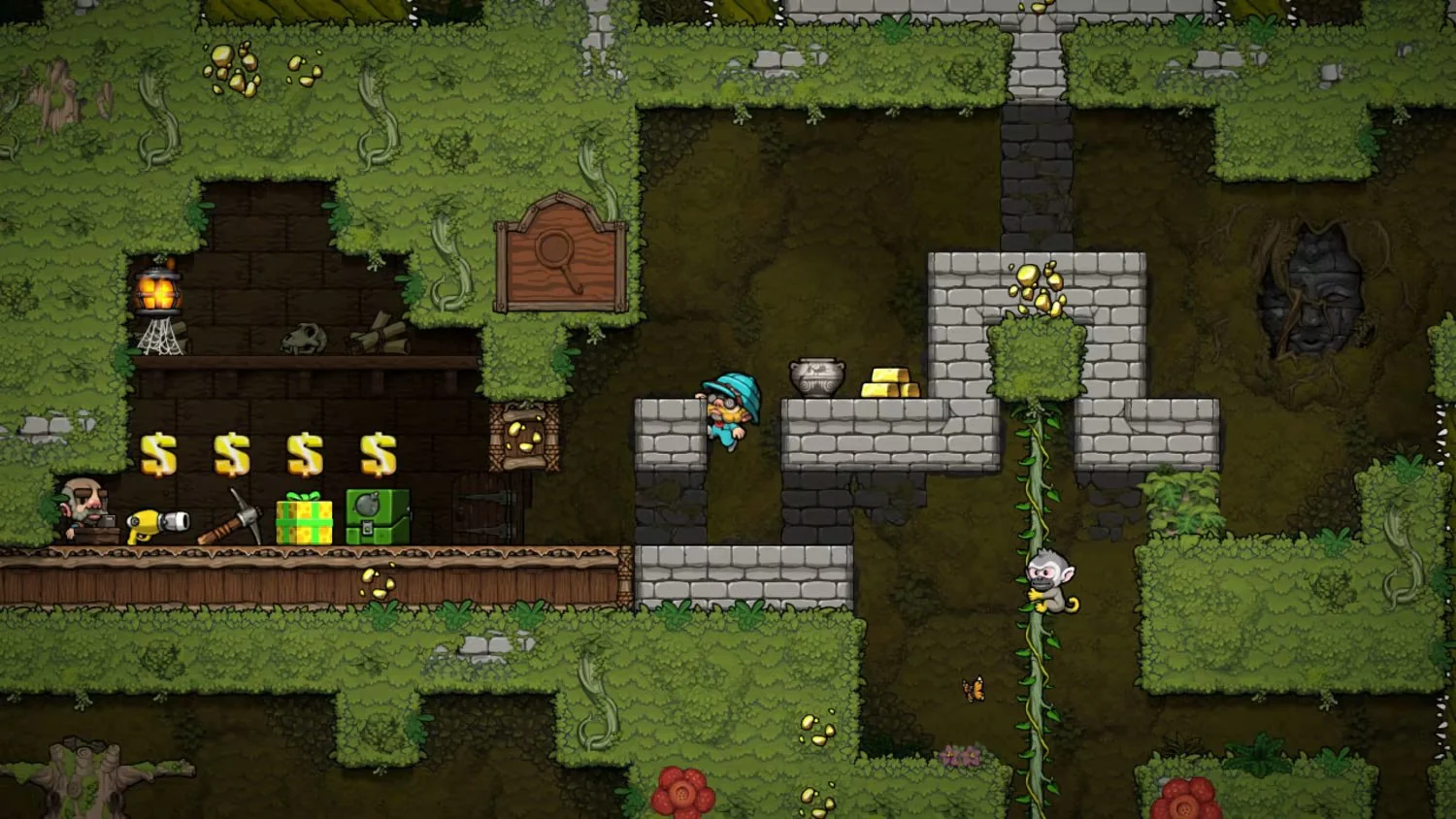
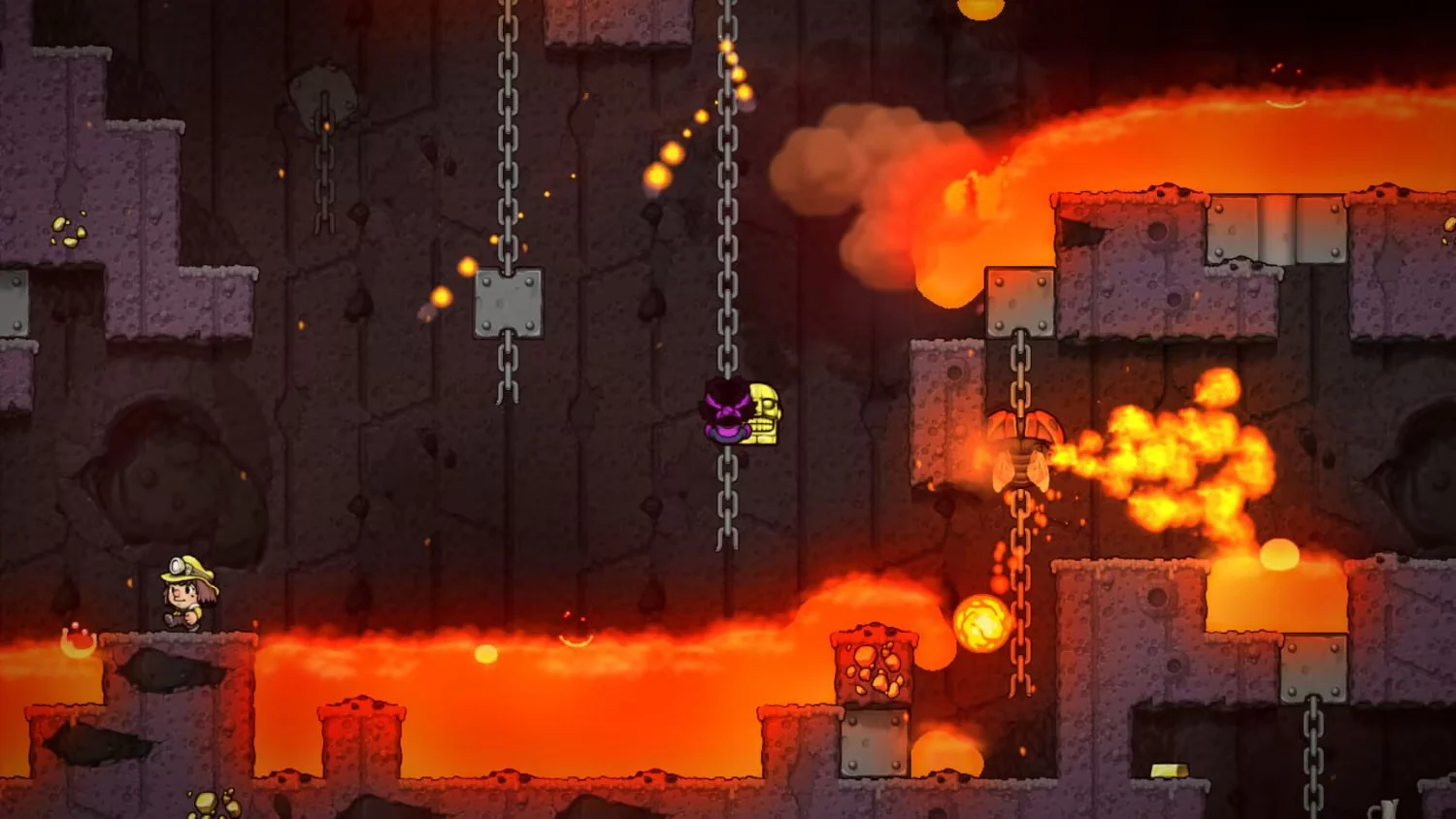
Volcana changes the feel of a descent through its own environmental dangers, while the Jungle brings another set of challenges and creatures to read. These biomes do not simply change the scenery; they alter the situations players must navigate and the risks attached to exploration.
The Tide Pool is another unsettling destination, adding further variety to the game’s route through the Moon. Moving between such areas keeps progression from becoming visually or mechanically static. Each biome has value as a place to explore, but each also demands attention to its particular threats. The result is a world that feels connected while refusing to become comfortable.
Precision Platforming Under Constant Pressure
Spelunky 2 builds its challenge from a compact set of actions used under stressful conditions. Jumping needs to be measured. The whip can deal with nearby threats, but using it carelessly can create openings for danger. Bombs are valuable tools for breaking through obstacles or changing a situation, yet they require thought before use.
Traps make every room more complicated. Spikes, crushing blocks, flying arrows, and explosive landmines can punish rushed movement, often forcing players to pause and consider timing. Enemies add another layer, with distinct attack patterns and weaknesses that reward observation. A safe route is not always obvious, especially when creatures, hazards, and useful items share the same small space.
This is where the platforming challenge becomes more than reflexes. Quick decision-making matters, but so does restraint. A player may need to choose between pursuing an item, using a bomb, taking a longer route, or leaving a tempting area unexplored. Tools such as shotguns and jetpacks can offer new possibilities, while turkeys, pets, and other companions can change how a dangerous encounter unfolds.
Four-Player Co-op and Shared Cave Chaos
For players who want to face the Moon’s hazards together, Spelunky 2 supports co-op mode for up to four players through local multiplayer and online multiplayer. The same unstable caves and shifting layouts remain, but cooperation introduces a new kind of unpredictability.
Four players can share discoveries, help carry items, and work through difficult spaces together. They also share the consequences of risky choices. In a game built around traps, enemies, and tight movement, teamwork requires awareness as much as enthusiasm. One player’s plan can affect the path available to everyone else.
That shared pressure makes multiplayer a fitting extension of the single-player experience. The danger is communal, the discoveries can be celebrated together, and the chaos of a cave run can quickly turn a careful plan into a scramble for survival.
7 Practical Habits for Surviving Longer Runs
These Spelunky 2 tips focus on the habits supported by the game’s demanding survival strategy. They will not remove the danger, but they can make each failure more useful.
- Study the room. Look for spikes, arrows, crushing blocks, landmines, and other traps before committing to a jump or drop.
- Read enemy patterns. Watch how creatures attack and move, then use their weaknesses and openings rather than reacting blindly.
- Resist rushing. Fast movement can lead directly into traps or enemies; taking time often prevents avoidable mistakes.
- Plan each movement. Consider where a jump will land, what sits below a ledge, and whether an item is worth the risk.
- Experiment carefully. Learn how bombs, the whip, weapons, mounts, companions, and other mechanics interact with the environment.
- Adapt to the layout. Procedural generation means a successful approach in one run may need adjustment in the next.
- Use defeat as information. Each death can reveal a trap trigger, a safer route, or a better response to a dangerous encounter.
For players drawn to exacting platforming, repeated discovery, and high-risk exploration, Spelunky 2 Switch NSP offers a Moon expedition where progress is built from patience and experience. Its changing caves ensure that the next run may feel familiar in principle, yet dangerous in entirely new ways.
Recommended Similar Games
 Blacksad Under The Skin Switch NSPView Game
 Silver Falls Guardians And Metal Exterminators S Switch NSPView Game
 Grand Theft Auto: Vice City – The Definitive Edition Switch NSPView Game
 AKIBA’S TRIP2 Director’s Cut Switch NSP XCIView Game
 SD GUNDAM BATTLE ALLIANCE Deluxe Edition Switch NSP XCIView Game
 Gift Switch NSPView Game
