AKIBA’S TRIP2 Director’s Cut Switch NSP XCI

Report Link Error
Select the broken download file, then submit the report.
Screenshots
About Game
AKIBA’S TRIP2 Director’s Cut Switch NSP XCI places an unusual action role-playing conflict in the bright, crowded streets of modern-day Akihabara. Its premise mixes conspiracies, local culture, character relationships, and deliberately comic battles, using the district’s recognizable commercial energy as the backdrop for a threat hiding in plain sight.
Akihabara as the Setting for Nanashi’s Conflict
The story follows Nanashi, a young man drawn into a secret struggle after becoming a Synthister. These vampire-like beings feed on the life force of unsuspecting Akihabara residents, turning the familiar routines of shopping streets and local hangouts into part of a larger danger. Nanashi is rescued by the mysterious Shizuku and becomes involved with a group fighting back against the Synthisters.
The Akihabara setting is not simply decorative. The game frames the district as a living place filled with residents, stores, side activities, and people who may need help. That gives Nanashi’s conflict a more grounded scale: the danger concerns the people moving through the city as much as the shadowy forces behind it. The narrative also centers on alliances, conversations, and choices that can shape dialogue, special events, and endings.
AKIBA’S TRIP2 Director’s Cut uses this modern setting to balance lighthearted absurdity with a threat that is more serious for the characters involved. Nanashi’s new condition makes him part of the problem he is trying to stop, while the people around him provide different perspectives on the city and its secrets.
How Strip Action Combat Works
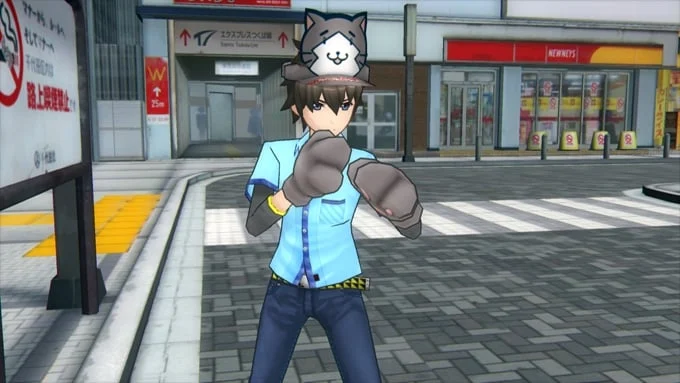
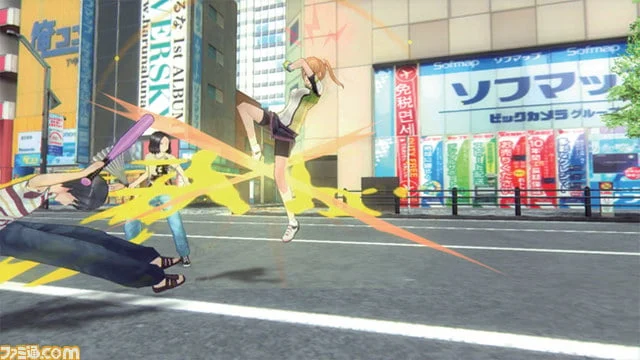
The defining mechanic is strip action combat. Synthisters must be exposed to sunlight, and the route to victory involves tearing away their clothing during battles. Rather than treating combat as a straightforward exchange of attacks, encounters ask players to target clothing and work toward exposing an opponent.
This gives the action RPG combat a strategic angle. Clothing is both an obvious visual feature and a functional part of a fight, so weakening an enemy’s outfit becomes central to progress. The concept is intentionally humorous, yet it also serves the story’s logic: sunlight is the key weakness that makes Synthister battles possible.
- Expose the threat: Removing clothing is necessary to leave Synthisters vulnerable to sunlight.
- Choose your approach: Combat revolves around targeting opponents’ clothing rather than relying only on conventional damage.
- Use your equipment: Weapons and wearable items contribute to a character’s available combat options and statistics.
- Read the encounter: The unusual objective makes each battle a mix of action, timing, and playful presentation.
- Keep the tone flexible: The comic premise sits alongside a story about protecting Akihabara’s residents.
The result is a system that suits the game’s offbeat identity. It is action-oriented, but its win condition is closely tied to the Synthisters’ weakness and the setting’s exaggerated sense of humor.
Exploring a Detailed Virtual Akihabara
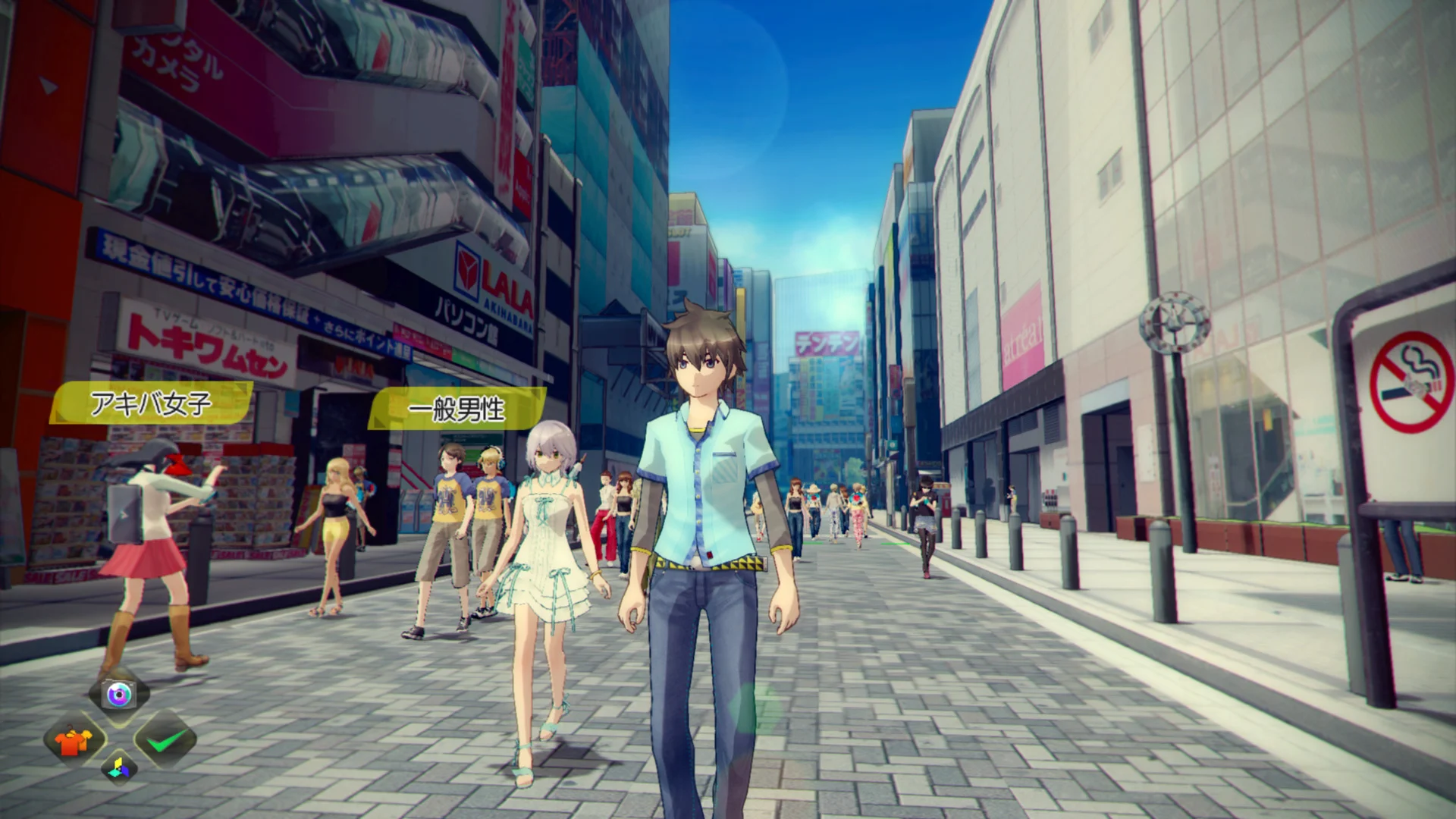
Outside combat, the game invites players to move through a virtual Akihabara built around streets, stores, recognizable landmarks, and smaller corners of the district. The recreation is designed to support wandering as well as story progress. Shops, local residents, and optional activities create reasons to look beyond the main path.
Exploration includes interactions with people around the city, side missions, mini-games, and hidden areas. The district’s detail helps the setting feel more than a sequence of battle arenas. Players can take time to meet quirky inhabitants, assist locals, and find additional material away from the central conflict.
The game also presents key areas without loading screens between them, supporting a smoother sense of movement through the city. That approach matters for the atmosphere: Akihabara is presented as a connected place where a story mission can lead naturally into a shop visit, a conversation, or an unexpected side activity.
For players interested in the district itself, the use of real-world landmarks and stores gives the exploration a recognizable frame. For others, it provides a lively stage for the characters, missions, and escalating Synthister threat.
Kati’s Route and the Director’s Cut Additions
The Director’s Cut adds Kati’s Route, a new storyline focused on Kati, the foreign exchange student. Its inclusion gives the narrative another viewpoint within the broader Akihabara conflict and adds fresh challenges for players returning to the game.
This new storyline is meaningful because the game’s larger plot is already concerned with relationships, character motivations, and the consequences of Nanashi’s involvement with the anti-Synthister group. A route centered on Kati expands the cast’s role in the story rather than treating the added content as a separate distraction.
The Director’s Cut content also provides more room for the game’s character-driven side. As players build bonds with allies, dialogue and special events can change, while different endings encourage attention to relationships and choices. Kati’s Route adds another reason to revisit the setting and see its conflict from a different angle.
Customization Through Clothing, Weapons, and Accessories
Clothing has an especially prominent place in this game because it matters in both combat and presentation. Players can equip a wide selection of outfits, accessories, weapons, and clothing-based armor items. These choices allow Nanashi’s appearance to reflect personal taste while also affecting character statistics.
Character customization therefore has two purposes. An outfit can be chosen for its style, but wearable pieces also function as armor. Weapons add another layer to the available equipment, letting players shape their setup around the items they discover.
This system fits naturally with the wider design. Since clothing is vital to strip action battles, outfits are not an incidental cosmetic feature. The same object category that defines an enemy’s vulnerability also helps define the player character’s appearance and capabilities. That connection keeps the game’s fashion-focused humor tied to its progression systems.
Switch Release Details and Supported Languages
The Nintendo Switch release of AKIBA’S TRIP2 Director’s Cut Switch NSP XCI launched on March 16, 2023. It is published by Acquire and developed by Acquire, with its listed genre spanning Action, Adventure, and Role-Playing.
The release is listed for the Asia and Japan regions, with language support for English, Japanese, Chinese, and Korean. Its combination of free exploration, relationship-focused story material, equipment customization, side content, and route-based additions makes it particularly suited to players looking for an eccentric action RPG built around Akihabara culture and a highly unconventional combat idea.