Shovel Knight Showdown Switch NSP
Report Link Error
Select the broken download file, then submit the report.
Screenshots
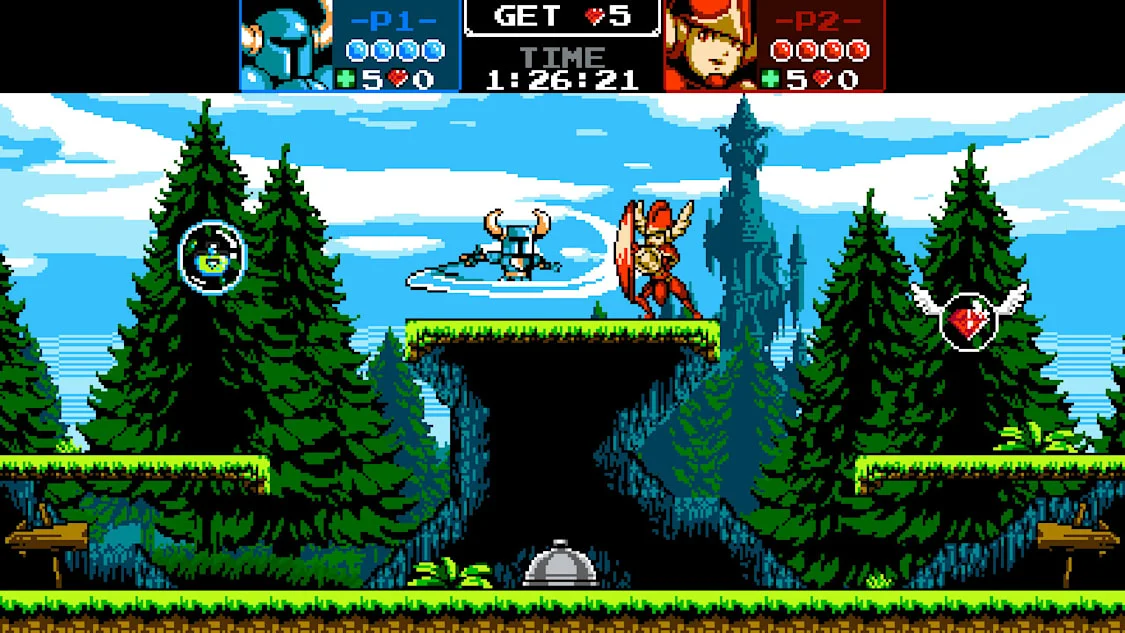
About Game
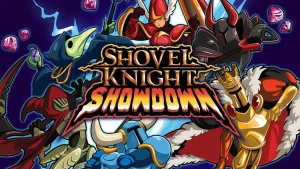
Shovel Knight Showdown Switch NSP brings the Shovel Knight universe into a competitive arena format built around fast platform-fighting action. Developed and published by Yacht Club Games, this Nintendo Switch release shifts attention from a conventional adventure structure toward direct battles, flexible match rules, character-specific story paths, and local competition for up to four players.
Shovel Knight Showdown on Nintendo Switch: A Platform-Fighting Spin-Off
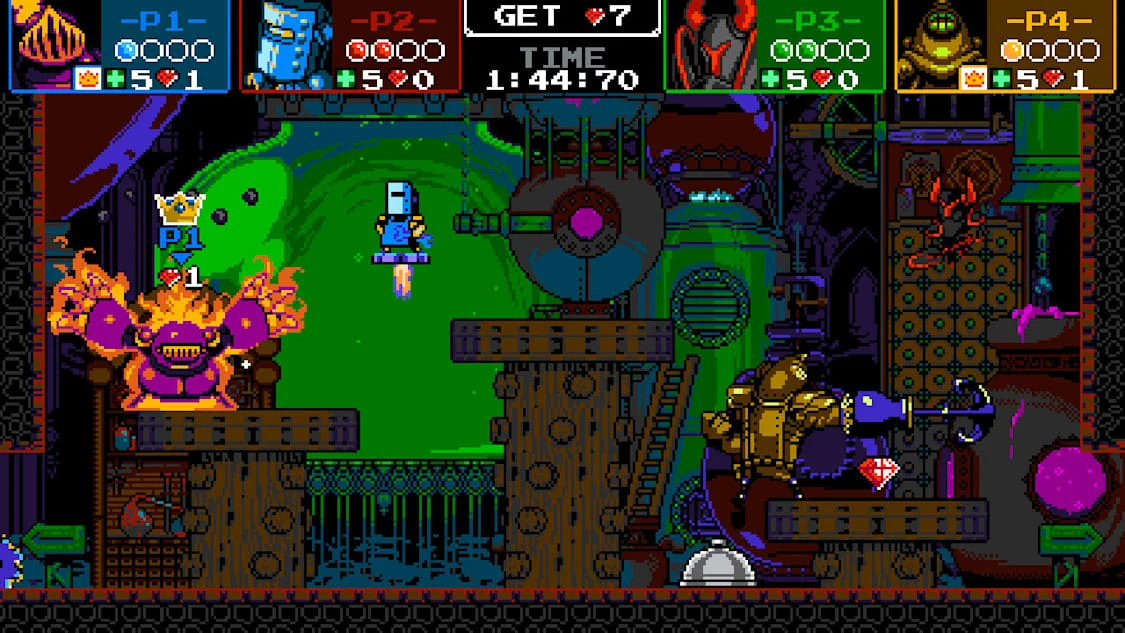
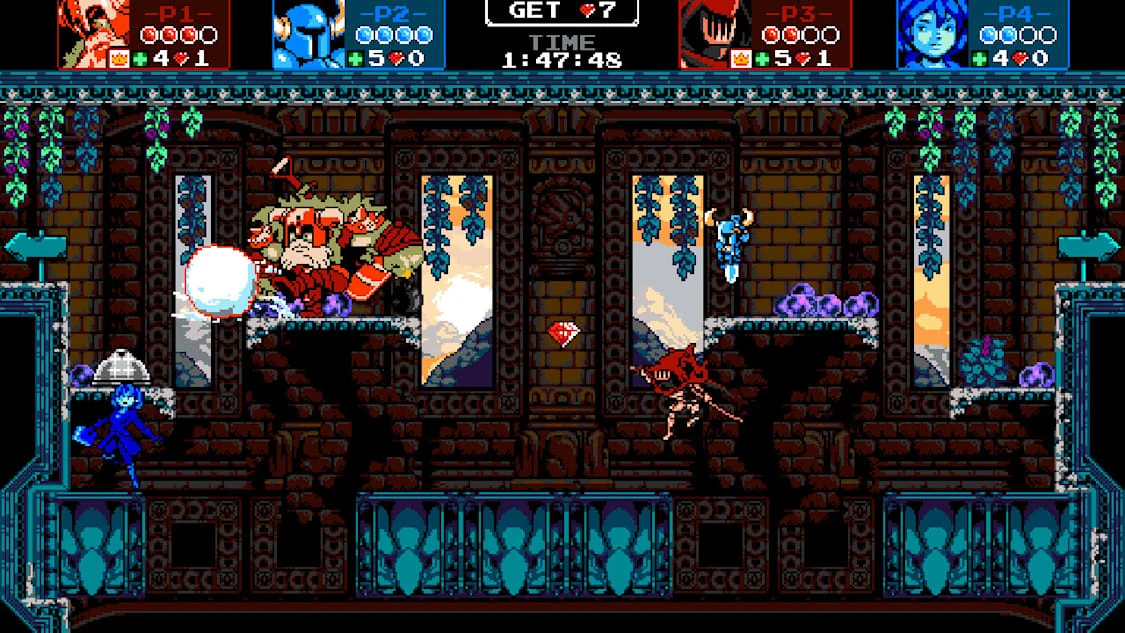
Shovel Knight Showdown is an action-platformer with a clear competitive focus. Its battles take place in platform-filled arenas where positioning, timing, attacks, items, and stage features all influence the outcome. The familiar Shovel Knight setting provides the framework, but the central activity is fighting rather than a long-form quest.
That focus gives the game a lively, immediate rhythm. Players move around dynamic stages, contend with hazards and interactive elements, and look for openings against opponents. A match can change quickly when an item appears or a stage feature becomes part of the contest. The result is platform fighting action that rewards attention to both the opponent and the arena itself.
Yacht Club Games presents the showdown as a gathering of characters from across the broader Shovel Knight universe. Instead of treating every fighter alike, the game builds its battles around contrasting movement tools and combat options. That variety supports both casual sessions with friends and more deliberate play against AI opponents.
The Tournament Premise and Character Story Paths
The game’s single-player setup centers on a grand tournament. Each participant enters the competition for a personal reason, with motivations that can include proving themselves, settling old scores, or simply pursuing the excitement of battle. The tournament gives the roster a shared destination while leaving room for individual perspectives.
In the Shovel Knight Showdown story content, each character receives a brief narrative path. These stories are not presented as a traditional adventure campaign; instead, they provide concise context for why a fighter has joined the contest. That approach keeps the action moving while giving each route a small sense of identity.
Character story mode also encourages players to spend time beyond a single preferred fighter. Trying another combatant means learning a different toolkit and seeing another short tournament narrative. The progression is therefore tied less to exploration and more to experimenting with the roster, completing battles, and uncovering the motivations behind each competitor’s participation.
A Roster of 16 Fighters With Distinct Playstyles
Shovel Knight Showdown features 16 playable characters. The roster is designed around differing abilities rather than simple cosmetic variation, so changing fighters can substantially alter how a match feels. Some combatants may suit players who value mobility, while others may encourage a more measured approach based on their available strengths and weaknesses.
Each fighter has unique abilities, special moves, and recovery options. These differences matter in platform arenas, where leaving solid ground can create both opportunity and danger. A player who understands a character’s movement and recovery tools can better navigate hazards, return to the stage, or pressure an opponent near an edge.
The roster’s variety gives the game a practical form of replay value. Learning one character does not fully prepare a player for the next. Matchups can change according to the selected fighters, their special moves, the stage, and the items in play. For players interested in improving, the process is as much about understanding individual limitations as it is about recognizing powerful options.
Core Combat: Movement, Attacks, and Recovery
Shovel Knight Showdown gameplay relies on skillful movement and precise attacks in fast-paced arenas. The basic objective may be easy to understand, but effective play asks players to make quick decisions: approach, retreat, use a special move, avoid a hazard, collect an item, or prepare a recovery when knocked away from a favorable position.
Movement is especially important because the stages are not empty spaces. Platforms create routes above and around opponents, while hazards and interactive elements can alter the flow of combat. Awareness of the environment is therefore part of defensive play. A player can avoid a dangerous section of the stage, use a platform to reposition, or take advantage of a changing situation when an opponent is distracted.
Attacks and special moves provide each character’s main offensive identity, but they are most useful when paired with good timing. Repeated aggression can leave a fighter exposed, while a more patient approach can create a better opening. Recovery options add another layer: a battle does not necessarily end when a character is forced away from the central arena, provided the player can use their available movement tools well.
Items and power-ups further complicate the exchanges. They can influence the direction of a match, making item awareness another useful skill. Players who want a competitive edge can practice not only direct combat, but also the judgment required to decide when an item is worth pursuing and when it is safer to maintain position.
Battle Options: Story, Battle, Tournament, and Versus
The available modes support several ways to engage with the competitive brawler. Story gives individual fighters their short tournament narratives, while other options prioritize direct matches or organized competition. Together, they make room for solo play, AI battles, and local multiplayer sessions with up to four players.
- Story: Follow brief character-focused narratives connected to the tournament premise.
- Battle: Enter combat-oriented matches built around the game’s platform-fighter fundamentals.
- Tournament: Take part in a more structured sequence of tournament battles.
- Versus: Set up direct competition with friends or AI opponents.
- Custom rules: Adjust match rules to shape the kind of contest the group wants to play.
This range of options makes Shovel Knight Showdown suitable for different settings. A single player can explore story paths or face AI, while a group can use local multiplayer for quick rivalries and repeat matches. Customizable rules add flexibility, particularly when players want to tailor a session around their own preferred conditions.
The game is best suited to players looking for accessible platform-fighter combat with room to learn distinct characters. Its immediate matches can work well for a shared local session, but its 16-fighter roster, stage hazards, power-ups, and character-specific abilities also give returning players new combinations to explore.
Nintendo Switch Release Details and Supported Regions
Shovel Knight Showdown Switch NSP refers to the Nintendo Switch release of Shovel Knight Showdown, developed and published by Yacht Club Games. The game released on December 10, 2019. Its listed genres are Adventure, Action, and Platformer, while its design is centered on competitive arena combat and tournament battles.
The Nintendo Switch version is listed for Europe, the USA, Asia, and Japan. Supported languages are English, German, Spanish, French, Italian, Japanese, Korean, Portuguese, Russian, and Chinese. The title’s recorded Switch Title ID is 0100B380022AE00, and the listed firmware version is v9.0.1.