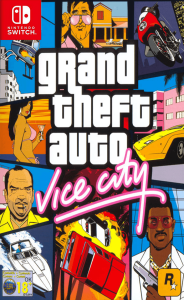
Grand Theft Auto: Vice City – The Definitive Edition Switch NSP
Report Link Error
Select the broken download file, then submit the report.
Screenshots
About Game
Grand Theft Auto: Vice City – The Definitive Edition Switch NSP places Rockstar Games’ crime story in a stylised 1986 metropolis of neon streets, flashy vehicles, radio music, and competing criminal interests. Developed by Grove Street Games for Nintendo Switch, this Action and Adventure release follows Tommy Vercetti through a city where a failed deal becomes the opening move in a struggle for money, influence, and survival.
Vice City in 1986: Tommy Vercetti’s Return to the Criminal Underworld
Tommy Vercetti begins the story newly released from prison after serving time for a hit. His former boss, Sonny Forelli, wants him out of Liberty City and sends him south to Vice City, where Forelli hopes to establish new drug operations. The assignment is meant to be a fresh start, but it quickly turns into a crisis.
A drug deal is ambushed, leaving Tommy without the money and drugs he was supposed to secure. That loss puts him under pressure from Sonny Forelli while forcing him to learn the rules of Vice City 1986 for himself. The city is colourful and inviting on the surface, yet its criminal networks are hostile, opportunistic, and crowded with people who have their own ambitions.
Tommy’s search for what was lost brings him into contact with crooked lawyers, crime lords, rivals, and other figures operating across the city. The premise gives the campaign a clear sense of momentum: recover the missing goods, deal with the people responsible, and avoid becoming another casualty of Vice City’s underworld.
Building an Empire Across Vice City
The Tommy Vercetti story develops from a recovery mission into a larger fight for control. As he completes jobs and works with different criminal figures, Tommy gains access to new opportunities while making enemies of those who expect Vice City to remain under their control. The plot is shaped by ambition, betrayal, and the practical need to keep moving before rivals can close in.
Progression is tied to Tommy’s growing position in the city. Missions advance his reach through the Vice City underworld, while businesses and properties provide another way to establish influence and create revenue. This creates a useful contrast between the immediate danger of shootouts and chases and the longer-term goal of building a criminal empire.
Tommy is not simply passing through the city on someone else’s business. His decisions and actions gradually turn Vice City into a place where he can challenge the people who initially held power over him. That rise gives the narrative a focused arc, even as the open world leaves room for detours and optional work.
Exploring the Neon-Lit Open World on Nintendo Switch
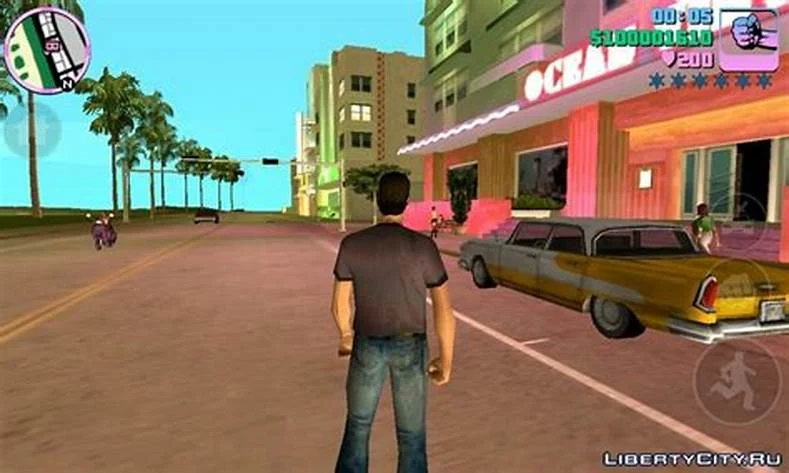
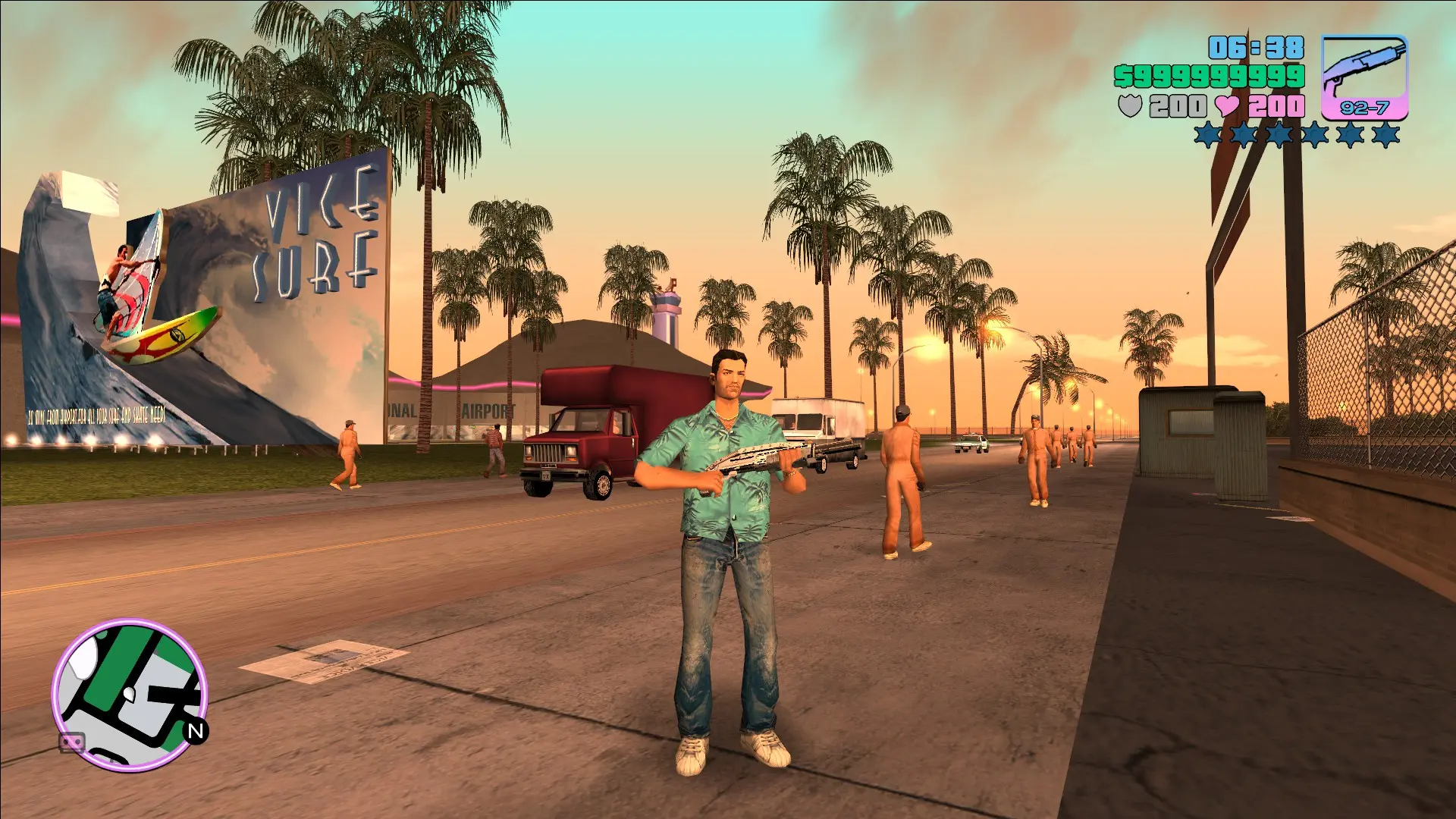
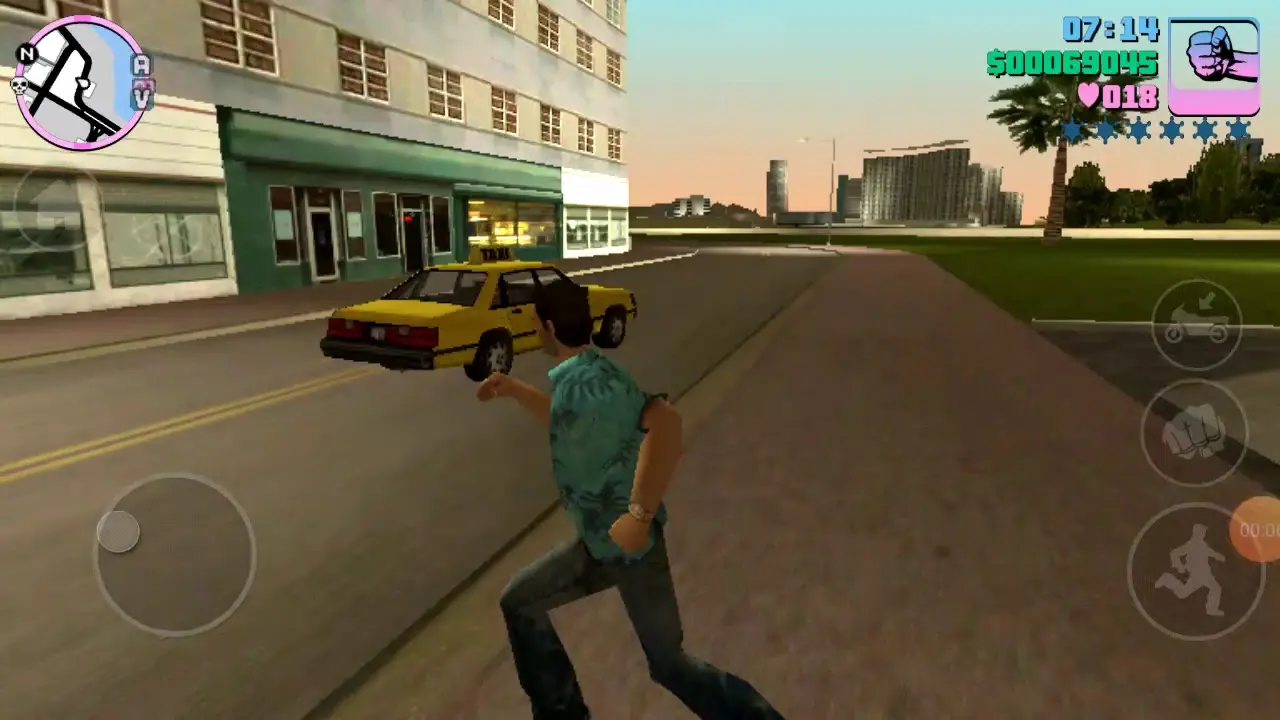
Vice City is an 1980s-inspired city built for movement. Its districts, pedestrians, secrets, and traffic give the world a busy street-level character, while the neon-lit presentation supports the period setting. Players can travel on foot or take control of vehicles, using the city as both a route between missions and a place to explore at their own pace.
The Nintendo Switch version keeps the focus on this portable open-world format: a large city to roam, activities to find, and missions that can be approached after time spent simply driving through the streets. The setting is strengthened by radio stations featuring licensed music from the 1980s, adding another layer to the era-inspired atmosphere.
Exploration is more than a pause between story objectives. Finding different districts, uncovering hidden details, and choosing a route through the city can make even routine travel feel connected to Vice City’s personality. The world supports chaos when players want it, but it also rewards attention to its layout and opportunities.
Missions, Shootouts, Chases, and Criminal Enterprises
The action structure combines third-person shooting, vehicular combat, and story-driven criminal work. Tommy faces rival gangs and law enforcement in gunfights, while cars and motorcycles become vital during pursuits, escapes, and missions that demand quick travel across the city.
Vice City missions range from assassinations to larger operations and elaborate heists. Some jobs centre on direct confrontation; others ask players to chase targets, reach destinations under pressure, or handle the practical work behind Tommy’s expanding operations. The variety helps the campaign move between close-range danger and wider city-spanning action.
- Take the shot: Third-person shooting drives confrontations with rival gangs and law enforcement.
- Keep moving: Car chases and vehicular combat turn the streets into part of the action.
- Follow the job: Story assignments include assassinations, pursuits, and larger criminal operations.
- Manage attention: A rising wanted level can make police pressure increasingly difficult to ignore.
- Build income: Businesses and properties connect criminal success with a more durable revenue stream.
There is room for a measured approach as well. Police attention can become relentless, making an escape or a visit to a Pay ’n’ Spray more useful than extending a shootout. That balance between aggression and getting away gives the city’s law-enforcement response a meaningful role in moment-to-moment play.
Vehicles That Define Vice City’s Streets
Vehicles are central to the rhythm of Vice City. The available 1980s-era selection includes sleek sports cars and powerful motorcycles, each serving as transport, an escape tool, or a way to take part in a chase. Driving is not separate from exploration; it is one of the main ways players experience the size and variety of the city.
Sports cars suit fast travel through major streets, while motorcycles offer another way to navigate Vice City’s roads. In a city built around criminal work and police attention, finding the right vehicle can matter as much as carrying the right weapon. A successful escape may depend on leaving a mission area quickly, avoiding pursuit, and choosing roads that create distance from law enforcement.
The focus on Vice City vehicles also supports replay value. Returning to the streets for a different car, a motorcycle ride, or an unplanned pursuit can produce a different kind of session from the structured story campaign.
Side Activities Beyond the Main Story
Outside the main plot, Vice City side missions offer practical diversions and extra rewards. Taxi driving, pizza delivery, vigilante tasks, ambulance driving, and street races all give players activities beyond Tommy’s central climb through the underworld. These tasks make use of the city’s roads and vehicle range while providing reasons to revisit areas between major missions.
Property acquisition adds another dimension to progression. Buying businesses and properties helps establish revenue, tying optional activity to Tommy’s broader effort to control more of Vice City. It also reinforces the game’s central idea of moving from a dangerous setback toward a position of influence.
Grand Theft Auto: Vice City – The Definitive Edition Switch NSP is best suited to players interested in an open-world crime story with 1980s atmosphere, driving, shooting, mission variety, and optional city activities. Its appeal comes from the way Tommy’s rise, the city’s presentation, and the freedom to explore all feed into the same pursuit of power.