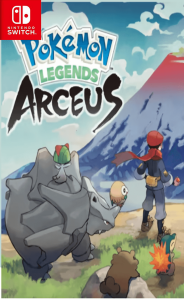
Pokémon Legends: Arceus Switch NSP XCI
Report Link Error
Select the broken download file, then submit the report.
Screenshots
About Game
Pokémon Legends: Arceus Switch NSP XCI places Pokémon exploration in a markedly different historical setting: Hisui, the region that will later be known as Sinnoh. Released on January 28, 2022, this action role-playing game from Game Freak and Nintendo frames its adventure around field research, untamed landscapes, and a first Pokédex rather than a settled modern Pokémon world. Its strongest idea is simple but effective: discovering Pokémon becomes part of the journey, not merely a step between destinations.
Hisui Before Sinnoh: The Setting of Pokémon Legends: Arceus
The Hisui region gives the game its distinct atmosphere. This is ancient Sinnoh, an era in which people and Pokémon do not yet share the close familiarity associated with later settings. The landscape feels less developed, and the work of understanding Pokémon is still underway.
The player joins the Galaxy Expedition Team’s Survey Corps with an important assignment: research the region’s Pokémon and help create its first Pokédex. That role shapes progression throughout the adventure. Catching, battling, and observing Pokémon are not separate side activities; they directly support the Survey Corps’ work and expand the Pokédex through research tasks.
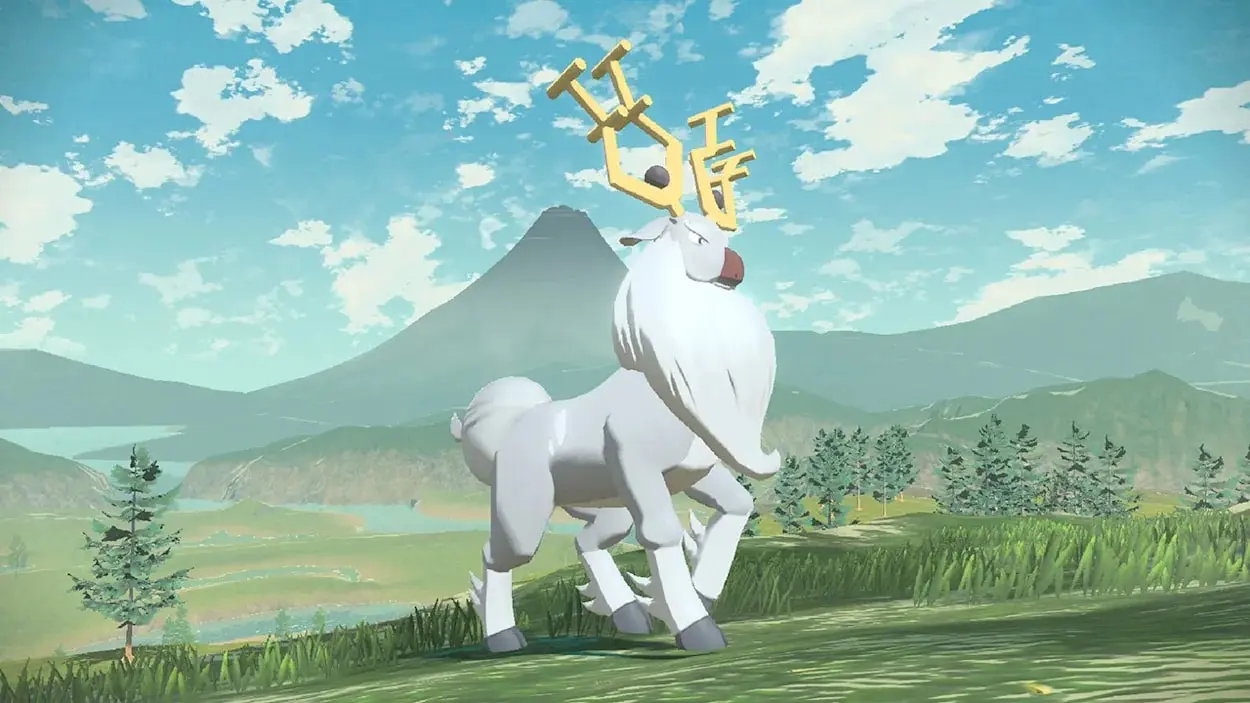
Hisui also carries a larger mystery. Strange events affect the region, including frenzied Noble Pokémon, while the story investigates Arceus and its connection to the land. The result is a setting that balances practical fieldwork with a broader search for answers. Pokémon Legends: Arceus Switch NSP XCI uses its historical premise to make the act of cataloguing Pokémon feel consequential.
Exploration Across Hisui’s Wild Areas and Habitats
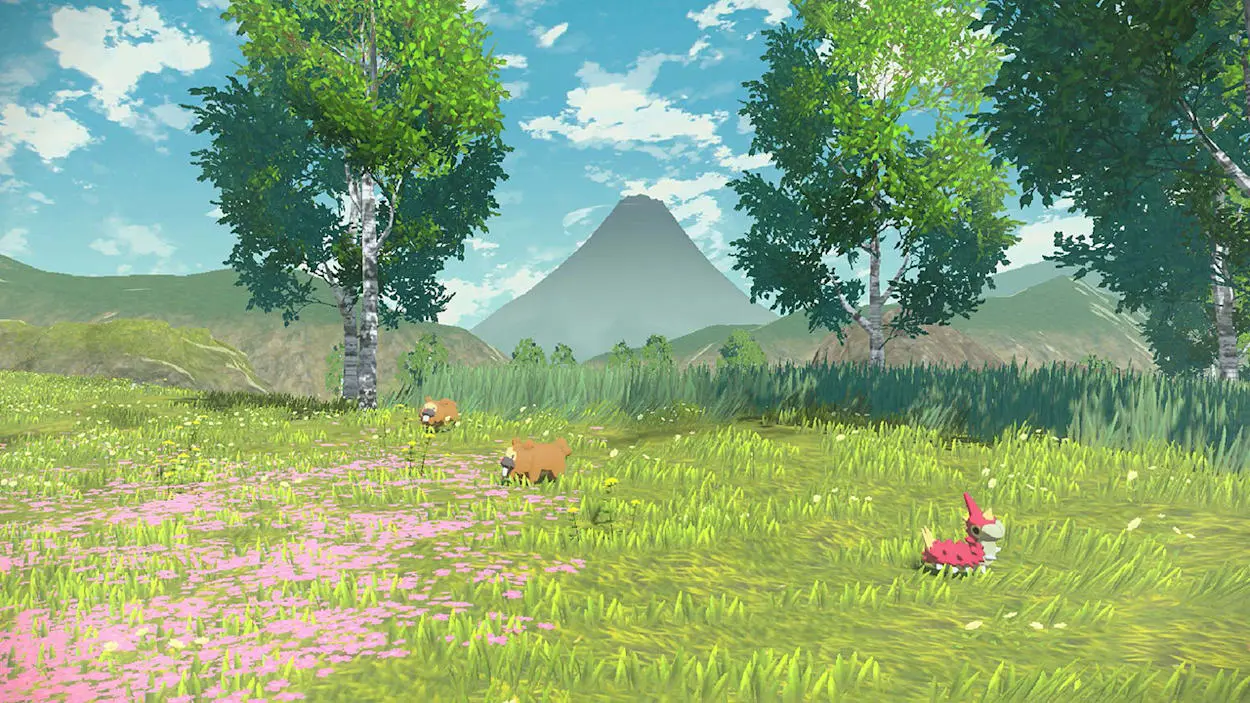
Hisui exploration is built around broad natural areas rather than a single uninterrupted world. These open areas invite players to travel through different biomes, search for Pokémon habitats, and collect materials from the environment. A trip away from camp can involve looking for a particular species, gathering ingredients for useful items, or simply seeing what appears in a new part of the map.
Habitats matter because Pokémon are part of the environment instead of only appearing as abstract battle encounters. Wild Pokémon can be watched from a distance, approached carefully, or avoided when the situation looks dangerous. This makes each area feel like a place to study as well as a route to cross.
Resources add another practical layer to travel. Materials gathered during exploration can be used to craft essential supplies such as Poké Balls and potions. That loop gives preparation a tangible role: time spent paying attention to the surroundings can make later research trips and wild Pokémon encounters more manageable.
The game’s atmosphere comes largely from this sense of expedition. Hisui is not presented as a fully understood region. Players are repeatedly encouraged to venture out, learn where Pokémon live, and return with more complete research than they had before.
How Catching Pokémon Changes in Pokémon Legends: Arceus
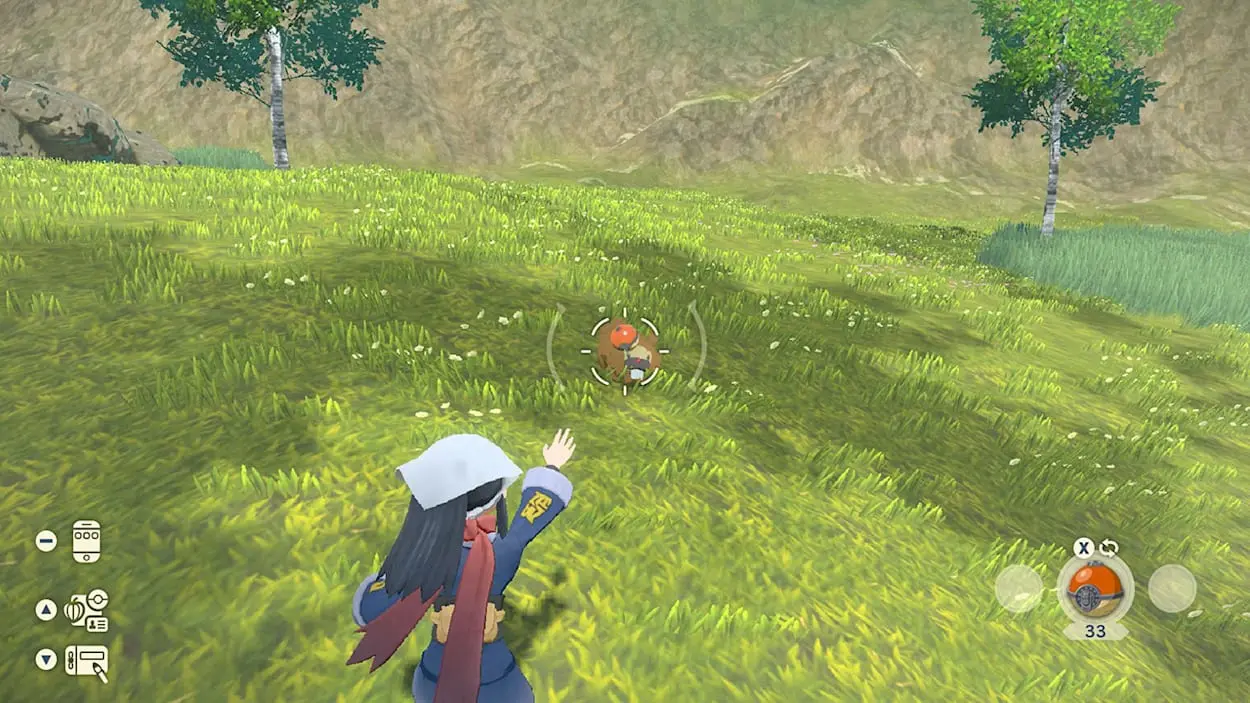
The approach to catching Pokémon is more direct than the traditional pattern of always beginning with a battle. Players can observe a wild Pokémon’s behavior, use the terrain for cover, approach with stealth, and throw Poké Balls while remaining in the field. A careful throw may secure a catch without entering a battle at all.
That does not make battles unnecessary. Some Pokémon may be better handled by weakening them first, while others may react aggressively to a close approach. The important change is choice. Catch Pokémon through a stealthy approach when conditions allow, or move into battle when that offers the safer or more reliable answer.
This system also strengthens the research focus. Observation is useful in its own right, while repeated catching and battles contribute to Pokédex tasks. Instead of treating a species as completed after a single encounter, the game encourages continued study of its behavior and interactions.
The transition between roaming and Pokémon battles keeps these decisions close to the landscape. A player can be gathering resources one moment, notice a target in a nearby habitat the next, then decide whether a quiet Poké Ball throw or a battle is appropriate. That rhythm gives routine encounters more tension than a purely menu-driven search.
Turn-Based Battles, Action Order, and Battle Styles
Despite its active exploration, the battle system remains command-based and turn-based. The added strategic element is Action Order, which shows how moves can affect the sequence of turns. A decision is not only about immediate damage; it can also influence who acts next and when.
Two battle styles deepen that choice. Strong Style puts greater emphasis on power, while Agile Style can be used to influence turn priority. Their value depends on the current battle rather than a single fixed answer. A powerful move may be tempting against a difficult opponent, but turn order can make the cost of that choice matter.
This makes preparation useful beyond building a capable team. Players benefit from watching Action Order, considering the behavior of the opposing Pokémon, and choosing a style that fits the immediate risk. The system is accessible in concept, yet it adds pressure when facing powerful wild Pokémon or progressing through more demanding encounters.
Alpha Pokémon and the Risks of Exploring Hisui
Not every sighting in Hisui is an easy research opportunity. Alpha Pokémon are larger, more aggressive, and more powerful versions of wild Pokémon. Their presence changes the mood of exploration because a route that appears safe can suddenly contain an opponent better avoided until the player is prepared.
These wild Pokémon encounters reward caution. Stealth may help players avoid drawing attention, while resources and healing items can be valuable when a confrontation cannot be avoided. Alpha Pokémon also reinforce the game’s view of Hisui as a wilderness where the player is not automatically in control of every situation.
Frenzied Noble Pokémon add another kind of challenge through boss battles that call for quick reflexes alongside strategy. Together, these encounters prevent the research journey from becoming too passive. Curiosity is important, but so is knowing when to observe from a distance, retreat, or return with better preparation.
6 Practical Exploration and Research Priorities in Hisui
- Observe first. Watch wild Pokémon behavior before moving in, especially when working toward Pokédex research tasks.
- Use stealth. A quiet approach can create an opening to throw Poké Balls without starting a battle.
- Gather materials. Collect environmental resources during each outing to support crafting Poké Balls and potions.
- Build research steadily. Catching, battling, and observing Pokémon all contribute to Pokédex research, so repeated encounters have value.
- Read Action Order. In battles, consider how Strong Style and Agile Style may alter turn priority before committing to a move.
- Respect Alpha Pokémon. Larger, aggressive wild Pokémon demand care; avoid unnecessary risks when supplies or team readiness are limited.
For players drawn to exploration, collection, and turn-based strategy, the structure offers a clear reason to keep revisiting Hisui’s open areas. Progress is tied to curiosity as much as combat ability. Each habitat can supply another research task, another resource run, or another chance to refine an approach to catching and battling Pokémon.
Available in English, Japanese, French, German, Italian, Spanish, Korean, and Chinese, the game combines action-oriented field movement with role-playing systems built around research and preparation. Its central appeal lies in making Hisui feel like a place that must be learned: a region where Pokémon habitats, risks, and discoveries shape the pace of the adventure.