Romancing SaGa -Minstrel Song- Remastered Switch NSP
Report Link Error
Select the broken download file, then submit the report.


Screenshots
About Game
Romancing SaGa -Minstrel Song- Remastered Switch NSP presents a role-playing adventure built around freedom, experimentation, and repeat visits to its world. Square Enix’s remaster preserves a structure in which player choices, combat discoveries, and the protagonist selected at the beginning can all shape the course of a journey through Mardias.
Choosing Among Eight Protagonists
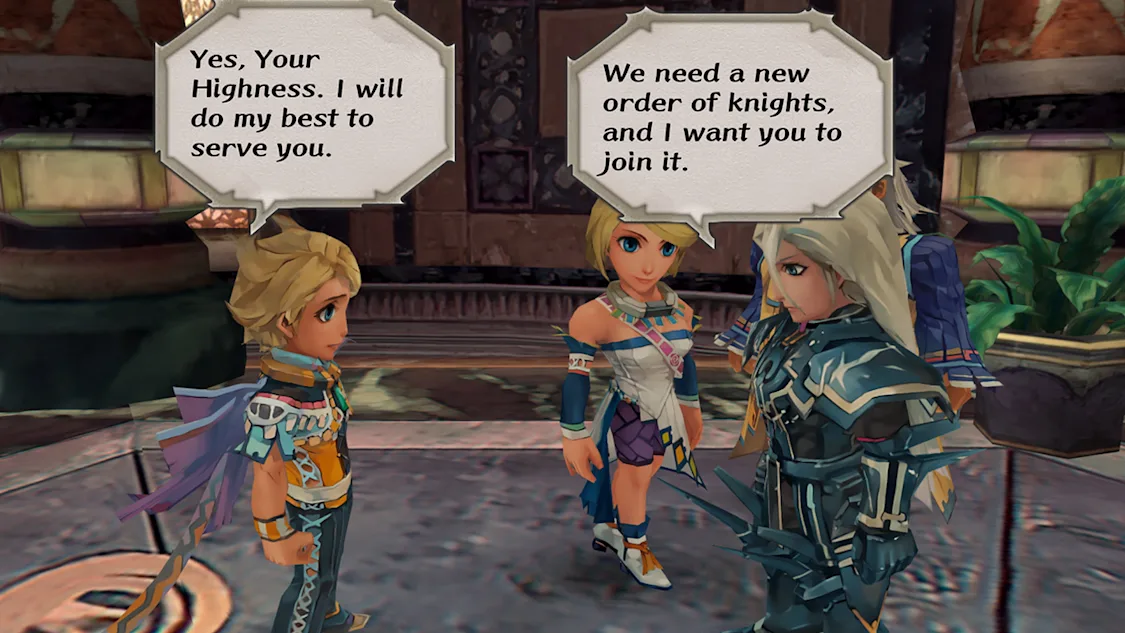
The first major decision is also one of the game’s defining ideas: players select from eight protagonists. Each comes with individual motivations, character backstories, and starting points, giving the opening of a playthrough a distinct context before the broader adventure begins.
Mardias is a world marked by the legacy of Saruin, a malevolent deity once sealed away by eight legendary heroes. The threat has not entirely faded, as Fatestones and Saruin’s lingering influence continue to affect the land. Against that backdrop, the chosen protagonist begins a personal route that can intersect with wider events, other characters, and the fate of the world.
This setup gives the narrative an unusually flexible atmosphere. A protagonist’s circumstances matter, but they do not reduce the journey to a single fixed track. Different beginnings invite players to see familiar places and events from another angle, while the game’s open structure leaves room for discoveries that may not appear in exactly the same order from one run to the next.
Turn-Based Battles and the Glimmer System
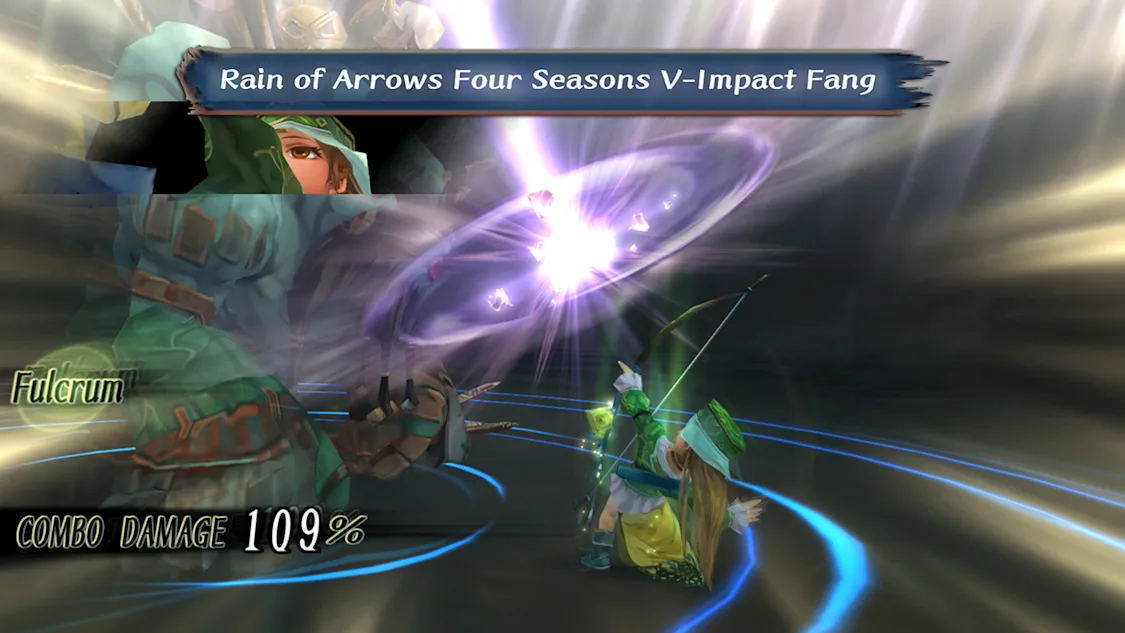
Combat is turn-based, yet it is designed to remain active and responsive to the party’s development. Tactical battles ask players to consider their characters’ weapons, spells, abilities, and proficiencies rather than relying on a single universal path for growth. Characters improve through the tools they use, allowing a party’s development to reflect the player’s decisions over time.
The signature mechanic is the Glimmer system. During battle, characters can spontaneously learn new abilities. That possibility gives encounters an element of surprise: a fight can become the moment when a character gains an option that changes how they contribute to later battles. New abilities are not simply a matter of following a predetermined menu path, which supports the game’s broader interest in personal experimentation.
Weapon and spell proficiencies are therefore meaningful parts of progression. Players can explore different approaches and build a group around the equipment and magic they actually choose to use. The result is a combat system that rewards attention to party strengths while leaving space for unexpected developments in the middle of a fight.
Exploration, Quests, and Player-Driven Progression
Exploration is central to the game’s Free Scenario System. Rather than requiring a strictly linear sequence of objectives, the game allows players to travel through the world, find quests, and approach them in the order they encounter them. This makes progression feel less like a checklist and more like a route shaped by curiosity and circumstance.
Quest order can vary, and choices made along the way help create a player-driven narrative. The game also offers recruitable characters with distinct skills, giving players another way to adjust a party to suit their plans. A group assembled for one journey may not resemble the group used by someone making different decisions or pursuing different goals.
That variability supports replay value without requiring every playthrough to follow the same rhythm. One player may focus on a particular protagonist’s opening circumstances, seek out a new set of companions, or encounter quests in a different sequence. Another may develop different weapon or spell proficiencies. The appeal lies in seeing how those decisions accumulate into a route that feels personal.
Remastered Enhancements on Nintendo Switch
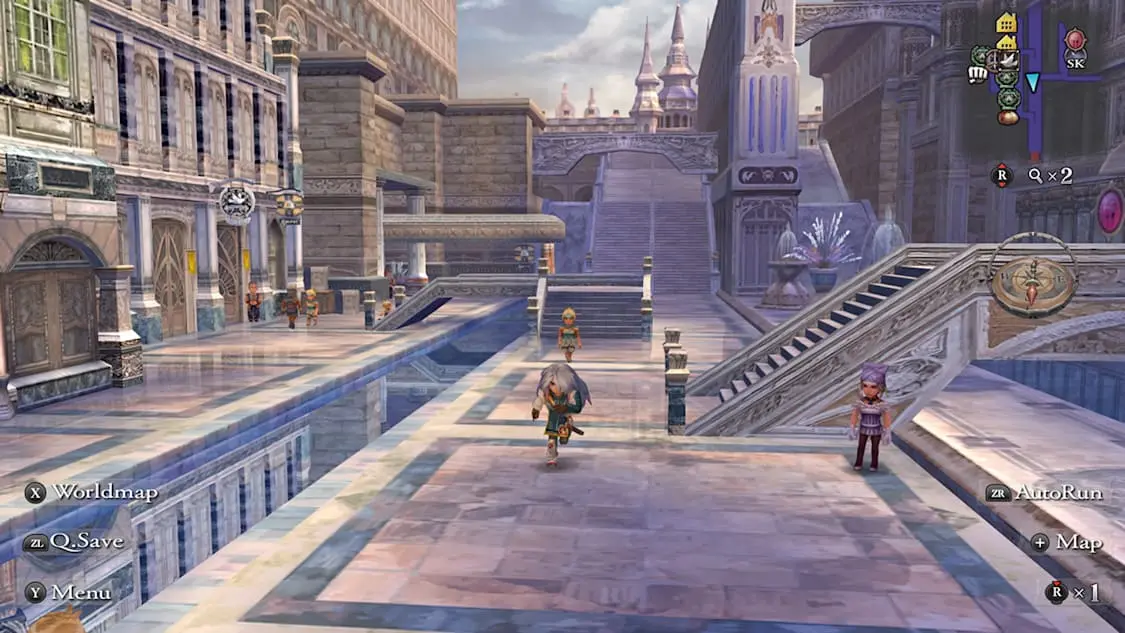
On Nintendo Switch, the remaster pairs the game’s established systems with a modernized presentation. Remastered graphics refresh the visual side of the experience while retaining the fantasy setting and its cast of adventurers, mysteries, and ancient threats.
The version also adds quality-of-life improvements intended to make play smoother. Faster movement helps reduce the time spent crossing the world, while adjustable battle speed gives players more control over the pace of turn-based encounters. These additions are particularly useful in a game that encourages exploration, repeated battles, and flexible questing.
The changes do not replace the game’s open-ended identity. Instead, they support it by making it easier to move between exploration and combat at a preferred tempo. Players interested in taking their time can do so, while those revisiting areas or working through battles can adjust the experience around their own pace.
5 Early Gameplay Priorities for New Players
- Build a flexible party. Experiment with party composition as recruitable characters become available. Different skills can change how a group handles tactical battles.
- Try several weapon types. Weapon proficiencies develop through use, so testing options can reveal approaches that fit particular characters and play styles.
- Make room for spells. Spell proficiency is also part of character growth. Exploring magic alongside physical options helps create a more varied party.
- Follow curiosity. Exploration is rewarded by the game’s Free Scenario System. Seek out quests and allow discoveries to influence the order in which you progress.
- Adapt rather than force a route. SaGa gameplay tips begin with accepting the open-ended structure. New abilities from the Glimmer system, new companions, and changing quest opportunities can all suggest a different plan.
Release and Platform Details for Romancing SaGa -Minstrel Song- Remastered
Romancing SaGa -Minstrel Song- Remastered Switch NSP is a Square Enix-developed and Square Enix-published role-playing game released on December 1, 2022. It is available across Europe, the USA, Asia, and Japan, with English and Japanese language availability.
The Nintendo Switch release is suited to players drawn to non-linear role-playing games, tactical turn-based combat, and systems that encourage experimentation. Its eight protagonists, varied character growth, recruitable party members, and flexible quest structure give it a strong fit for those who value decision-making and different paths through the same world.