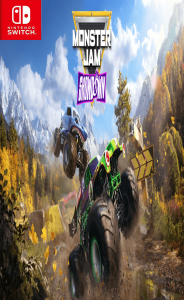
Monster Jam Steel Titans Switch NSP
Report Link Error
Select the broken download file, then submit the report.
Screenshots
About Game
Monster Jam Steel Titans Switch NSP brings the noise, weight, and spectacle of Monster Jam competition to Nintendo Switch. Released on November 26, 2019, this racing, simulation, and sports game was developed by Rainbow Studios and published by THQ Nordic. Its focus is simple: climb into oversized trucks, take on varied events, and learn how to control powerful machines built for speed, jumps, collisions, and crowd-pleasing stunts.
Monster Jam Steel Titans on Nintendo Switch: Game Overview
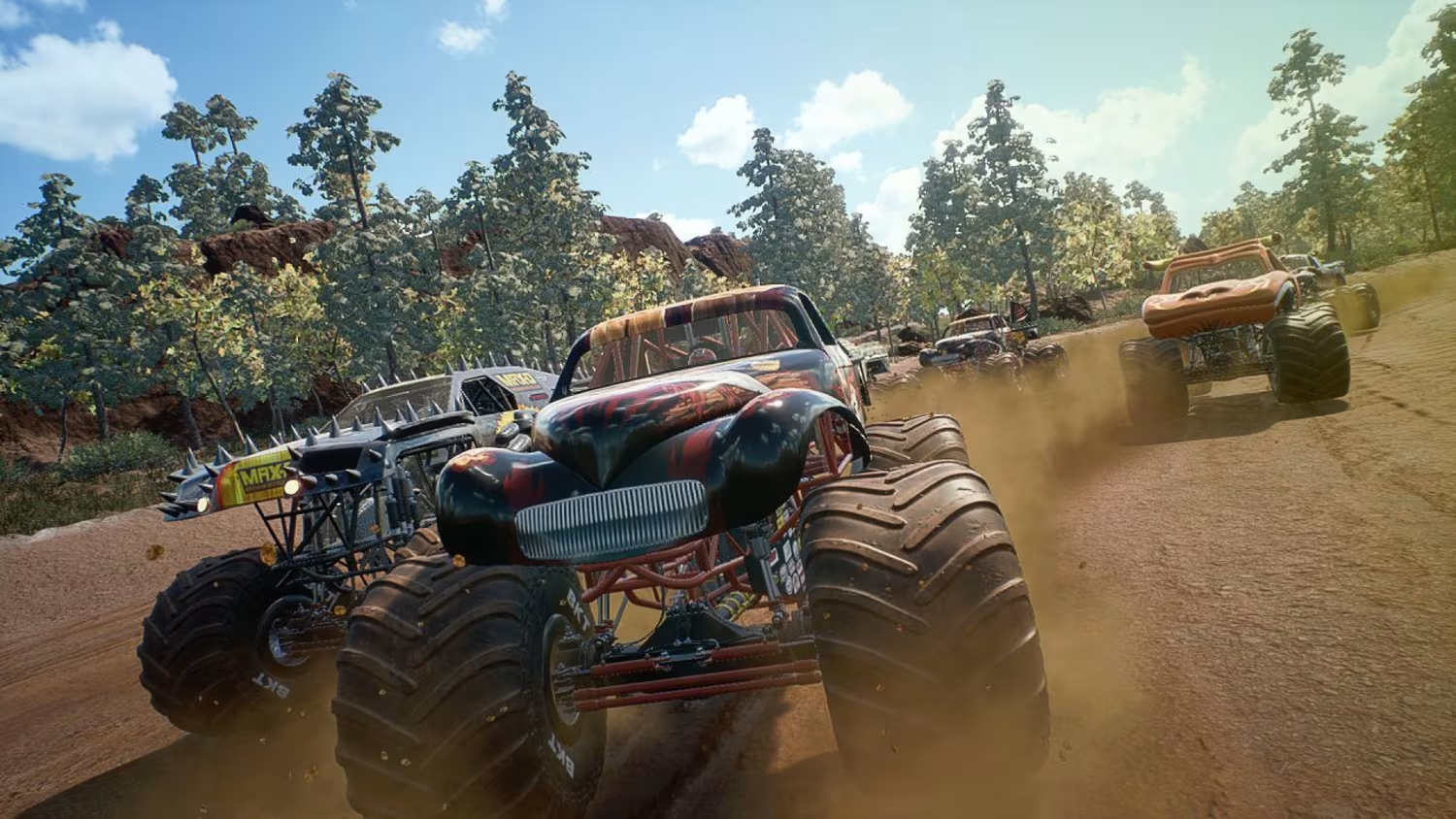
Monster Jam Steel Titans Switch approaches monster-truck driving as more than a series of races. Competition includes track events, direct contests against rivals, stunt-focused runs, and precision challenges that require careful balance. The trucks have substantial weight, so momentum matters when approaching ramps, recovering from a landing, or trying to turn quickly around an opponent.
The presentation is rooted in the familiar Monster Jam contrast between enclosed stadium action and larger outdoor spaces. Stadium events put the emphasis on compact courses, obstacles, and performances under pressure, while open-world areas provide room to drive, practice, and search for secrets. Truck damage and environmental deformation add to the sense that these vehicles are made to hit hard rather than glide cleanly through every event.
It is a game for players who enjoy motorsport with a more physical, exaggerated feel. Success is not only about finishing first. It can also depend on maintaining control in the air, putting together a creative freestyle sequence, or balancing a truck on two wheels without losing the run.
Career Progression From Rookie Driver to World Champion
The Monster Jam Steel Titans career mode provides the game’s main form of progression. There is no traditional narrative built around named heroes or villains. Instead, the player’s path develops through results: enter events, improve driving ability, earn victories, and move from rookie status toward the goal of becoming a Monster Jam Steel Titans World Champion.
That structure gives each discipline a practical purpose. Circuit races help develop pace and positioning, while stunt and skill events ask for a different relationship with the truck’s weight and momentum. Advancing through the career unlocks additional trucks and customization options, with in-game currency used for new vehicles and upgrades. The result is a progression loop based on learning the event formats and gradually expanding the available garage.
Replay value comes from this mix of advancement and experimentation. A difficult event can invite another attempt with a different truck, a cleaner line through a course, or a more ambitious approach to a jump. The game’s career is therefore less about following a scripted story than building a record of wins, records, and increasingly confident performances.
Four Event Types That Define the Competition
The range of Monster Jam Steel Titans events prevents the driving from settling into a single routine. Each format stresses a different skill, from controlled speed to improvisation under the pressure of a score.
- Circuit races: These events emphasize pace, cornering, and handling momentum across tracks. Strong Monster Jam Steel Titans circuit races demand attention to racing lines as well as the truck’s size and weight.
- Head-to-head competition: Direct contests against rivals put speed and agility under scrutiny. The focus is on responding quickly while keeping the truck under control through the course.
- Freestyle events: Freestyle shifts the objective from pure finishing position to performance. Jumps, tricks, crashes, and inventive use of obstacles help define a run.
- Two-wheel skill challenges: These tests are built around precision, asking drivers to hold a truck on its front or rear wheels rather than simply powering ahead.
Together, the four formats make the career feel like a broad Monster Jam program rather than a conventional racing ladder. A player comfortable with circuits may need to rethink their approach in freestyle, while someone who enjoys stunt runs may find the balance challenges especially demanding.
Driving 25 Popular Monster Jam Trucks
The game includes Monster Jam Steel Titans 25 trucks, giving players a sizeable selection of vehicles to drive as they progress. The trucks are not presented as interchangeable machines: their handling characteristics differ, encouraging players to experiment rather than assume that one vehicle will suit every kind of event.
That variation is important because Monster Jam driving is closely tied to feel. A truck’s response can affect how a player approaches a ramp, reacts after contact, or tries to recover from a flip. Learning those differences supports better results in competitive events and makes garage expansion meaningful beyond appearance alone.
Customization and upgrades add another layer to the truck-focused progression. As vehicles are unlocked, players can adjust performance and appearance while continuing to refine their preferred choices. For newcomers, trying several trucks can be a useful way to understand the game’s handling. More experienced players may appreciate finding a vehicle that fits their preferred balance between racing control and stunt potential.
Stadium Arenas and Open-World Environments
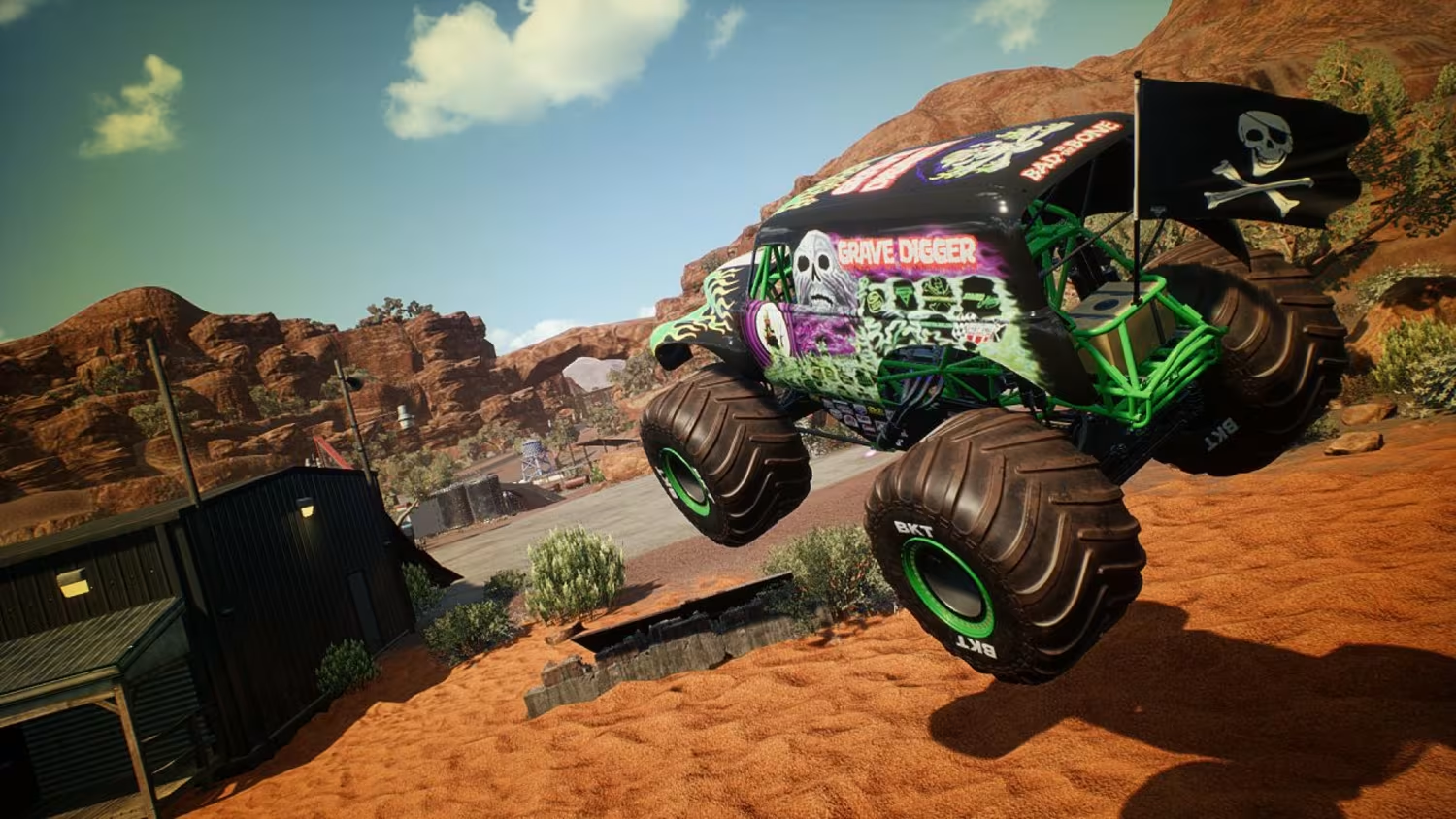
Monster Jam Steel Titans open world areas give the game breathing room outside its stadium competitions. These outdoor environments are designed for exploration, practice, and locating secrets, offering a less structured setting in which to work on jumps, landings, and general control.
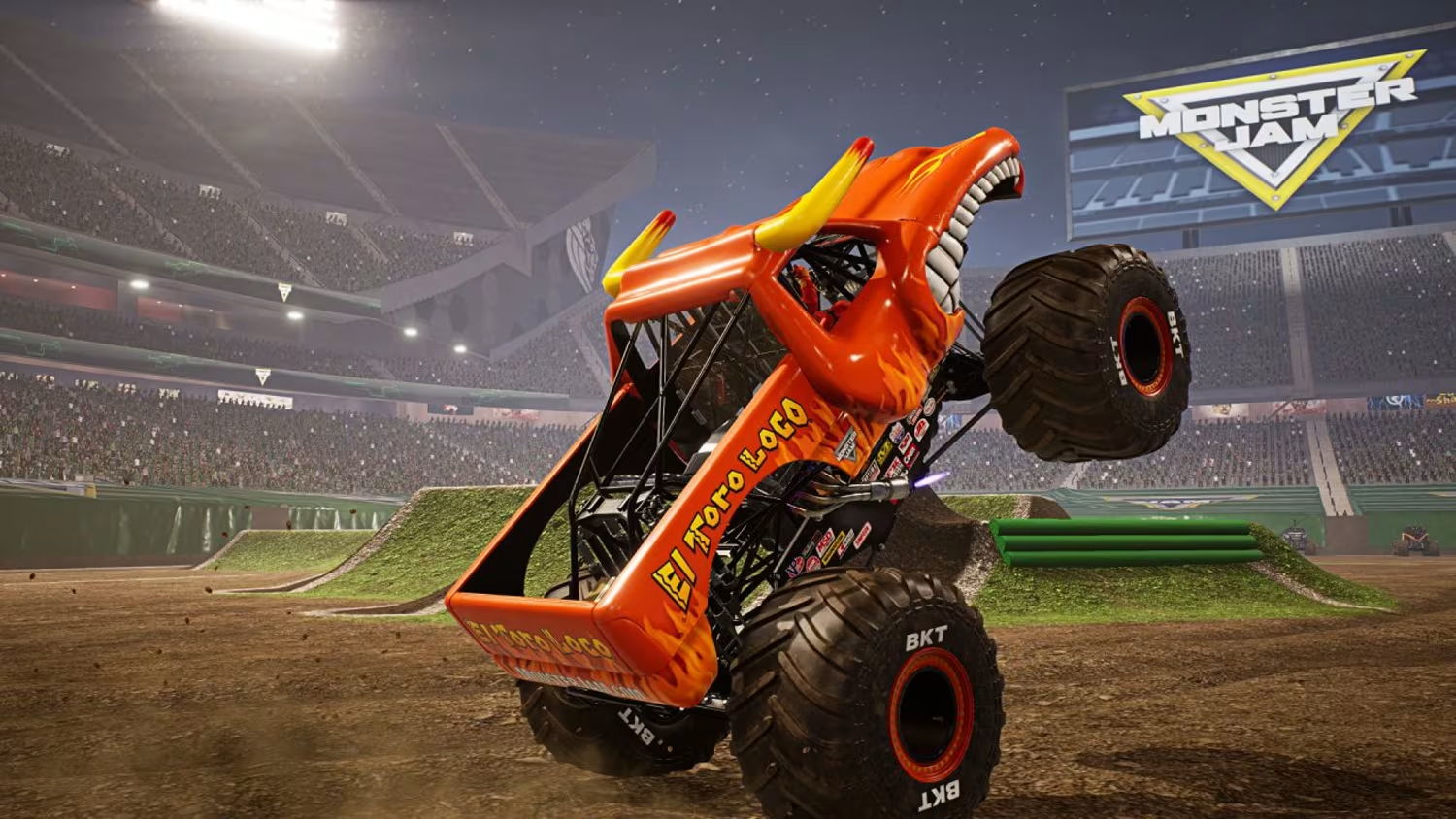
By contrast, Monster Jam Steel Titans stadiums concentrate the action. Their arena setting suits organized events, where obstacles and courses turn each run into a focused test. The contrast between broad outdoor driving and tighter stadium competition helps maintain variety: one space supports experimentation, while the other asks players to deliver under event conditions.
This split also supports the game’s atmosphere. Monster trucks are naturally dramatic vehicles, and the stadium setting gives stunts and collisions a performance-oriented energy. Outdoor environments make room for the quieter side of the experience: learning the terrain, practicing maneuvers, and exploring without the immediate demand of a formal event.
Freestyle Stunts and Two-Wheel Skill Challenges
Monster Jam Steel Titans stunts are central to its freestyle appeal. These events reward a willingness to use ramps, obstacles, and momentum creatively. Big jumps and tricks can be exciting, but the truck’s mass means that an ambitious attempt still needs a controlled landing. Crashes and deformation are part of the spectacle, reinforcing the rough, forceful character of monster-truck competition.
The two-wheel events offer a more measured challenge. Monster Jam Steel Titans two wheel skills ask players to balance on either the front or rear wheels, turning raw vehicle power into an exercise in restraint. Small adjustments matter, and the goal is not merely to perform a dramatic move but to sustain it with accuracy.
That combination makes the game suitable for players drawn to Monster Jam’s mix of competition and showmanship. Racing fans can pursue cleaner runs and faster finishes, while stunt-minded players can focus on freestyle creativity and difficult balance maneuvers. Monster Jam Steel Titans Switch NSP captures both sides: the urge to win and the satisfaction of making a massive truck do something unexpectedly precise.