Let’s Build a Zoo Switch NSP
Report Link Error
Select the broken download file, then submit the report.
Screenshots
About Game
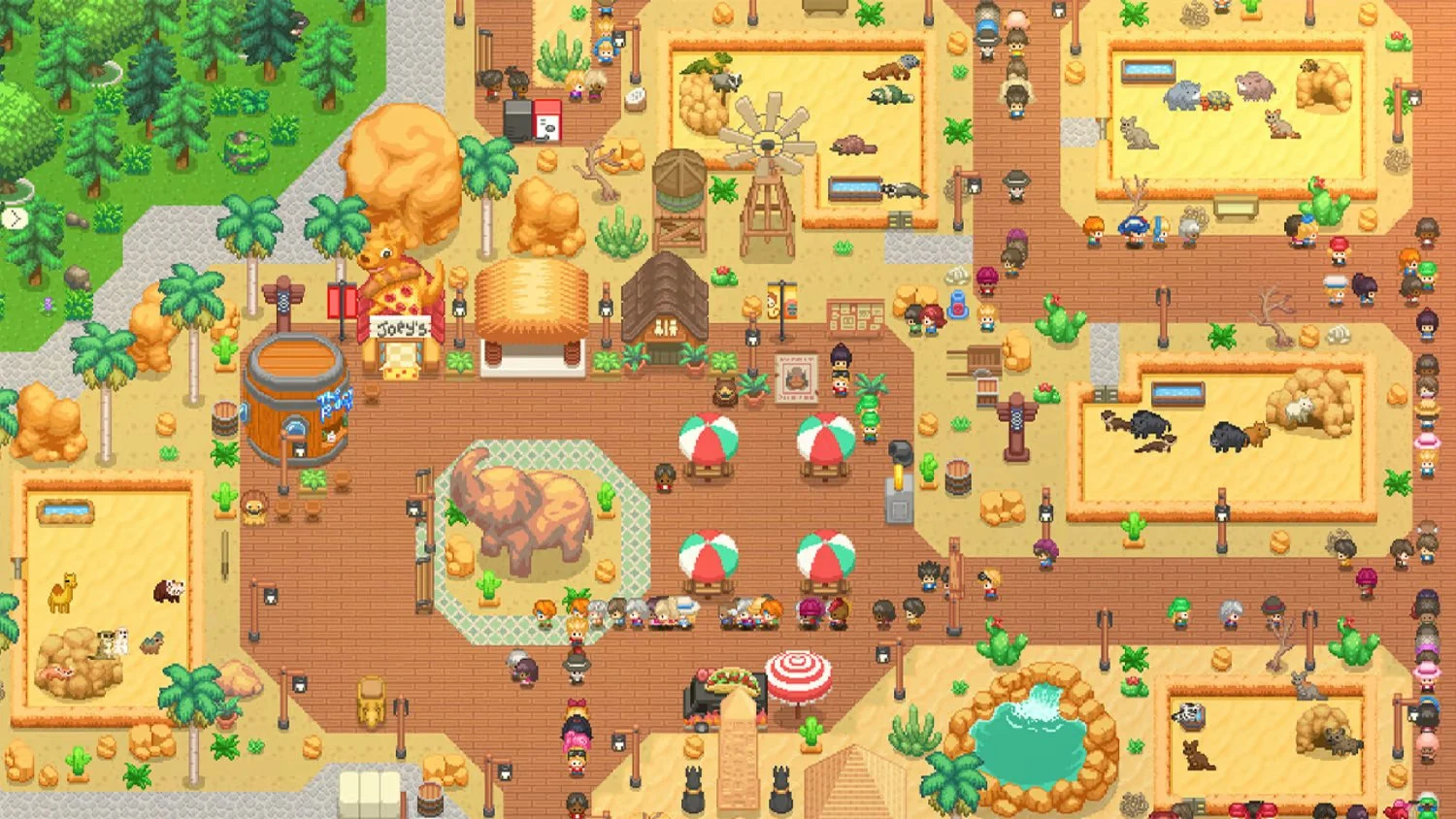
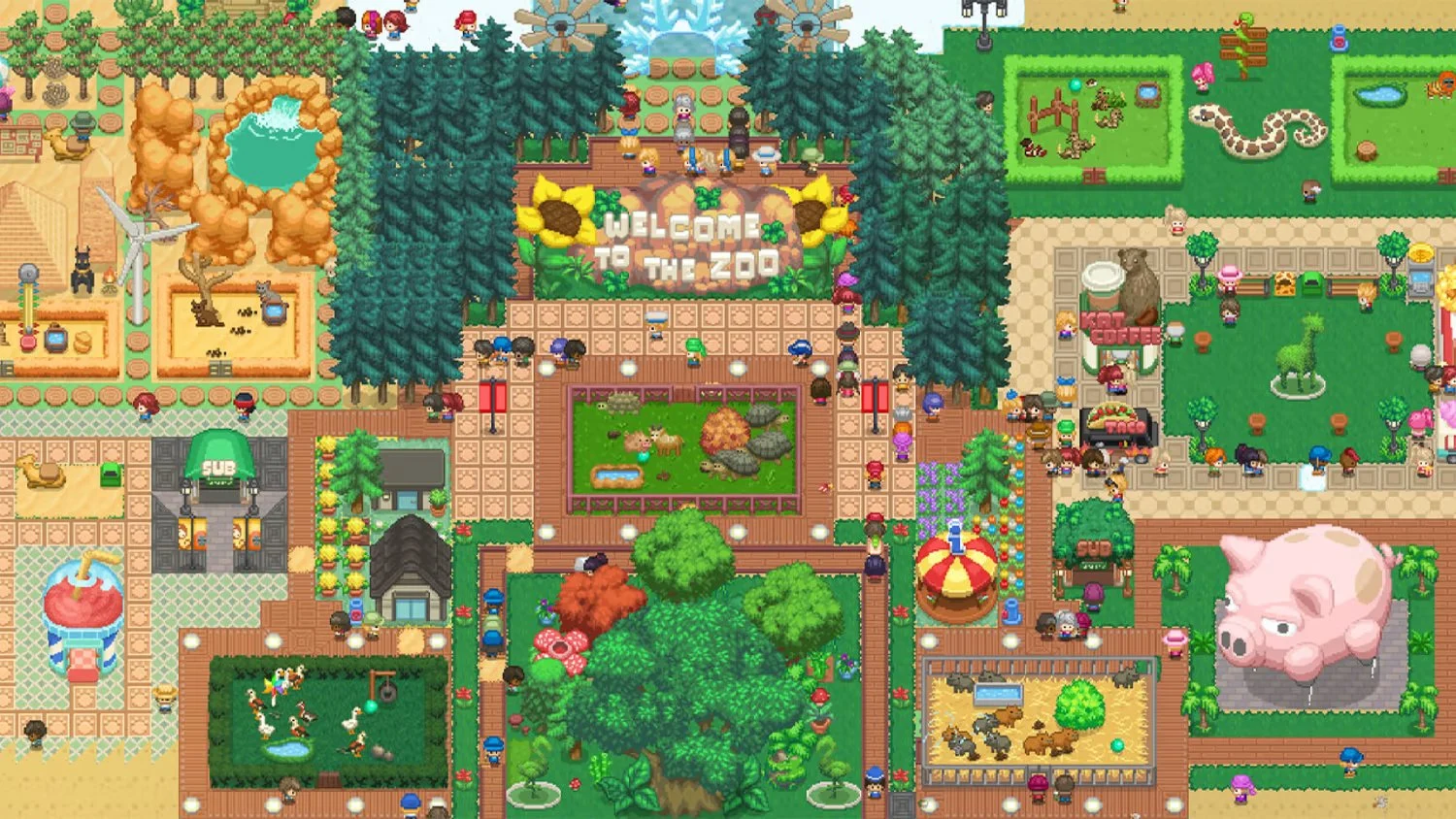
Let’s Build a Zoo Switch NSP places players in charge of a young animal park with room to grow in many directions. Rather than moving through a fixed campaign, the simulation develops through construction plans, financial decisions, animal care, research, and the choices made while shaping the zoo’s identity.
A Zoo Builder Defined by Player Choices
Let’s Build a Zoo begins with a small plot of land and a limited collection of animals. From there, progress comes from managing the park effectively and deciding what kind of zoo it should become. The game’s narrative is not built around a traditional sequence of story missions. Its sense of progression comes from the consequences of management decisions, changing reputation, and the gradual transformation of a modest attraction into a larger destination.
Player choices extend beyond placing buildings or increasing ticket-taking potential. The zoo can be shaped around animal welfare, conservation-minded decisions, unusual attractions, or a stronger focus on profit. Breeding, genetic splicing, and handling excess animals can all become part of the park’s wider ethical direction. These decisions influence the zoo’s moral standing and can lead to different gameplay paths.
That structure gives the simulation a flexible rhythm. A player can spend time carefully improving a few habitats, then shift attention toward visitor services, staff needs, or research. Another park may take a more experimental route by pursuing unusual animal combinations. The result is a management game where the “story” emerges from the way each zoo is run rather than from a predetermined script.
Planning Habitats, Paths, and Visitor Facilities
A functional zoo layout depends on more than finding open space for animals. Habitats need to fit into a park that visitors can navigate easily, with paths connecting enclosures to shops, attractions, and other visitor facilities. The construction side of the game encourages players to build the zoo from the ground up, arranging its practical needs while also creating a park that guests will want to explore.
Path placement matters because access affects the visitor experience. A confusing or poorly connected layout can make it harder to support the wider park, while a more organized design helps link animals, amenities, and attractions into a coherent whole. Planning ahead also makes later additions easier to accommodate when the zoo begins to expand.
Facilities serve a dual purpose. They help make the zoo more appealing to visitors while supporting the economic side of the simulation. Attractions and shops can contribute to a fuller park experience, but they also need to fit within a budget and a sensible layout. This makes construction less about filling empty land and more about balancing convenience, revenue, and room for future development.
Animal Welfare as a Core Management Challenge
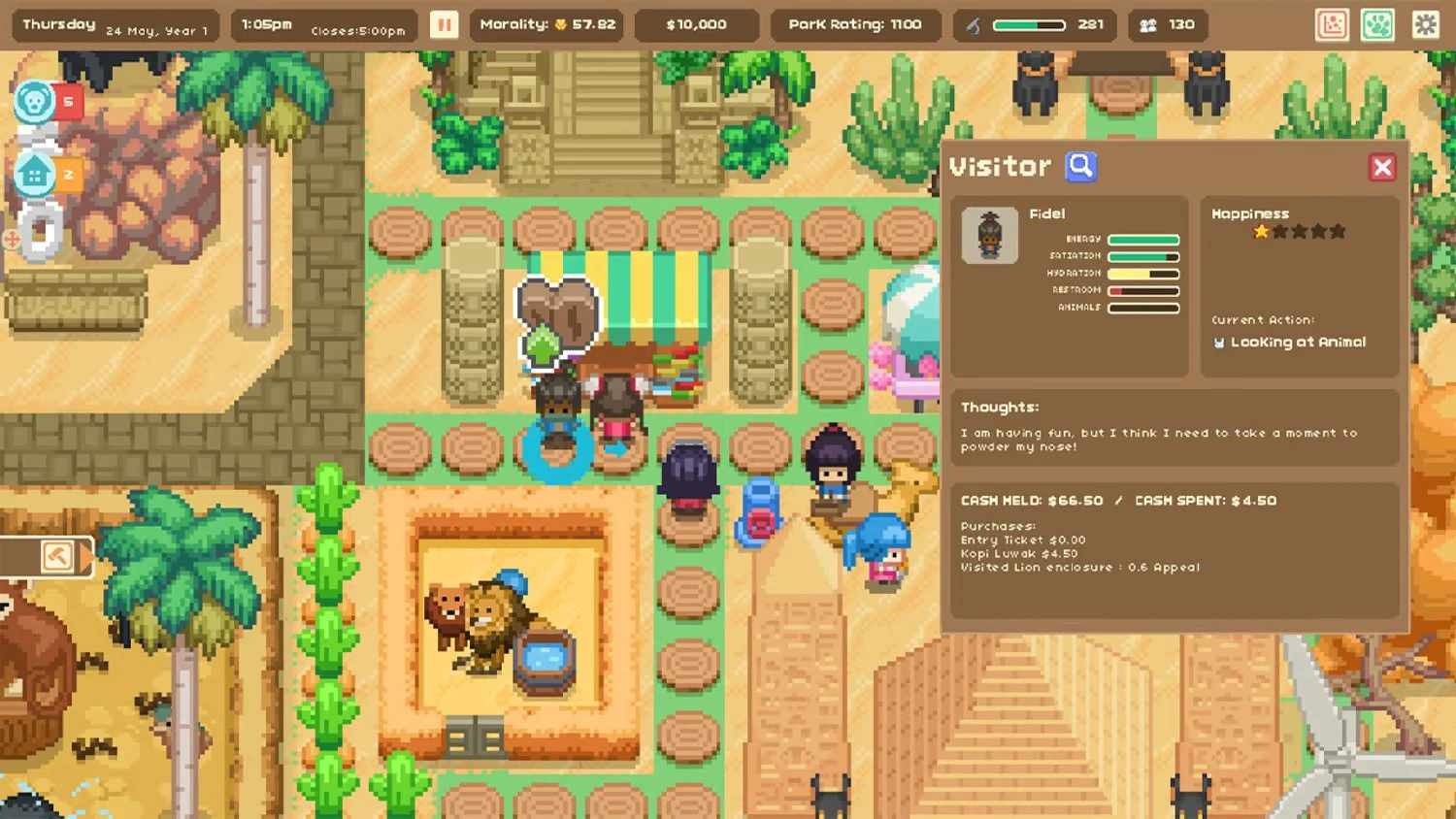
The zoo animals are not simply displays for visitors. Their animal welfare, happiness, and health need regular attention. A successful park has to monitor these indicators while also managing breeding and maintaining suitable conditions as the collection grows. Neglecting care can create problems even if the rest of the zoo is expanding well.
Breeding adds another layer to the management process, allowing the animal population to develop over time. Genetic splicing provides a more unusual option, letting players combine species to create hybrids. The game includes more than 300,000 possible hybrid animals, making experimentation an important source of variety. These creations can attract visitors and contribute to research, though they are also connected to the game’s ethical choices.
This balance gives the simulation some of its most interesting tension. Animal happiness has to be considered alongside visitor demand, available space, financial pressure, and the desire to try new systems. The game’s animal management is therefore not isolated from the rest of the zoo; it informs the park’s reputation, operations, and direction.
Managing Money, Staff, and Long-Term Growth
Building a larger zoo requires careful control of zoo finances. New habitats, facilities, and expansion plans all compete with ongoing costs such as staff wages and animal care. Spending too aggressively can create pressure on the budget, while holding back too much can limit the park’s ability to attract visitors and develop its services.
Staff management is part of that operational layer. Employees need to be supported as the zoo becomes more complex, and their wages have to be considered alongside other expenses. Research also demands attention, offering new technologies and upgrades that can improve facilities and animal care. These systems make gradual growth more dependable than rapid expansion without a plan.
The long-term appeal comes from managing these connected demands. A growing park can introduce new animals, improve visitor facilities, pursue research, and test genetic experiments, but each move affects available resources. The simulation rewards steady adjustment rather than a single correct solution, leaving room for different styles of park expansion and repeat play.
7 Practical Priorities for a Successful Early Zoo
- Plan the foundations. Leave room for future habitats, pathways, shops, and attractions before building too densely.
- Protect visitor access. Keep paths clear and make sure guests can reach animal areas and visitor facilities without difficulty.
- Spend with restraint. Balance construction costs against animal care, staff wages, and the need to preserve a workable budget.
- Watch animal indicators. Regularly check animal happiness and health so welfare problems do not undermine the wider park.
- Experiment carefully. Genetic splicing can create distinctive hybrids, attract visitors, and support research, but it also carries ethical consequences.
- Use research purposefully. New technologies and upgrades can improve facilities and animal care, helping the zoo operate more effectively.
- Expand in control. Add new areas gradually, giving the park time to support its growing animal population, staff needs, and visitor demand.
These Let’s Build a Zoo tips are especially useful for players who prefer a structured early game. Starting with a manageable park gives each new system time to settle into place. It also makes it easier to see how animal welfare, visitor satisfaction, research, and finances influence one another.
Nintendo Switch Release Details for Let’s Build a Zoo
Let’s Build a Zoo Switch NSP is associated with the Nintendo Switch release in the USA on September 29, 2022. It is a Simulation game published by No More Robots. The supported language options are English, French, German, Japanese, Spanish, and Chinese.
The Nintendo Switch title ID is 0100BF401539C000. The listed firmware version is 14.1.0, and the file size is 128 MB. For players interested in a zoo management simulation built around construction, animal care, operational planning, and meaningful management choices, the game offers a broad set of systems within a compact park-building premise.
Recommended Similar Games
 inKONBINI: One Store. Many Stories Switch NSPView Game
 Cast n Chill Switch NSPView Game
 BRIGANDINE The Legend of Runersia Switch NSPView Game
 Tale of Immortal Switch NSPView Game
 Float Survival Simulator – Ocean Survivor Switch NSPView Game
 Story of Seasons: Pioneers of Olive Town Switch NSP XCIView Game
