Float Survival Simulator – Ocean Survivor Switch NSP
Report Link Error
Select the broken download file, then submit the report.
Screenshots


About Game
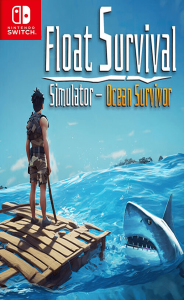
Float Survival Simulator – Ocean Survivor Switch NSP places its survival drama on a tiny, makeshift float in the middle of a vast ocean. The setup is deliberately spare: a shipwreck has left one person alone at sea, with limited space, few resources, and no obvious safety beyond the raft beneath their feet. What follows is a struggle shaped by practical decisions—what to collect, what to craft, what to protect, and how quickly to turn a vulnerable float into a sustainable refuge.
Shipwrecked on a Tiny Float: The Player-Driven Survival Premise
The ocean survival premise begins with a lone shipwreck survivor adrift on a small raft. There is no named cast driving a fixed plot and no elaborate scripted storyline to follow. Instead, the game’s narrative grows out of survival itself. A successful day of gathering materials, a hard-won water supply, or a new section added to the raft becomes part of the player’s own account of enduring the sea.
That approach gives the setting a persistent sense of exposure. The player starts with little protection from hunger, thirst, harsh weather, and dangerous marine life. The ocean is both the source of nearly every useful material and the environment constantly threatening to take those gains away. Progress is therefore less about reaching a single dramatic destination than about improving the odds of lasting another day.
Float Survival Simulator Ocean Survivor frames perseverance as its central theme. The fragile float is not simply a starting platform; it is the visible record of the player’s choices. Every tool, structure, and added foundation piece reflects resources that were pulled from the water and converted into a better chance of survival.
The Core Survival Loop: Hook, Gather, Craft, Expand
The main gameplay rhythm is built around a hook and the debris drifting across the ocean. Wood, plastic, metal, and other useful materials pass by the raft, and collecting them is the first step toward almost every improvement. This makes ocean debris gathering a regular, hands-on task rather than a background system. Missing a useful piece of debris can mean waiting for another opportunity, while successful collection supplies the next craft or expansion project.
From there, materials are turned into equipment and structures. The game supports the crafting of tools, weapons, and essential survival items through a workbench, making raft crafting the bridge between scavenging and long-term security. A hook brings in supplies; supplies enable tools; tools and crafted items support food, water, defense, and construction.
That loop also encourages planning. Resources can be spent immediately on urgent needs, saved for a larger upgrade, or used to prepare for future trouble. Researching technologies and crafting recipes can further improve the player’s options, while nearby islands offer another reason to look beyond the raft for rare resources and hidden blueprints.
Managing Hunger, Thirst, and Health at Sea
Gathering materials is only one side of the challenge. Survival meters demand steady attention, with hunger, thirst, and health all affecting the player’s ability to stay alive. Food and fresh water are not optional extras to pursue after construction; they are immediate priorities that shape the pace of each session.
The game provides routes toward more sustainable living, including crop cultivation and rain collectors. These systems matter because they reduce dependence on short-term luck and help turn a temporary emergency raft into a place capable of supporting continued survival. Establishing reliable food and water changes the player’s focus from immediate desperation to broader building and exploration goals.
Pressure can arrive from more than empty meters. Aggressive sharks and other marine life can threaten the raft, while storms add another source of uncertainty. This creates an ocean survival strategy built on overlapping responsibilities: maintain supplies, guard the base, collect what is drifting past, and keep improving the tools needed to respond when conditions worsen.
From Emergency Raft to Floating Fortress
The construction element gives the survival premise its clearest sense of progression. What begins as a small float can be expanded with scavenged materials into a larger base with structures, tools, and dedicated space for the systems that keep the player alive. Expansion is both practical and expressive, since the layout of the raft develops according to what the player needs most.
A larger raft can support a more organized approach to gathering, crafting, food production, and water collection. The possibility of building upward adds further ambition: the game allows the creation of a multi-story floating fortress. That phrase captures the contrast at the heart of the experience. A player begins exposed on a minimal platform, then gradually works toward a fortified home built from items once floating past in the sea.
Base building also gives every collected material a purpose. Extra foundations may offer room to grow, while crafted equipment can improve survival and defense. The progression is grounded in accumulation and problem-solving rather than a predetermined story path, making each developed raft a personal response to the same unforgiving environment.
7 Early Priorities for Staying Afloat
- Secure water first. Fresh water is a vital survival need, so working toward a dependable source, including rain collectors, should be treated as an early goal.
- Establish food. Hunger requires regular attention, and crop cultivation can help create a more sustainable food supply.
- Gather passing debris. Use the hook to pull in floating wood, plastic, metal, and other materials needed for crafting and construction.
- Track inventory. Keep an eye on available space and focus on the resources needed for the next useful upgrade rather than holding everything without a plan.
- Craft essential tools. A workbench supports the creation of tools, weapons, and survival items that broaden the player’s options.
- Reinforce the raft. Expand the starting float into a more functional base, adding the space required for survival systems and structures.
- Prepare for threats. Sharks, other marine life, and storms can interrupt routine gathering, so defense and readiness matter alongside construction.
Switch Release Facts for Float Survival Simulator – Ocean Survivor
Title: Float Survival Simulator – Ocean Survivor Switch NSP
Title ID: 0100ED202095C000
USA release date: December 21, 2024
Publisher: BitToBit Publisher
Genre: Adventure, Simulation, Strategy, Role-Playing
Language: English
Firmware: 19.0.0
File size: 228 MB
Its genre labels fit the supplied mechanics closely. The adventure comes from surviving and exploring nearby islands; simulation is reflected in resource, hunger, thirst, and health management; strategy appears in planning upgrades and defenses; and role-playing is present in the player’s sustained survival journey. For players interested in gathering loops, practical crafting, and base construction under constant environmental pressure, the game’s focus remains firmly on building security one scavenged resource at a time.
Recommended Similar Games
 Verho – Curse of Faces Switch NSPView Game
 Sakura Fox Adventure Switch NSPView Game
 Natsu-Mon 20th Century Summer Kid Switch NSPView Game
 No Sleep For Kaname Date – From AI: THE SOMNIUM FILES Switch NSPView Game
 Zombie Rollerz: The Last Ship Switch NSPView Game
 Tales from the Borderlands Switch NSP XCIView Game
