KORG Gadget Switch NSP
Report Link Error
Select the broken download file, then submit the report.
Screenshots
About Game
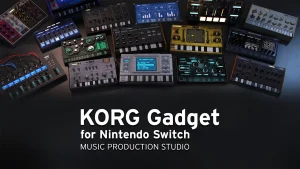
KORG Gadget Switch NSP turns Nintendo Switch into a compact environment for writing, arranging, and refining music. Released in the USA on April 26, 2018, by DETUNE Ltd., this English- and Japanese-language music and practical application is built around creation rather than conventional competition. Its 558 MB release is not concerned with stages, enemies, or score chasing; the focus is on shaping sound into a finished piece.
KORG Gadget on Nintendo Switch: A Portable Music-Creation Toolkit
KORG Gadget Switch is designed around the appealing idea of a portable music studio. The Switch format suits short experiments as well as longer sessions, giving players a space to sketch rhythms, test sounds, and assemble ideas into structured tracks. It presents music creation in a direct, accessible way, while still leaving room for detailed adjustment and experimentation.
The application’s practical genre designation fits its purpose. Rather than asking players to master a fictional world, it supplies tools for composition. A session can begin with a simple beat, develop through layered parts, and end as a completed song. That flexible structure makes the experience approachable for newcomers curious about sound design, while experienced musicians can use the available instruments, effects, and arrangement tools to pursue more developed ideas.
Its presentation is functional and hands-on: instruments, clips, parameters, and effects are there to be manipulated in service of a track. The atmosphere comes from the music being made. A sparse electronic pattern can feel focused and intimate, while stacked drums, bass, and melody can turn the same project into something much larger.
No Fixed Storyline: Building a Personal Musical Journey
There is no traditional KORG Gadget Switch storyline. No protagonist guides the player through a fixed plot, and there are no quests or predetermined ending conditions. Instead, progression is measured through personal output: a first rhythm, a more confident arrangement, a newly discovered sound combination, or a track that finally feels complete.
That open-ended music creation gives every project its own direction. One player may begin by programming a drum pattern, while another may start with a melodic phrase or an effect-treated texture. The application does not prescribe which route is correct. Its creative composition tools provide the framework, but the sequence of decisions belongs to the person making the music.
This structure also supports replay value in a natural way. Returning does not mean replaying the same content for a different result. It means revisiting an unfinished idea, trying a new gadget, rearranging clips, or building an entirely separate piece. Each session can become another chapter in a personal collection of music.
How Gadgets Form the Foundation of a Track
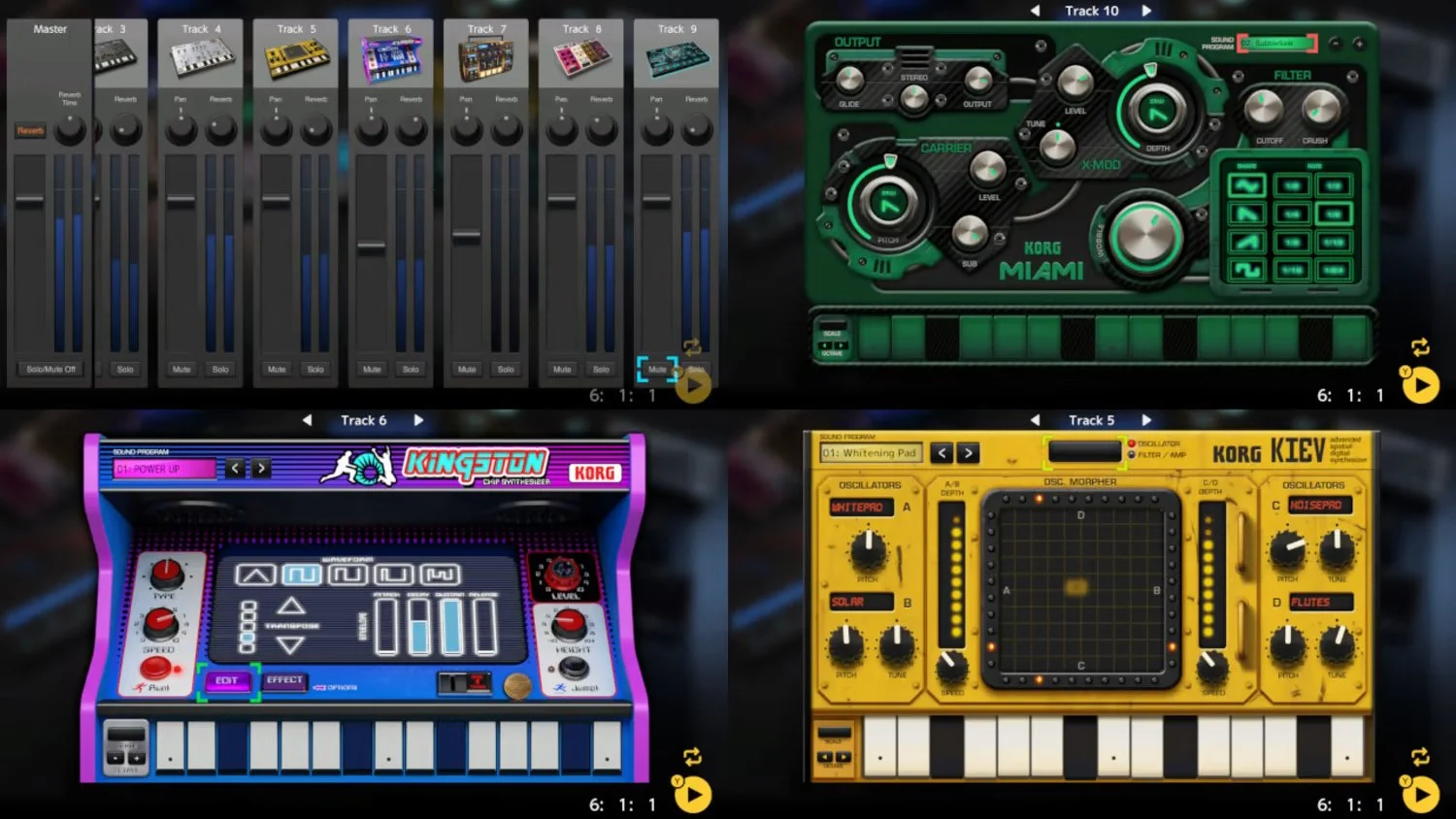
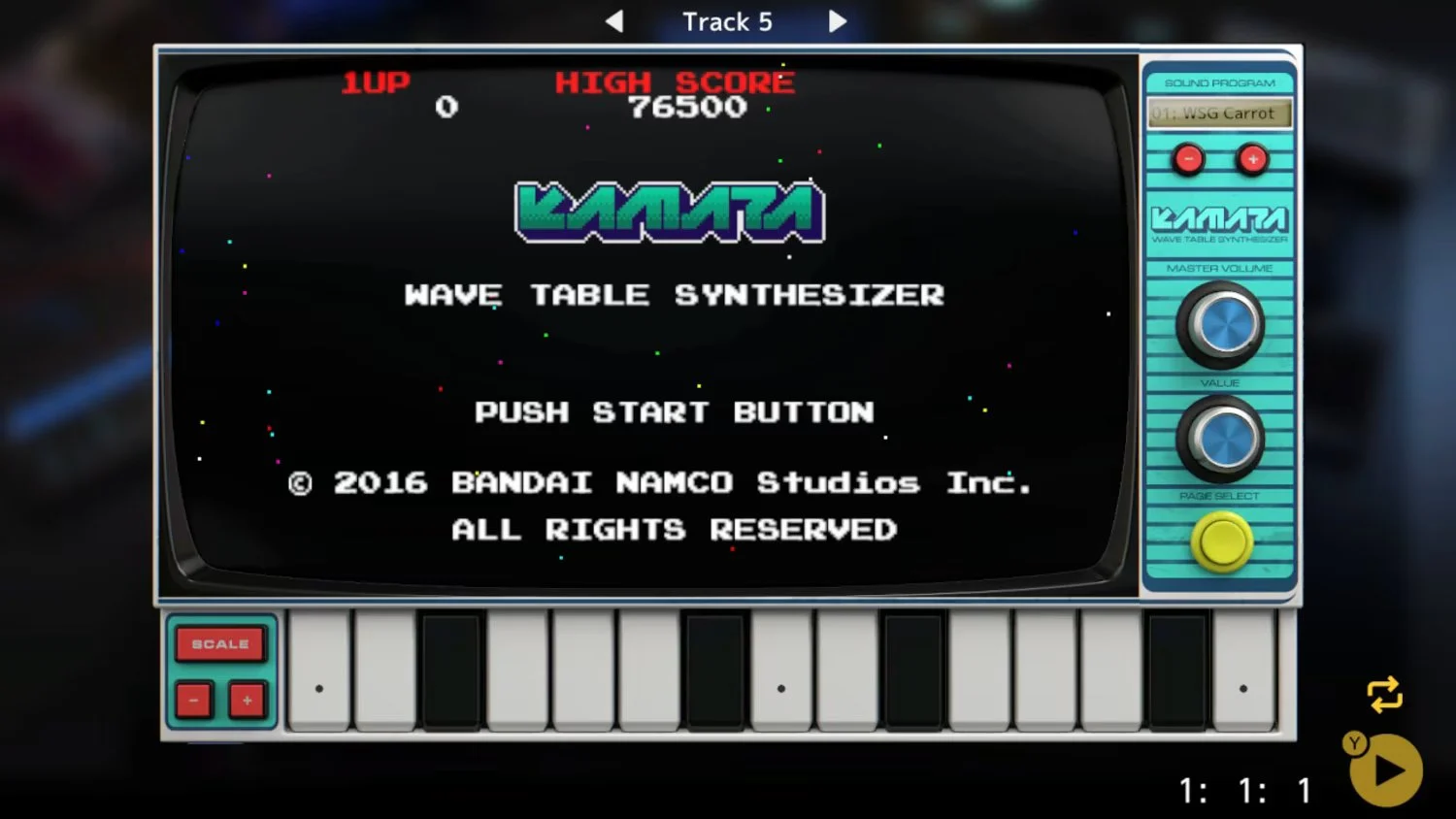
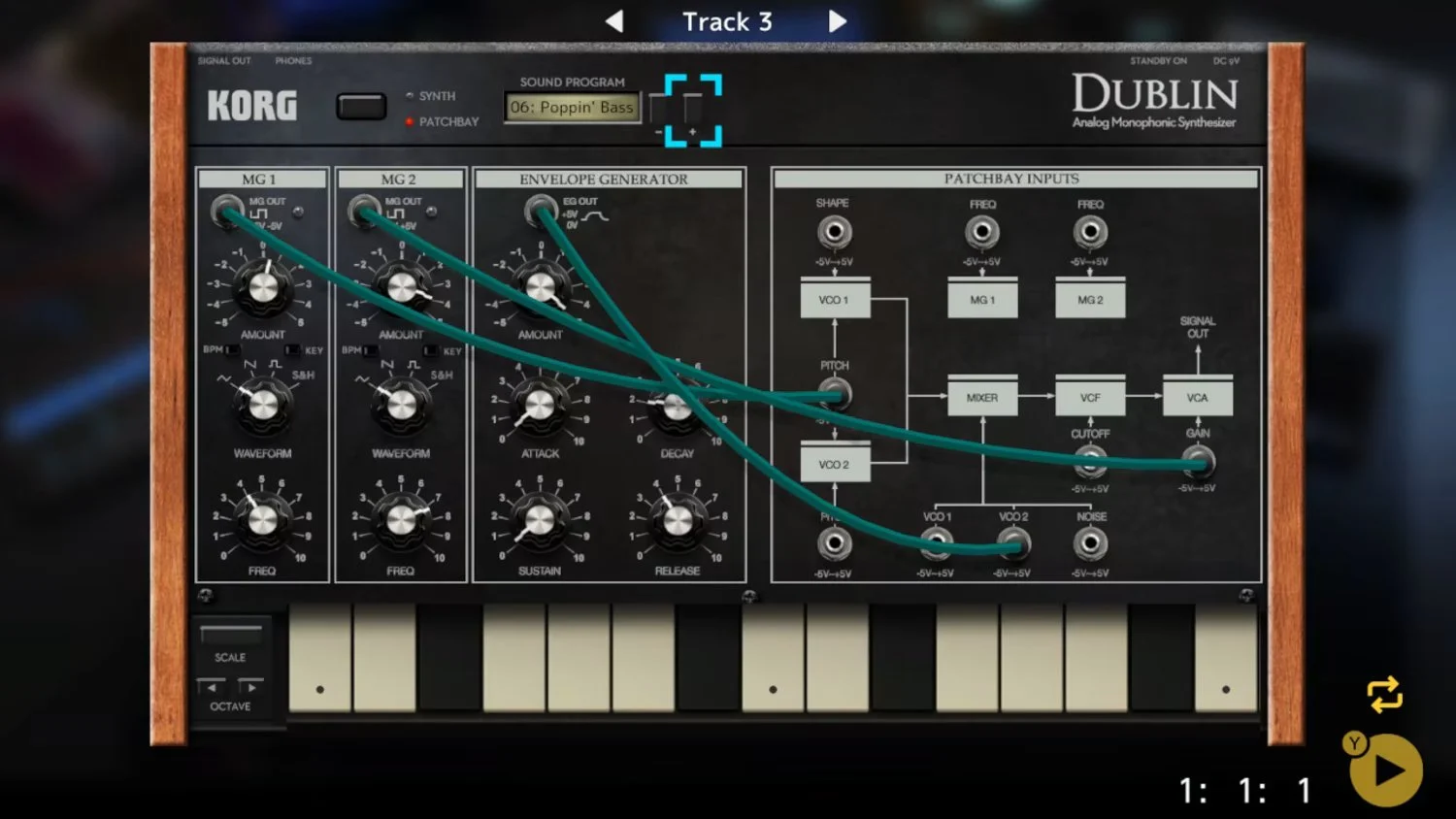
The central building blocks are virtual instruments known as gadgets. More than 40 gadgets are available, each with its own sound character. They can be combined to form complete arrangements, from a basic groove to a fuller song with introductions, verses, choruses, and changing sections.
Music track creation develops piece by piece. A drum gadget can establish pulse and momentum. Basslines can reinforce the rhythm or introduce their own movement. Melodies add a clear focal point, while effects can reshape individual tracks or affect the master output for a more polished result. The process encourages layering, subtraction, and revision rather than a single irreversible performance.
- Set the pulse: Begin with drums or a rhythmic pattern to establish the track’s foundation.
- Add weight: Bring in a bassline that supports the beat and gives the arrangement direction.
- Find a voice: Use melodic gadgets to introduce hooks, chords, or more abstract musical phrases.
- Arrange the clips: Place musical material on the timeline to shape sections such as intros, verses, and choruses.
- Refine the sound: Apply effects and adjust parameters to change the character of individual parts or the full mix.
The available tools make experimentation central to the experience. Changing patterns, combining unexpected virtual instruments, and adjusting effects can reveal new harmonies and rhythms. A project may evolve from a simple loop into a detailed composition through that steady process of testing and revising.
Touch Controls and Joy-Con Input for Hands-On Production
KORG Gadget Switch controls are designed around the hardware’s available interaction methods. Touch music production allows direct engagement with the interface, while Joy-Con input can be used for parameter adjustments. Those options give the application a tactile quality that suits its focus on shaping sounds in the moment.
Parameter changes matter because small adjustments can alter the feel of a part. A rhythm can become more forceful or restrained, a melodic line can shift in character, and an effect can change the sense of space around a track. The ability to interact through touch controls or Joy-Con movements keeps those decisions close to the act of listening.
This is useful for players who prefer immediate experimentation over a rigid production routine. The application still involves arranging clips and constructing songs, but its control approach encourages quick responses to musical ideas. A player can make an adjustment, hear the result, and decide where the track should go next.
Jam Mode and Recording Live Musical Ideas
Beyond arranged composition, KORG Gadget Switch NSP includes ways to capture ideas as they happen. Live recording supports performance-based experimentation, allowing musical material to be recorded rather than only constructed through step-by-step arrangement. This can be especially valuable when a pattern, melody, or parameter change feels more natural when played in the moment.
The multiplayer Jam mode expands that creative space by allowing players to jam with friends. Rather than treating multiplayer as a contest, it is framed around shared music making. Players can explore sounds together, react to each other’s ideas, and use the session to develop material that might later become part of a more structured project.
Jam mode also changes the atmosphere of the application. Solo work can feel focused and private, with attention placed on detail and arrangement. A shared jam can be more spontaneous, built around quick musical responses and the pleasure of discovering combinations collaboratively.
Saving Projects and Exporting Finished Creations
Saved projects make the creative process less dependent on finishing everything in one sitting. A track can be recalled later, expanded with additional gadgets, revised with new effects, or reorganized after fresh listening. This supports iterative work, where an early idea can remain available for further development instead of being treated as a one-time experiment.
When a composition is ready, finished tracks can be exported as audio files for sharing. That gives each project a clear endpoint without making the process feel final in a restrictive sense. A player can export one version, return to the saved project, and continue refining it if new ideas emerge.
For people interested in portable composition, virtual instruments, collaborative jams, or simply learning through sound, KORG Gadget Switch offers a flexible creative workspace. Its reward is not a final credits sequence. It is the growing body of music made through repeated listening, adjustment, and invention.
Recommended Similar Games
 Melatonin Switch NSPView Game
 Trombone Champ Switch NSPView Game
 Just Dance 2022 Switch NSPView Game
 Samba de Amigo Party Central Switch NSP XCIView Game
 Let’s Sing 2024 with International Hits Platinum Edition Switch NSP XCIView Game
 Cadence of Hyrule: Crypt of the NecroDancer Featuring The Legend of Zelda Switch NSP XCIView Game
