Keep Talking and Nobody Explodes Switch NSP
Report Link Error
Select the broken download file, then submit the report.
Screenshots
About Game
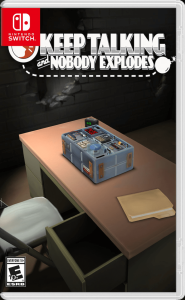
Keep Talking and Nobody Explodes Switch NSP turns a simple idea into a demanding cooperative puzzle session: one player sees a bomb on the Nintendo Switch screen, while other players rely on a separate bomb-defusal manual to explain how it works. Developed and published by Steel Crate Game, this puzzle game arrived on Nintendo Switch on August 16, 2018. Its pressure comes less from fast reflexes than from the challenge of exchanging accurate information before the countdown ends.
What Keep Talking and Nobody Explodes Brings to Nintendo Switch
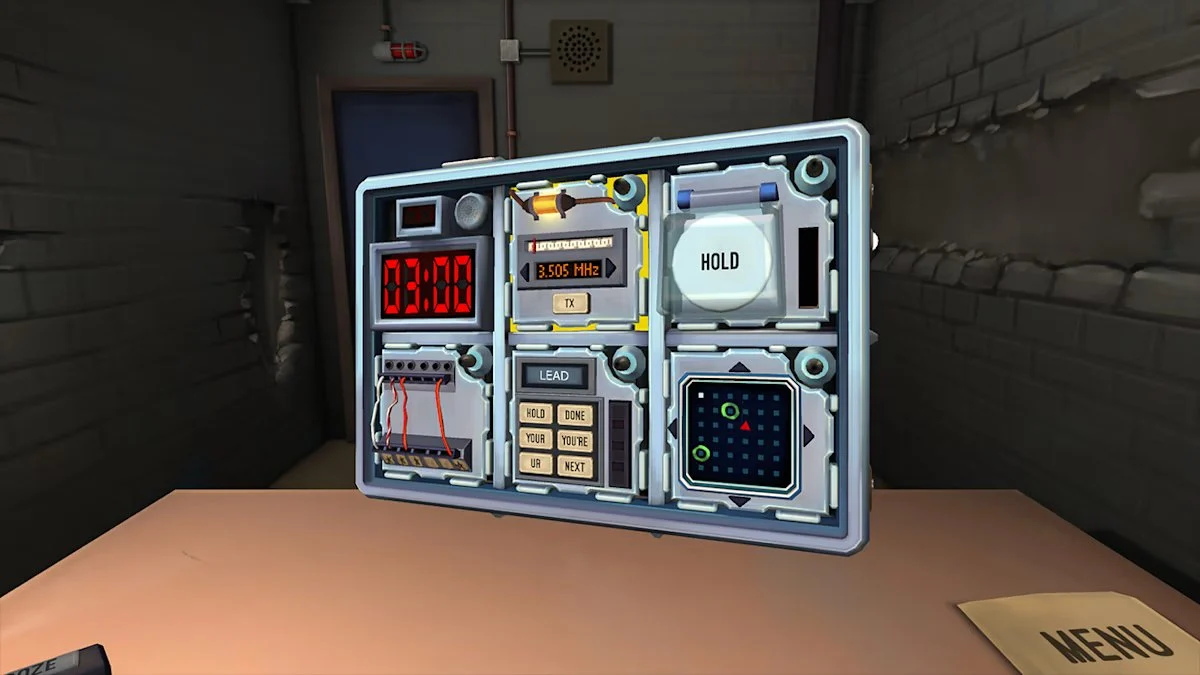
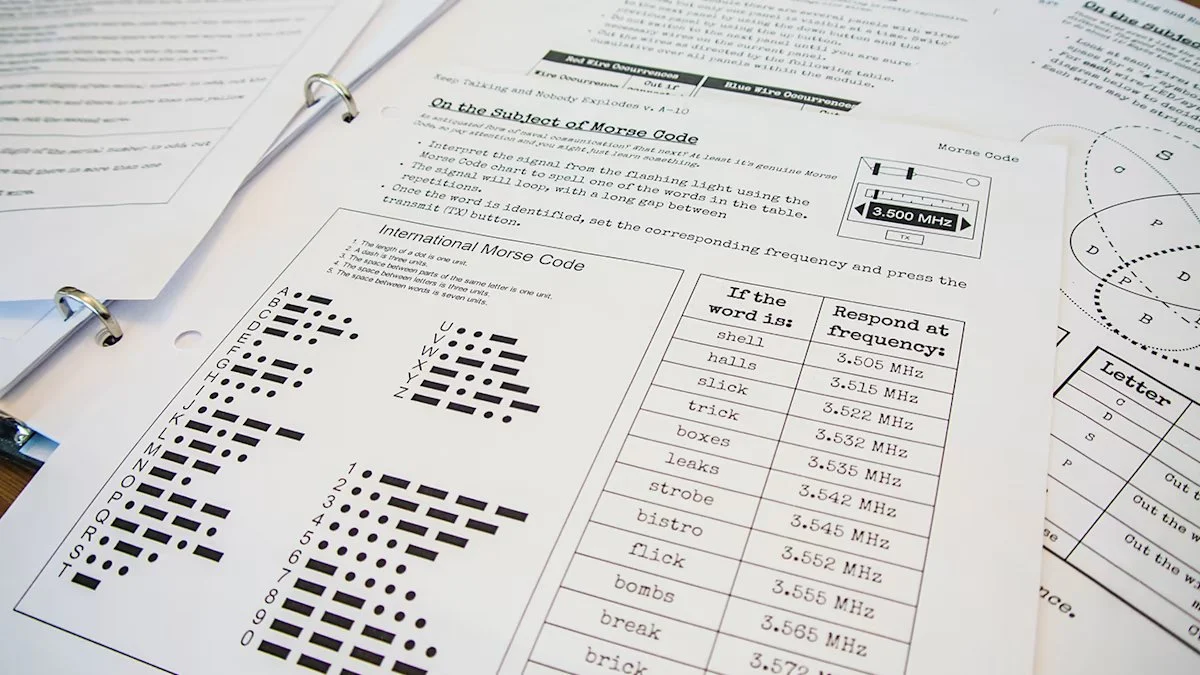
Keep Talking and Nobody Explodes is built for groups willing to talk through problems in real time. The player handling the Switch becomes the Defuser, facing a bomb made up of several modules. The other players become Experts. They have the manual, but they cannot see the bomb itself. Neither side has enough information to succeed alone.
That division creates a distinctive kind of Nintendo Switch puzzle game. The Defuser must inspect what is on screen and report it clearly. Experts must locate the correct section of the manual, interpret its rules, and give instructions that can be followed without confusion. A wire color, a symbol, a button label, or a diagram can become critical when there is little time left.
The presentation serves this setup directly. The Switch screen gives the Defuser a close view of the bomb and its changing collection of modules, while the manual remains the Experts’ point of reference. The result is a shared experience that can become orderly, frantic, funny, or tense depending on how well the group communicates.
The High-Stakes Premise: A Bomb, a Manual, and a Countdown
There is no traditional scripted storyline guiding players from one character moment to the next. Instead, each session begins with an immediate scenario: a bomb is present, it is counting down, and the team has to disarm it. The drama is created by the players’ own decisions and reactions.
Randomly generated bombs keep that premise from becoming routine. A new setup can ask the group to identify wires, work through symbols, interpret logic-based modules, or manage other puzzle details under pressure. The bomb-defusal game format gives every round a clear objective, but the route to success changes with the configuration in front of the Defuser.
Failure is part of the tension. Mistakes can produce strikes, and too many strikes cause the bomb to detonate. That consequence makes even a small misunderstanding feel important. An Expert may find the right rule, but if the Defuser describes a feature inaccurately or hears an instruction incorrectly, the team can lose valuable time and risk another error.
Why Clear Communication Is the Core Challenge
The puzzles matter, but language is often the larger obstacle. Experts cannot simply point to the correct answer on the bomb, and the Defuser cannot browse the manual for a solution. Players have to translate visual information into useful spoken descriptions, then turn the manual’s rules into precise actions.
A good report is usually specific and brief. Instead of announcing that there are “some strange symbols,” the Defuser needs to describe the symbols well enough for the Experts to identify the relevant module. Instead of giving a rushed set of directions, an Expert needs to make clear which wire, button, or sequence is being discussed. The countdown rewards teams that can confirm details without talking over one another.
This is why Keep Talking and Nobody Explodes Switch NSP works best as a communication game rather than a solo puzzle challenge. The group is constantly balancing speed against clarity. Talking faster does not necessarily help; accurate descriptions, quick corrections, and confirmation before an action often matter more.
The format can also produce a natural sense of progression. Early attempts teach players the language they need for the manual and the kinds of details that matter. Over time, a group may become more efficient at identifying modules, reporting information, and dividing attention. That improvement comes from teamwork as much as individual familiarity.
How to Organize a More Effective Defusal Team
Successful teams do not need to eliminate the pressure, because pressure is part of the experience. They do benefit from a simple structure. A few habits can make the manual easier to use and reduce avoidable mistakes during a bomb scenario.
- Learn the manual layout. Before starting a bomb, give the Experts time to recognize where different module sections are located. Finding the right page quickly can save crucial seconds once the countdown is active.
- Assign module responsibilities. If several Experts are available, one person can focus on a particular type of puzzle while another searches for a different section. Clear defusal team roles prevent multiple people from giving conflicting directions.
- Describe before acting. The Defuser should report the visible details of a module before making a move. Colors, symbols, labels, positions, and diagrams may all affect the instruction the Experts provide.
- Use direct instructions. Experts should state the action in simple terms and avoid leaving room for interpretation. If an instruction involves a particular wire or sequence, confirm it is understood before the Defuser commits.
- Stay composed after a strike. An error raises the stakes, but panic can cause a second mistake. Regroup, identify what went wrong, and return to the remaining modules with clear communication.
Difficulty, Variety, and Replayable Bomb Scenarios
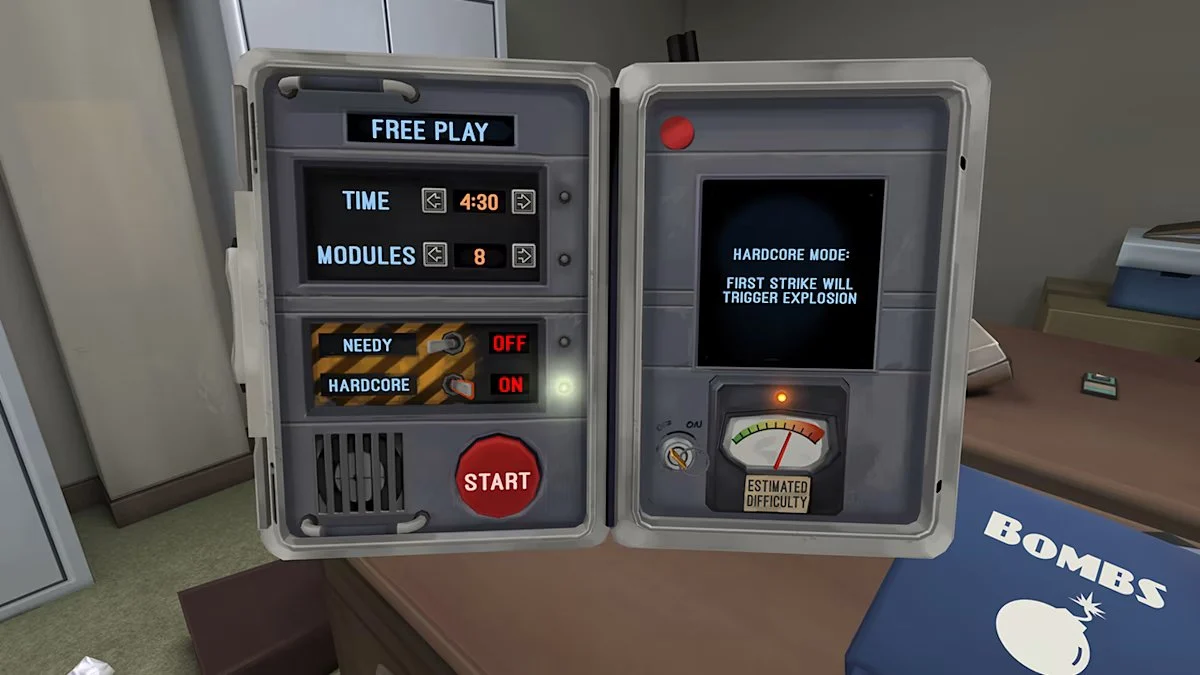
Variety is a major reason repeated sessions remain engaging. The game includes different bomb types and difficulty settings, while randomly generated setups mean the same group is not simply repeating one fixed sequence. A familiar module may appear in a new combination with other problems, changing how the team has to manage its time.
That structure supports replay value without relying on a conventional campaign. Each bomb becomes its own compact event: players assess what they have, decide who should handle each task, and try to keep communication controlled as the timer continues. Some rounds may be solved through calm organization; others may unravel because one description was incomplete.
The suitable audience is therefore less about puzzle expertise and more about willingness to collaborate. It fits players who enjoy party-style sessions, spoken problem-solving, and the suspense of working against a countdown. Groups that prefer quiet, independent play may find its constant verbal exchange demanding, but that demand is central to the design.
Switch Release Details and Supported Regions
Keep Talking and Nobody Explodes was released for Nintendo Switch on August 16, 2018. Steel Crate Game is listed as both the developer and publisher. The Switch release is available for the USA, EUR, and JPN regions, with English and Japanese language support.
Its Nintendo Switch format keeps the Defuser’s role focused on the console screen while the rest of the team works from the separate manual. That clear separation is the foundation of the game’s cooperative tension: one side can see the danger, the other side can explain the solution, and neither can finish the job without the other.