Hello Neighbor Switch NSP
Report Link Error
Select the broken download file, then submit the report.
Screenshots
About Game
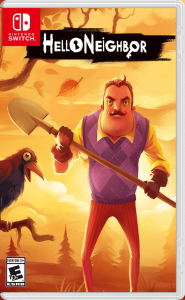
Hello Neighbor Switch NSP brings a tense suburban mystery to Nintendo Switch, combining action, puzzles, first-person exploration, and adventure elements in a compact but uneasy experience. Released on July 27, 2018, this version was developed and published by tinyBuild Games and made available in Europe and the USA.
Hello Neighbor on Nintendo Switch: Game Overview
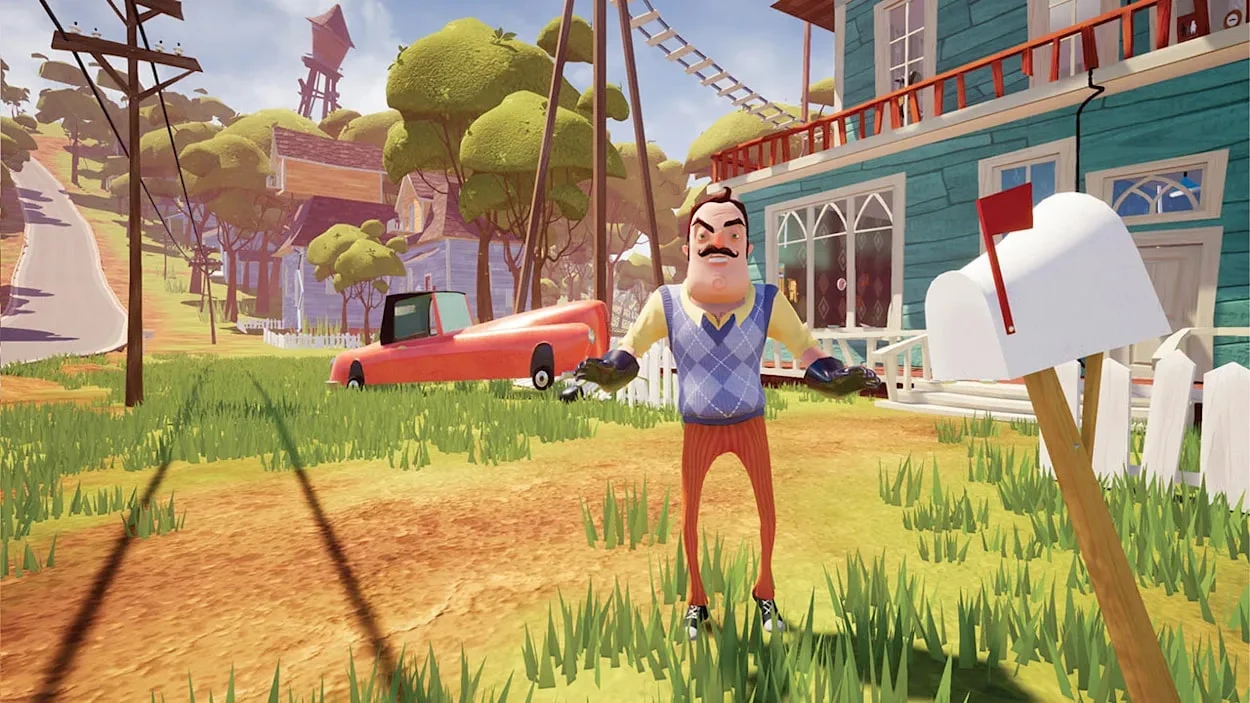
Hello Neighbor Nintendo Switch places players outside an ordinary-looking home with an extraordinary amount of unanswered questions behind its walls. The premise is direct: enter the neighbor’s property, search for a path through his increasingly strange house, and reach the basement. The route, however, is built around locked doors, hidden passages, environmental obstacles, and the constant risk of being caught.
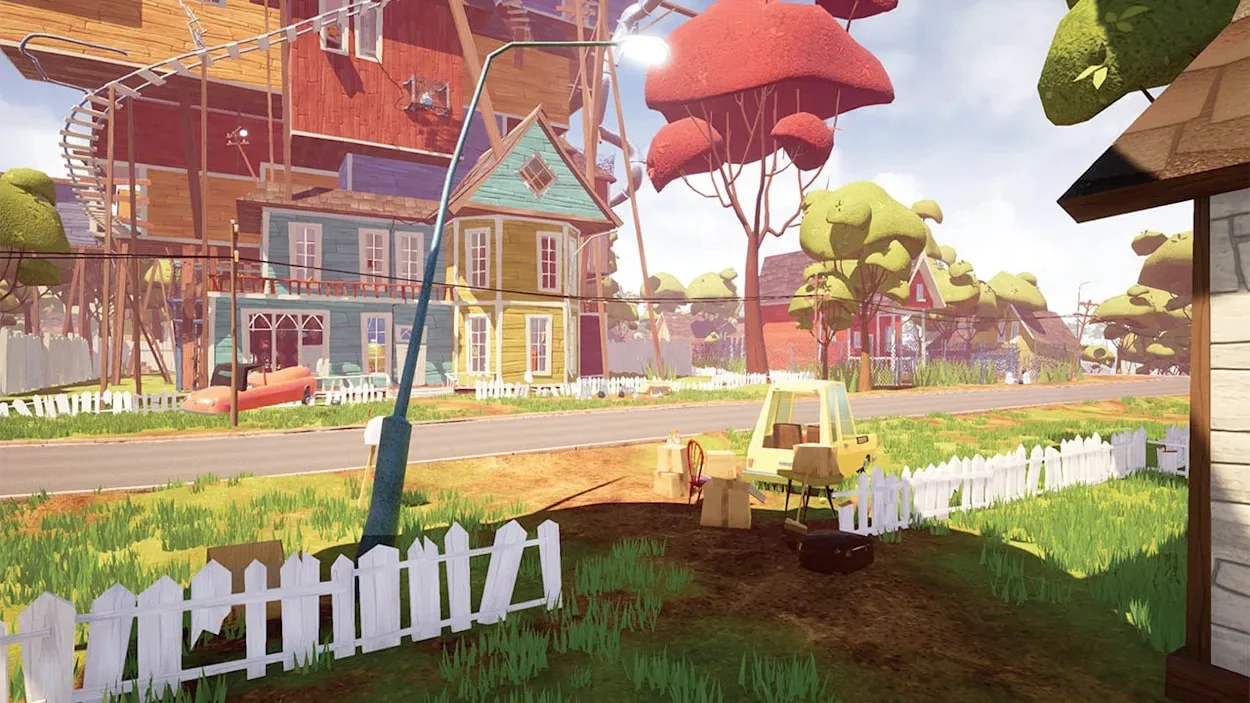
tinyBuild Games frames the experience as a first-person adventure with a strong stealth and puzzle focus. Its suburban setting is intentionally familiar: a street, a home, a yard, and a neighbor who initially appears to be simply unusual. That recognizable backdrop gives the game’s more surreal spaces and suspicious discoveries extra weight. The house becomes less like a fixed building and more like a maze shaped by secrets, barriers, and opportunities for experimentation.
The Switch version suits a game built around repeated attempts. Short stretches of exploration can lead to a useful object, a newly opened route, or another clue about what lies below the house. Failure is part of the structure, encouraging players to observe, rethink their plan, and approach the property from another angle.
Nicky Roth’s Suspicion and the Mystery Next Door
The Hello Neighbor story follows Nicky Roth after he moves into a suburban house near Mr. Peterson. Nicky soon notices that his neighbor is behaving strangely. His concern deepens when he sees Mr. Peterson boarding up a door inside his own home, an action that turns a passing suspicion into a personal investigation.
Nicky’s goal is driven by curiosity as much as fear. Something appears to be hidden behind the sealed door and in the basement beyond it, but the game does not present every answer openly. Instead, it asks players to share Nicky’s uncertainty. Mr. Peterson’s house is a place of locked rooms and concealed spaces, where each successful entry can reveal another reason to keep searching.
The mystery is not only about reaching a particular destination. It is also about understanding why the neighbor guards his home so intensely and what the scattered details of the building suggest about his past. The result is a story of confronting an unsettling unknown in a setting that should feel safe.
Environmental Storytelling Inside the Neighbor’s House
Hello Neighbor environmental storytelling carries much of the narrative work. Rather than relying on conventional exposition, the game communicates through rooms, objects, visual details, and the discoveries made during exploration. A boarded-up entrance, an oddly arranged area, or an item placed in an unexpected location can all become part of the larger picture.
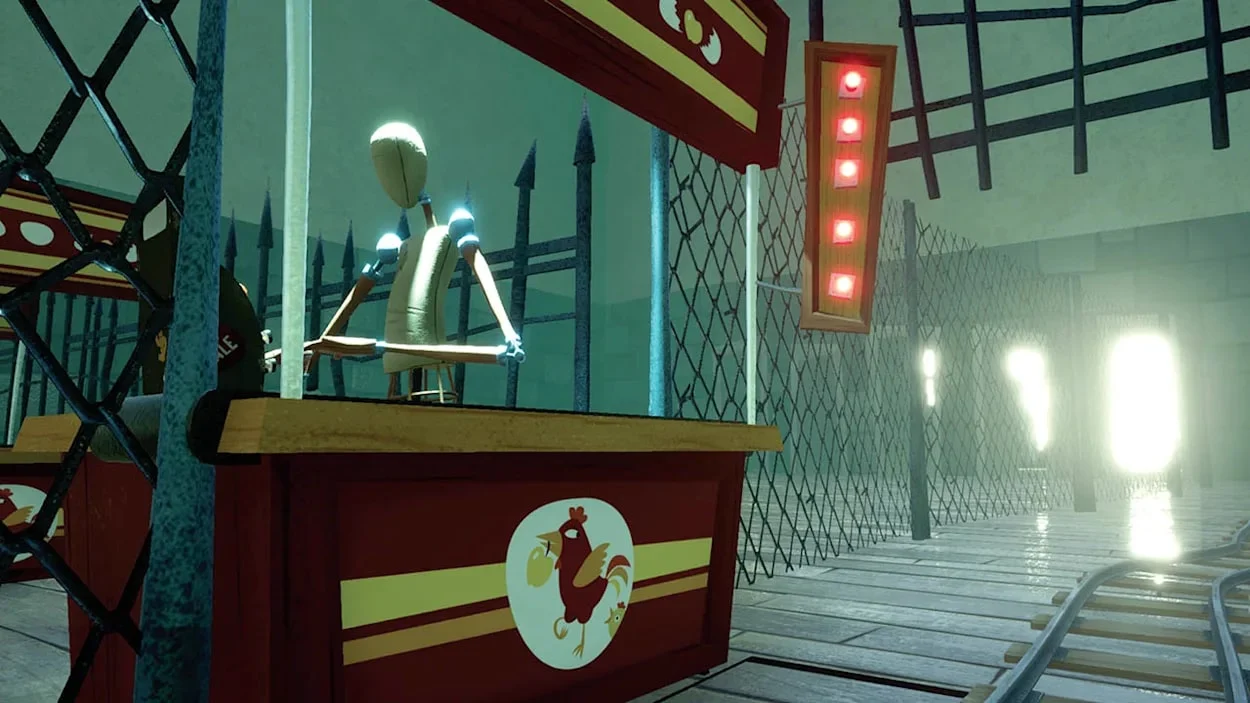
This approach makes the neighbor house secrets feel tied to the act of searching. Players are not simply told what happened; they move through the house and assemble impressions from what they find. The building’s unusual layout supports that feeling. It contains spaces that invite questions, including hidden pathways, secret rooms, and routes that lead closer to the mysterious basement.
The presentation benefits from restraint. The tension comes from being somewhere one should not be, hearing activity nearby, and deciding whether to continue exploring or retreat. Every room can be useful mechanically, but it may also add another fragment to the uneasy atmosphere surrounding Mr. Peterson and his cellar.
Stealth, Puzzles, and First-Person Exploration
Hello Neighbor stealth gameplay revolves around infiltration. Players enter the house, avoid Mr. Peterson, locate useful tools, and solve environmental problems that block progress. The first-person perspective keeps attention close to doors, windows, furniture, switches, and objects that might help create a way forward.
Progression comes through opening new routes. A locked door may require a key. A mechanism may need to be activated. A higher area may require a different approach than the front entrance. The house can be explored from multiple angles, which encourages players to look for alternatives when a familiar route becomes too risky.
The neighbor responds to repeated tactics, making routine approaches less dependable over time. Using the same entrance or relying on the same pattern can lead to added obstacles around that route. This gives the game replay value within its central challenge: each attempt can become a chance to change plans, try another entry point, or test a new solution.
- Watch first: Observing Mr. Peterson’s movement patterns can make an attempted entry more deliberate.
- Change routes: A blocked or risky entrance may push players toward windows, hidden paths, or another side of the house.
- Search closely: Keys, mechanisms, and useful objects can be found through careful house exploration.
- Create noise: Thrown items and other distractions can draw attention away from a chosen route.
- Experiment freely: Environmental puzzles often reward trying objects in unexpected ways.
Using Objects, Distractions, and Environmental Interactions
Hello Neighbor items are practical tools for both exploration and escape. Objects found around the house can be used to create noise, distract the neighbor, activate mechanisms, locate keys, and overcome obstacles. The game’s puzzles are closely connected to these interactions, so a seemingly ordinary item may become important once players understand where and when to use it.
Hello Neighbor distractions add another layer to stealth. Throwing an object can create a sound elsewhere in the house, potentially giving Nicky time to move through a previously dangerous space. This does not remove the tension; it shifts it. Players must judge whether a diversion will create an opening or leave them exposed while they search for the next clue.
That balance makes the house feel active rather than decorative. A room can contain a puzzle component, an escape route, a hiding opportunity, or a new complication. For players who enjoy first-person puzzle adventures that reward observation and repeated experimentation, the design offers a clear reason to revisit spaces with a different plan.
Nintendo Switch Version Details: Release, Size, and Languages
The Nintendo Switch release arrived on July 27, 2018. It is listed at 2.3GB and is available in the Europe and USA regions. The game supports English, German, French, Spanish, Dutch, Italian, Portuguese, Russian, Japanese, Chinese, and Korean.
Hello Neighbor Switch NSP has a base firmware requirement of v9.1.0, while its update requires v12.1.0. Its blend of stealth, exploration, environmental puzzles, and an unsettling story makes it most suitable for players drawn to suspenseful first-person adventures where patience, observation, and a willingness to alter tactics are central to progress.