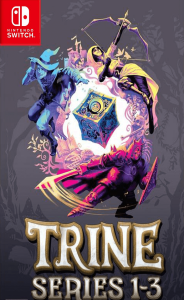
Trine Series 1-2-3 Switch NSP
Report Link Error
Select the broken download file, then submit the report.
Screenshots
About Game
Trine Series 1-2-3 Switch NSP brings three linked fantasy adventures together around a simple but durable premise: a knight, a thief, and a wizard are bound by a mysterious magical force and must rely on very different talents to move forward. The result is an adventure built around bright fantasy scenery, light combat, careful traversal, and puzzles that reward curiosity more than a single prescribed answer.
Three Heroes, One Magical Quest Across the Trine Trilogy
The Trine trilogy follows Pontius, Zoya, and Amadeus, three unlikely companions connected through the Trine artifact. Pontius is a heavily armed knight, Zoya is an agile thief, and Amadeus is a wizard whose magic can alter the spaces around him. Their shared connection gives the series its central structure: each hero has an individual style, but progress depends on using the group as a whole.
The first adventure brings the trio together to confront a skeleton army and restore peace. The second chapter calls them back into a new danger shaped by ancient magic and mythical creatures. By the third game, the scope expands again as the heroes investigate lost ruins and face more powerful threats. Those events form a continuing fantasy story rather than three unrelated journeys, with the artifact serving as the thread between changing locations and conflicts.
There is a playful contrast in the cast. Pontius handles danger directly, Zoya reaches places others cannot, and Amadeus creates opportunities where there appear to be none. That division also gives each level a steady rhythm. A combat encounter may call for the knight, a distant ledge may favor the thief, and an awkward obstacle can become manageable once the wizard starts moving or conjuring objects.
How Character Switching Drives Every Puzzle
Character switching is the practical center of Trine gameplay. Players can move between the three heroes instantly, turning a single room or platforming route into a small chain of decisions. The characters are not merely alternate appearances; their abilities shape how enemies, gaps, movable objects, and vertical spaces are approached.
Pontius carries a sword and shield, making him the natural choice for close combat and for blocking or reflecting incoming projectiles. Zoya uses a bow for ranged attacks and can light distant torches, while her grappling hook offers a way to cross gaps and reach high platforms. Amadeus can conjure boxes and planks, levitate objects, and use fireballs. His magic often changes the geometry of a challenge rather than simply overcoming it by force.
That combination supports platforming without reducing it to precision alone. A difficult jump may become easier after a plank becomes a ramp. A high route may be opened with Zoya’s hook. A threat that blocks the way may be handled by Pontius’s shield or a ranged attack. The best route is often the one created by combining the heroes’ strengths rather than relying on only one of them.
- Build a path: Amadeus can create planks to form bridges or ramps across awkward spaces.
- Take the high route: Zoya’s grappling hook can help reach elevated platforms and bypass hazards.
- Hold the line: Pontius can use his shield to block danger and reflect projectiles.
- Light the way: Zoya’s bow can ignite distant torches when a puzzle requires fire.
- Experiment freely: Moving objects and combining abilities can reveal less obvious routes through an area.
From 2D Fantasy Paths to Trine 3’s Fully 3D Spaces
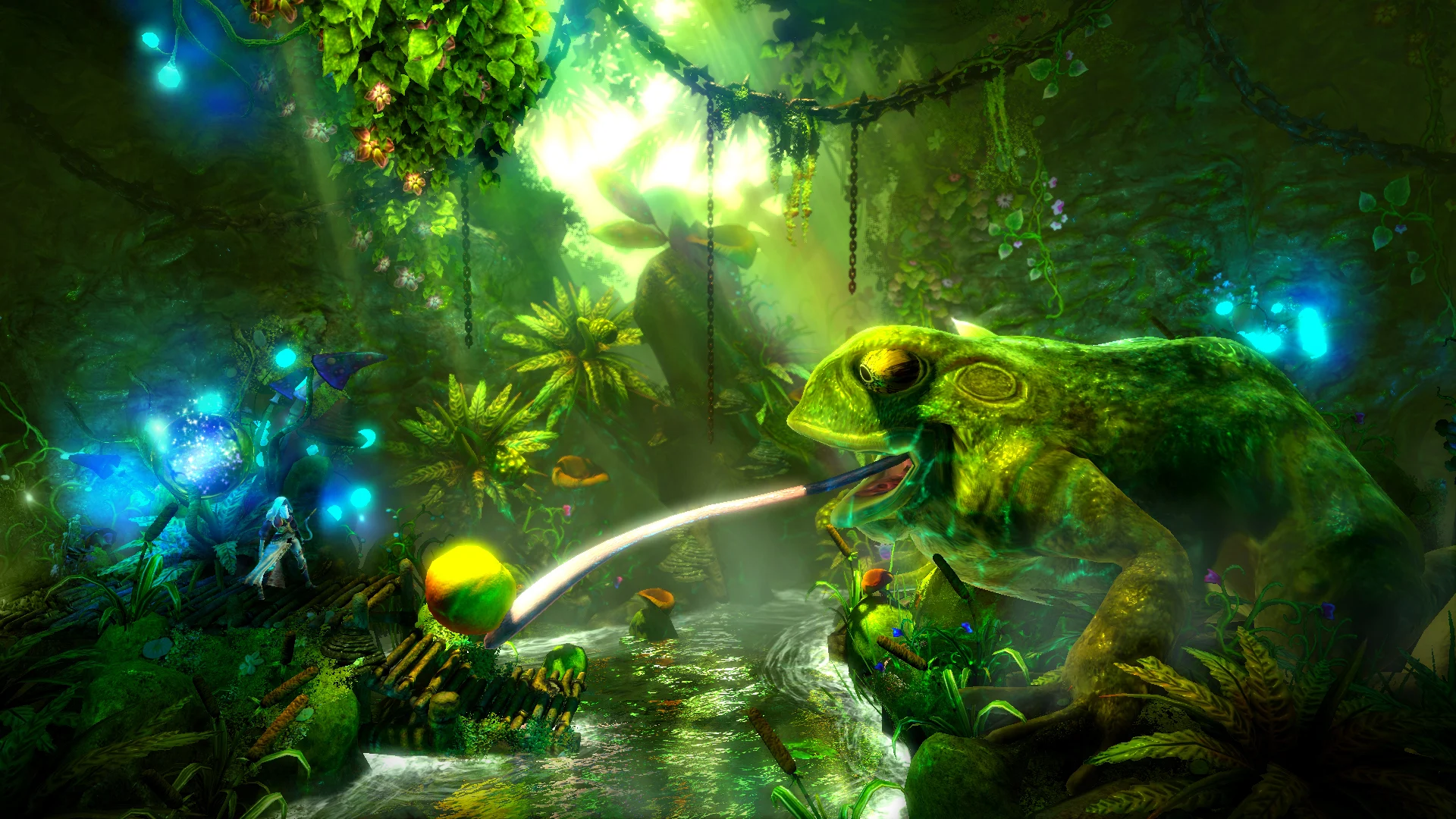
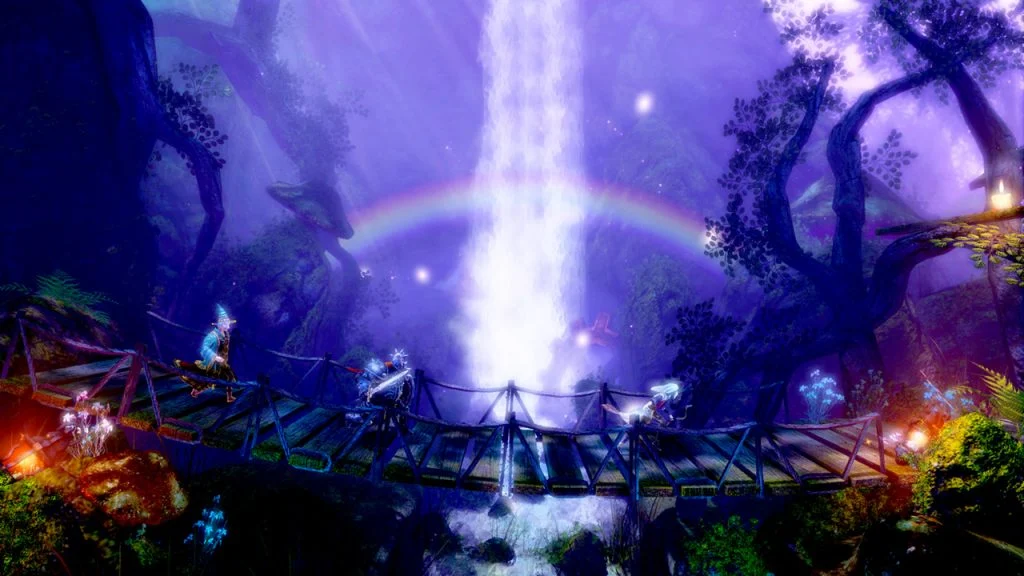
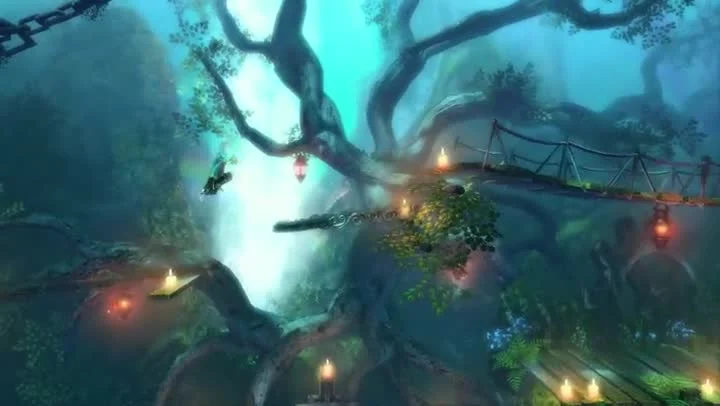
The trilogy develops its fantasy platforming format across three chapters. The earlier games establish the series’ mix of side-view movement, environmental challenges, and character-led problem-solving. The worlds are filled with fantasy creatures, ancient magic, and spaces designed to be explored for secrets as well as forward progress.
Trine 3 changes the spatial feel of that formula by introducing fully 3D environments. The shift gives traversal a broader sense of direction as the heroes move through ruins and confront new dangers. Even with that added dimension, the familiar identity remains: the player is still considering which hero is best suited to an obstacle, how an object can be used, and how a route can be opened.
This progression makes the collection feel like an evolving series rather than a repeated template. The core relationship between knight, thief, wizard, combat, and puzzle-solving stays recognizable, while the third chapter explores what those ideas can do in 3D environments. For players interested in fantasy platforming that changes its scale across successive adventures, that movement gives the trilogy a clear arc.
Creative Physics Puzzles and Alternative Solutions
The series places much of its personality in physics-based puzzles. Objects can be moved, lifted, placed, or used as part of the environment. Amadeus’s planks are especially useful because they can become bridges over gaps, ramps toward higher ground, or tools for reaching spaces that initially seem inaccessible.
Environmental puzzles also make use of torches, platforms, hazards, and objects positioned around the level. Zoya can light a torch from afar; Amadeus can levitate an item into a better position; Pontius can provide protection when combat interrupts a route. These systems encourage players to pause and inspect a space instead of treating every challenge as a simple obstacle course.
Alternative solutions are an important part of the appeal. A direct approach might work, but an unconventional use of a conjured object or grappling hook can lead to a shortcut or a safer route. Hidden experience orbs, secrets, and passages provide another reason to look above, below, and around the obvious path. Experience can unlock new abilities for the heroes, adding progression to the incentive to explore.
Cooperative Play and Shared Problem-Solving
Trine co-op makes the heroes’ differences even more visible. Local multiplayer and online multiplayer allow players to share the party, turning ability combinations into a collaborative process. One player can focus on creating a route while another prepares to cross it, defend the group, or search for a hidden collectible.
Cooperative puzzles can also make experimentation more immediate. Instead of switching between heroes alone, players can test an idea together: create a plank, secure a grapple point, block a threat, and see whether the plan works. The games remain suited to solo play because character switching preserves the same essential teamwork, but multiplayer gives those exchanges a more social rhythm.
The format is particularly fitting for players who enjoy discussing routes, trying unusual solutions, and revisiting areas for secrets. The mix of collectible hunting, unlockable abilities, and multiple possible approaches gives individual levels reasons to be explored beyond the most direct route.
Nintendo Switch Release Details and Language Support
For the USA region, Trine Series 1-2-3 Switch NSP is listed with a release date of October 8, 2019. It is classified in the Adventure genre and carries a GameTrust publishing credit. The Nintendo Switch release supports English, French, German, Italian, Spanish, Chinese, Russian, and Japanese.
The available language selection supports a trilogy whose appeal is easy to understand from its structure: three distinct heroes, magical environments, combat that stays connected to traversal, and puzzles that invite creative solutions. Its blend of fantasy atmosphere and cooperative problem-solving makes it a natural fit for players looking for platforming challenges that reward thought as much as movement.