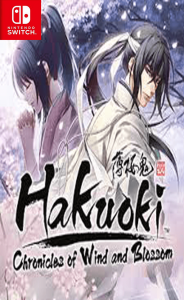
Hakuoki: Chronicles of Wind and Blossom Switch NSP
Report Link Error
Select the broken download file, then submit the report.
Screenshots
About Game
Hakuoki: Chronicles of Wind and Blossom Switch NSP places a personal search against one of Japan’s most turbulent historical backdrops. Released on August 1, 2024, this English-language Adventure title from eastasiasoft follows Chizuru Yukimura through a Kyoto shaped by samurai conflict, political instability, romance, and unsettling supernatural forces. Its visual novel format gives the story room to linger on conversations, loyalties, and decisions whose consequences can alter Chizuru’s path.
Chizuru Yukimura’s Search in Bakumatsu-Era Kyoto
Chizuru Yukimura arrives in Bakumatsu Kyoto with a clear purpose: she is looking for her missing father. That search quickly becomes more complicated than a simple family mystery. Kyoto is presented during a period when the country’s future is uncertain, and Chizuru’s private concerns become entangled with wider unrest.
Her father’s disappearance gives the narrative an immediate sense of direction, while the revelations surrounding his work create further questions. Chizuru is not merely passing through a historical setting; she is drawn into a world where information is guarded, alliances are fragile, and the people around her carry their own burdens. The story’s focus on loyalty, sacrifice, and identity gives her search emotional weight beyond the central mystery.
That premise also supports the game’s romantic routes. As Chizuru spends time with different members of the Shinsengumi, her relationships can develop in distinct directions. These routes frame personal connection as something shaped by the dangers and pressures surrounding the characters, rather than as a separate element from the historical drama.
The Shinsengumi and the Story’s Supernatural Threat
Chizuru’s entry into this world begins after she witnesses samurai confronting demonic-like creatures. The encounter leads her to the Shinsengumi, the well-known samurai corps associated here with maintaining peace and order. From that point, the game blends a samurai drama with a supernatural mystery.
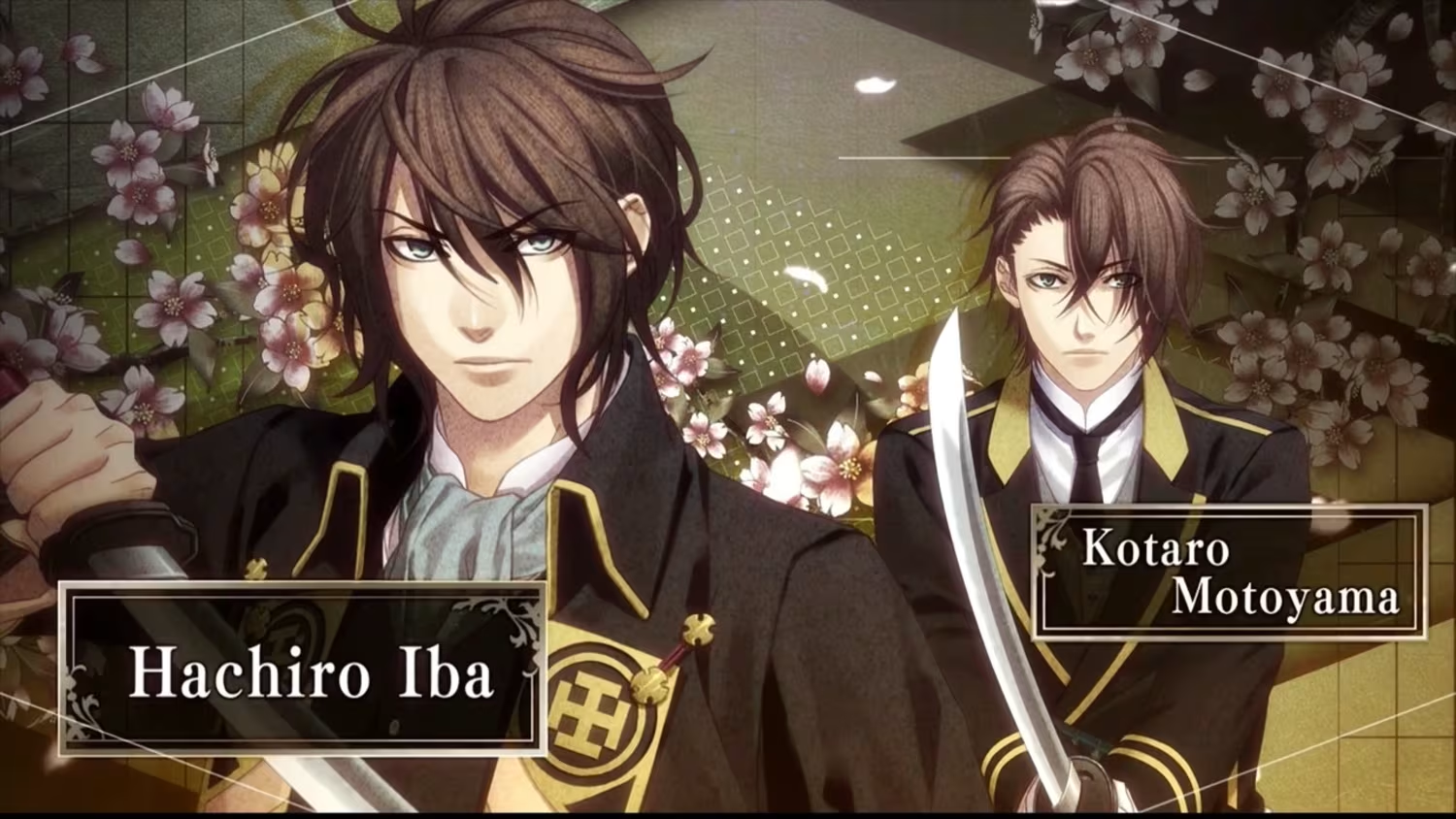
The Shinsengumi are not treated as a distant historical reference. Their members become central figures in Chizuru’s story, each bringing a different personality, background, and potential relationship path. As she learns more about them, she also uncovers secrets tied to her father and questions about the corps’ true nature.
This mixture of historical inspiration and fantasy gives the narrative a broader range of tension. Political conflict and civil war are threats rooted in the setting, while the demonic-like creatures introduce another layer of danger. The result is a story where quiet dialogue scenes can carry as much importance as moments of open crisis.
Political Intrigue, Civil War, and a Changing Japan
The Bakumatsu period provides more than decorative history. In Hakuoki: Chronicles of Wind and Blossom Switch NSP, the clash between tradition and modernity shapes the atmosphere around Chizuru and the Shinsengumi. Peace and order are not abstract ideals; they are contested goals in a nation facing major upheaval.
Political intrigue runs alongside the personal stories. Characters must contend with shifting circumstances, difficult loyalties, and the looming possibility of civil war. This lets the narrative connect intimate choices with a wider sense of instability. A conversation about trust can matter because the people involved are living through a period in which established structures are changing.
The historical setting also gives the supernatural elements a useful contrast. The world is already unsettled by human conflict, so the mysterious threats do not feel disconnected from the story’s larger mood. Instead, they deepen the uncertainty surrounding Chizuru’s father, the Shinsengumi, and the future facing Japan.
How Dialogue Choices Shape the Narrative
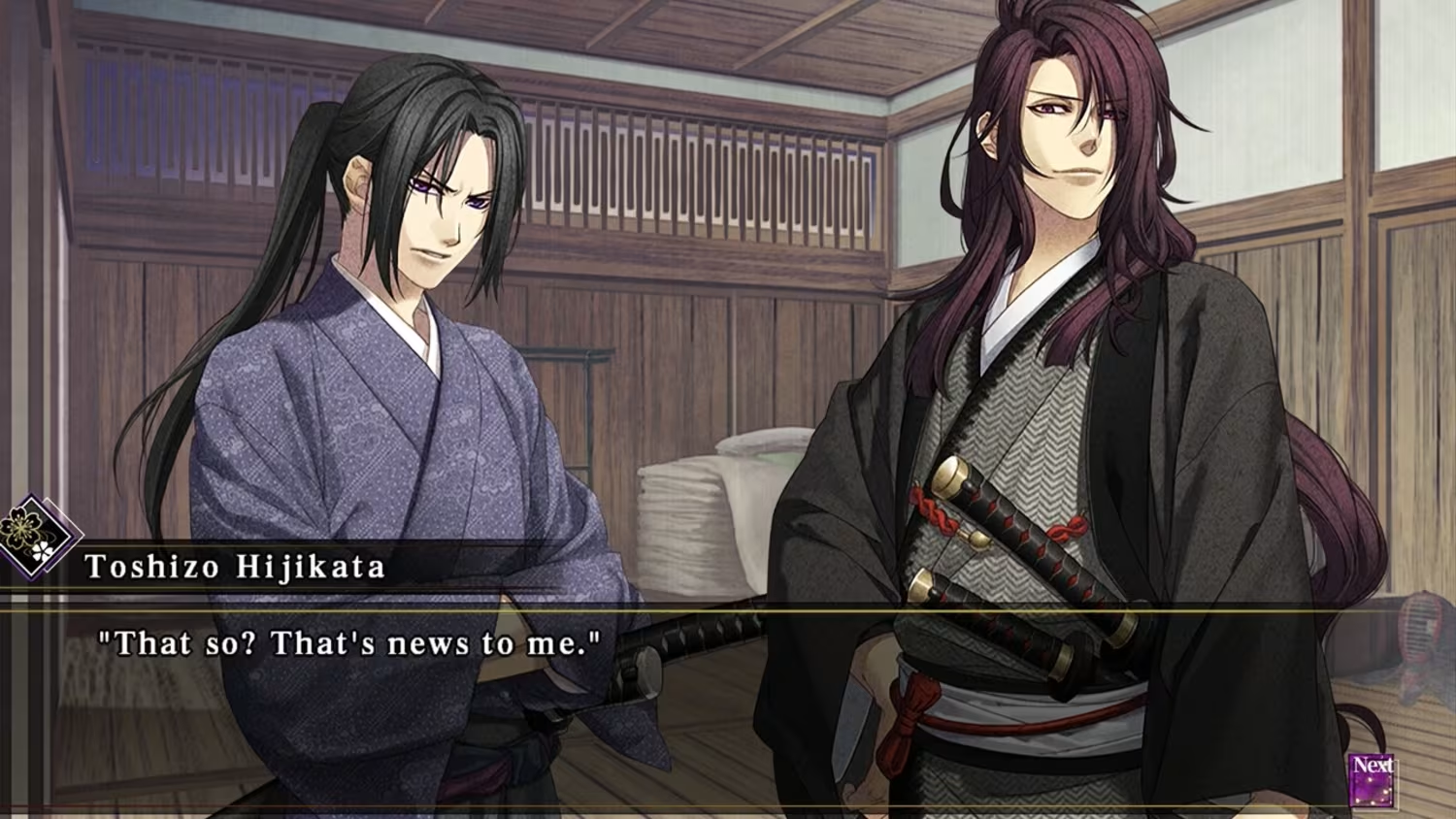
This is a visual novel built primarily around reading dialogue and descriptive prose. Players follow Chizuru’s perspective through conversations, story scenes, and critical decisions rather than through action-heavy systems. The pace suits a narrative that depends on character development and gradual revelations.
Dialogue choices are the main form of player input. At key moments, the available responses can influence relationships, change story developments, and guide Chizuru toward different outcomes. The branching narrative supports both romantic and non-romantic conclusions, so a single route does not represent the game’s full range of possibilities.
An affinity system tracks relationship progress with the Shinsengumi members. That structure gives decisions a practical role: paying attention to what a character values can help clarify which choices may strengthen a connection. It also makes route choices feel connected to the personalities established in the writing, rather than functioning only as isolated prompts.
Replay value comes from those alternate paths and multiple endings. Returning to earlier decisions can reveal different character interactions, revised story directions, and outcomes that were unavailable on a previous playthrough. Players looking for a dialogue-driven game with meaningful route variation will find the format especially relevant.
Art, Character Sprites, and Historical Atmosphere
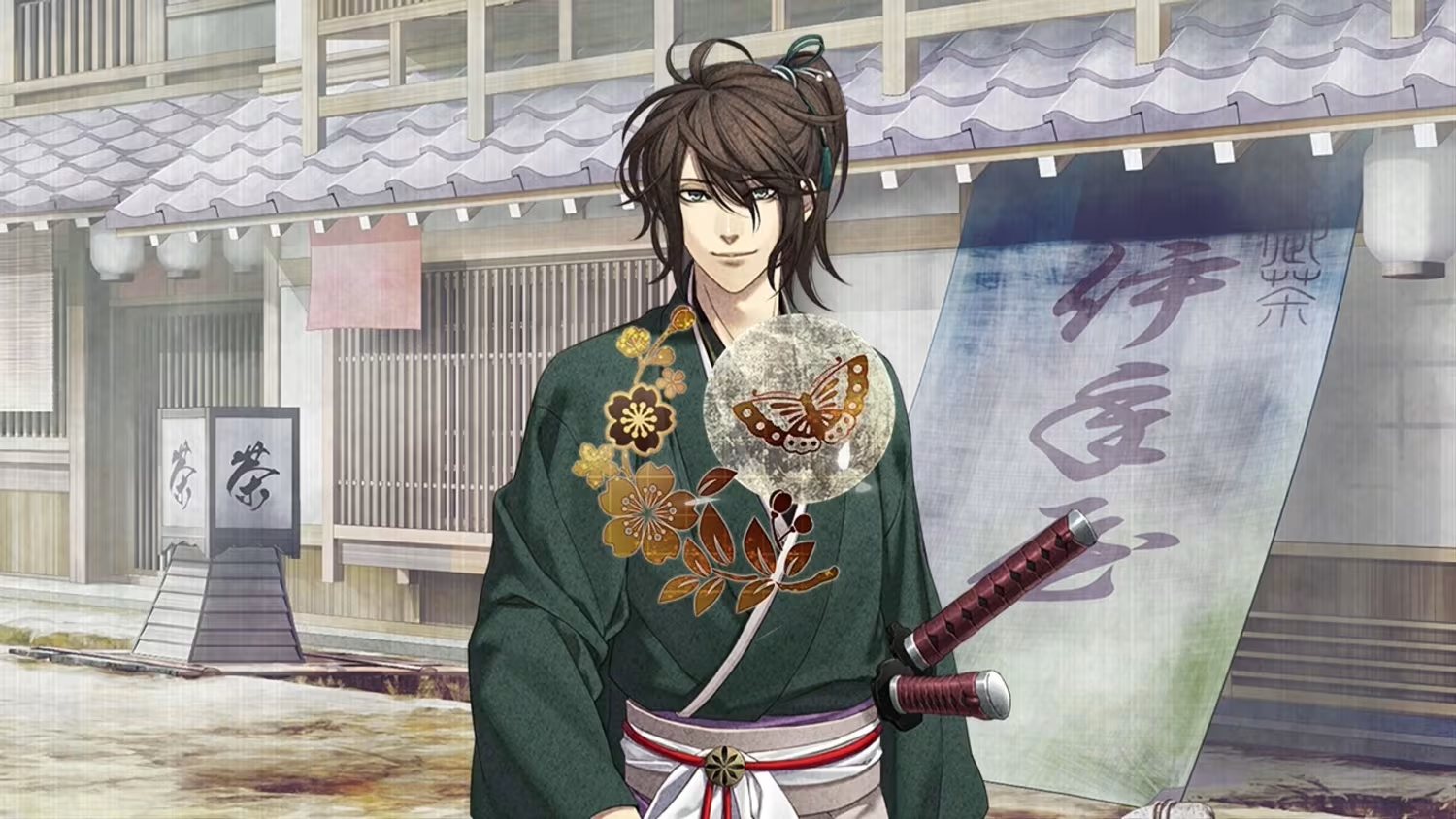
The presentation supports the story’s dramatic setting through detailed historical environments, character designs, and expressive character sprites. Much of the game’s visual communication happens during conversations, where sprites help convey shifts in mood and reaction while the writing carries the scene forward.
Static and animated background art add movement and texture to the historical settings. These visual details help establish Kyoto as more than a backdrop for choices, reinforcing the tension between formal traditions, political uncertainty, and supernatural danger. The art direction is closely tied to the genre’s strengths: it emphasizes faces, setting, and emotional tone.
Fully voiced dialogue from a Japanese voice cast adds another layer to the presentation. For an English-language release centered on long-form reading, voice performances can help define the characters’ individual presence and sustain the mood through extended scenes. The combination of prose, artwork, sprites, backgrounds, and voice acting is designed for players who enjoy following a story at a deliberate pace.
5 Tips for Following Routes and Key Decisions
- Read for subtext. Dialogue often establishes what characters value, fear, or expect from Chizuru. Those details can make later choices easier to interpret.
- Consider each response carefully. Critical dialogue options can affect the branching narrative, relationships, and eventual outcomes, so quick selections may lead away from a desired route.
- Watch affinity progress. The character affinity system provides a way to follow Chizuru’s relationship development with each Shinsengumi member.
- Commit to a route. When pursuing a particular character’s story, keep choices consistent with the relationship direction you want to explore.
- Revisit major decisions. Multiple endings, including romantic and non-romantic conclusions, make earlier choices worth returning to after one path is complete.
For readers who enjoy historical fantasy, character-focused romance, and choice-led storytelling, the game’s appeal lies in how those elements overlap. Chizuru’s search for her father supplies the personal thread, while the Shinsengumi, the supernatural mystery, and the Bakumatsu conflict keep widening the stakes around her.