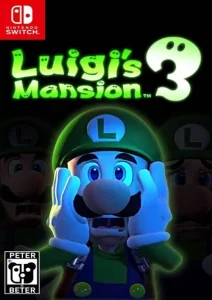
Luigi’s Mansion 3 Switch NSP XCI
Report Link Error
Select the broken download file, then submit the report.
Screenshots
About Game
Luigi’s Mansion 3 Switch NSP XCI points to a Nintendo Switch adventure built around an uneasy holiday, a towering haunted hotel, and a hero who would plainly prefer not to be there. Developed by Next Level Games and published by Nintendo, the game pairs Luigi’s anxious comic energy with ghost-catching action, room-by-room discovery, and puzzles that make the Last Resort feel like more than a simple backdrop.
A Haunted Vacation at the Last Resort Hotel
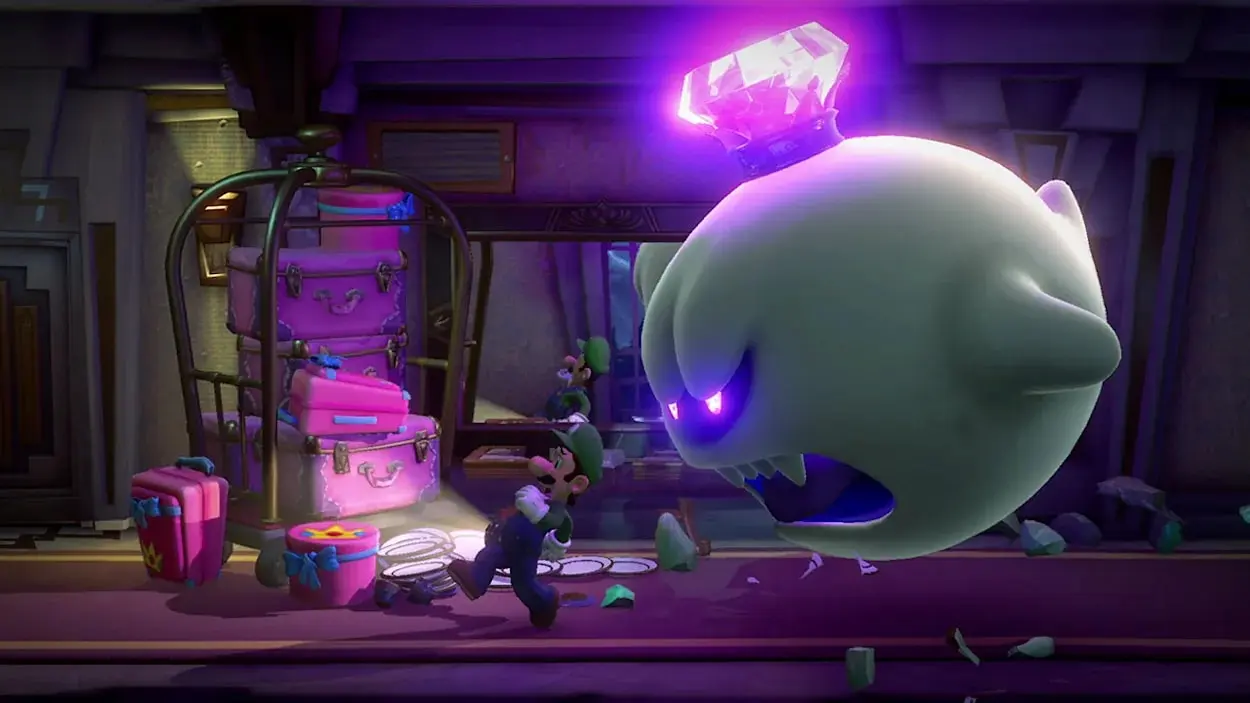
The Luigi’s Mansion 3 story begins with an invitation that appears too good to question. Luigi, Mario, Princess Peach, and several Toads arrive at the luxurious Last Resort hotel for a vacation. The grandeur does not last. King Boo has arranged the visit as a trap, capturing Mario, Peach, and the Toads and sealing them inside paintings.
Luigi escapes the first wave of trouble, but he is left alone in a hotel full of ghosts. With Professor E. Gadd’s help, he takes on the task of finding his friends and confronting King Boo. It is a familiar sort of burden for Luigi: he is reluctant, easily frightened, and still the person who must keep moving when everyone else needs rescuing.
The setting gives the adventure much of its atmosphere. The Last Resort hotel is grand in scale but hostile in purpose, combining the appeal of a vacation destination with the creeping sense that every corridor, elevator stop, and locked door could lead to another trap. Humor remains central to the experience, especially through Luigi’s reactions, even as the hotel’s ghostly residents repeatedly interrupt his search.
Exploring the Hotel’s Themed Floors
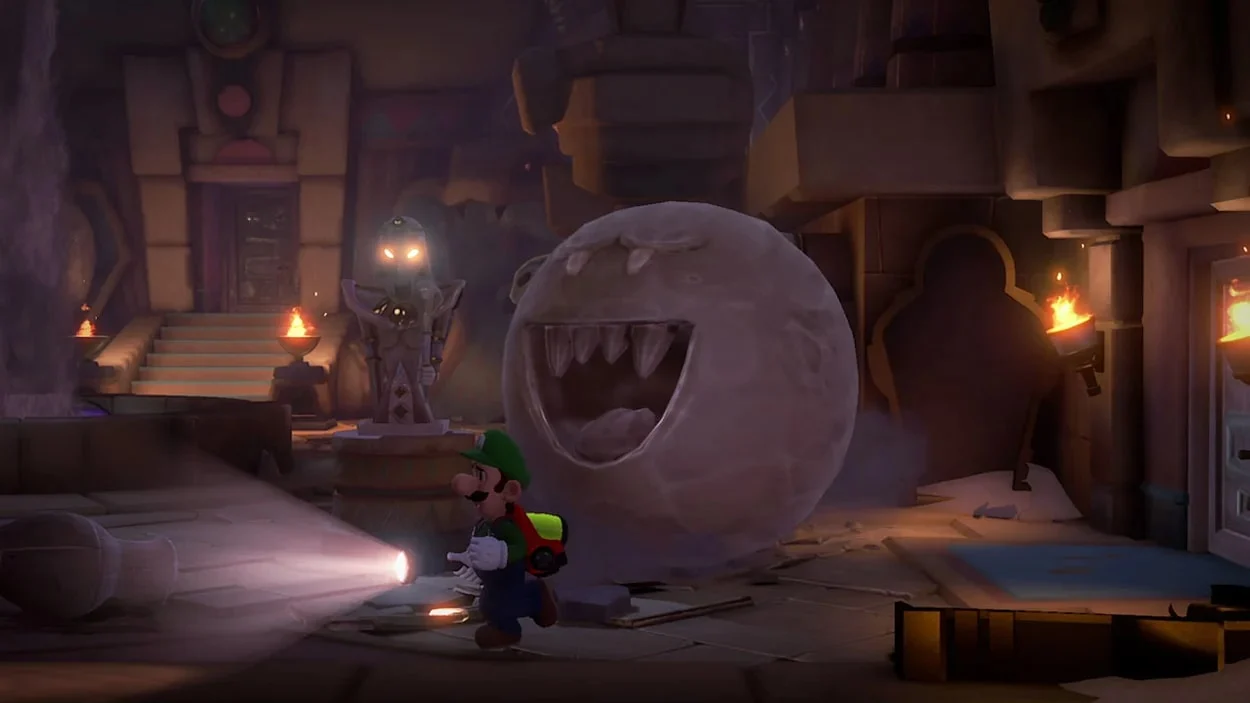
Progress through the hotel is shaped by its distinct themed floors. Rather than treating every area as the same stretch of haunted hallways, the game uses separate floors to create fresh spaces for exploration, ghosts, obstacles, and puzzles. That structure gives hotel exploration a steady rhythm: enter an unfamiliar floor, learn what makes it different, inspect its rooms, and work through the barriers that keep Luigi from advancing.
Each area encourages close observation. A path may be blocked by an object that can be moved, a mechanism that needs attention, or a puzzle whose answer is embedded in the room itself. Ghosts are part of that flow rather than merely interruptions. Encounters break up searching and puzzle-solving while reinforcing the hotel’s unstable, supernatural mood.
The floors also reward players who slow down. Hidden secrets are woven into the environment, and a room that appears finished may still hold money, gems, or something that responds to Luigi’s equipment. The appeal is not just reaching the next objective; it is noticing how much of the hotel can be poked, pulled, vacuumed, or otherwise disturbed.
The Poltergust G-00’s Core Ghost-Hunting Tools
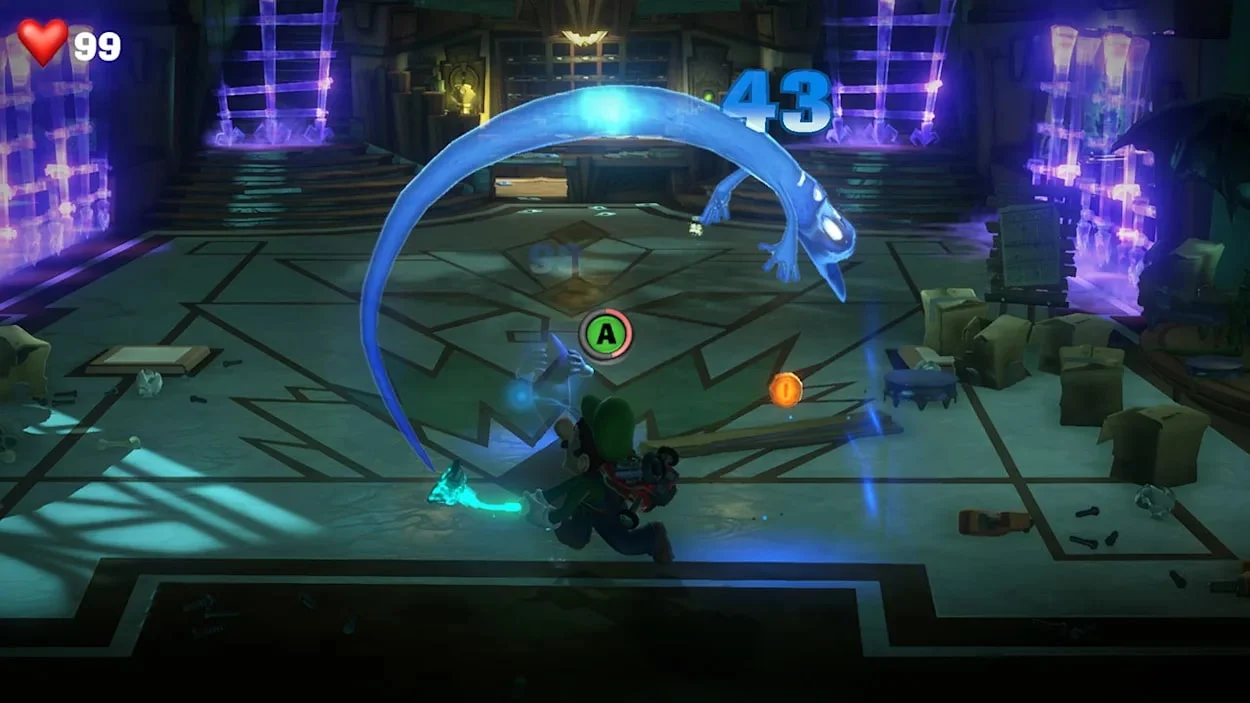
Luigi’s main tool is the Poltergust G-00, a versatile device that supports both ghost hunting and environmental puzzles. It can vacuum up ghosts after Luigi has stunned them with his flashlight, but its role extends well beyond capture. The Poltergust can manipulate objects, expose hidden items, and help open routes through the hotel.
Its functions give encounters a practical, physical feel. Once a ghost is vulnerable, Luigi can pull it in and use a Slam Attack to throw it around for extra damage. This can also help clear groups of nearby ghosts. The Suction Shot fires a plunger that can attach to objects or ghost shields, allowing Luigi to pull them away or reveal a new path.
The Burst Move is another useful response when the room becomes crowded or suspicious. Luigi jumps and repels nearby ghosts, but the move can also reveal invisible items and interact with certain environmental puzzles. That overlap is important: the same kit used in action sequences is also the kit used to read the hotel’s spaces. Progress often comes from experimenting rather than waiting for a single obvious prompt.
Gooigi and Two-Character Puzzle Design
Gooigi, Luigi’s gooey counterpart, expands the game’s puzzle design by making certain spaces accessible in a different way. He can pass through grates and cross spikes, allowing him to reach areas Luigi cannot safely enter. Switching between the two creates two-character puzzles that ask players to consider position, timing, and which character should handle a particular obstacle.
Gooigi is not just a route-finding tool. He can assist during ghost encounters and contribute to puzzles that require two characters working in separate parts of a room. A mechanism, blocked path, or inaccessible object may need one character to act while the other waits elsewhere. These moments make the hotel feel more intricate, turning Luigi’s isolation into a small but useful partnership.
The grates and spikes are clear examples of how the game communicates Gooigi’s purpose. They are physical restrictions for Luigi but opportunities for his companion. That simple contrast makes the switching mechanic easy to understand while giving designers room to build more involved environmental challenges.
7 Exploration Habits for Finding More Secrets
- Search slowly. Take time in each room rather than rushing toward the next doorway; hidden details and puzzle elements can be easy to overlook.
- Question unusual objects. Anything that seems out of place may be worth inspecting, pulling, or otherwise testing with Luigi’s equipment.
- Use every function. The Poltergust G-00 is for more than ghosts, so try its tools when a route, object, or mechanism does not immediately make sense.
- Try the Burst Move. It can repel nearby ghosts, reveal invisible items, and interact with environmental puzzles.
- Check hidden areas. Explore nooks, side spaces, and rooms that seem complete before deciding there is nothing more to find.
- Switch to Gooigi. When Luigi is stopped by grates, spikes, or a puzzle built for two characters, Gooigi may provide the missing route or action.
- Watch for gems and money. These rewards encourage careful searching and give the hotel’s many rooms added replay value.
Why Luigi’s Mansion 3 Blends Adventure and Action
As an Adventure and Action game, Luigi’s Mansion 3 Switch NSP XCI balances several connected ideas. Ghost-catching brings direct action, while the Last Resort supports exploration and the environmental puzzles shape progression. The result is not a constant series of battles, nor is it a purely quiet search through hotel rooms. Luigi moves between investigating spaces, solving obstacles, uncovering secrets, and dealing with spectral threats.
The game’s presentation is closely tied to that balance. The hotel’s themed floors give each stage its own identity, while Luigi’s fearful behavior keeps the tone playful. King Boo’s trap provides a clear purpose for the journey, but the pleasure of the adventure comes from the small discoveries along the way: a concealed gem, an object that reacts to the Poltergust, an inaccessible opening for Gooigi, or a puzzle that finally clicks into place.
For players who enjoy exploration, approachable puzzle-solving, and lighthearted ghost hunting on Nintendo Switch, this is a suitable adventure. Its replay value rests naturally in the hotel’s hidden money, gems, and secrets, while its progression keeps attention on Luigi’s continuing effort to rescue his friends from the Last Resort.
Recommended Similar Games
 An Alt Girl for Skoof Switch NSPView Game
 Emio – The Smiling Man: Famicom Detective Club Switch NSPView Game
 The Hundred Line -Last Defense Academy- Switch NSPView Game
 Looking For Fael Switch NSPView Game
 METAL GEAR SOLID 2 Sons of Liberty Master Collection Version eShop Switch NSPView Game
 Trails in the Sky 1st Chapter Switch NSPView Game
