Grand Theft Auto: San Andreas – The Definitive Edition Switch NSP

Report Link Error
Select the broken download file, then submit the report.
Screenshots
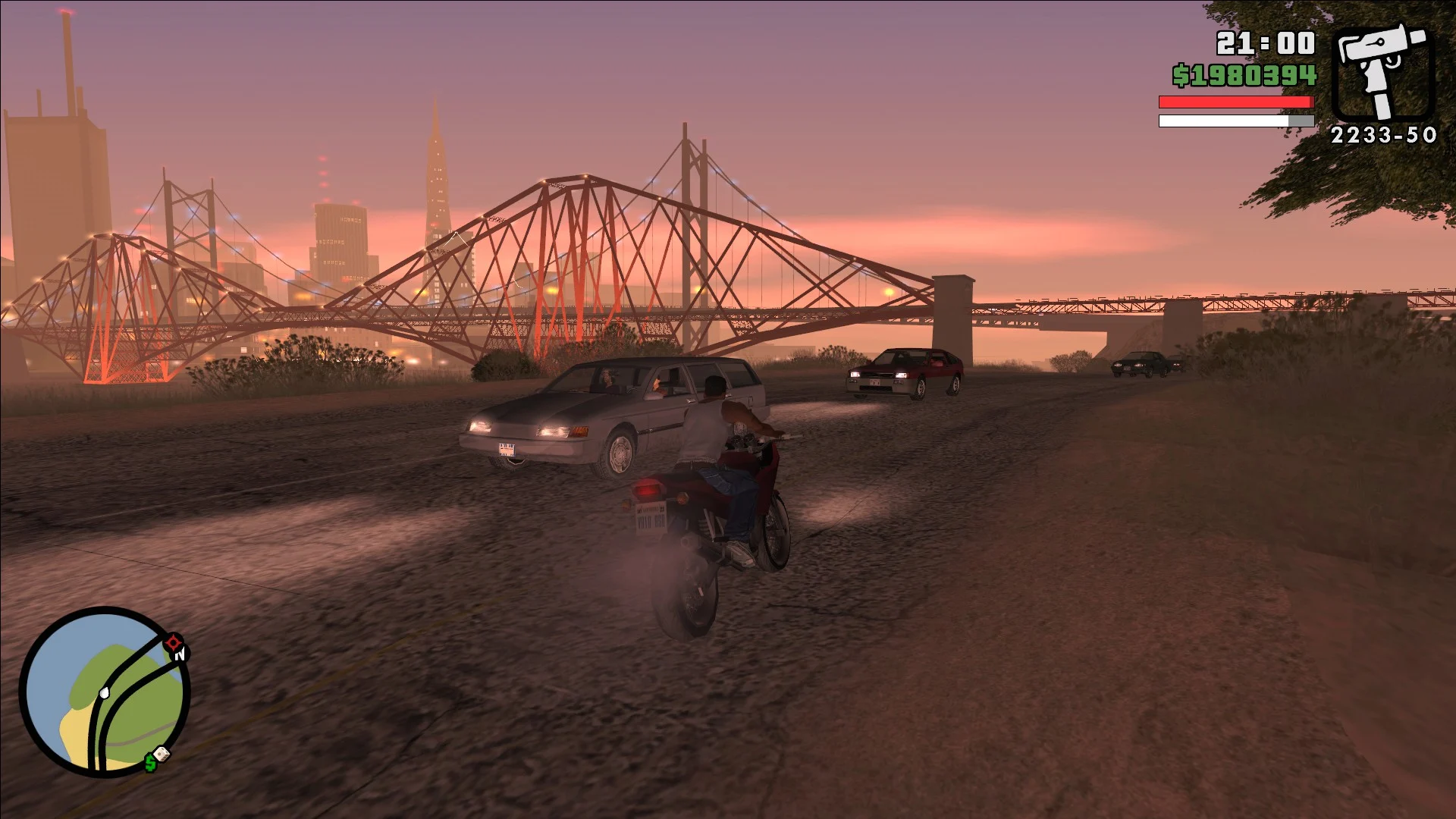
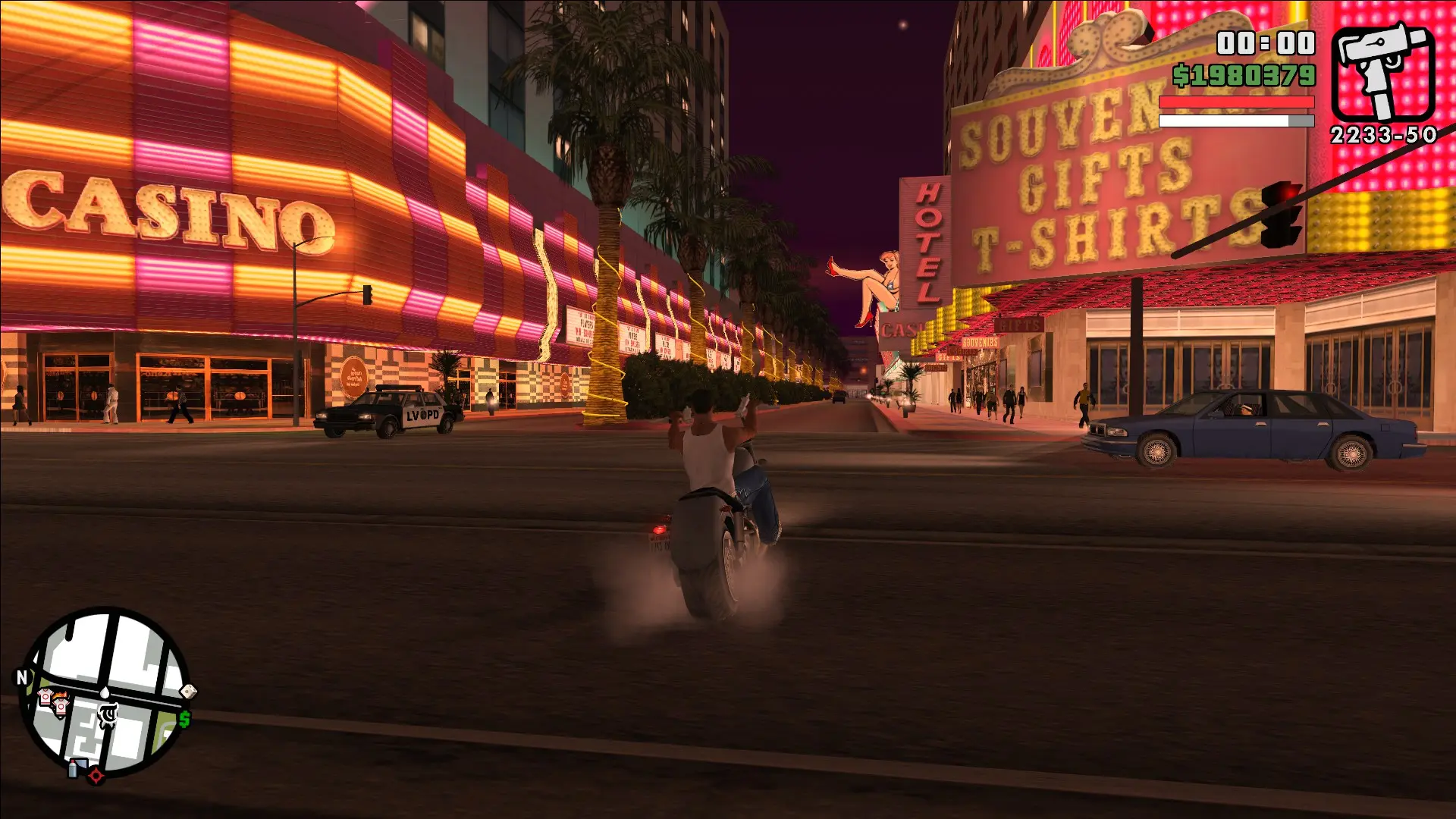
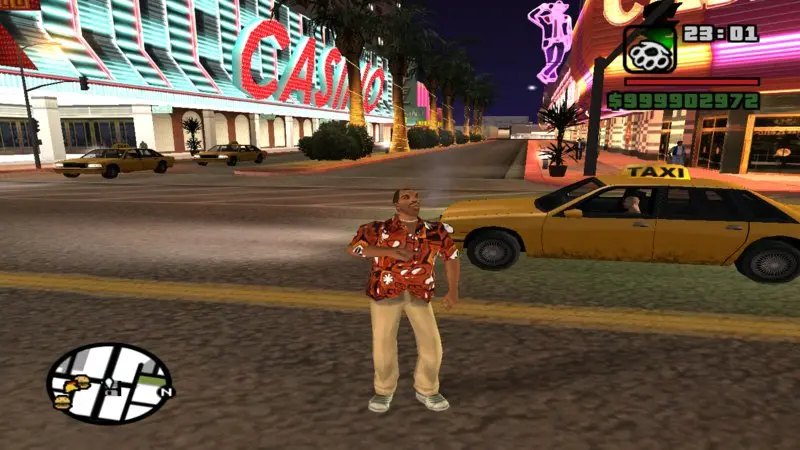
About Game
Grand Theft Auto: San Andreas – The Definitive Edition Switch NSP brings Rockstar Games’ action-adventure open-world story to Nintendo Switch, placing Carl “CJ” Johnson’s turbulent return home in a version released on November 11, 2021. Developed by Grove Street Games, this edition pairs the familiar journey through San Andreas with remastered graphics, updated controls, and handheld play.
A Switch Return to San Andreas
Grand Theft Auto San Andreas Definitive Edition Switch revisits a large state defined by three major cities—Los Santos, San Fierro, and Las Venturas—as well as the countryside connecting them. The structure remains broad: story missions drive CJ’s return to the criminal underworld, while the surrounding map leaves room for travel, races, vigilante work, training, customization, and other optional pursuits.
Rockstar Games’ 1992 setting gives the game a distinct identity. Los Santos is where CJ’s personal crisis begins, but the journey expands far beyond his old neighborhood. San Fierro and Las Venturas introduce new places, characters, and challenges, making the world feel like a long road rather than a single-city campaign. The scale supports a play style that can shift between focused missions and unplanned exploration.
On Switch, the appeal is not only the size of San Andreas but the ability to experience its action-adventure format in handheld play. The Definitive Edition presents the same central story and systems with modern gameplay enhancements intended for the Nintendo Switch version.
CJ’s 1992 Homecoming Story
Carl “CJ” Johnson returns to Los Santos after five years away. His mother has been murdered, and the people closest to him are in a fractured state. His family is struggling, while the Grove Street Families have lost stability in their own neighborhood. That combination of grief, loyalty, and pressure gives CJ a clear reason to become involved again.
The story quickly places CJ between crooked police, rival gangs, and conflicts within his own circle. His goal is not simply to survive Los Santos; he is trying to restore his family’s position, protect the Grove Street Families, and recover a sense of respect in a city that has changed during his absence. The stakes grow as his path takes him across the state.
This wider journey moves from the gang conflict of Los Santos to San Fierro’s urban sprawl and on to Las Venturas, where casino heists become part of the story. Alliances, betrayal, and the harsh realities of street life shape the campaign’s atmosphere. CJ’s progression is closely tied to the people and places around him, so the open world has narrative weight beyond being a backdrop for missions.
Vehicles and Activities Across the Open World
San Andreas offers more than one way to move through its cities and countryside. Cars and bikes are central to travel, but CJ can also fly helicopters and sail boats. Those options make the map feel varied: roads encourage driving, open water supports boating, and aircraft provide a different view of the state’s scale.
The available open world activities extend beyond the main story. Racing offers a competitive diversion, while vigilante work provides another kind of task away from the core campaign. Exploration itself can be rewarding because the game’s regions differ in character, from Los Santos’ neighborhood tensions to the broader spaces between cities.
Vehicles also support the game’s changing pace. A player can spend time traveling between objectives, take on a side activity, or simply use a car, bike, helicopter, or boat to see a different part of the map. This flexibility is a major source of replay value: the campaign supplies direction, but the state provides room to revisit activities and experiment with how CJ travels.
Territory Battles for Grove Street
Gang conflict is one of the clearest ways that CJ’s personal story and the game’s systems meet. The Grove Street Families are under pressure from rival gangs, and territory wars give players a direct role in trying to reclaim ground for CJ’s side.
These gang wars are not merely background color. Claiming territory for the Grove Street Families makes the struggle for the neighborhood tangible, turning the larger conflict into an activity with a visible purpose. It reinforces the idea that CJ is rebuilding something damaged when he came back to Los Santos.
For players drawn to action with a broader objective, the territory system adds another layer to the main mission structure. It complements CJ’s efforts to regain respect while keeping the focus on the rivalry surrounding Grove Street. The result is a form of progression tied to the state of Los Santos itself, not only to the next story mission.
7 Early Priorities for Exploring San Andreas
- Learn the cities. Spend time in Los Santos, then take note of how San Fierro, Las Venturas, and the countryside widen the game’s sense of place.
- Use every route. Cars and bikes are useful for regular travel, while helicopters and boats offer different ways to cross the open world.
- Visit the gym. Working out develops CJ’s physical attributes, including stamina and muscle.
- Build CJ’s abilities. Keep an eye on systems such as respect, stamina, weapon proficiencies, and overall appeal as CJ develops.
- Sample side activities. Try racing and vigilante work to break up story missions and see more of the world’s available activities.
- Shape CJ’s look. Clothes, hairstyles, and tattoos allow players to customize his appearance while moving through the campaign.
- Face the conflict. Engage with gang wars and territory conflict when the Grove Street Families need to challenge rival gangs.
Definitive Edition Enhancements on Nintendo Switch
Grand Theft Auto: San Andreas – The Definitive Edition Switch NSP is presented as a remastered Nintendo Switch edition with improved controls, remastered graphics, and modern gameplay enhancements. These changes are intended to make the experience feel more current while preserving the game’s established mix of action, driving, exploration, role-playing elements, and story missions.
The visual update matters because San Andreas is built around contrast: dense city areas, long stretches of countryside, water travel, and the changing identity of its three major cities. Improved visual fidelity supports that range, while updated controls are particularly relevant in a game that regularly moves between on-foot action, driving, flying, and sailing.
The Switch format suits players interested in a lengthy open-world adventure with both directed and optional content. It is best matched to an audience that enjoys crime drama, gang-focused conflict, vehicle travel, character customization, and systems that let CJ improve over time. With English, Portuguese, French, German, Russian, Chinese, Spanish, Italian, Korean, and Japanese language options, the release is listed for Europe and USA regions. Its combination of story progression and repeatable activities gives San Andreas room to remain engaging beyond a straight mission-by-mission playthrough.