Fire Emblem Engage Switch NSP XCI

Report Link Error
Select the broken download file, then submit the report.


Screenshots

About Game
Fire Emblem Engage Switch NSP XCI refers to a Nintendo Switch role-playing and strategy game released on January 20, 2023. Developed and published by Nintendo, it combines a fantasy quest across Elyos with map-based battles that reward patient positioning, weapon awareness, and careful use of each unit’s strengths.
Fire Emblem Engage: A Tactical RPG on Nintendo Switch
Fire Emblem Engage belongs to the tactical RPG tradition: story progression and character recruitment sit alongside turn-based encounters where every movement can reshape the map. Its battles take place on grids, asking players to weigh offensive opportunities against defensive risks before committing a unit to a position.
The strategic layer is central rather than incidental. Units have different classes, abilities, weapons, and combat roles, so an army is not simply a collection of interchangeable fighters. A stronger attack may be less useful than protecting a vulnerable ally, holding a terrain advantage, or setting up several units to threaten the same target.
Nintendo released the game for the Switch in January 2023, supporting English, French, German, Italian, Japanese, Korean, Chinese, and Spanish. The combination of role-playing progression and deliberate battlefield planning gives the game room for both players learning the basics of tactical combat and those prepared to examine each encounter more closely.
Alear’s Awakening and the Threat of Sombron
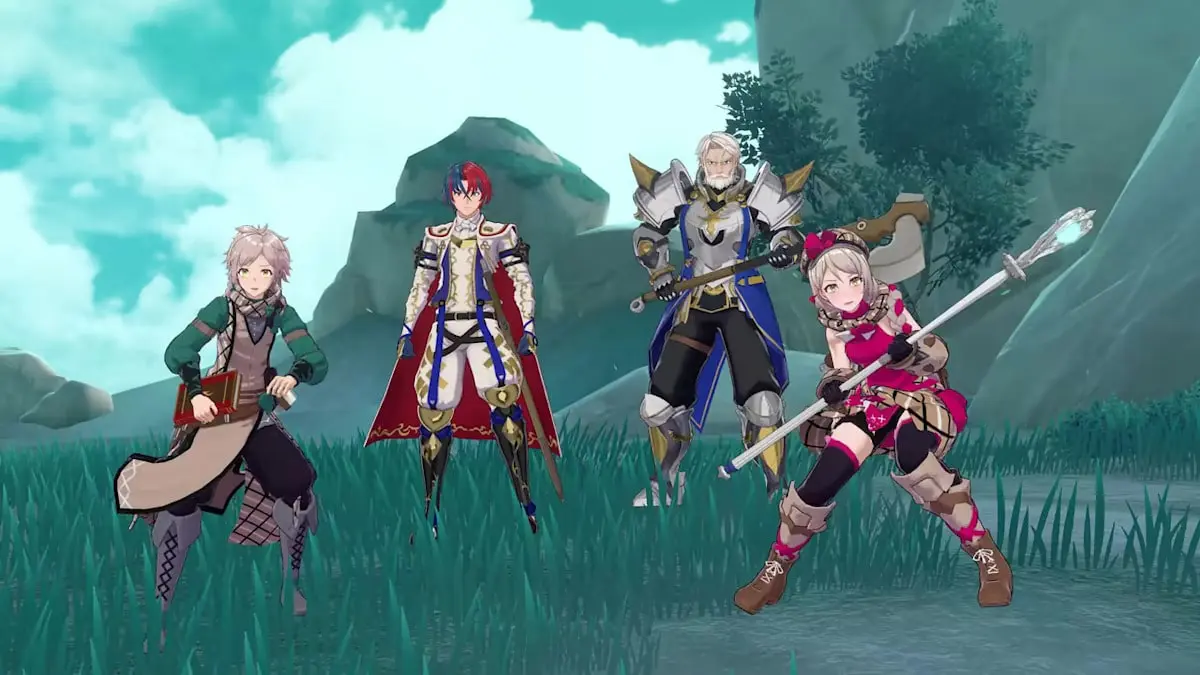
The Fire Emblem Engage story begins with Alear, a Divine Dragon who awakens after a thousand-year sleep. Alear has no memories of the past and returns to a world facing a familiar danger: the Fell Dragon Sombron has become a threat once again.
That premise gives the journey a clear sense of purpose. Alear travels through Elyos, meets allies with their own motivations, and builds a force capable of resisting Sombron. The conflict is framed around protecting the world, but the loss of memory also gives Alear a personal reason to uncover what came before the awakening.
The narrative’s movement from one encounter to the next supports the game’s tactical structure. New characters do not only expand the cast; they also bring new combat possibilities. As the journey continues, the growing army becomes part of both the story’s stakes and the player’s strategic toolkit.
The Twelve Emblem Rings and Their Role in the Journey
The search for the twelve Emblem Rings drives much of the adventure. These rings contain the spirits of heroes from earlier Fire Emblem games, allowing Alear and their allies to call upon legendary strength during the campaign.
Emblems are more than story artifacts. They connect directly to combat through the Engage system, which lets units temporarily merge with Emblem heroes. During this state, a unit can receive stat increases, gain access to special weapons, and use powerful abilities. The timing of that transformation matters, especially when a battle presents a dangerous boss, a crowded enemy formation, or a narrow opening that must be exploited quickly.
Bonding with Emblems can also unlock additional abilities. This creates another progression path alongside training and class choices, encouraging players to consider which Emblem fits a unit’s role. A combatant who needs mobility, durability, damage, or a particular tactical option may benefit differently depending on the ring assigned to them.
The rings also give the game a celebratory connection to the wider series. Their presence brings earlier heroes into Alear’s journey while keeping the immediate objective focused on collecting the power needed to stop Sombron.
Grid-Based Battles and Turn-Based Tactical Planning
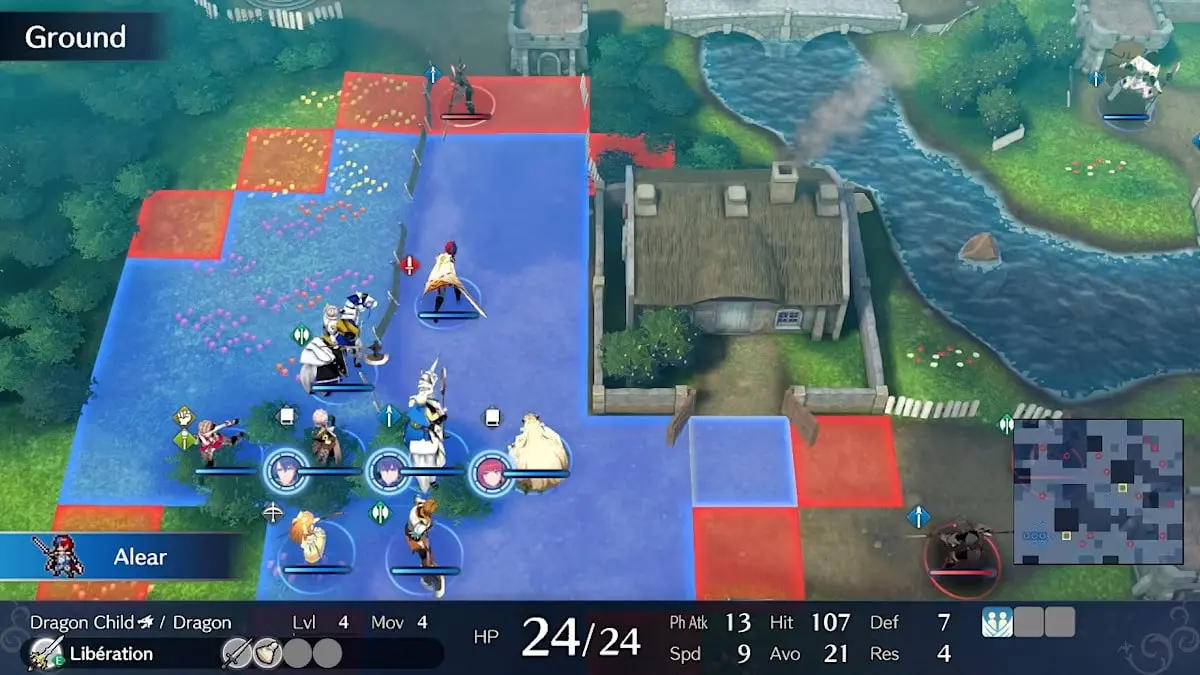
Fire Emblem Engage combat is built around decisions made one turn at a time. Before advancing, players can study enemy positions, judge attack ranges, and decide where their own units can safely stand. A careless move can leave a character exposed; a measured move can turn the same space into a defensive advantage.
Terrain is one factor in that calculation. Weapon effectiveness is another, including the returning weapon triangle’s rock-paper-scissors relationship between weapon types. Character abilities, class roles, and available support from nearby allies add further considerations. The practical question is rarely just who can defeat an enemy; it is who can do so without creating a weakness elsewhere on the map.
Chain Attacks add a reason to coordinate formations. When units are positioned to contribute together, linked strikes can help wear down an opponent that might otherwise be difficult to handle. This makes placement important even for units that are not delivering the final blow.
Difficulty settings allow players to seek a suitable level of pressure, while the core grid-based strategy remains consistent: read the field, plan the sequence, and preserve options for the next turn. Difficult maps can reward restraint as much as aggression.
The Somniel as an Army Management Hub
Between battles, the Somniel functions as Fire Emblem Engage’s base. It is a place to manage the army, train units, and take part in activities before returning to the campaign. This rhythm gives the game a useful pause between major maps, shifting attention from immediate survival to longer-term preparation.
Army management matters because a growing roster brings choices. Players can recruit and train distinct units, experiment with class promotions, and adjust appearances. The Somniel also supports the process of preparing for the next tactical challenge rather than treating each battle as an isolated event.
That structure can add replay value through experimentation. Different unit development choices, class directions, Emblem relationships, and battlefield approaches can alter how an army handles the same kind of challenge. The campaign remains focused on Alear’s quest, but the route through its combat decisions can vary considerably.
7 Tactical Priorities for Difficult Fire Emblem Engage Maps
For players approaching demanding encounters, these priorities reflect the systems described throughout Fire Emblem Engage Switch NSP XCI. They are not shortcuts around the tactical challenge; they are a framework for making better decisions before and during each turn.
- Read the map first. Check enemy positions and likely threats before moving. Early information helps prevent a unit from advancing into an unsafe area.
- Claim useful terrain. Terrain advantages can affect how safely a unit holds a position, making map features worth considering before an attack begins.
- Check weapon matchups. The weapon triangle gives weapon choice tactical importance, so compare likely exchanges instead of relying only on raw strength.
- Build chain-attack opportunities. Place units so they can contribute to linked pressure against targets that would be difficult for one combatant to defeat alone.
- Reserve Engage power. Stat boosts, special weapons, and powerful abilities are most valuable at pivotal moments, including boss encounters or situations where allies are surrounded.
- Train with purpose. Develop units according to the role they can serve in the army, taking classes, abilities, and Emblem options into account.
- Prepare at the Somniel. Use the base between battles to manage the army and reinforce the plans that will matter on the next map.
For an audience drawn to strategic role-playing games, Fire Emblem Engage offers a campaign where story, army development, and turn-based planning remain closely connected. Alear’s search for the Emblem Rings gives the journey its direction, while the battlefield systems give each chapter its tension.