Final Fantasy V Switch NSP
Report Link Error
Select the broken download file, then submit the report.
Screenshots
About Game
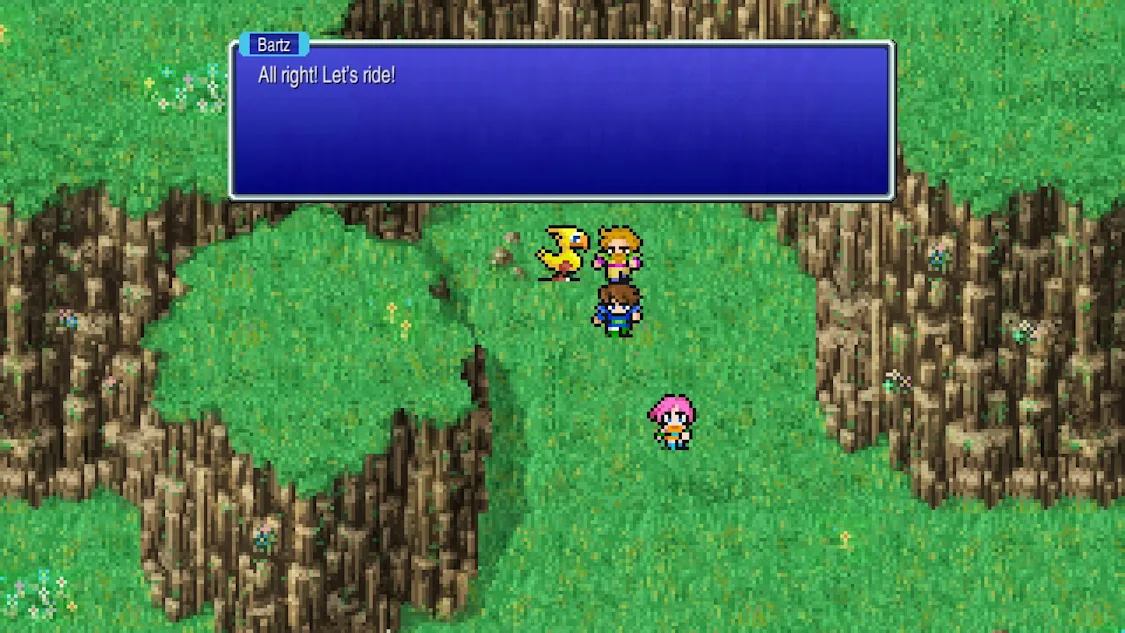
Final Fantasy V Switch NSP refers to Square Enix’s Role-Playing release for Nintendo Switch, dated April 19, 2023. Developed and published by Square Enix, it brings a crystal-centered adventure, a changing party, and one of the series’ most flexible character-building systems to players across Europe, the USA, Asia, and Japan.
Final Fantasy V on Nintendo Switch: Release and Version Details
The Final Fantasy V release date on Nintendo Switch is April 19, 2023. Square Enix handled both development and publishing, placing the game firmly within the company’s long-running RPG tradition. Its release spans Europe, the USA, Asia, and Japan, with language support including English, French, German, Italian, Japanese, Korean, Portuguese, Russian, Chinese, and Spanish.
Final Fantasy V is built around a large-scale journey that begins when the world’s wind crystal shatters. The crystals are more than background mythology: they preserve balance and keep a dangerous evil sealed away. Their destruction makes the crisis immediate, sending the central cast toward a threat that grows from a regional disturbance into a struggle for the fate of the world.
The Switch version’s listed base firmware is v15.0.1, while its update firmware is v16.0.3. Beneath those version details is a classic Square Enix RPG focused on exploration, party development, tactical battles, and a job system designed to reward curiosity.
The Party at the Heart of Final Fantasy V
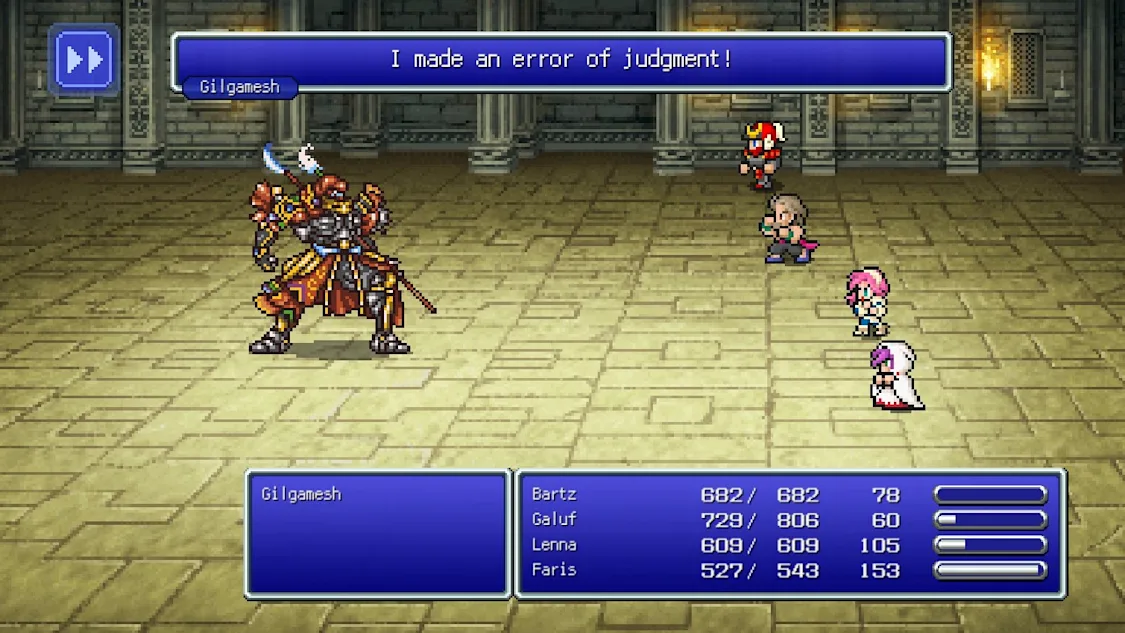
The story follows Bartz as he becomes involved in the consequences of the shattered crystal. His companions arrive with different concerns and unanswered questions, giving the journey a sense of discovery as well as urgency. Princess Lenna is searching for her father, the king, who vanished after the crystal’s destruction. Galuf joins while suffering from amnesia, leaving his past unclear. Faris, a sky pirate, brings another secret into the group dynamic.
These circumstances keep the party connected to the wider crisis without making every member feel interchangeable. Lenna’s search, Galuf’s missing memories, and Faris’s concealed history all sit alongside the shared effort to protect the remaining crystals. The group’s relationships develop as they travel, learn more about their pasts, and face the consequences of the growing darkness.
Later, Krile, Galuf’s granddaughter, joins the party. Her arrival adds another family connection to a story already concerned with friendship, fate, and sacrifice. The party’s changing composition also matters mechanically: the job system allows characters to take on different combat roles, so the narrative group and the player’s chosen battle group can evolve together.
Exdeath, the Void, and the Threat to the World
Exdeath is the central Final Fantasy V villain, a sinister sorcerer connected to the void. Born from that void, he seeks the destruction of every crystal and intends to plunge the world into darkness. This goal gives the party a clear purpose: defend what remains before the balance maintained by the crystals is lost completely.
The threat does not remain simple for long. The journey reveals deeper lore involving the Dawn Warriors, the void, and the fabric of existence itself. As the conflict expands beyond the initial disaster, the stakes rise with it. Protecting the crystals becomes inseparable from confronting Exdeath and the darkness associated with the void.
This gives Final Fantasy V an atmosphere shaped by movement between adventurous exploration and looming catastrophe. Towns, landscapes, and dungeons are not merely stops between battles; they sit within a world whose stability is under pressure. The party’s growing bond provides a human counterweight to the scale of Exdeath’s ambition.
How the Job System Defines Final Fantasy V
The Final Fantasy V Job System is the game’s defining mechanical feature. Characters can be assigned to a wide range of jobs, and nearly any character can take on nearly any available role. Rather than locking Bartz, Lenna, Galuf, Faris, or Krile into one permanent combat identity, the system allows the party to be reshaped around a player’s preferred strategy.
Jobs provide distinct skills and statistics, but the system goes further through mastery. As a character learns abilities from a job, those abilities can be equipped after moving into a different job assignment. A character does not have to remain in one role forever to benefit from its training. That creates room for combinations built from learned strengths rather than a single fixed class.
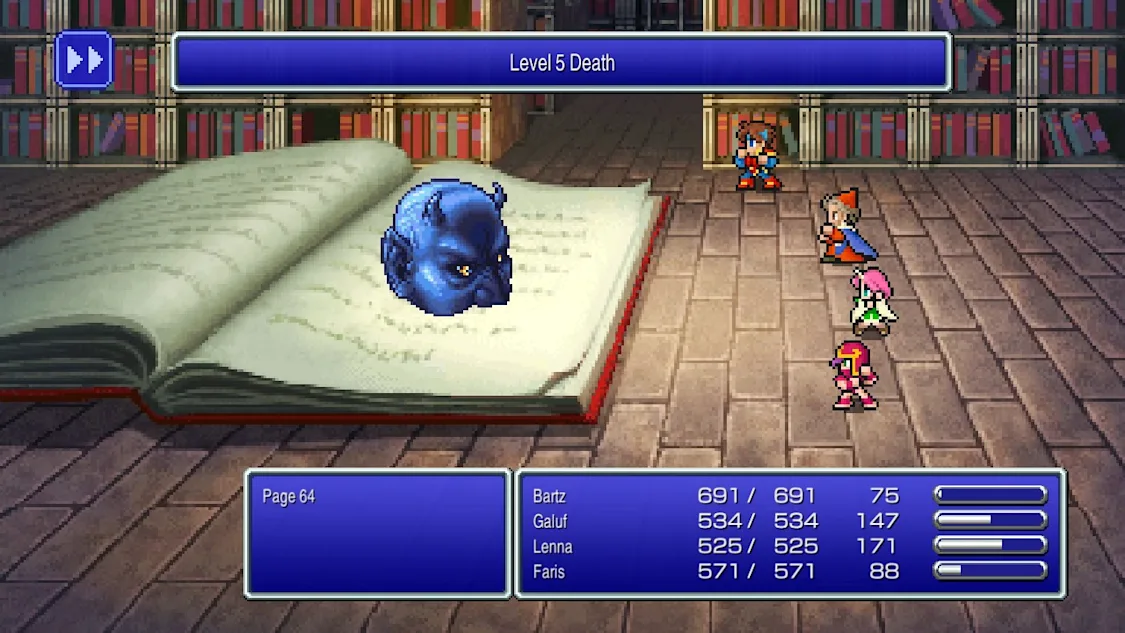
Combat uses the Active Time Battle system. Decisions must be made while the battle gauge moves, so command selection and timing matter alongside party composition. Offensive magic, healing, physical attacks, and support options can be arranged around the challenges presented by enemies and bosses.
For players returning to Final Fantasy V Switch NSP as a search term, the important creative point is the game’s replay value through experimentation. With more than 20 jobs available and the ability to carry learned job abilities between assignments, a new party setup can change how battles are approached without changing the core adventure.
Classic Jobs and Unusual Roles to Experiment With
The job selection includes familiar Final Fantasy roles and more unusual specialties. That range supports both straightforward party construction and less predictable combinations.
- Knight: A classic physical role for players who want a durable, direct approach to combat.
- Black Mage: A job associated with offensive magic, useful when magical damage is needed.
- White Mage: A healing-focused role that supports party survival during demanding encounters.
- Monk: A martial option that broadens the party beyond weapon-based and magic-based roles.
- Blue Mage: One of the game’s more distinctive jobs, adding variety to the available class choices.
- Geomancer: Another unusual role that demonstrates how far the job list extends beyond the standard fantasy party.
The appeal of these Final Fantasy V jobs lies in their flexibility. A party can lean toward traditional roles, with a Knight in front and dedicated Black and White Mages behind, or it can explore different arrangements by combining learned abilities across jobs. This makes progression feel active: gaining a job skill is not only a short-term improvement, but also a possible ingredient in later builds.
World Exploration, Towns, and Dungeons in Final Fantasy V
Exploration moves between the world map, towns, and dungeons. The world map gives the adventure its sense of distance as the party travels across vast lands in pursuit of answers and the remaining crystals. Towns provide opportunities for shopping and preparation, while dungeons bring the group into more intricate areas filled with the dangers of the quest.
These locations support the game’s progression loop. Travel advances the story; towns help prepare the party; dungeons test that preparation through battles and exploration. The job system adds an extra layer to this rhythm, since a difficult area can encourage a different party setup, a new ability choice, or a revised balance between offense and healing.
Final Fantasy V suits RPG players who enjoy adjusting a party as much as advancing a story. Its world is threatened by shattered crystals and the void, but its moment-to-moment identity comes from trying roles, mastering abilities, preparing in towns, and carrying a personalized party through the next dungeon.
Recommended Similar Games
 Pokémon Shining Pearl Switch NSP XCIView Game
 Raging Bytes Switch NSPView Game
 The Legend of Heroes Sen no Kiseki I Kai Thors Military Academy 1204 Switch NSPView Game
 Arisen Force: Life Devotee Switch NSPView Game
 Chained Echoes Switch NSPView Game
 The Legend of Heroes: Trails into Reverie Switch NSP XCIView Game
