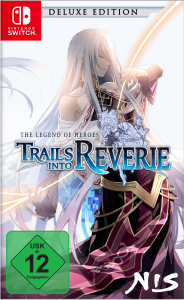
The Legend of Heroes: Trails into Reverie Switch NSP XCI
Report Link Error
Select the broken download file, then submit the report.
Screenshots
About Game
The Legend of Heroes: Trails into Reverie Switch NSP XCI places its action in a Zemuria still dealing with the consequences of catastrophe. It is a role-playing adventure built around intersecting viewpoints, tactical turn-based battles, and a fragile peace that never feels entirely secure. By bringing several established storylines together while adding a masked new presence, it frames its journey as both a continuation and a meeting point for its cast.
A Post-Great Twilight Story Across Zemuria
The Trails into Reverie story begins after the Great Twilight, the destructive event that shook Zemuria. Peace is beginning to return across the continent, but that recovery is precarious. A new threat appears before stability can truly settle in, creating a crisis that links three protagonists whose circumstances and priorities are not the same.
Players follow Rean Schwarzer, Lloyd Bannings, and a mysterious masked figure called “C.” Their separate journeys gradually reveal different sides of the same unfolding situation. Rather than treating the new conflict as a single straight line, the game uses its protagonists to show how a continent-wide problem can affect familiar heroes, new allies, and people operating from the margins.
This structure gives the setting a suitably unsettled atmosphere. The Great Twilight is over, yet its aftermath remains part of the world’s mood: alliances are still being tested, secrets are still being exposed, and the prospect of peace can be threatened again. The routes intertwine as the wider conspiracy comes into view, allowing character growth and new relationships to develop alongside the central crisis.
The True Reverie Corridor adds another layer to the experience. Alongside its dungeon-focused challenges, it includes special episodes that can expand the context around the world and its characters. That makes it more than a simple detour from the main story, offering additional scenes for players who want to spend more time with the broader cast.
How the Crossroads System Shapes the Narrative
The Crossroads system is central to how Trails into Reverie presents its three story paths. At designated points, players can switch among Rean’s route, Lloyd’s route, and C’s route instead of staying with one protagonist for an extended stretch. The result is a narrative that moves laterally as well as forward.
Each route supplies a different perspective on the same period in Zemuria. One group may be dealing with an immediate problem while another uncovers information that changes how that problem is understood. Switching paths helps the larger picture form piece by piece, which suits a story concerned with connected fates and a conspiracy that reaches beyond a single location or team.
The Crossroads system also gives the game a useful sense of pacing. A change in route can refresh the party, the immediate objective, and the viewpoint on current events. Instead of making the three paths feel isolated, the design encourages players to see them as parts of a shared narrative. The three story paths are distinct, but their value comes from the way they speak to one another.
Turn-Based Battles Built Around Tactical Choices
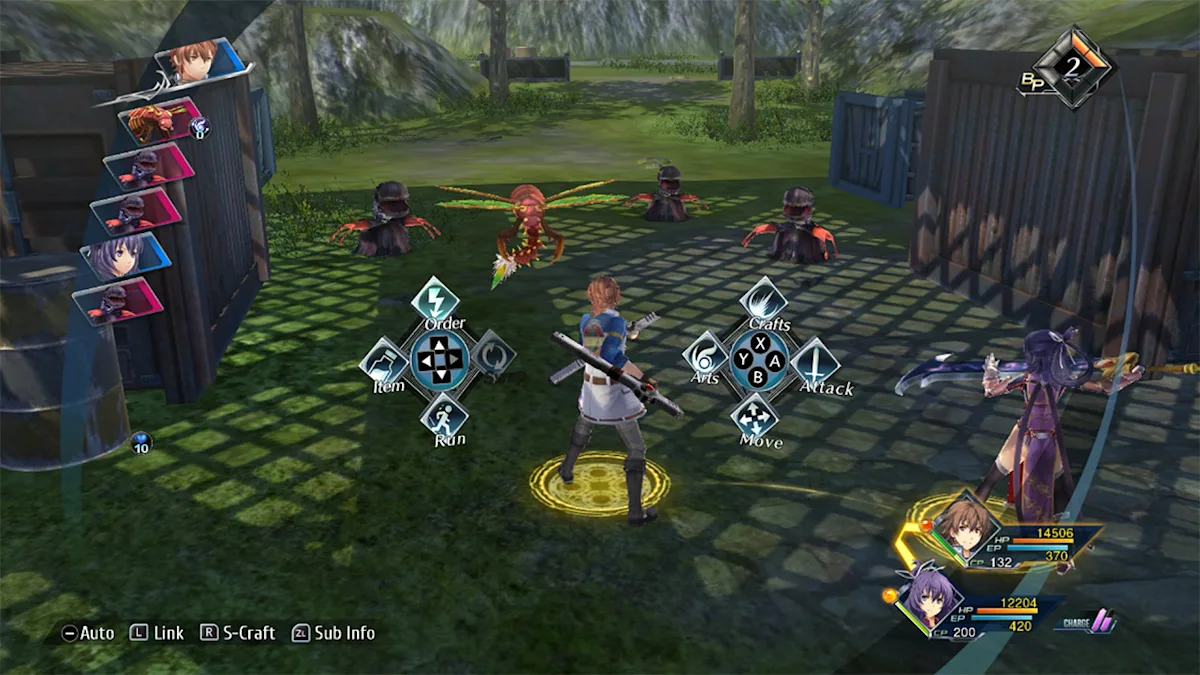
Trails into Reverie combat is turn-based, with tactical choices shaped by character abilities, party planning, and the needs of a particular encounter. Crafts, Arts, and Brave Orders provide different options in battle, so success is not simply a matter of relying on one attack pattern from fight to fight.
Crafts and Arts give players offensive and supportive tools, while Brave Orders add another tactical consideration to the team’s approach. The practical question in each battle is how to use available actions efficiently: push for damage, protect the party, support allies, or adjust to an opponent’s strengths and pressure.
Orbment customization contributes to that planning. Equipping quartz can improve statistics and provide new abilities, giving characters room to be shaped around a preferred role or a specific challenge. A party prepared for one enemy group may not be ideal for the next, so the game rewards attention to changing conditions rather than a fixed setup.
The True Reverie Corridor offers a fitting place to test these ideas. Its procedurally generated dungeon format, rewards, equipment opportunities, and adjustable team compositions create space for experimentation outside the main routes. For players who enjoy refining builds and trying unfamiliar combinations, that progression loop can provide a useful change of pace.
United Front Attacks and Party Synergy
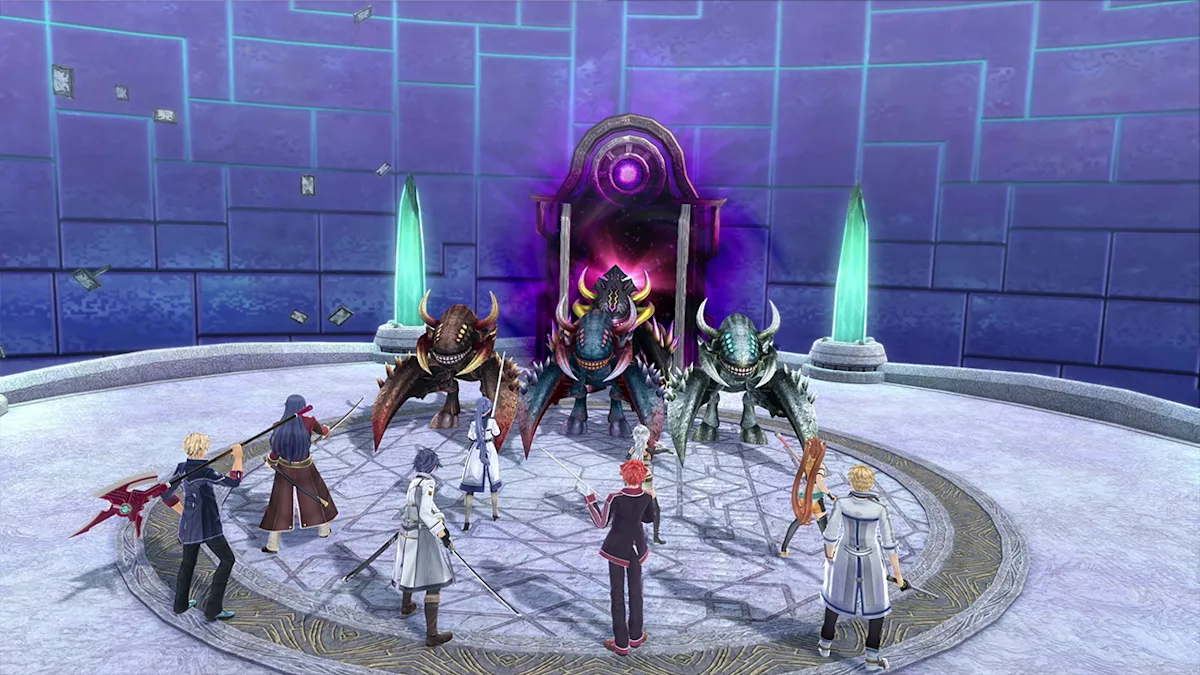
The United Front system gives a full party a powerful combined attack option. In Trails into Reverie battles, this creates an incentive to think about the group as a coordinated unit rather than a collection of individual turns. A combined strike can be especially valuable when a difficult encounter calls for a decisive burst of damage.
Its importance is tied to party synergy. Characters can be organized around complementary abilities, and their Arts, Crafts, Brave Orders, equipment, and quartz choices can support a broader plan. A well-considered team is better equipped to adapt when an enemy demands a different response from the one that worked in the previous fight.
The United Front system therefore fits naturally with the game’s wider combat design. It is a strong offensive option, but it also reinforces the appeal of building a party with purpose. The more players understand how their team functions together, the more meaningful a combined-party move becomes.
5 Practical Strategies for Exploring and Preparing for Tougher Battles
- Search thoroughly. Explore areas carefully for hidden items and useful resources. Small discoveries can support later preparation, particularly when challenges begin to demand more from the party.
- Follow side opportunities. Side quests and optional character interactions can add resources and further context for the cast. They also provide reasons to slow the pace between major story developments.
- Test different teams. Experiment with party setup rather than treating one group as the answer to every encounter. Different characters and combinations can change the tools available in battle.
- Rework Orbments. Adjust Orbment configurations and quartz when a character needs improved statistics or different abilities. A tailored setup can be more useful than repeating an earlier build without changes.
- Read the encounter. Adapt tactics to the enemy in front of the party. Use Crafts, Arts, Brave Orders, and the United Front system according to the situation instead of relying on a single routine.
These Trails into Reverie tips reflect the game’s emphasis on flexibility. Exploration feeds preparation, preparation informs party setup, and party setup matters most when a battle asks players to reconsider their approach.
Nintendo Switch Release Details for Trails into Reverie
The Legend of Heroes: Trails into Reverie arrived on Nintendo Switch on July 7, 2023. NIS America is listed as both publisher and developer. Its genre classification is Action, Adventure, Role-Playing, while its core play combines story-led progression with turn-based strategy and dungeon exploration.
The Nintendo Switch release supports English and is listed for the Europe and USA regions. With interconnected routes, optional episodes, party experimentation, and the challenge-focused True Reverie Corridor, it is suited to players who value character-driven role-playing stories as well as those who enjoy adjusting a tactical party over time.
For players approaching The Legend of Heroes: Trails into Reverie Switch NSP XCI, the appeal lies in that balance: a post-crisis Zemuria story told from multiple angles, strategic systems that reward adaptation, and extra spaces in which to explore teams, equipment, and character-focused material.