Factorio Switch NSP
Report Link Error
Select the broken download file, then submit the report.
Screenshots
About Game
Factorio Switch NSP brings Wube Software’s strategy game to Nintendo Switch with a release date of Oct. 27, 2022. Its premise is direct but demanding: a stranded astronaut must turn a hostile alien landscape into a functioning industrial network, then use that network to build a way home. The portable setting is a natural fit for a game built around planning, adjustment, and the satisfaction of watching a carefully designed system begin to run on its own.
Factorio on Nintendo Switch: A Portable Automation Experience
Factorio Nintendo Switch is focused on the steady construction of an industrial operation. Rather than relying on a fixed sequence of missions, it gives the player a large manufacturing problem and asks them to solve it through machinery, logistics, power, research, and defense. Each new production goal creates another practical question: where will the resources come from, how will they travel, and what needs to be built next?
That structure suits portable play because progress can come from many small decisions. A session might involve extending a conveyor route, increasing furnace output, setting up a new mining area, or reorganizing a crowded section of the factory. Those individual changes build toward a much larger machine. Wube Software’s game makes the factory itself the central subject, from its first hand-built tools to its later interconnected production lines.
The atmosphere comes less from cinematic storytelling than from the contrast between a lone survivor and an increasingly elaborate industrial footprint. The planet is a place to explore for resources, but it is also a place that pushes back. Expansion brings capability, while the pollution created by machinery can draw the attention of hostile native creatures.
Crash-Landing and the Goal of Escape
The Factorio story begins with a crash landing. A lone astronaut is stranded on an alien planet with a damaged spacecraft and limited means of survival. The immediate task is resource gathering, but the larger objective quickly becomes much more ambitious: rebuild enough industrial capacity to create the components needed for a rocket escape.
This gives the game’s open-ended construction a clear sense of purpose. Iron, copper, coal, stone, and later materials are not collected simply to fill storage. They are inputs for equipment, machines, power systems, defenses, and increasingly advanced technology. The route to a rocket escape is therefore inseparable from the growth of the factory.
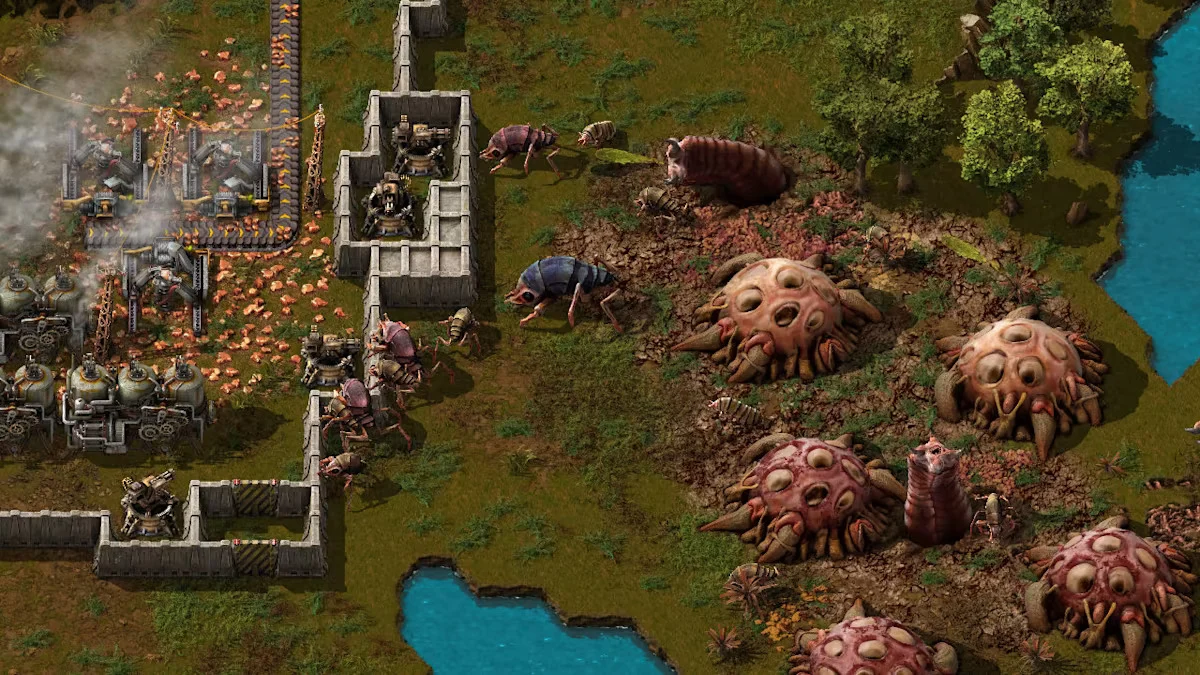
Alien planet survival also involves dealing with the Biters, the world’s hostile inhabitants. They are attracted by factory pollution and can attack infrastructure, turning defense into a continuing consideration rather than a separate activity. Walls, turrets, ammunition, and stronger defensive options become part of the same industrial chain that supports everything else.
From Manual Mining to Automated Production
Early progress begins with direct work. The player manually mines basic resources such as iron, copper, coal, and stone, then uses those materials to make the first essential equipment. This hands-on opening matters because it makes the value of automation immediately clear. Manual collection is useful at the start, but it cannot support the scale required for more complex construction.
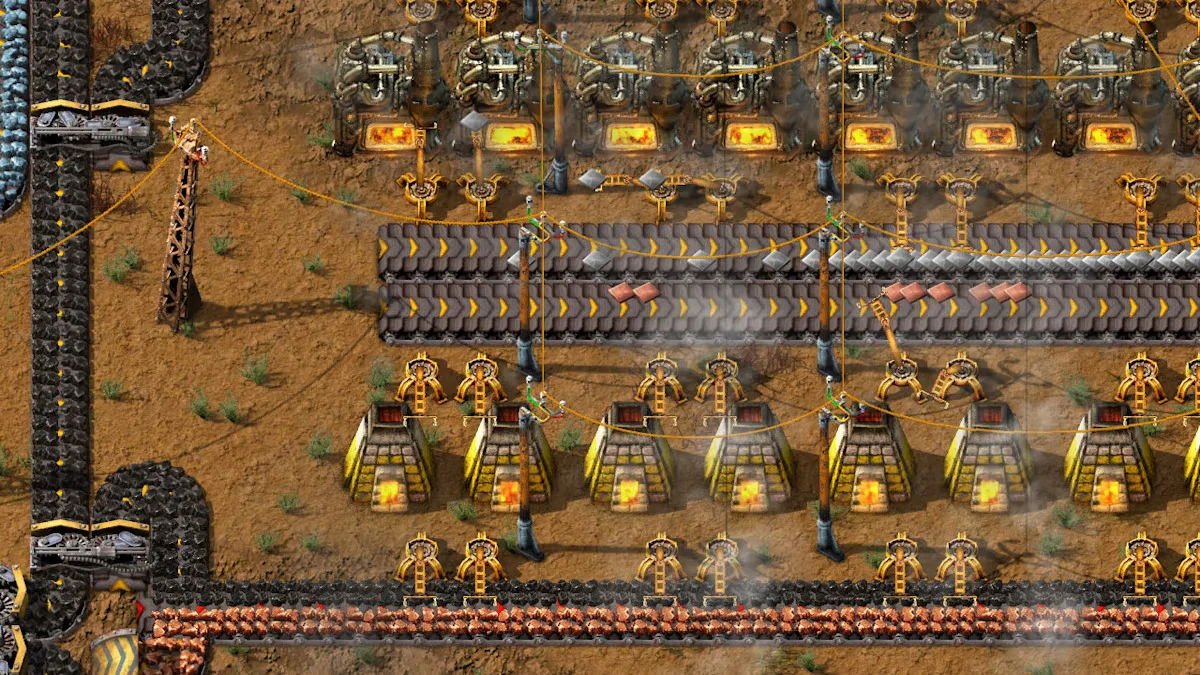
Factorio automation starts to change the rhythm once automated miners, furnaces, conveyor belts, and assembly machines enter the picture. Miners extract raw materials, belts move them, furnaces process them, and assembly machines turn components into useful products. A simple chain can become the foundation for a much broader production network.
The important shift is not merely faster resource gathering. It is the ability to create production lines that continue operating while attention moves elsewhere. That creates a productive tension: every automated system solves one problem while revealing the next bottleneck. A line may need more ore, more fuel, more processing capacity, or a cleaner route for materials.
Designing an Efficient Factory Layout
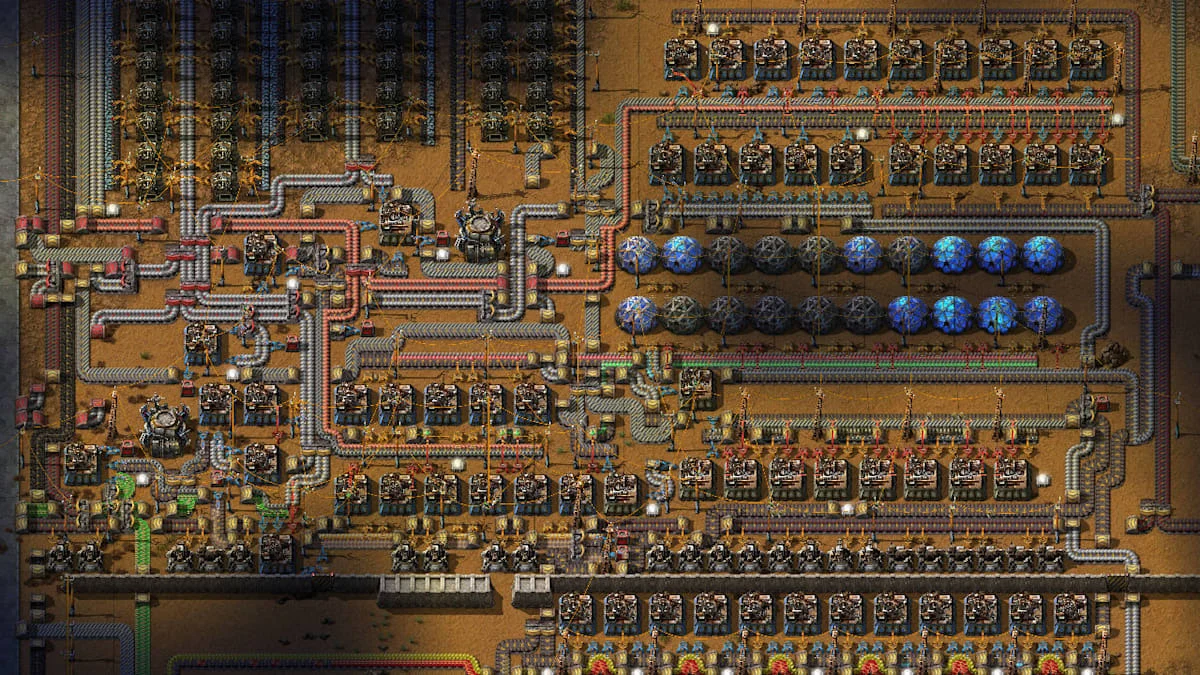
Factorio factory building is shaped by relationships between machines. A single assembly machine is useful, but its real value depends on reliable inputs and a clear destination for its output. Furnaces need ore and fuel. Assemblers need components. Research labs need science-related materials. Defensive structures need supplies. As the factory expands, each requirement becomes part of a larger logistical map.
A thoughtful factory layout leaves room for growth while keeping material flow understandable. Conveyor belts can connect nearby processes, while robotic arms and trains offer additional ways to move items across an expanding base. The challenge is not just fitting machinery into available space. It is arranging that machinery so that production remains stable as demand increases.
This is where Factorio Switch NSP becomes especially absorbing. An inefficient section can be rebuilt, extended, or supplied differently, and the consequences are easy to see in the movement of materials. The factory is never truly finished while the player is still pursuing stronger technology and a rocket. Every improvement invites another round of optimization.
Research as the Engine of Expansion
Research provides the framework for long-term growth. New technologies expand what the factory can produce and improve the tools available to manage it. The results can include stronger production capabilities, advanced power generation, improved weaponry, and broader industrial options.
This technology progression gives structure to expansion. A growing factory needs electricity, and power can be generated through options such as steam engines, solar panels, or nuclear reactors. It also needs protection as hostile creatures threaten structures. Research therefore connects the peaceful puzzle of production with the pressure of defending the system that makes further progress possible.
Industrial expansion is rarely a straight line. Unlocking a new technology may require a larger supply of existing materials, which in turn can mean new mines, more belts, additional furnaces, or more power. The game’s progression is built around that chain of cause and effect, encouraging players to revisit earlier systems as their ambitions increase.
7 Priorities for Building a Stronger Factory
- Secure the basics. Gather iron, copper, coal, stone, and other needed raw materials so early crafting and construction can begin.
- Automate mining. Replace repeated manual collection with automated miners that provide a more dependable flow of resources.
- Refine materials. Use furnaces and other production structures to turn raw inputs into materials needed for more advanced manufacturing.
- Build clear logistics. Connect production lines with conveyor belts, robotic arms, and, as the base grows, trains that can move items efficiently.
- Establish reliable power. Keep machines and research operating by planning electricity generation through available power options.
- Push research forward. Unlock technologies that improve production, expand industrial capabilities, and provide better defensive tools.
- Defend the network. Use walls, turrets, and ammunition to protect valuable infrastructure from Biters drawn by pollution.
Factorio is best suited to players who enjoy strategy systems with room for experimentation, careful planning, and repeated refinement. Its appeal lies in watching a collection of separate machines become a coordinated whole, then finding the next weakness that needs attention. The eventual rocket is the destination, but the lasting pull comes from the route: expanding an industrial operation one belt, miner, furnace, and assembly machine at a time.
Recommended Similar Games
 Banchou Tactics Switch NSPView Game
 ROMANCE OF THE THREE KINGDOMS XIV: Diplomacy and Strategy Expansion Pack Bundle Switch NSP XCIView Game
 Golem Lights Switch NSPView Game
 Drill Core Switch NSPView Game
 Yu-Gi-Oh! EARLY DAYS COLLECTION Switch NSP XCIView Game
 This War of Mine: Complete Edition Switch NSP XCIView Game
