Car Mechanic Simulator Pocket Edition Switch NSP
Report Link Error
Select the broken download file, then submit the report.
Screenshots
About Game
Car Mechanic Simulator Pocket Edition Switch NSP brings a vehicle-repair career to Nintendo Switch in a compact simulation built around fault-finding, component work, and workshop growth. Released on April 15, 2022, it is a Lifestyle, Practical, Racing, and Simulation title from Ultimate Games, available in Europe and the USA with support for English, French, German, Italian, Spanish, Dutch, Portuguese, and Russian.
What Car Mechanic Simulator Pocket Edition on Switch Is About
This is not a character-led story with a fixed sequence of dramatic events. Its focus is the day-to-day work of an aspiring mechanic: accepting vehicles, locating problems, stripping down affected systems, and returning cars in working order. The sense of progress comes from the workshop rather than from a scripted cast or plot.
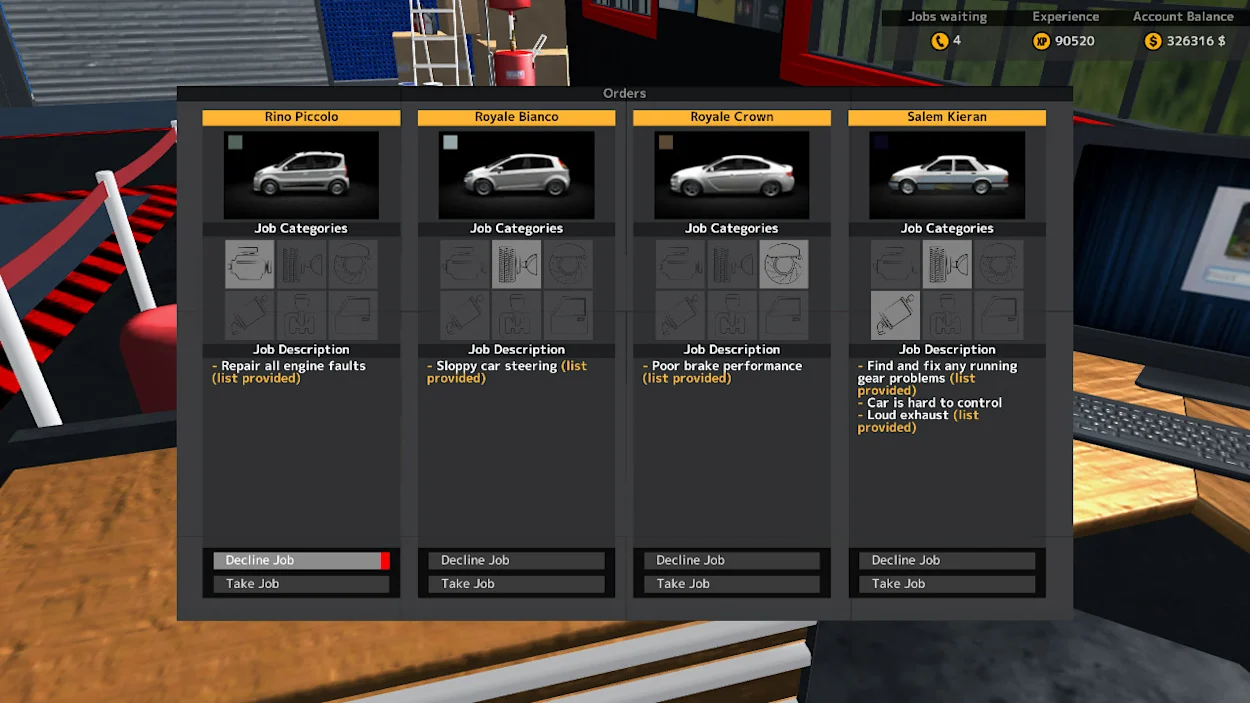
As a car repair simulation, the game asks players to engage with the practical sequence behind a repair. A customer order presents a problem, but the answer is not always immediately visible. Players need to investigate, access the relevant components, and decide whether a part can be repaired or needs to be replaced. That structure gives each job the feel of a mechanical puzzle.
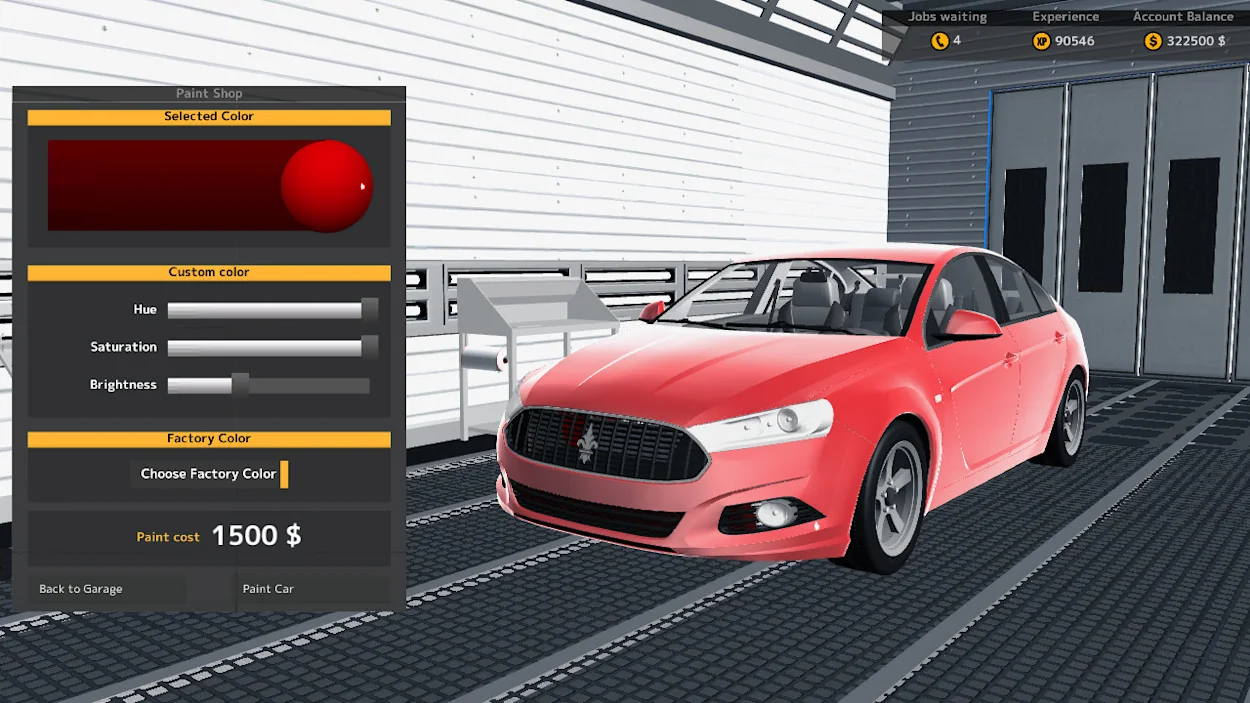
The wider goal is garage management. Money earned from completed work can be directed toward the workshop, including additional bays, tools, and functions. Parts also matter to the business side: new and used components can be obtained from the in-game shop, while repairing existing parts can help control costs. The game’s appeal lies in making the garage feel like an evolving workplace shaped by successful repairs.
A Career Built Around Repair Orders and Reputation
The career begins with more modest workshop tasks before opening the way to tougher assignments. Completing repair orders earns money and experience, helping the player develop a stronger workshop reputation. As that reputation grows, so does the scope of the work, with more complex and more exotic vehicles becoming part of the repair schedule.
This career progression is player-driven. Rather than moving through a traditional campaign, players build momentum through the jobs they take on and the decisions they make around the garage. Customer satisfaction, finances, available parts, and workshop improvements all feed into that process. A repaired car is not simply the end of a task; it is also a contribution to the business’s ability to take on the next one.
The approach gives repair orders a useful variety. One vehicle may call for a straightforward replacement, while another may demand a longer investigation and deeper disassembly. The growing workshop reputation gives those routine actions a larger purpose, turning individual jobs into steps toward a busier and better-equipped repair operation.
Diagnosing Vehicle Problems Before Starting Repairs
Good repairs start with correct information. Before removing parts, players can use diagnostic equipment to identify hidden faults and narrow down where the problem may be. This helps prevent aimless dismantling and makes the repair process more deliberate.
The available tools include the diagnostics path tester and the engine condition tester. Their role is to support car diagnostics by helping the mechanic investigate a vehicle before beginning more invasive work. In a simulation centred on individual parts, that preliminary step matters: finding the faulty area first makes it easier to plan the work that follows.
Diagnostics also reinforce the game’s practical tone. The objective is not merely to select a repair command from a menu. Players are encouraged to approach the vehicle in an ordered way, using the available equipment to understand the issue and then working toward the affected component. That makes a successful diagnosis satisfying in its own right, especially when it leads cleanly into a repair.
Disassembly and Reassembly: The Core Repair Process
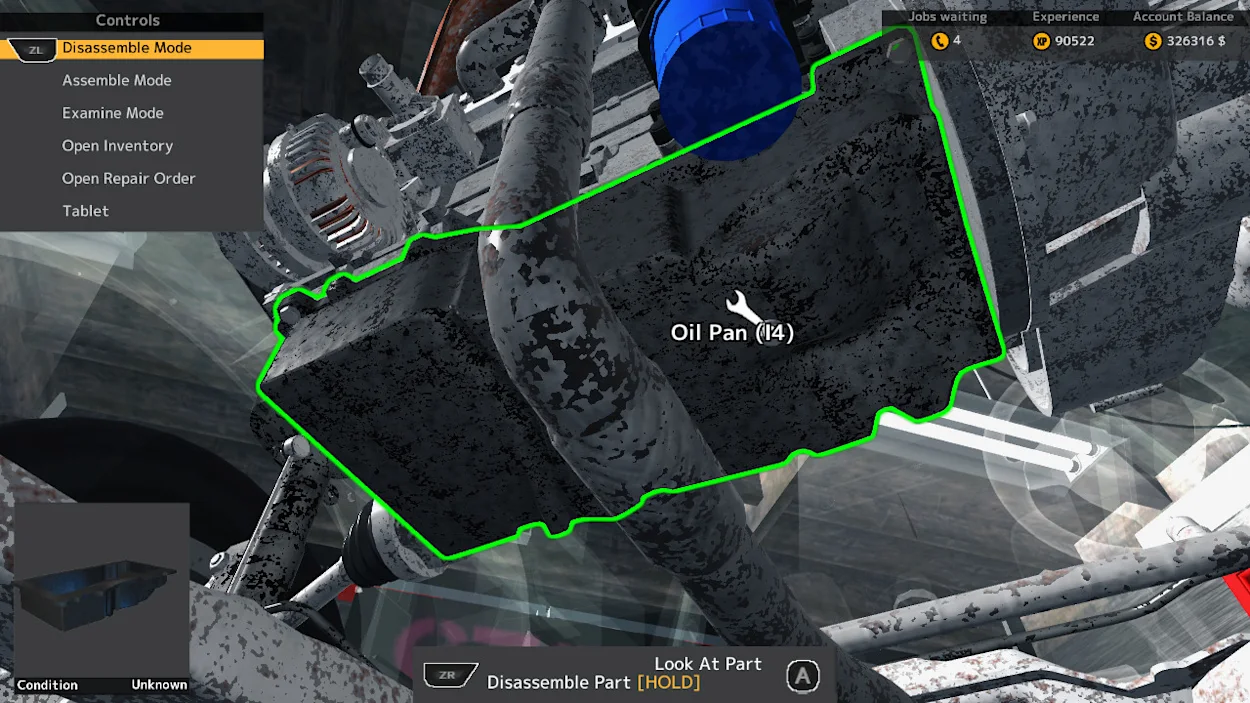
Once the likely fault has been identified, the main hands-on loop begins. Components must be removed carefully to reach the damaged or worn part. The game covers hundreds of individual car parts, ranging from small bolts through to major pieces such as engine blocks, so the route to a repair can involve several connected layers of disassembly.
This is where the simulation’s methodical rhythm is most apparent. A faulty item may sit beneath other components, requiring players to work through the affected section of the car rather than jumping directly to the answer. Each removed part creates a path toward the next stage, and the work only feels complete when the vehicle is properly put back together.
Players can repair an existing component or fit a replacement from the shop. New and used parts are both available, giving part management a place in the decision-making process. Saving money through repairs can be useful, while a replacement may be necessary when a component cannot serve its purpose.
Vehicle reassembly is as important as disassembly. Systems need to be restored correctly before the job can be finished, making careful installation the final mechanical check on the player’s work. A test drive on the test track can then confirm that the repaired vehicle is functioning as intended before it is returned to the customer.
Tuning Cars for Better Performance and Higher Returns
Repair work is not limited to restoring a car to working condition. The game also includes car tuning, allowing players to use aftermarket parts and specialised options to improve performance. That adds another branch to the garage’s activity, connecting mechanical work with the prospect of more profitable jobs.
Performance upgrades fit naturally beside the repair systems because they use the same interest in car components and workshop capability. A player who has become comfortable locating faults and handling replacements can also explore ways to enhance a vehicle beyond its basic repair requirements. The result is a career loop with room for restoration, maintenance, and performance-minded work.
For players who enjoy repeated mechanical tasks with changing vehicles and jobs, Car Mechanic Simulator Pocket Edition Switch NSP offers replay value through its ongoing workshop development. There is always another order to assess, another part decision to make, or another investment to consider. It is best suited to players who enjoy deliberate simulation, practical problem-solving, and the gradual satisfaction of turning garage work into a growing business.
7 Practical Steps for an Efficient Repair Workflow
- Read the order. Start by checking the customer’s repair request and identifying the vehicle problem that needs attention.
- Diagnose first. Use car diagnostics tools, including the diagnostics path tester or engine condition tester, to investigate faults before removing components.
- Target the area. Begin disassembly around the affected system, removing the necessary parts to reach the suspected fault.
- Assess each part. Check the components involved and determine which items are responsible for the issue.
- Choose the fix. Repair usable components when appropriate, or obtain new or used replacement parts from the shop.
- Reassemble carefully. Reinstall the vehicle’s systems correctly, including every required component on the route back from the repair.
- Test the result. Take the completed vehicle onto the test track to make sure its systems are working before returning it to the customer.