Heist Simulator 2025 Switch NSP

Report Link Error
Select the broken download file, then submit the report.
Screenshots

About Game
Heist Simulator 2025 Switch NSP presents a tactical crime scenario built around preparation, personnel, and the pressure of carrying a plan through when conditions change. Released in the USA on January 31, 2025, this English-language Simulation title is published by XenoXeno for Nintendo Switch. Its premise puts the player behind the scenes rather than simply at the point of action: success depends on organizing capable people, studying targets, and finding a way out when a job stops going as expected.
Heist Simulator 2025 on Nintendo Switch: Confirmed Game Details
The confirmed Heist Simulator 2025 release date is January 31, 2025. It is categorized as a Simulation game, with XenoXeno listed as publisher. The available region is USA, and the supported language is English. The title carries Title ID 0100F5D021A0E000, requires firmware version 19.0.0, and has a listed file size of 1.15 GB.
Those details frame a game concerned with orchestrating high-risk jobs in a fictional criminal environment. Rather than presenting theft as a matter of walking into a target and taking valuables, the supplied setup emphasizes the work before and after the central operation. Reconnaissance, crew selection, equipment, security countermeasures, and escape planning are all part of the stated structure.
The Master Planner Premise and Criminal Underworld Setting
The story of Heist Simulator 2025 Switch NSP casts the player as an unnamed master planner who operates from the shadows. The player coordinates a group of specialists and pursues a growing reputation through contracts and missions. Each completed job is described as contributing to new opportunities, positioning progression around the player’s standing within the criminal underworld.
The setting is not limited to a sequence of isolated robberies. Rival crews, secrets, and a climb toward the top of a criminal hierarchy are part of the supplied narrative framework. That gives the contracts a wider context: they are steps in a career shaped by reputation and competition, not merely disconnected challenges.
Characters also matter beyond their immediate utility. Crew members are described as having individual motivations and backstories, while player decisions can affect loyalty and the outcome of later operations. The premise therefore suggests that planning includes managing relationships as well as managing routes, tools, and timing.
From Reconnaissance to Exfiltration: The Heist Planning Loop
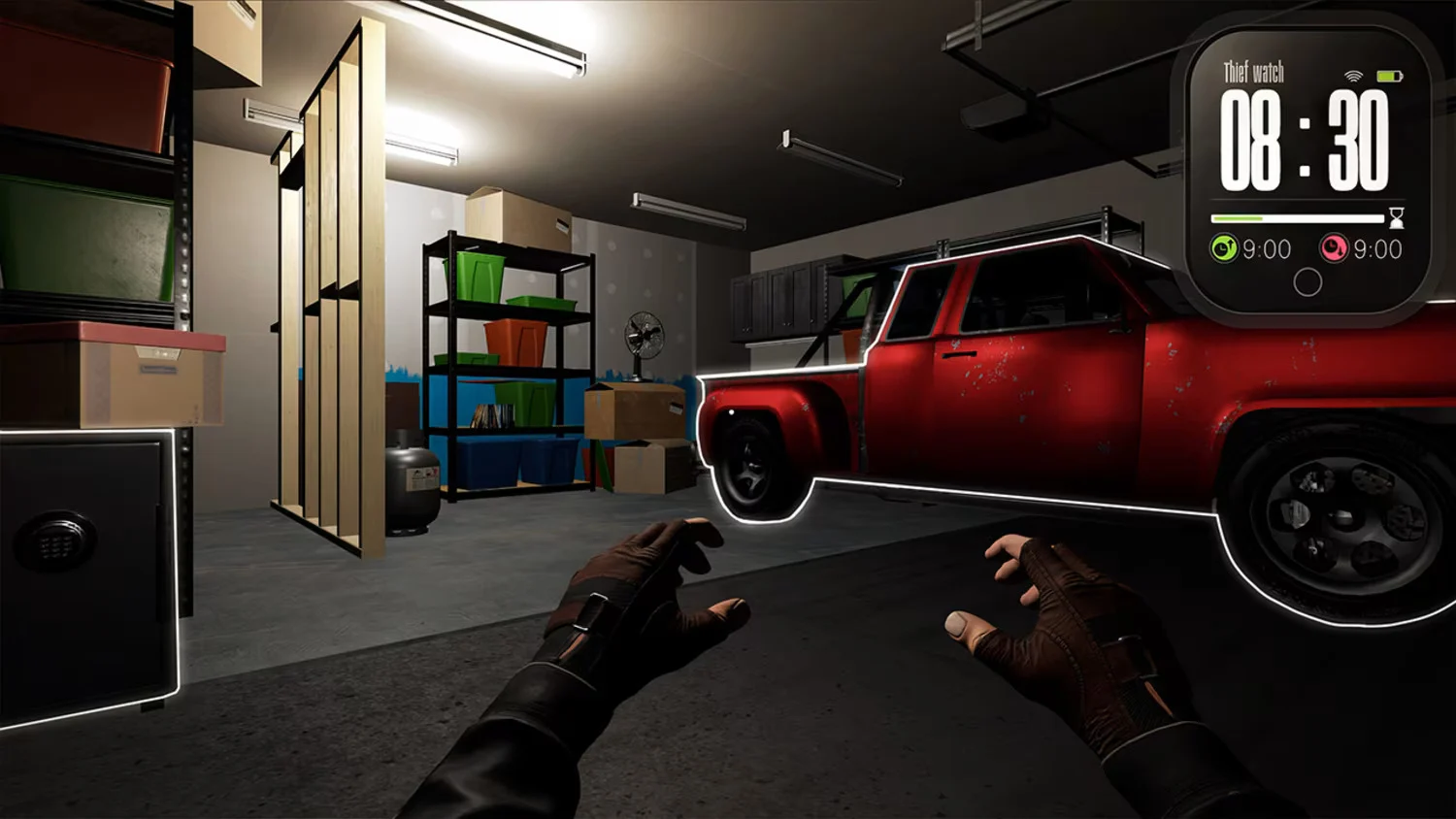
The central gameplay loop runs from initial scouting to exfiltration. Before an operation, players examine locations, identify security weak points, and map escape routes. This reconnaissance phase is presented as a serious part of the job, encouraging attention to alternative paths and obstacles before the crew commits to an approach.
Once a plan is in motion, the game’s security threats can include laser grids, cameras, guards, and advanced alarm systems. These are described as evolving measures, so preparation alone is not treated as a guarantee. Adaptability becomes important when an unforeseen complication disrupts a route or exposes a weakness in the original plan.
- Scout first: Study the location, search for security gaps, and consider more than one route through the target.
- Plan the exit: Escape routes are part of the preparation, not an afterthought once the objective is complete.
- Choose the team: Match specialist abilities to the obstacles expected during a contract.
- Pack with purpose: Equipment selection can shape how the crew handles security systems and physical barriers.
- Adjust under pressure: When conditions shift, the operation calls for quick changes rather than blind adherence to the first plan.
That structure gives the game a measured rhythm. There is room for careful analysis before a mission, followed by the urgency of execution. The stated emphasis on precision and flawless execution fits a heist theme in which a small oversight can complicate an otherwise sound operation.
Building a Specialist Crew for Each Contract
Crew management is a key part of the progression model. Players can recruit and upgrade a diverse set of specialists, assign them particular roles, and make use of skills such as hacking, demolition, and stealth. These abilities are not presented as interchangeable; they are intended to help solve different kinds of obstacles during a job.
A hacking-focused specialist may be relevant when electronic security is the immediate concern, while demolition offers a more forceful answer to a barrier. Stealth supports an attempt to move without attracting attention. The decision is not only about which ability sounds useful in isolation, but which combination best suits the target, route, equipment, and preferred style of operation.
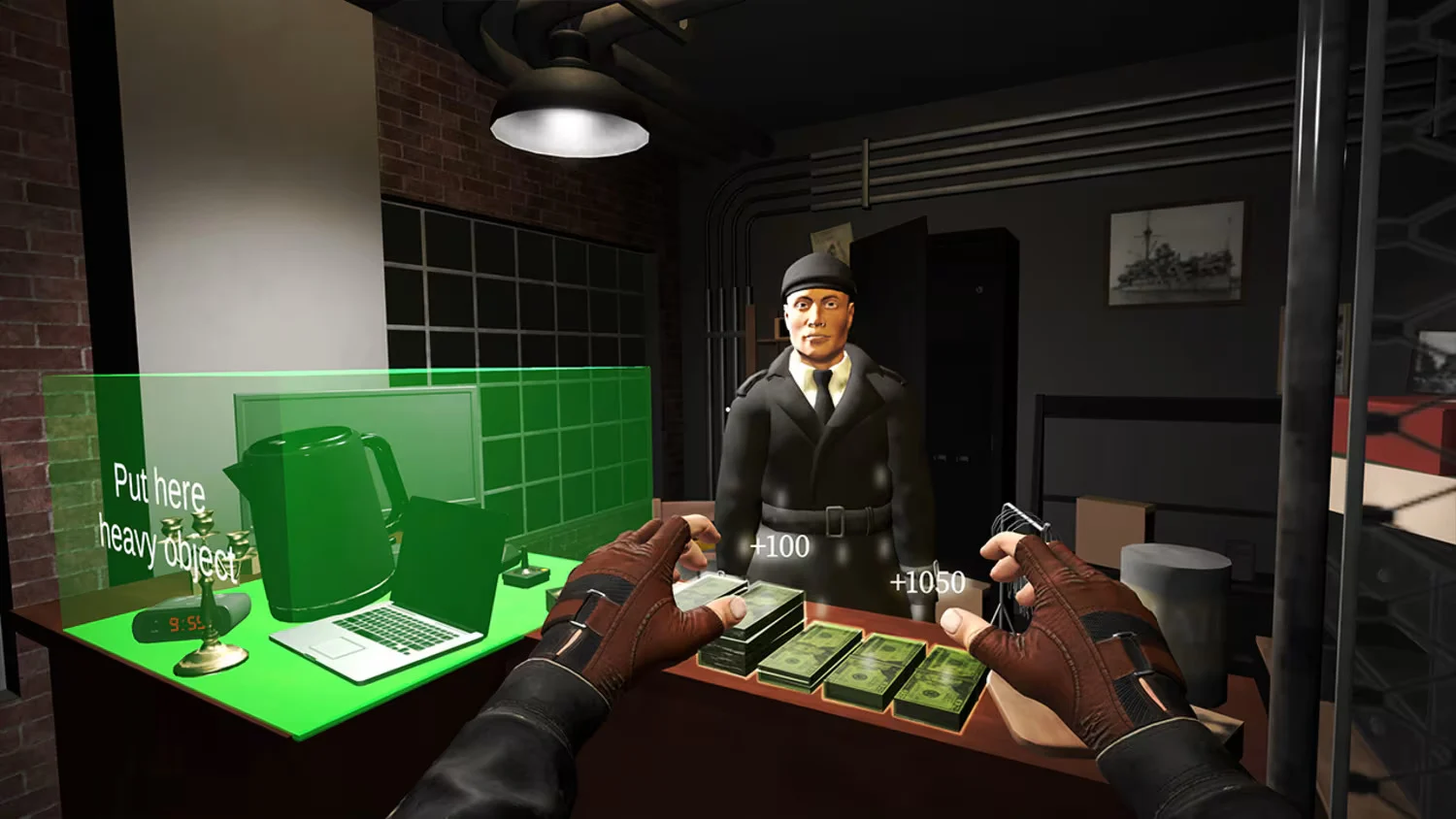
The game also includes resource management. Players manage finances, acquire tools, and invest in upgrades for both equipment and a hideout. Those investments support access to bigger and more lucrative jobs, giving the campaign a clear sense of advancement. Combined with the loyalty element, crew choices may carry consequences beyond a single mission’s success or failure.
Stealth or Brute Force: Choosing a Heist Approach
Each mission allows for two broad approaches: avoiding detection through stealth or using direct force. A quiet operation aims to bypass guards, cameras, alarms, and other security measures without drawing attention. It suits a player who values route planning, timing, and careful use of specialist abilities.
The brute force approach is more immediate, using a direct response to obstacles rather than trying to remain unseen. The reference makes clear that both paths come with different risks and rewards. That distinction matters because it prevents one method from being framed as the universal answer. A loud approach may solve one problem while introducing others, while stealth can demand more patience and a stronger grasp of the environment.
This choice supports a flexible heist strategy. Players can weigh the risks of exposure against the demands of the objective, then decide how much of the operation should be built around caution, speed, force, or specialist support.
Why Procedurally Generated Heist Elements Support Replayability
Replayability is supported by dynamically generated elements within heist locations. The supplied description does not specify exactly which parts of a level are generated or how those systems are arranged, but it does state that repeated operations can produce fresh challenges and varied experiences.
That approach fits the game’s emphasis on reconnaissance and adaptation. If conditions within a location can vary, a previously successful route may not be enough on its own. Players are encouraged to reassess security, reconsider crew assignments, and remain attentive during execution rather than relying entirely on memory.
For players interested in simulation games with tactical planning, crew management, and changing mission conditions, Heist Simulator 2025 offers a crime-focused structure built around preparation and consequence. Its criminal-underworld atmosphere, specialist team system, and variable heist elements point toward a game designed for methodical planners who enjoy revisiting operations with a revised strategy.