Brain Memory Training Academy Switch NSP
Report Link Error
Select the broken download file, then submit the report.
Screenshots
About Game
Brain Memory Training Academy Switch NSP is a Nintendo Switch puzzle and strategy game built around repeatable mental exercises rather than long-form levels or a conventional campaign. Developed and published by Dezvolt Games, it presents a compact routine of interactive activities focused on memory, attention, calculation, language, and problem-solving. The appeal is in returning for short sessions, testing familiar skills under changing pressure, and watching personal scores develop over time.
Brain Memory Training Academy on Switch: A Daily Cognitive Exercise Format
The academy format gives the game a clear purpose: each play session is framed as a piece of personal practice. Instead of sending players through a fictional world, it offers a set of mini-games that ask for concentration, quick recognition, recall, and response. Pattern recognition, rapid calculations, spatial tasks, reaction prompts, and attention drills form part of the broader activity mix.
That structure suits the Nintendo Switch puzzle game format well. A player can approach it as a brief daily brain training routine, choosing a focused session rather than committing to an extended chapter. The exercises are designed to be replayed, and their challenge can adapt as performance improves. This makes the routine feel less static: a task that is straightforward at first may demand faster responses or more precise recall as progress builds.
The presentation described by the game’s premise is functional and academy-themed, with the emphasis placed on the exercises themselves. Its atmosphere is one of self-improvement and steady practice rather than dramatic spectacle. Scores and completed tasks become the main feedback, turning each round into a small test of concentration and persistence.
A Personal Progress Journey Instead of a Traditional Story
The Brain Memory Training Academy Switch NSP experience does not rely on a traditional story with major characters, plot twists, or a final narrative destination. Its progression is instead framed around enrolling as a new academy student and working through courses intended to encourage mental agility. The player’s own record becomes the ongoing story.
Each completed exercise acts as another stage in that cognitive progress. Improving a score, mastering a difficult sequence, or handling a faster prompt can provide the sense of advancement that another game might deliver through new locations or story scenes. The academy setting gives these repeated challenges a shared context, while the focus remains on the player’s evolving performance.
This approach makes the game especially suited to players who enjoy measurable goals. There is room to revisit activities, compare new attempts with previous results, and pursue gradual gains without needing to remember a complicated narrative thread. The reward is not a sprawling adventure; it is the growing familiarity that comes from repeated practice and the satisfaction of seeing a difficult task become more manageable.
Memory Recall Exercises and Sequence Challenges
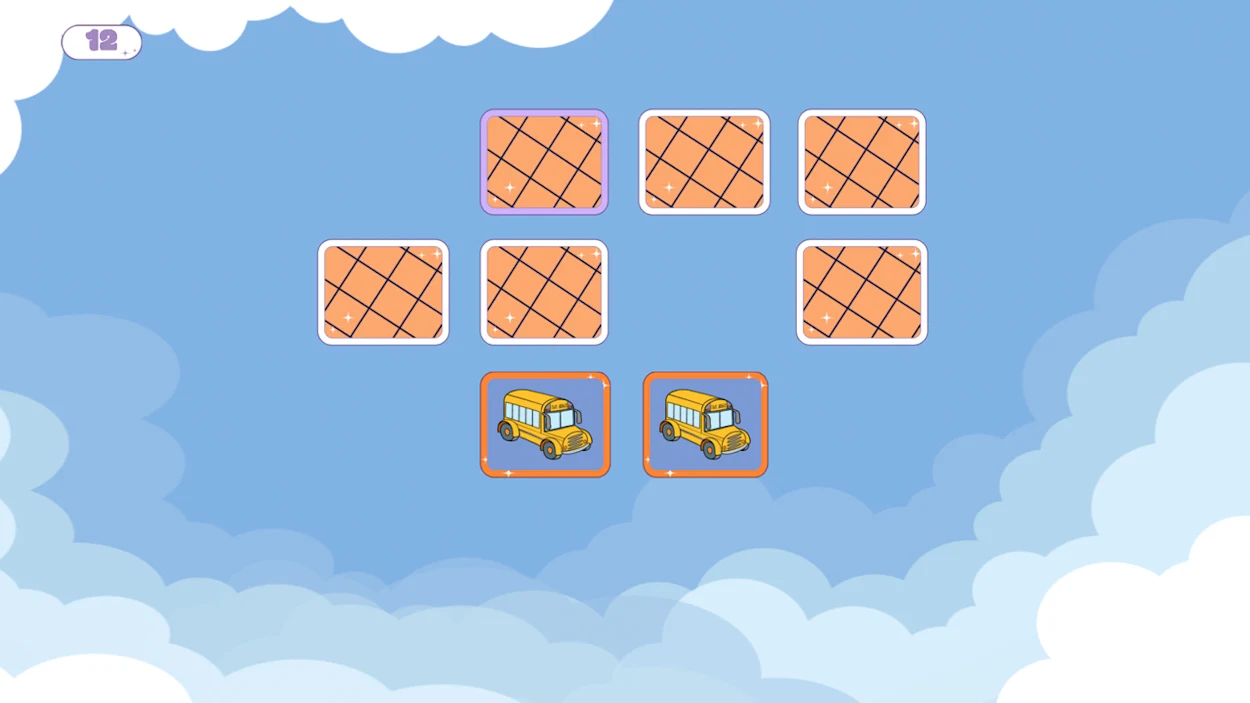
Memory recall challenges are a central part of the academy’s routine. These activities ask players to quickly retain and reproduce sequences involving numbers, colors, or objects. The pressure comes from the need to observe carefully, hold the information in mind, and respond before the task moves on.
Number sequence games can turn a simple series into a test of concentration, particularly when the player must remember the order rather than just recognize individual digits. Color-based exercises ask for similar attention, while object sequences introduce another kind of visual recall. These tasks are direct in concept, but the challenge lies in maintaining focus when speed and complexity increase.
The wider puzzle selection also supports this memory-focused design. Logic grids and spatial reasoning tasks ask players to work through solutions step by step, while attention drills can require identifying selected items among distractions or switching quickly between tasks. Timed arithmetic tests and reaction-time prompts add further variety, ensuring that the game’s replay value comes from multiple kinds of short-form challenges rather than one repeated exercise.
Language and Word Games in the Training Routine
Language and word games broaden the academy beyond visual memory and numerical tasks. Vocabulary exercises and verbal fluency games provide a different rhythm, asking players to engage with words as part of the same larger training routine. Their inclusion helps the game feel like a mixed set of cognitive activities rather than a collection devoted to only one skill.
These verbal exercises sit alongside quick calculation tests, spatial puzzles, and focus drills, letting players move between different task types during a session. That variety can be useful for anyone who prefers alternating between number-based, visual, and language-oriented prompts instead of repeating the same type of challenge continuously.
The game’s course-like framing also gives these activities a shared role. A vocabulary task is not presented as a separate mode with an unrelated purpose; it is another exercise on the path toward stronger scores and greater mental agility. For players who enjoy word-focused puzzles but also want recall and logic activities in the same package, that blend is a meaningful part of the format.
5 Practical Tips for Building a Consistent Training Habit
The game’s design encourages regular return visits, but the most useful approach is likely to be a sustainable one. Progress is framed around repeated effort, not a need to solve every difficult exercise immediately.
- Make it regular. A daily training routine can help turn the academy’s exercises into a familiar habit, even when the available play time is limited.
- Keep sessions focused. Short, attentive sessions can be more manageable than trying to play for a long stretch without concentration.
- Accept the hard rounds. Difficult puzzles and tougher levels are part of the game’s challenge, offering a chance to adjust strategies and try again.
- Stay composed. A relaxed approach can make it easier to focus on a sequence, a timed calculation, or a prompt surrounded by distractions.
- Notice small gains. Better scores and improved familiarity with an exercise are valid signs of progress, even when improvement arrives gradually.
These cognitive game strategies match the academy’s measured pace. The goal is not simply to chase a single high score, but to keep returning, learn from unsuccessful attempts, and give each type of exercise enough time to become familiar.
Release and Switch Version Details for Brain Memory Training Academy
Release date: January 26, 2024
Developer: Dezvolt Games
Publisher: Dezvolt Games
Genres: Puzzle, Strategy
Language: English
Regions: Europe, USA, Asia
Platform: Nintendo Switch
Brain Memory Training Academy is aimed at players looking for a structured collection of repeatable puzzles and short mental exercises. Its course-based progression, adaptive challenge, and score-focused feedback make it a natural fit for people who enjoy returning to the same activities over time and measuring their own improvement.