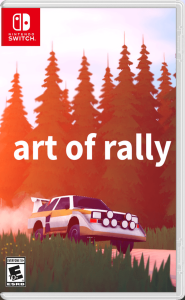
art of rally Switch NSP
Report Link Error
Select the broken download file, then submit the report.
Screenshots
About Game
art of rally Switch NSP presents rally racing through a clean, stylized lens, pairing minimalist scenery with driving that asks for concentration and control. Funselektor Labs frames the experience around the sport’s celebrated past, but the appeal is not limited to nostalgia. Its stages reward careful reading of the road, measured steering, and the willingness to repeat a route until a difficult sequence begins to flow.
What Makes art of rally Stand Out on Nintendo Switch
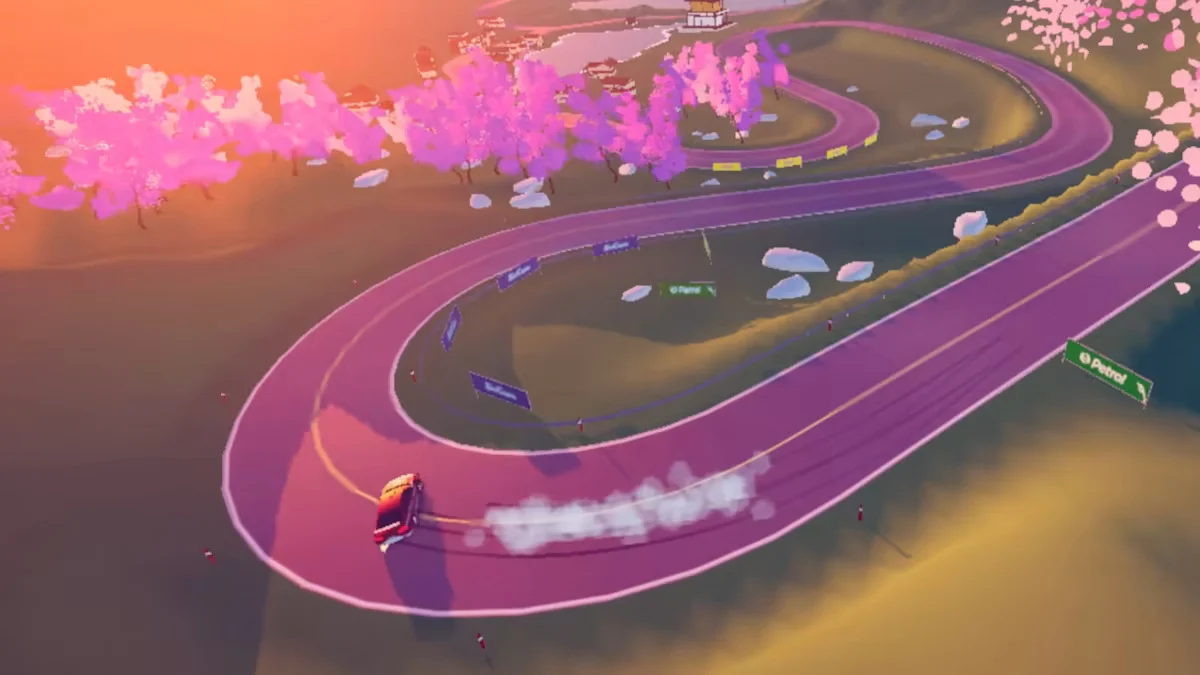
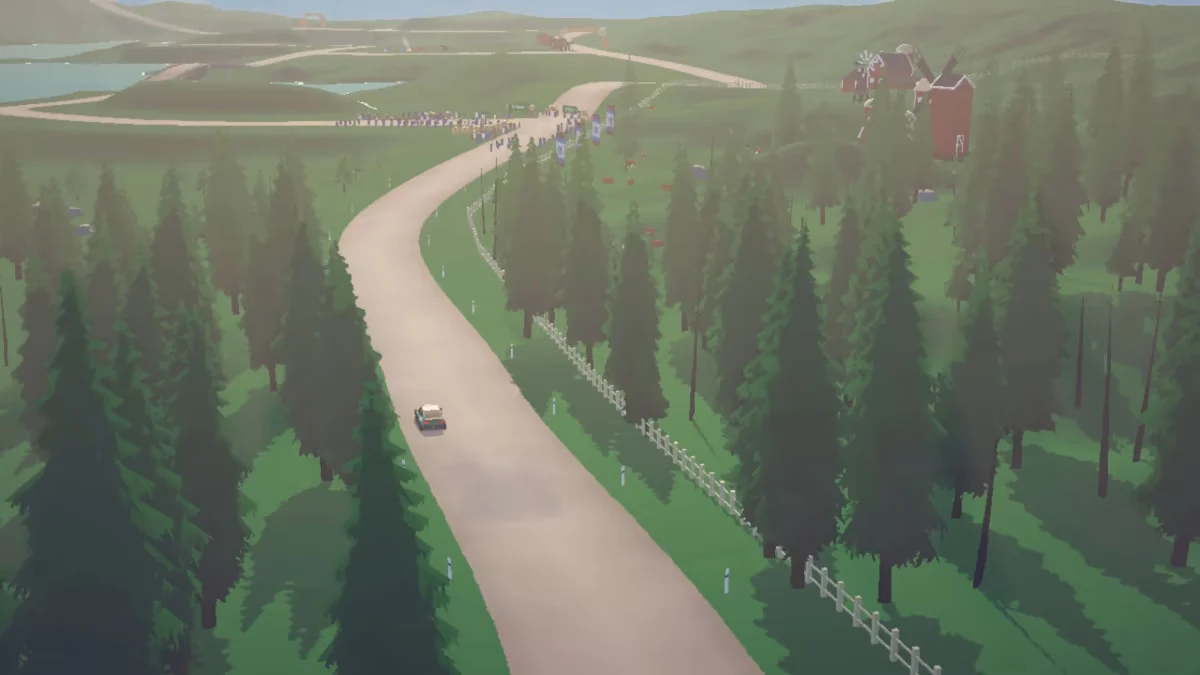
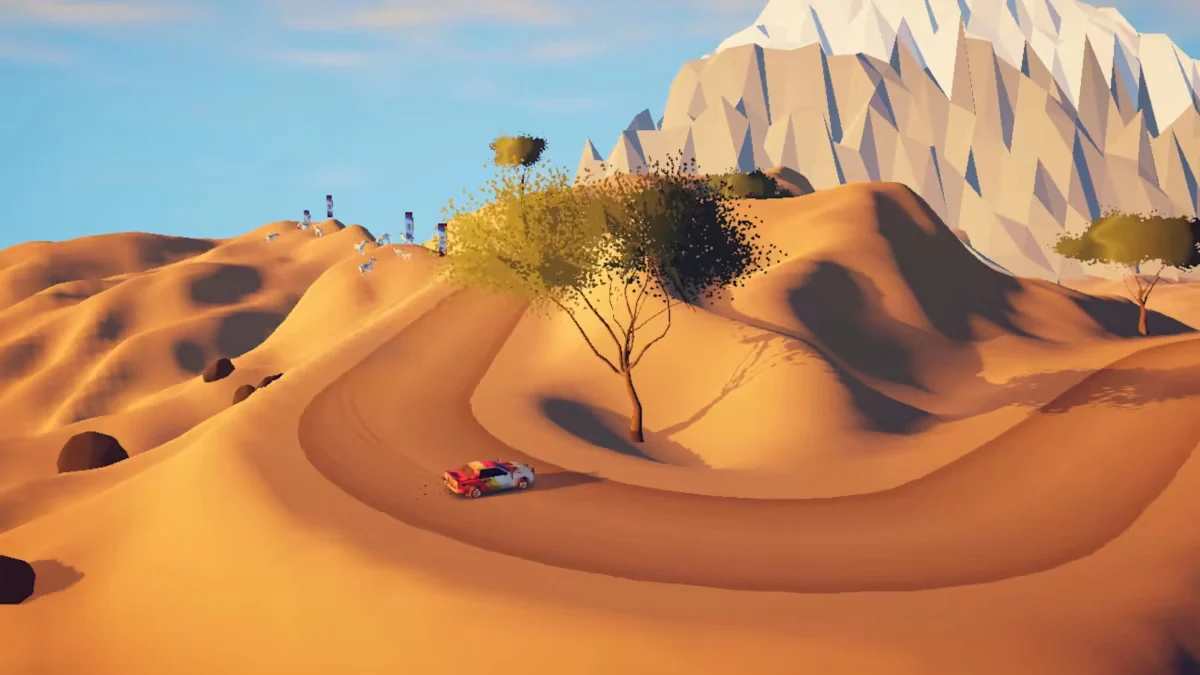
The art of rally racing game approach is distinctive because its visual simplicity does not make the driving simple. Forests, mountain roads, and snowy environments are rendered with a restrained, colorful style that keeps the action readable while giving each setting its own mood. The camera angles and replay presentation also let players appreciate the shape of a stage and the line a car takes through it.
Under that polished presentation is a challenging handling model. The game balances arcade-style accessibility with simulation-minded depth: getting a car moving and sliding through corners is approachable, while consistently setting clean times requires patience. Steering too sharply, carrying too much speed into a bend, or reacting late to a hazard can quickly disrupt a run. This makes each successful stage feel earned rather than automatic.
Funselektor Labs uses this contrast well. The presentation is inviting, but the driving expects the player to learn. That combination gives the game a calm visual atmosphere without reducing the tension of a narrow road, an unseen corner, or a fast section where every input matters.
A Rally Journey Through the Sport’s Golden Era
The art of rally career mode does not rely on a conventional linear story. Its sense of progression comes from rally history and from the changing character of the vehicles available to drive. Players move through different groups and classes, beginning with older machinery before advancing toward faster and more demanding cars associated with the 1960s, 1970s, 1980s, and the Group B era.
This golden era rally framing gives the career a historical rhythm. Earlier vehicles encourage a different pace and technique than the more powerful machines unlocked later. As speed rises, the need to prepare for corners, control slides, and understand the terrain becomes more urgent. The transition through these eras helps the progression feel like more than a list of events; it becomes a tour through changing rally styles.
Group B rally cars are especially meaningful within that escalation. Their place near the more powerful end of the journey reinforces the game’s broader curve: more speed brings more responsibility. A player who has developed smoother habits in earlier classes is better placed to handle the greater demands of later cars and championship events.
Driving Physics, Car Control, and Surface Challenges
art of rally physics place emphasis on responsive control and adaptation. Cars do not simply glide over every route in the same way. Terrain, speed, corner shape, and vehicle behavior influence the best approach, so players need to adjust their steering and braking rather than relying on one aggressive technique for every stage.
Smoother inputs are often more effective than sudden corrections, particularly on difficult surfaces. A rally car can lose momentum or drift wide when pushed too hard, while a controlled entry can make the exit cleaner and faster. That is the central lesson behind practical art of rally driving tips: anticipate the road, make deliberate inputs, and avoid treating every corner as an emergency.
Co-driver pace notes are an important part of that anticipation. They provide information about upcoming turns and hazards, allowing the driver to think ahead instead of reacting only after a corner appears on screen. Good rally car control depends on listening as much as steering. The notes help establish braking points, prepare a car for entry, and reduce the costly mistakes that come from arriving at a blind turn unready.
- Keep inputs smooth: Measured steering is often more reliable than abrupt corrections.
- Read the pace notes: Use the co-driver’s calls to prepare for turns and hazards before they arrive.
- Respect the surface: Different terrain types call for different levels of speed and control.
- Learn each car: Older vehicles and more powerful machines demand their own approach.
- Repeat difficult stages: Practice helps reveal safer lines and more consistent corner entries.
Career, Time Trials, and Free Roam Activities
The game offers several ways to engage with its roads. Career championships provide the clearest sense of advancement, guiding players through locations, events, vehicles, and the rising challenge of the rally journey. For those drawn to precision rather than progression, art of rally time trials focus attention on the clock. A small error in one section can become the difference between an ordinary run and a personal best.
Free roam provides a different pace. Instead of concentrating solely on a timed route, players can explore expansive maps, seek out hidden areas, and discover secrets. It is a useful counterpoint to the pressure of championship stages, letting the environments function as places to investigate rather than merely roads to survive.
These modes also support replay value in different ways. Championships encourage continued progress, time-focused challenges invite repeated attempts at cleaner runs, and free roam rewards curiosity. The same stylized locations can therefore feel competitive, exploratory, or simply scenic depending on the player’s chosen activity.
The Nintendo Switch Release: Version and Technical Metadata
The Nintendo Switch edition of art of rally Switch NSP was released on August 12, 2021. It was both published and developed by Funselektor Labs, with the listed genres of Racing, Simulation, and Sports. The release is identified by Title ID 0100A88012504000 and is listed for the Europe and USA regions.
Language support includes English, Japanese, Portuguese, French, German, Russian, Chinese, Spanish, Italian, and Korean. The listed firmware information is Base – v12.1.0 and Update – v17.0.0. These details place the Switch release clearly while the game itself remains focused on its rally routes, changing vehicle eras, and stage-based driving challenge.
Why art of rally Appeals to Both Newcomers and Rally Fans
An art of rally review begins with a useful contrast: the game is welcoming in appearance but demanding in practice. Newcomers can appreciate its readable visual style, varied environments, and immediate pleasure of guiding a car through a corner. The driving’s accessible surface gives players room to experiment with camera angles, techniques, and assists while they learn how a car responds.
Rally fans, meanwhile, have the historical inspiration, varied classes, and escalating machinery to explore. The movement from older cars toward the Group B era gives the experience a clear rally identity, while pace notes and terrain changes keep the focus on disciplined driving. This is not a rally simulation Switch experience built around a single type of player. It accommodates casual exploration, career progression, and serious time chasing, provided each player is ready to learn from the road.
Recommended Similar Games
 Dragon Quest Builders Switch NSP XCIView Game
 Untitled Goose Game Switch NSPView Game
 Ultra Kaiju Monster Rancher Switch NSPView Game
 Cozy Gardener Simulator Switch NSPView Game
 Shin chan: Me and the Professor on Summer Vacation – The Endless Seven-Day Journey Switch NSPView Game
 Sonic Racing CrossWorlds Switch NSPView Game
