Sonic Racing CrossWorlds Switch NSP
Report Link Error
Select the broken download file, then submit the report.
Screenshots
About Game
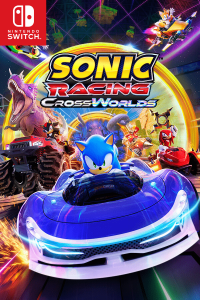
Sonic Racing CrossWorlds Switch NSP is listed as a USA Nintendo Switch release from SEGA, dated September 25, 2025. Framed around speed, dimension-spanning circuits, and familiar Sonic characters, it pairs kart competition with a story about unstable worlds colliding. The available details point to a racing game built around constant movement: drifting through corners, carrying boost momentum, reacting to items, and working with teammates when the field gets crowded.
Sonic Racing CrossWorlds: Release and Switch Details
SEGA is the publisher for Sonic Racing CrossWorlds, which is categorized under both Sports and Racing. Its listed USA release date is September 25, 2025. The Nintendo Switch metadata identifies the title with Title ID 01006E001823C000, a firmware requirement of 20.3.0.0, and a listed file size of 7.94 GB.
Language support is broad, covering English, Japanese, Spanish, Portuguese, French, German, Italian, Russian, Korean, Simplified Chinese, and Traditional Chinese. That range suits a game whose appeal is rooted in readable racing fundamentals rather than a story that needs lengthy setup before the first competition begins.
The genre labels are useful here. This is not presented simply as a Sonic adventure with occasional races. Racing is the central activity, while the sports classification reflects its competitive structure: positioning, speed management, item timing, and performance across different events. Grand Prix, Exhibition, Time Trial, and Online Multiplayer are among the listed modes, giving the game room for both structured competition and repeated track practice.
The CrossWorlds Story Setup
The story begins with a new energy source that merges separate dimensions. That disruption creates unstable CrossWorlds tracks, turning the race locations into part of the problem rather than mere backdrops. Sonic, his allies, and unexpected rivals are drawn into the situation, racing through the affected environments in an effort to stabilize the dimensions and identify the source of the phenomenon.
Dr. Eggman has his own interest in the energy. His attempt to harness it gives the competitive premise a clear threat beyond the finish line: if the power remains unchecked, the wider cosmos is put at risk. The setup is fitting for Sonic’s world because it turns a high-speed contest into a direct response to escalating chaos. Races are not detached challenges; they are the method by which the characters push back against the instability around them.
That premise also supports the game’s varied course design. A merged-dimensional track can plausibly shift in character from one section to the next, allowing the action to move between blended environments without needing every circuit to follow a single visual or thematic rule.
Fast-Paced Kart Racing at the Core
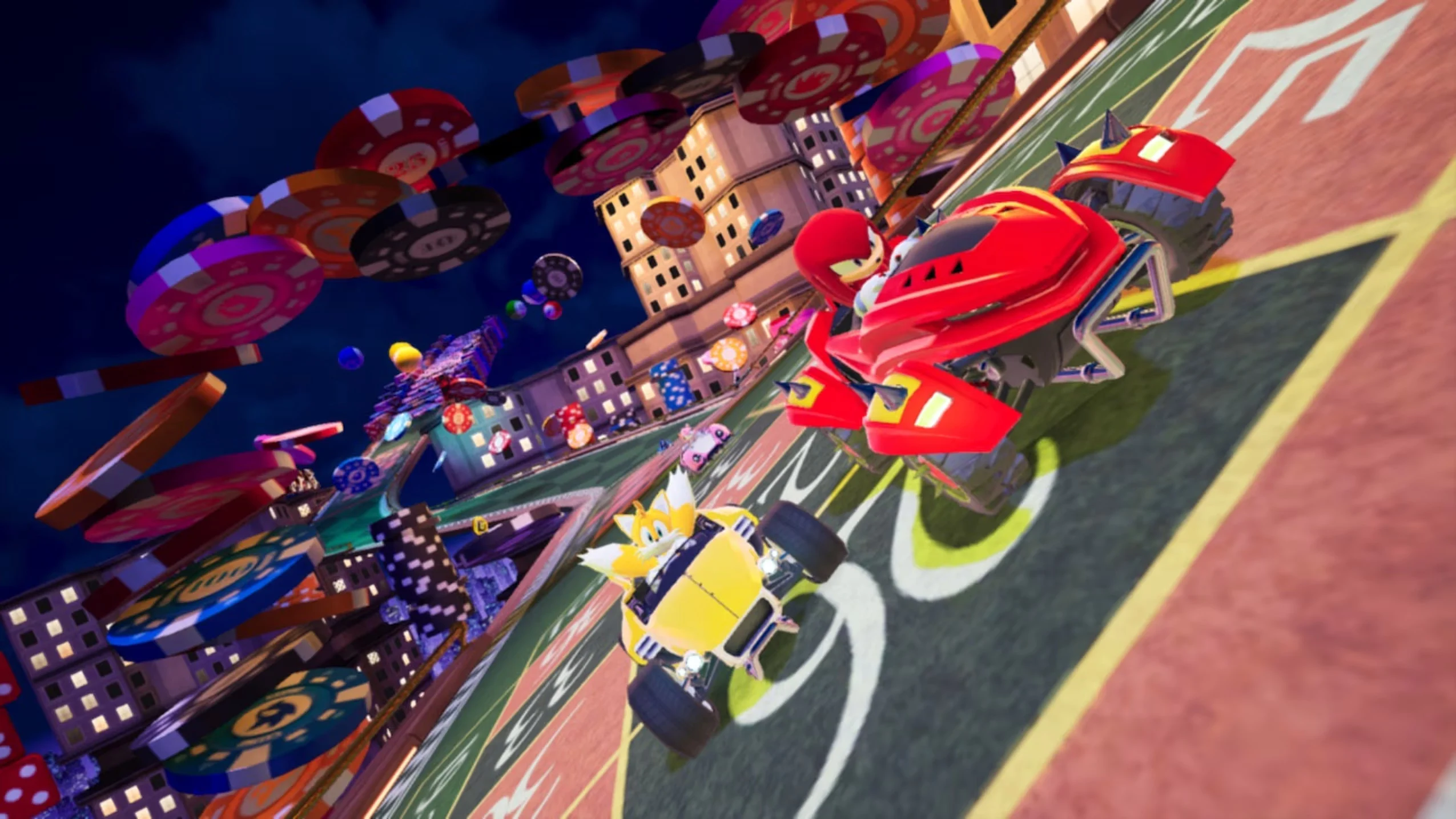
The main contest in Sonic Racing CrossWorlds gameplay is fast-paced kart racing. Players select from a roster of Sonic characters with distinct abilities and kart statistics, then navigate courses where clean control matters as much as raw speed. A stronger speed-focused choice may not suit every layout, while handling or defense can become more valuable where turns, hazards, and rival pressure demand steadier responses.
Drifting and boosts are especially important. A drift is not simply a stylish way to take a corner; it is a tool for preserving momentum and creating an advantage when the course opens up again. Boosts reward accurate movement and can help a racer recover position, protect a lead, or capitalize on a rival’s mistake. The pace depends on quick decisions, because the best line through a turn may change when an item appears, an opponent moves alongside, or the track condition shifts.
The resulting rhythm should feel active rather than automatic. Racing well means reading the course while keeping an eye on the pack. The player is asked to balance immediate speed against the possibility of a more useful action a few seconds later.
How CrossWorlds Tracks Change the Racing Experience
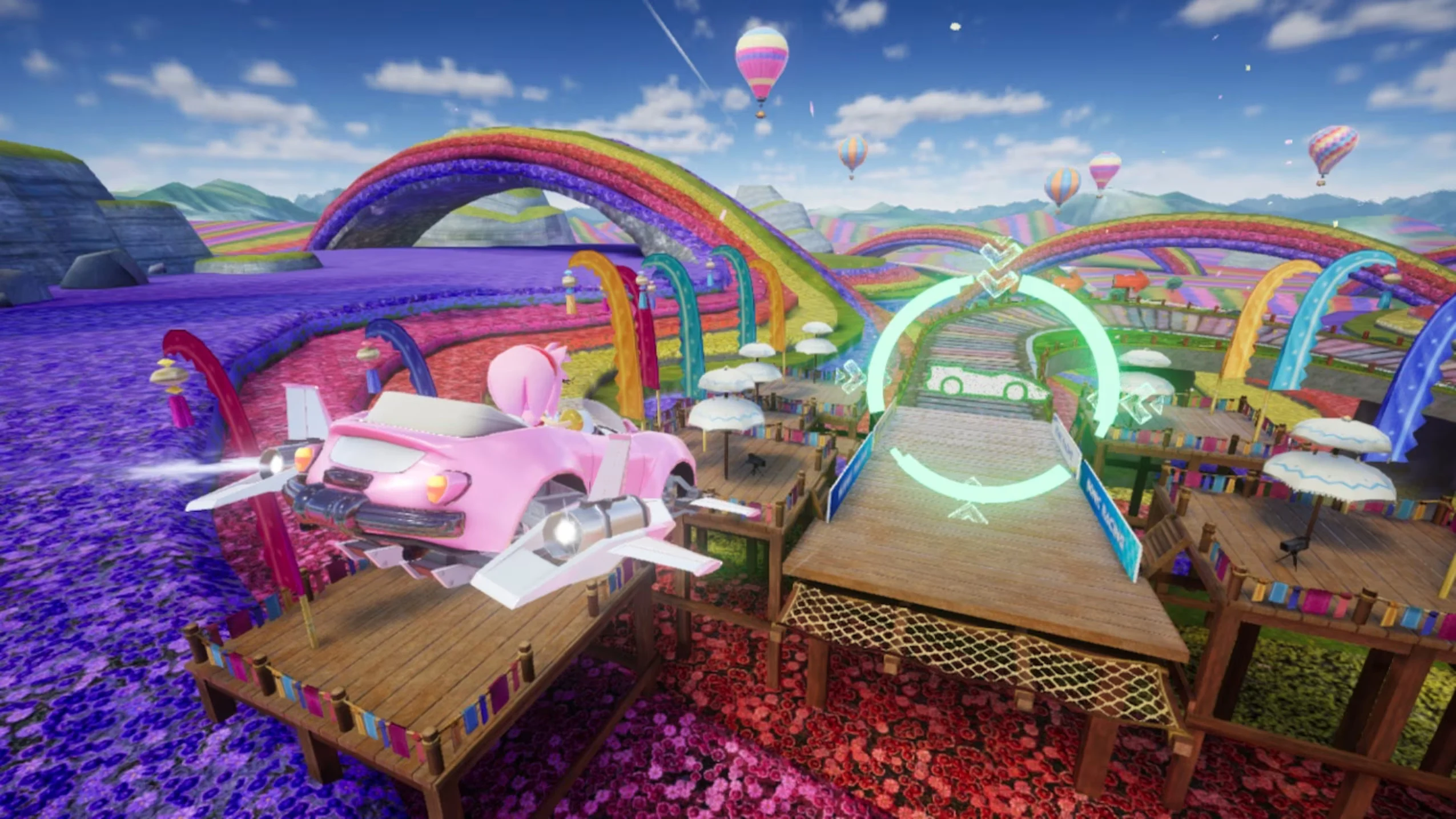
CrossWorlds tracks are built around environments blended from different dimensions. This idea gives the game a more unstable atmosphere than a conventional set of fixed circuits. The important effect is practical as well as visual: changing environments keep races from settling into a single routine, asking racers to stay alert as they move through different kinds of track space.
For a Sonic racing game, that emphasis suits the series’ sense of motion. Courses are not described as quiet, static venues. They are chaotic routes shaped by the same interdimensional event driving the story. That can make track navigation a continuing part of the challenge, especially when precise drifts, boosts, and item decisions are already competing for attention.
The available modes add replay value without requiring the same type of race every time. Grand Prix offers a broader competitive format, Exhibition provides direct race selection, Time Trial shifts attention toward personal speed and route discipline, and Online Multiplayer brings other competitors into the mix. The CrossWorlds premise gives those repeat attempts a useful foundation: the appeal lies in learning how to respond when a course and a race situation refuse to stay simple.
Wisp-Driven Power-Ups and Race Tactics
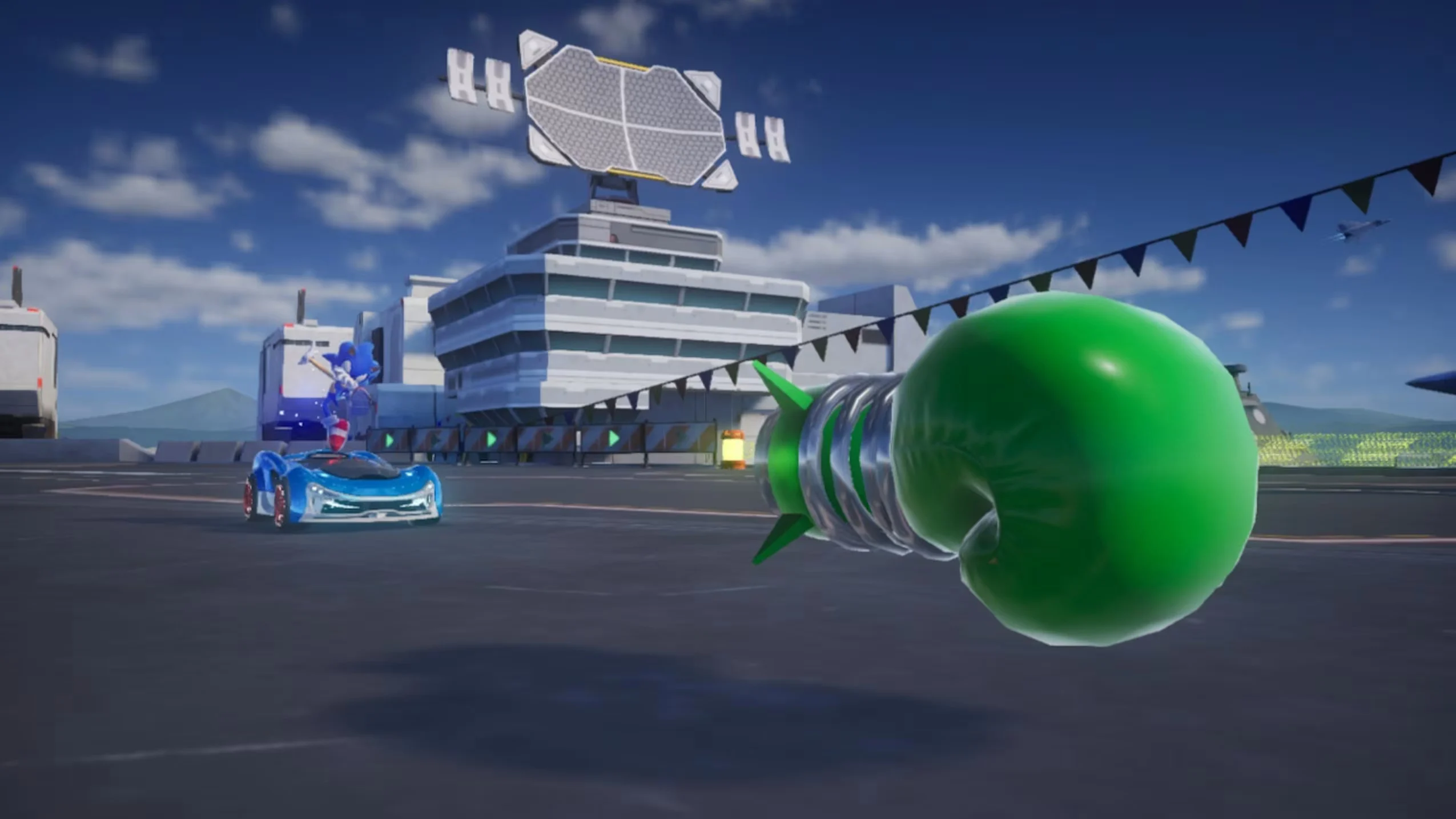
Wisp-driven power-ups add another layer to racing items. They can be used to attack opponents or defend a position, making them useful both when chasing the leaders and when trying to hold off nearby rivals. Their value depends less on merely collecting them than on using them at the right moment.
An offensive item may be strongest when a competitor has limited room to avoid it. A defensive option may be better saved for a tense stretch near the front of the pack. The game’s item system therefore encourages patience as well as aggression. Spending a power-up immediately can create a short-term opening, but holding it can protect against a more dangerous situation later in the lap.
Team mechanics extend that tactical focus. Racers can share beneficial items and perform Team Ultimate moves with partners. Coordination matters because a well-timed shared resource or Team Ultimate can change a close race more effectively than isolated play. The game’s competitive energy is still about finishing first, but the route to that result can involve cooperation rather than individual speed alone.
5 Racing Habits to Build a Stronger Finish
- Pick for the course. Consider character abilities and kart statistics before racing. Speed, handling, and defense each have value, and the best fit can depend on the demands of a particular track.
- Refine each drift. Practice controlled drifts through corners instead of treating turns as interruptions. Better cornering helps preserve speed and creates opportunities for stronger exits.
- Link boosts with purpose. Consecutive boosts are important for maintaining momentum. Look for moments where a clean drift can lead directly into a boost rather than breaking the racing line.
- Spend items at key moments. Wisp power-ups can attack or defend, so avoid using them without a clear reason. A timely item can be more valuable than an early one.
- Race as a team. Share useful items with teammates and coordinate Team Ultimate moves when possible. In a close contest, cooperation can create the opening that individual driving cannot.
Sonic Racing CrossWorlds Switch NSP is suited to players looking for a Sonic-themed racing game where speed is only one part of the contest. Its core ideas—dynamic CrossWorlds environments, Wisp-based items, drift-driven momentum, and team coordination—suggest a competitive experience that rewards practice while leaving room for sudden changes in the race.